Zoisite is a fascinating and versatile mineral that bridges the world of crystallography, gemology and regional geology. Belonging to the epidote group, it displays a range of colors and textures, from pale green and pink to intense blue and violet, and appears in geological settings shaped by intense pressure and temperature. In this article you will find a detailed overview of its mineralogy, principal occurrences, recognized varieties, practical applications and some intriguing facts that highlight why zoisite has attracted collectors, jewelers and scientists alike.
Mineralogy and physical properties
Zoisite is a calcium aluminium sorosilicate with the chemical formula Ca2Al3(SiO4)(Si2O7)O(OH). It is the orthorhombic member of a solid-solution series that includes the monoclinic clinozoisite, and both minerals are commonly grouped together in petrological descriptions. Its crystal habit can be prismatic or columnar, and it frequently occurs as compact, granular or fibrous masses rather than large, well-formed crystals.
Key physical characteristics
- Crystal system: orthorhombic.
- Mohs hardness: typically between 6 and 7, making it suitable for many types of jewelry when properly set.
- Specific gravity: approximately 3.1–3.4, depending on composition and presence of inclusions.
- Optical properties: zoisite is usually biaxial (+) and many colored varieties show pronounced pleochroism, most famously in tanzanite where different crystal orientations reveal blue, violet and brownish hues.
- Common colors: green, blue, violet, pink, brown and colorless. The color is controlled by trace elements such as manganese, chromium and vanadium, and by radiation and heating histories.
Formation and paragenesis
Zoisite commonly forms during regional metamorphism of aluminous and calcium-rich rocks. It can develop in contact-metamorphosed skarns, in hydrothermal veins and as a product of metasomatism. Zoisite typically associates with minerals such as garnet, kyanite, staurolite, quartz, epidote and calcite. Its presence in a rock assemblage often signals medium- to high-grade metamorphic conditions and specific chemical environments (notably the availability of Ca and Al).
Where zoisite occurs: principal deposits
Zoisite is globally distributed, but some localities stand out because they produce gem-quality or distinctive varieties. Deposits range from classical European type localities to famous gem-producing mines in East Africa. Below are notable occurrences and what makes them important.
Classic and type localities
- Austrian Alps: The mineral was first described from the Saualpe region of Carinthia in Austria in the early 19th century; these classical European deposits are historically significant for mineralogy.
- Norway: Fine pink varieties, later named thulite (a manganese-bearing zoisite), have long been quarried and used as ornamental stone.
Major gem and commercial localities
- Tanzania (Merelani Hills): The source of the blue-violet variety known as tanzanite. Discovered only in the 20th century, this locality produces the world’s most famous zoisite gemstone.
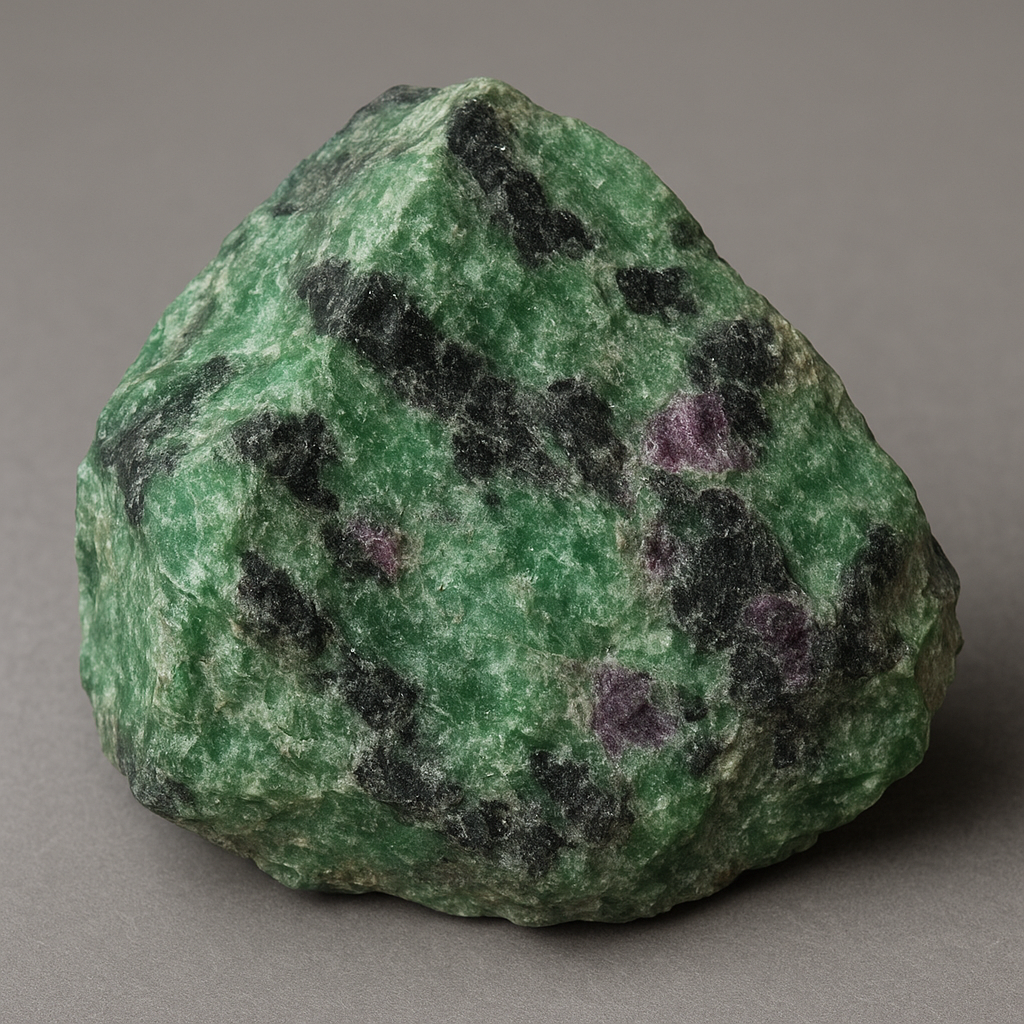
- Tanzania (Longido and other areas): Anyolite or “ruby-in-zoisite” is found here—green zoisite with red corundum (ruby) inclusions and black amphibole, prized for dramatic ornamental pieces.
- Kenya and Madagascar: Occasional occurrences of gem-quality zoisite and decorative material.
- Pakistan and India: Zoisite appears in high-grade metamorphic terrains of the Himalaya and associated terrains; some regions yield attractive specimens.
- United States and Canada: Zoisite is reported in various metamorphic terranes; although gem-quality material is less common, museum-quality specimens occur.
Associated geological settings
Zoisite is most commonly tied to regional metamorphic belts and contact metamorphism where calcium-rich sediments or carbonate intrusions are present. Skarn environments (formed by metasomatism adjacent to igneous intrusions) are especially favorable because they bring the necessary reagents for zoisite formation. The mineral can also occur in alpine-type fissures and as a retrograde mineral in some high-grade metamorphic rocks.
Varieties and gemological significance
The most commercially and culturally prominent varieties of zoisite are distinct not only in color but also in how they are used within the jewelry market and by collectors. Each variety has its own story and technical considerations.
Tanzanite
Tanzanite is the trade name for blue to violet zoisite found almost exclusively in the Merelani Hills of northern Tanzania. Its discovery in the 1960s sparked immediate interest because of its intense color and relative rarity: the deposit is geographically small, located near Mount Kilimanjaro and the town of Arusha.
Key points about tanzanite:
- Color: ranges from blue and violet to purplish hues. Unheated stones can show brownish tones that are often improved by heat treatment, a routine practice in the trade.
- Pleochroism: strong, meaning the stone shows different colors when viewed from different directions; skillful cutting is essential to maximize the most desirable color face-up.
- Rarity and value: because the deposit is limited and gem-quality rough is not abundant, high-quality tanzanite can command high prices in the market.
Thulite
Thulite is the pink to reddish variety colored by manganese; historically mined in Norway and valued as an ornamental and lapidary stone. It is less commonly faceted but often cut into cabochons and used for beads, inlays and carvings.
Anyolite (ruby-in-zoisite)
Anyolite, often marketed as “ruby-in-zoisite”, combines green zoisite with red corundum (ruby) and black minerals (commonly hornblende). It is primarily collected and carved into decorative objects. Because the ruby occurs as inclusions rather than as continuous gem material, the overall piece is usually polished or sculpted rather than faceted.
Treatment, cutting and care
Zoisite requires careful handling both in cutting and in consumer care due to its range of colors, inclusions and cleavage tendencies. Some varieties undergo routine treatments to improve aesthetics.
Common treatments
- Heat treatment: Widely used for tanzanite to transform brownish or strong pleochroic material into more appealing blue-violet tones. The practice is stable and generally accepted in the gem trade when disclosed.
- Surface treatments and dyes: Less common for high-quality zoisite, but some ornamental materials may be dyed or treated to enhance color uniformity.
Cutting practices
Because of pleochroism, cutters orient zoisite to display the best color face-up; this is particularly critical for tanzanite. The gem’s moderate hardness permits faceting and cabochon work, but care must be taken with stones that contain significant inclusions or cleavage planes.
Care for zoisite gems
- Avoid harsh chemicals and prolonged exposure to high heat or sudden temperature changes, which could damage the stone or alter its color.
- Use warm, soapy water and a soft brush for cleaning; ultrasonic cleaners are generally not recommended for heavily included specimens.
- Store separately from harder gems (such as corundum) to prevent abrasion.
Uses beyond jewelry
While gemstones and ornamental objects represent the most visible uses of zoisite, the mineral also has roles in geological research, education and the lapidary arts.
- Educational specimens: Zoisite’s occurrence in varied metamorphic contexts makes it valuable for teaching mineralogy and metamorphic petrology.
- Lapidary art: Exotic specimens such as anyolite are carved into sculptures, beads and decorative slabs prized for dramatic color contrasts.
- Collector specimens: Well-crystallized zoisite from classic localities or unusual color variants are sought after by mineral collectors worldwide.
- Scientific research: Zoisite and its relationship with clinozoisite offer insights into crystal chemistry, phase transitions and the behavior of trace elements during metamorphism.
Cultural, historical and metaphysical perspectives
Different cultures and markets have ascribed meanings and values to zoisite varieties. The commercial name tanzanite has had a particularly rapid ascent in popularity since the 1960s, becoming a modern gem with intensive marketing that emphasized its unique origin and striking color. Thulite, with its soft pink tones, has been used locally in Scandinavia for personal ornaments and decorative objects for centuries.
In metaphysical and crystal-healing circles, zoisite varieties are often credited with emotional and spiritual benefits. Those beliefs are not scientifically validated but have contributed to the mineral’s popularity in certain markets. Ruby-in-zoisite is frequently associated with vitality and creativity in such practices, while tanzanite is linked to intuitive or meditative properties because of its violet-blue hues.
Notable specimens and market considerations
Some zoisite specimens have achieved fame because of size, quality or unusual coloration. Museum collections and major gem auctions occasionally feature remarkable tanzanite gems, and large, well-matched anyolite sculptures are prized in decorative arts. Market value for zoisite is driven by color intensity, clarity, cut, carat weight and rarity of origin. Tanzanite’s market is further influenced by its single known source area, which introduces supply-side risk and interest from investors.
Authenticity and synthetics
Natural zoisite is generally straightforward to identify for experienced gemologists, but identification can be more challenging with heavily included material or in the presence of treatments. Synthetic counterparts are rare; the greatest commercial challenge is the accurate disclosure of heating and origin. Standard gemological testing—refractive indices, specific gravity, microscopy and spectroscopic analysis—can establish identity and detect common treatments.
Interesting facts and research directions
- Geographic uniqueness: Tanzanite is notable as a gem that is both relatively newly discovered and tied to a geographically restricted deposit, which has encouraged conservation and supply-management discussions.
- Color engineering: The role of trace elements (such as vanadium and manganese) and heat in developing gem colors makes zoisite an intriguing subject for mineralogists studying color centers and crystal chemistry.
- Cross-disciplinary interest: Zoisite specimens with unusual inclusions or growth textures are used to study metamorphic fluid histories and the conditions of mineral formation.
Conservation and ethical considerations
Because high-quality gem zoisite (particularly tanzanite) comes from a limited area, mining practices and the social and environmental impacts of extraction are active concerns. Both governmental regulation and industry-led initiatives have sought to improve transparency, working conditions and environmental protection in gem-producing regions. Consumers increasingly expect ethical sourcing and disclosure, giving rise to traceability programs and responsible-sourcing certifications in the gem trade.
Further reading and exploration
For those who wish to learn more, standard mineralogy texts and gemological resources provide in-depth data on crystallography, optical properties and identification methods. Visiting major natural history museums or gem exhibitions offers a chance to see exemplary zoisite specimens in person, and field guides to regional geology can provide context on where zoisite and its associated minerals form. Collectors and gem enthusiasts often consult specialized publications on tanzanite, thulite and ruby-in-zoisite to stay current with market trends and new discoveries.