
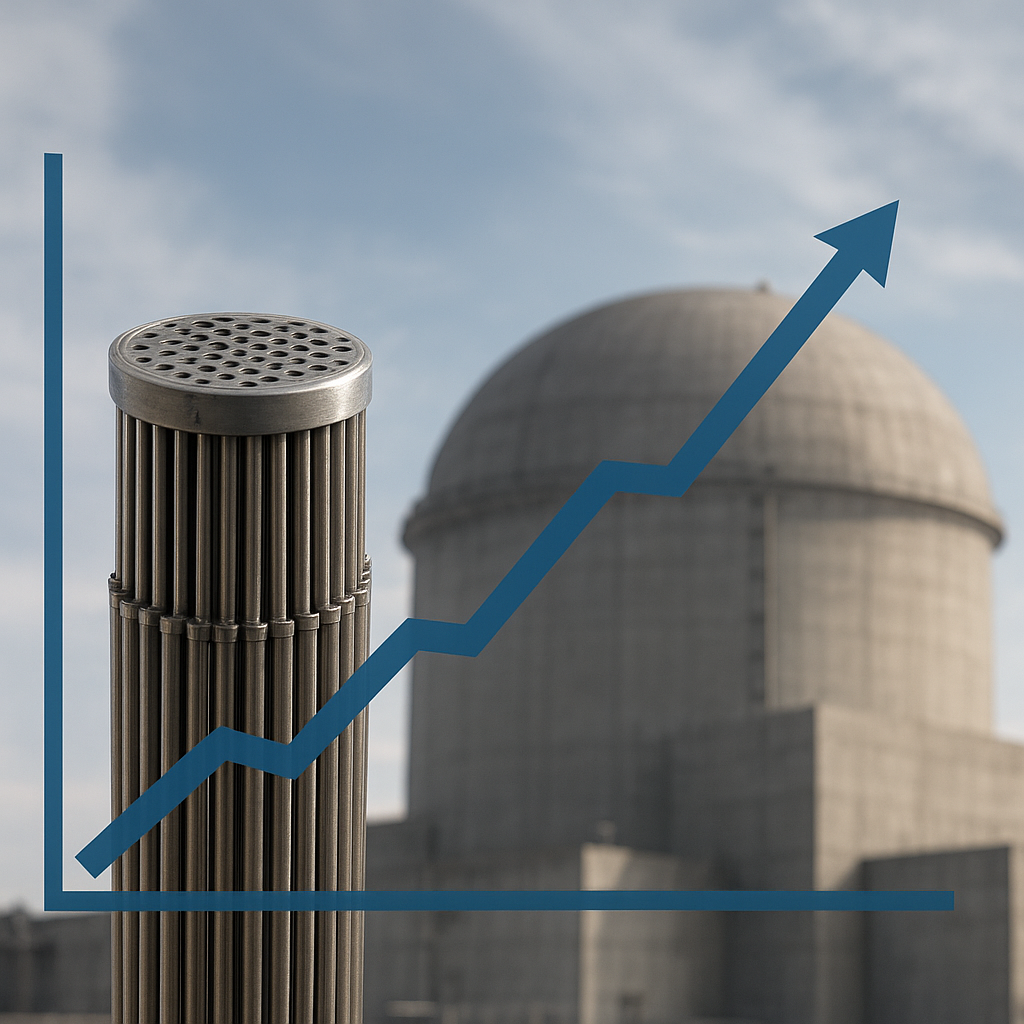
The evolution of nuclear reactor technology has placed zirconium at the center of material science and supply-chain discussions. As an element whose properties — low neutron absorption, good mechanical strength at high temperatures, and relatively low corrosion rates in water — make it uniquely suitable for fuel cladding, zirconium and its alloys remain essential to most commercial water-cooled reactors. This article explores the historical and emerging factors shaping global demand for zirconium in nuclear applications, examines production and supply dynamics, and surveys technical trends that could affect future consumption patterns, including manufacturing, fabrication, and potential recycling strategies.
Zirconium’s function and importance in nuclear reactor technology
Zirconium’s adoption in nuclear reactors stems from a combination of favorable physical and nuclear properties. Its very low thermal neutron absorption cross-section, relative resistance to oxidation in pressurized water, and acceptable mechanical performance under irradiation make it the material of choice for fuel tube cladding and various structural components in light-water reactors (LWRs). Historically, specialized alloys such as Zircaloy-2 and Zircaloy-4 were developed to balance strength with corrosion resistance and dimensional stability under irradiation.
Key properties that drive use
- Low neutron absorption, minimizing parasitic capture and improving fuel economy.
- Good thermal conductivity, aiding heat transfer from fuel to coolant.
- Reasonable corrosion resistance in high-temperature water and steam environments.
- Workability and weldability suitable for thin-walled fabrication into cladding tubes and assembly components.
Primary drivers of zirconium demand in reactor fleets
Several intersecting trends determine zirconium demand: the number and type of operating reactors, life-extension programs, new-build projects (including small modular reactors), and innovation in fuel design. Economic and regulatory decisions made by utilities and governments also weigh heavily on procurement plans.
Operating fleet and life extension
Most existing commercial reactors are water-cooled designs that rely on zirconium cladding. As utilities pursue license renewals and long-term operation, there is steady demand for replacement fuel assemblies and maintenance parts. Extended operational lifetimes often require periodic fuel reloads and component replacements, maintaining a baseline consumption of zirconium products.
New builds, SMRs, and international expansion
New reactor construction programs, particularly in Asia and parts of Eastern Europe and the Middle East, drive incremental zirconium demand. The rise of small modular reactors (SMRs) introduces both opportunities and uncertainties: some SMR designs continue to use conventional zirconium-based cladding and thus add to demand, while others explore alternative materials which could reduce per-unit zirconium consumption.
Accident-tolerant fuels and material innovations
Research into accident-tolerant fuels (ATFs) aims to enhance safety margins under severe conditions. Several ATF concepts retain zirconium alloys but modify alloy chemistry (e.g., niobium, tin, chromium additions) or incorporate coatings to improve high-temperature oxidation resistance. Some concepts replace zirconium cladding entirely with advanced ceramic or composite materials; if adopted widely, such transitions would materially alter long-term zirconium demand trajectories.
Supply chain, production processes and market constraints
Zirconium for nuclear applications typically originates from zircon (zirconium silicate) mined as a heavy mineral. The conversion chain — from zircon ore to zirconium sponge and finally to nuclear-grade fabrication products — includes several intensive processing steps and quality controls to meet stringent nuclear standards.
Mining and raw materials
- Primary feedstock is zircon sand, recovered from heavy-mineral sand deposits. Major producers include Australia, South Africa, and a few other countries rich in heavy-mineral sands.
- Zircon production volumes fluctuate with demand from non-nuclear sectors (ceramics, refractory industries), which can affect availability and pricing for nuclear-grade processing.
Refining and alloy production
Nuclear-grade zirconium requires separation from hafnium, which has a similar chemical behavior but a much higher neutron absorption cross-section. Hafnium removal is an expensive and technically demanding step, typically accomplished through solvent extraction, fractional distillation of zirconium tetrachloride, or the Kroll process followed by chlorination. This separation bottleneck can constrain supply and raise costs, especially when hafnium separation facilities are limited.
Manufacturing and quality assurance
Manufacturing zirconium into thin-walled cladding tubes and structural components demands strict metallurgical controls to meet regulatory and safety standards. Nuclear regulators require traceability, impurity limits, and mechanical testing to validate performance under irradiation. A relatively small number of producers are certified to supply nuclear-grade zirconium, making the market less elastic and more sensitive to capacity changes or geopolitical disruptions.
Recycling and secondary sources
Spent fuel reprocessing and cladding recycling remain technically and politically contentious. While direct recycling of zirconium from spent cladding is possible in theory, contamination, hydrogen pickup, and irradiation damage often impair material reuse. Independent programs investigate hydride removal, re-melting, and re-fabrication, but widespread adoption of zirconium recycling for nuclear-grade applications is limited. In contrast, non-nuclear uses may accept recycled material more readily.
Economic, regulatory and geopolitical influences
Market dynamics for zirconium are shaped by macroeconomic cycles, regulatory shifts, and geopolitical factors affecting mining and processing. Price volatility in underlying zircon supplies can propagate through the nuclear material chain, affecting project costs and procurement strategies.
Regulatory demands and certification timelines
Introducing new zirconium alloys or fuel designs requires extensive testing, qualification, and regulatory approval. The long lead times and high costs of qualification can slow market adjustments even when technical alternatives exist. For vendors and utilities, this regulatory friction tends to favor established zirconium-based solutions over radical material changes.
Geopolitical risks and concentration
Because zircon and refining capacity are geographically concentrated, export controls, trade disputes, or mine disruptions can quickly influence global availability. Nations seeking energy security may invest in domestic production or stockpile strategic materials, influencing global demand distribution and pricing.
Technical challenges and research directions affecting demand
Several technical issues influence both near-term and long-term zirconium needs. These include corrosion and hydrogen uptake in high-temperature water, embrittlement under irradiation, and susceptibility to rapid oxidation during accidents. Research programs focus on mitigating these issues through alloy design, surface engineering, and alternative cladding concepts.
Advanced alloys and surface treatments
Alloying additions and surface coatings aim to reduce high-temperature oxidation rates and hydrogen uptake, thereby improving safety margins and extending component life. Examples include chromium-coated zirconium and niobium-bearing alloys. Adoption of these technologies can increase short-term material complexity and cost, potentially increasing demand for specialized fabrication processes even if net mass demand for zirconium changes minimally.
Substitution risks
True substitution of zirconium with non-metallic cladding (e.g., silicon carbide composites) could reduce future zirconium consumption significantly. However, these alternatives face hurdles in manufacturability, joining technology, irradiation behavior, and regulatory acceptance. Consequently, while substitution is a credible long-term risk to zirconium demand, uptake is gradual.
Market outlook and strategic implications for stakeholders
Projecting zirconium demand requires balancing continuing reliance on existing reactor technologies against gradual innovation and fleet changes. Short- to medium-term demand is likely to remain robust due to ongoing operations, life extensions, and conventional new builds, particularly in regions pursuing nuclear expansion. Over the longer term, adoption of ATFs, SMR-specific materials, or non-zirconium cladding could moderate growth or shift demand composition toward specialized alloys and coated products.
- Utilities and reactor vendors should monitor advances in ATF qualification and the status of SMR designs to align procurement strategies.
- Producers of zirconium and zircon feedstock may need to invest in hafnium separation and specialized fabrication capabilities to capture higher-value nuclear contracts.
- Policymakers should consider the strategic implications of concentrated supply chains and the potential need for stockpiling or diversification to ensure energy-security goals.
Investment and innovation opportunities
Opportunities exist across the value chain: improved mining and processing to lower costs, development of advanced alloys and coatings, and investment in recycling methods for end-of-life materials. Collaboration between industry, national labs, and regulators can accelerate safe deployment of innovations while managing the transition risks associated with potential material substitution.
