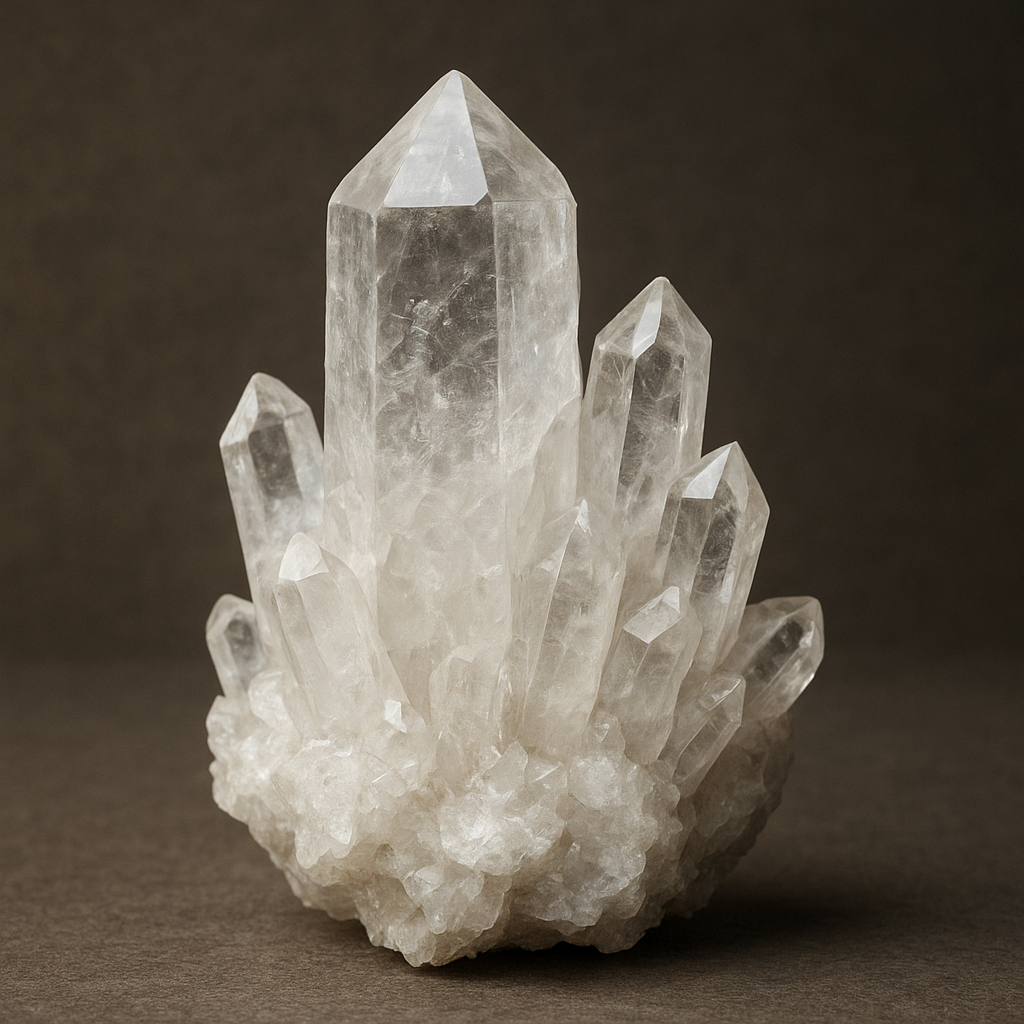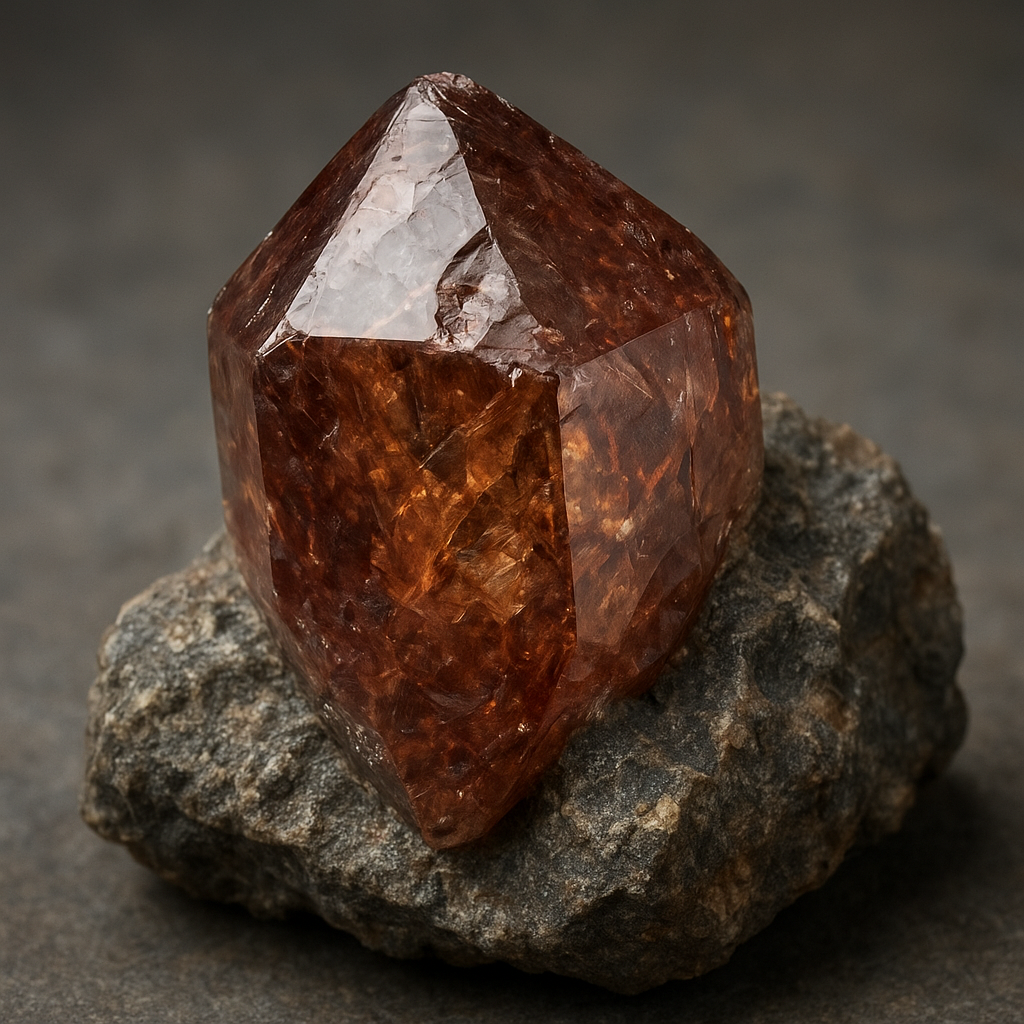
Zircon is a small but immensely informative mineral whose durability and chemical composition make it indispensable across geology, industry and gemology. This article explores the mineral’s chemistry, crystallography, global occurrences, scientific applications and cultural uses. Along the way it highlights remarkable discoveries enabled by zircons and the reasons this mineral remains a focus of modern research. Several technical topics are explained in accessible terms, with examples from famous localities and case studies.
Basic properties and mineralogy
The mineral commonly called zircon is chemically zirconium silicate (ZrSiO4). It crystallizes in the tetragonal system and typically forms prismatic crystals with pyramidal terminations. Crystal color ranges from colorless to yellow, brown, red, green and even blue; some specimens display pleochroism or strong pleochroic colors. Many gem-quality stones are heat-treated to change or enhance color.
Key physical and chemical properties:
- Hardness: around 7.5 on the Mohs scale, sufficiently hard for many jewelry uses but less hard than corundum.
- Density (specific gravity): typically 4.6–4.7 for unaltered, non-metamict crystals; density decreases when the crystal is metamict (radiation-damaged).
- Refractive index: high, producing lively brilliance in gem facets; refractive indices vary with composition and radiation damage.
- Chemistry: dominated by ZrO2 and SiO2; natural crystals commonly include trace amounts of uranium (U), thorium (Th) and rare-earth elements (REEs).
- Crystal habit: prismatic, often with well-developed growth zoning visible under cathodoluminescence or backscattered electron imaging.
Zirconium and the closely related element hafnium are hosted in zircon crystals. Zircon tends to incorporate Hf strongly, so natural zircons are a primary source for studying Hf isotopes and geochemistry. Zircon often tolerates uranium and thorium in its lattice but excludes lead on formation, a behavior central to one of its most important applications.
Where zircon is found
Zircon is widespread in the Earth’s crust because it forms in many igneous and metamorphic environments and is chemically resistant to weathering. It occurs as:
- Accessory mineral in felsic igneous rocks such as granite and syenite.
- Metamorphic minerals in high-grade metamorphic rocks (gneisses and granulites).
- Detrital grains in sandstones and conglomerates, transported and concentrated by water or wind.
Notable global localities and contexts:
- Sri Lanka, Madagascar and Australia produce gem-quality zircons prized in the gem trade for color and clarity.
- Australia’s Harts Range, Tanzania and Mozambique are important producers of colored and near-colorless gem zircons.
- Detrital zircon-rich sediments occur in many regions; famous sites include the Jack Hills in Western Australia, where zircons up to about 4.4 billion years old were recovered.
- Igneous-hosted zircons are common in continental crust and are routinely sampled from granitic rocks worldwide, including classical localities such as the Scandinavian Shield and the North American craton.
Because zircon is chemically robust, it survives repeated cycles of erosion, transport and burial. This resilience preserves ancient crystals that can be billions of years older than surrounding host rocks, making zircons reliable time capsules.
Geochronology and the scientific importance of zircon
Zircon is of profound importance to Earth scientists because it provides exceptional geochronological information. The mineral commonly incorporates uranium and thorium into its crystal lattice when it crystallizes but excludes lead (Pb). Over time uranium decays to lead via well-understood decay chains. Measuring the ratios of parent isotopes (U) to daughter isotopes (Pb) in zircon allows precise age determinations using the U-Pb decay system.
Why zircon is an excellent recorder of time
- Resistance to chemical weathering and physical erosion preserves crystal integrity over geologic time.
- Exclusion of initial Pb at crystallization makes it easier to interpret radiogenic Pb accumulation.
- High closure temperature means the U-Pb system remains closed through many metamorphic events, retaining original crystallization ages or recording later thermal events.
Analytical techniques such as Thermal Ionization Mass Spectrometry (TIMS), Secondary Ion Mass Spectrometry (SIMS), Sensitive High Resolution Ion MicroProbe (SHRIMP) and Laser Ablation Inductively Coupled Plasma Mass Spectrometry (LA-ICP-MS) permit dating of tiny zones within single zircon crystals. These instruments can resolve complex growth histories, distinguishing primary igneous growth from later metamorphic overgrowths.
Ancient zircons and Hadean Earth
One of the most celebrated discoveries in modern geology came from studies of detrital zircons in the Jack Hills of Western Australia. Some Jack Hills zircons yielded crystallization ages as old as ~4.37–4.44 billion years, making them the oldest known terrestrial minerals. These zircons preserve geochemical signatures (oxygen isotopes, trace elements) that suggest the presence of liquid water and continental crustal processes very early in Earth’s history — deep into the Hadean eon. Such findings transformed ideas about early Earth conditions.
Other ancient zircons have been found in high-grade metamorphic rocks and some Archean cratons. Zircon-derived age constraints are essential for reconstructing the timing of crust formation, metamorphism, magmatism and tectonic events over Earth history.
Provenance and detrital zircon studies
Because zircon can survive transport and burial, detrital zircon populations in sedimentary rocks are used to infer provenance — the sources and pathways of sediment. By dating many individual zircon grains from a sandstone, geologists can identify age populations corresponding to different source terrains and tectonic events. This helps reconstruct paleogeography, continental assembly, erosion histories and basin evolution.
- Detrital zircon age spectra often reveal multiple sources: ancient cratons, younger orogenic belts and volcanic inputs.
- Coupled U-Pb ages and Hf isotopic measurements on zircons provide insights into crustal growth vs. reworking.
Radiation damage and metamictization
Zircon commonly incorporates radioactive U and Th; their alpha decay damages the crystal lattice over time, a process called metamictization. Metamict zircons become partially amorphous, with reduced density, altered optical properties and potentially mobilized trace elements including lead. Metamictization complicates geochronology because radiation damage can enhance Pb diffusion and cause Pb loss, yielding apparent ages that require careful interpretation.
Annealing by high-temperature events can repair radiation damage, resetting lattice order and sometimes restoring U-Pb systematics. Imaging techniques (cathodoluminescence, backscattered electron images) reveal growth zoning and damage-related textures; these features guide microanalytical sampling to avoid disturbed zones and target pristine growth zones for accurate dating.
Industrial and gemological uses
In addition to its scientific value, zircon has a variety of industrial and gemological uses.
Gemstone market
Gem-quality zircons are valued for their brilliance and range of colors. Natural gem zircon is distinct from synthetic materials commonly mistaken for it. A frequent confusion is with cubic zirconia, a synthetic cubic form of zirconia (ZrO2) created as a diamond simulant in the jewelry trade. Despite similar names, cubic zirconia is chemically and structurally different from natural zircon. Gemological tests can distinguish them by refractive index, dispersion, specific gravity and spectroscopy.
High-quality natural zircons are often heat-treated to modify color (e.g., turning brownish stones into attractive yellow or blue hues). Natural blue and green zircons can be quite valuable due to rarity and attractive optical properties.
Industrial uses and zircon compounds
While zircon itself is mined for a range of purposes, many industrial applications derive from processed zircon or zirconia. Applications include:
- Source of zirconium metal production (after chemical processing). Zircon is a major raw material in extracting zirconium and hafnium, although separation of Hf from Zr is technically demanding and usually done chemically.
- Zirconia (ZrO2) is used in high-performance ceramics, oxygen sensors, thermal barrier coatings, dental crowns and as a refractory material. Stabilized zirconia exhibits high fracture toughness and thermal stability.
- In ceramics and glazes, zircon is used as an opacifier and to improve chemical stability.
- Foundry sands based on zircon are used for casting molds because of high melting point and resistance to thermal shock.
- Zircon-based refractories are used in kilns and furnaces because of resistance to corrosion by glass and steel melts.
Note that industrial processing of zircon to obtain zirconium metal usually involves conversion to zirconium tetrachloride or the production of zirconia via high-temperature reactions, and it is distinct from the gem trade.
Analytical techniques and modern research directions
Zircon research combines petrology, geochemistry and high-precision isotopic methods. Modern approaches include:
- High-resolution imaging: cathodoluminescence (CL) and backscattered electron (BSE) imaging reveal internal zoning, growth structures and annealed zones that guide sampling.
- Micro-analytical U-Pb dating (SIMS, SHRIMP, LA-ICP-MS, TIMS) allows age determinations for individual zones within a crystal down to micron scales.
- Coupled isotopic systems: Hf isotopes in zircon (measured by LA-MC-ICP-MS) inform on crustal versus mantle sources and crustal evolution; oxygen isotopes (O) measured by ion microprobe reveal evidence for surface-derived water and crustal processes in very old zircons.
- Trace element geochemistry (REE patterns, Th/U ratios) differentiates magmatic origins and can indicate crystallization conditions.
Current research frontiers include better understanding of Pb mobility in radiation-damaged zircon, refinement of in situ dating to resolve complex growth histories, and combining multiple isotope systems for integrated histories. Zircon-based studies are central to debates about early Earth habitability, the timing of continental crust stabilization and the nature of early crustal recycling.
Environmental, ethical and economic aspects of zircon mining
Zircon is mined both as a dedicated commodity and as a byproduct of heavy mineral sands operations that also recover ilmenite, rutile, monazite and other minerals. Environmental and social issues linked to placer and mining operations include habitat disturbance, sedimentation of waterways and socio-economic impacts on local communities.
Because some heavy mineral sands contain monazite and other thorium-bearing minerals, careful handling and regulatory oversight are necessary to manage naturally occurring radioactive material (NORM) during processing. Responsible sourcing and environmental mitigation practices are increasingly demanded by consumers and industry.
Case studies and notable discoveries
Jack Hills zircons
As noted earlier, the Jack Hills zircons provided the first robust evidence for Hadean continental crust and even liquid water on early Earth. Oxygen isotope studies of these ancient grains suggest interactions with low-temperature liquid water prior to their crystallization or during early alteration. These findings reshaped ideas about the early climate and the timing of crustal differentiation.
Acasta Gneiss and other oldest rock records
Zircon ages complement whole-rock ages for ancient gneisses such as those of the Acasta region in Canada (~4.03 Ga) and other Archean terranes. Zircon dating refines the timing of early crustal formation and subsequent metamorphism, helping to trace ancient tectonic events that otherwise leave sparse records.
Detrital zircon in basin analysis
Multiple sedimentary basins studied with detrital zircon techniques reveal provenance shifts through time, showing when new orogens supplied sediment, when cratonic sources dominated, or when long-distance transport connected previously separated terranes. These insights are applied in hydrocarbon exploration, mineral exploration and tectonic reconstructions.
Practical advice for collectors and jewelers
When handling or buying gem-quality zircon:
- Be aware of color treatments—many commercial blue or yellow zircons have been heat-treated to enhance color.
- Differentiate natural zircon from cubic zirconia by testing density, refractive index and dispersion; gem labs can provide certification.
- Avoid exposure to prolonged strong heat if the stone’s provenance or treatment history is unknown, as color and structure can change with heating and annealing.
Collectors of mineral specimens value well-formed prismatic crystals with intact terminations. Transparent, richly colored crystals may be faceted into gemstones; slightly included crystals are appreciated in mineral collections for their growth features and zoning.
Interesting facts and cultural notes
- Although the name zircon sounds similar to zirconia and zirconium, these terms refer to different substances: natural zircon (ZrSiO4) versus synthetic zirconia (ZrO2), and metallic zirconium (Zr).
- Some zircons fluoresce under ultraviolet light; cathodoluminescence microscopy also reveals colorful internal zoning patterns used diagnostically by geologists.
- Zircon was historically used in jewelry and as a talisman in some cultures; gem-quality stones have been prized for centuries in various regions.
- Zircon crystals have been identified in some lunar samples, providing age information about the Moon’s crustal history, and in meteorites, where they help constrain early Solar System events.
- The word “zircon” likely derives from the Persian word “zargun” meaning “gold-hued” or from similar regional names used historically for zircon gems.
Concluding observations
Zircon is much more than a pretty gemstone: it is a durable chemical archive that preserves information about magmatic, metamorphic and surface processes through deep time. From its role as a carrier of uranium and hafnium isotopes to its value as a gemstone and precursor for industrial zirconium compounds, zircon connects diverse fields spanning fundamental Earth science to advanced materials. Modern imaging and isotopic techniques continue to unlock zircon’s stories — from the Hadean to the recent past — ensuring that this humble mineral remains at the forefront of research and application.