Zinkenite is a striking and complex mineral belonging to the family of lead–antimony sulfosalts. It attracts interest from mineralogists, collectors and geochemists because of its unusual habits, metal-rich composition and role in hydrothermal ore systems. This article explores the mineral’s physical and chemical characteristics, typical geological settings and geographic occurrences, practical and historical uses, and some intriguing topics connected to its crystal chemistry, environmental implications and collecting value.
Appearance and basic properties
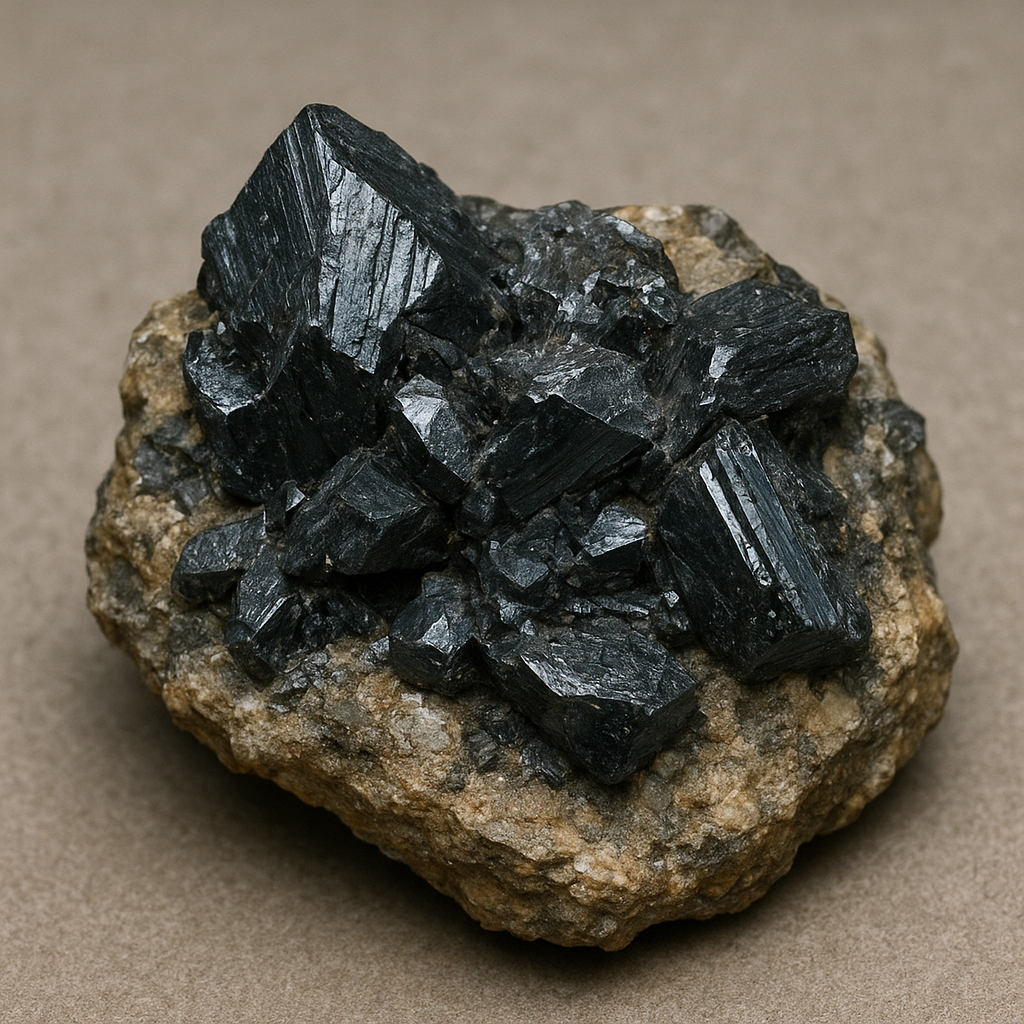
Zinkenite usually appears as metallic, lead-gray to black crystals and aggregates. Its habit often includes needle-like, prismatic or acicular crystals that may form felted or radiating clusters. Because the mineral is rich in heavy metals, it commonly shows a high specific gravity and a bright metallic luster when fresh, though surfaces can tarnish to duller tones on exposure. The mineral’s streak is typically dark gray to black.
Chemically, zinkenite is a complex sulfosalt containing both lead and antimony bonded to sulfur. Its composition can be represented by a relatively complex formula often given in the literature as Pb9Sb22S42, which reflects the presence of many cation sites and a complicated crystal framework. Because of this complexity zinkenite is of interest to mineralogists studying bonding, ordering and the structural behavior of heavy-metal sulfosalts.
Physical and mechanical traits
- Color: lead-gray to black.
- Luster: metallic.
- Hardness: generally soft to moderately soft compared to common rock-forming minerals (typically low on the Mohs scale).
- Specific gravity: relatively high due to the lead content (typically noticeably dense).
- Crystal habit: acicular, prismatic and fibrous aggregates are common.
The fragile, needle-like habit and metallic sheen make zinkenite specimens visually attractive to collectors, especially when crystals are well-formed or occur as aesthetic sprays on contrasting matrix minerals.
Geological occurrence and typical associations
Zinkenite forms under hydrothermal conditions, usually as a late-stage product in metal-bearing veins. It is commonly associated with other sulfosalts and sulfide minerals that precipitate from metal-rich fluids moving through fractures and cavities in host rocks. Because of its composition, zinkenite is more likely to be found where antimony and lead were concentrated by geological processes.
Typical geological settings
- Epithermal to mesothermal hydrothermal veins enriched in antimony and lead.
- Replacement zones in carbonate and siliciclastic rocks where metal-bearing fluids reacted with host lithologies.
- Polymetallic sulfide deposits where complex sulfosalts are common, especially in low- to moderate-temperature environments.
Common mineral associations
When zinkenite is present, it is frequently found together with a suite of sulfide and sulfosalt minerals. Typical companions include:
- Stibnite (Sb2S3) — a major antimony sulfide.
- Boulangerite and jamesonite — other lead–antimony sulfosalts that form acicular aggregates.
- Galena and sphalerite — lead and zinc sulfides commonly present in the same veins.
- Pyrite and arsenopyrite — iron sulfide and arsenic-bearing sulfide frequently associated with hydrothermal mineralization.
Notable localities and distribution
Zinkenite is not a ubiquitous ore mineral, but it has been reported from a number of classic sulfosalt-producing localities worldwide. Because it forms under specific hydrothermal conditions and requires a source of both lead and antimony, its occurrences tend to be localized and of interest to collectors and researchers.
- Tsumeb, Namibia: Famous for producing many rare and well-crystallized sulfosalts, often yielding specimens prized by museums and collectors.
- Lengenbach, Switzerland: A renowned locality for complex sulfosalts where many rare species have been identified; zinkenite has been reported among other exotic sulfosalts.
- Historic European mining districts such as parts of Germany (Saxony and Harz), Cornwall (United Kingdom) and Freiberg where antimony and lead mineralization was mined historically.
- Mexico and Peru: polymetallic mines with abundant sulfosalts sometimes yield fine zinkenite specimens.
- Other classic sulfide deposits around the world where antimony enrichment occurred in hydrothermal veins.
Collectors value specimens from these localities when zinkenite forms distinctive needle-like sprays or contrasts attractively with lighter matrix minerals.
Uses, economic importance and extraction
In commercial terms zinkenite is rarely mined as a primary ore. It can, however, contribute to the overall metal budget of polymetallic deposits and may be processed along with other lead and antimony minerals. Because zinkenite is a complex sulfosalt, metallurgical recovery of its metals is more challenging than for simple sulfides. Nevertheless, in deposits where zinkenite occurs in significant amounts it can be considered a minor source of antimony and lead.
Primary uses of contained metals
- Antimony: used in flame retardants, lead–acid battery grids and specialty alloys; also historically used in some semiconductor and glass applications.
- Lead: used in batteries, radiation shielding and historical use in construction and ammunition (though many uses have declined for environmental and health reasons).
Because zinkenite is most often encountered in small quantities and as part of mixed sulfosalt assemblages, its direct industrial significance is limited compared with more abundant ores like galena (for lead) or stibnite (for antimony). Instead, zinkenite’s primary value is scientific and aesthetic: it can be a useful indicator of the physicochemical evolution of hydrothermal fluids and a sought-after specimen for mineral collections.
Analytical methods and research interest
Zinkenite’s complex composition makes it a subject of research in several analytical domains. Typical approaches include:
- X-ray diffraction (XRD) to determine crystal structure and identify ordering in the sulfosalt framework.
- Electron microprobe and scanning electron microscopy (SEM) to quantify chemical composition and to map zoning or exsolution textures.
- Transmission electron microscopy (TEM) for detailed structural studies, especially when nano-scale intergrowths occur.
- Stable isotope and fluid inclusion studies to reconstruct the temperature, pressure and fluid composition during formation.
These studies help to clarify how sulfosalts form, how metal partitioning occurs among coexisting mineral phases, and how impurities or trace elements influence stability and crystal growth.
Environmental and health considerations
Because zinkenite contains lead and antimony, it is potentially hazardous if handled improperly. Both elements have toxicological concerns: lead can affect the nervous system and antimony has known health hazards at elevated exposures. As with all heavy-metal minerals, key safety practices include avoiding ingestion or inhalation of dust, washing hands after handling specimens and storing samples safely to prevent contamination.
From an environmental perspective, weathering of sulfosalt-bearing ores can release lead, antimony and sulfur to the environment, potentially contributing to acid mine drainage and metal contamination of soils and waters. Mine reclamation and careful processing of sulfosalt-bearing ores are therefore important to minimize environmental risks. Research into the geochemical behavior of complex sulfosalts under oxidizing weathering conditions is ongoing and relevant for mine remediation strategies.
Collecting, display and preservation
For mineral collectors, zinkenite’s appeal lies in its dramatic acicular habits and metallic sheen. When preparing, storing and displaying zinkenite specimens, collectors should note:
- Because many zinkenite crystals are delicate and slender, mechanical protection (small boxes, cushioned mounts) is necessary to avoid breakage.
- Surface tarnish can alter appearance; controlled humidity and avoiding exposure to corrosive atmospheres helps preserve luster.
- Labeling provenance and associated minerals increases scientific and monetary value; locality information is especially important for sulfosalt specimens.
- Because of toxicity, specimens should not be handled by children or in settings where ingestion of dust is possible; use gloves if necessary.
High-quality zinkenite specimens, particularly from classic localities, often command interest at specialist auctions and among museums, both for their aesthetic qualities and for their mineralogical significance.
Related mineralogical themes and interesting facts
The study of zinkenite opens doors to several broader topics within mineralogy and economic geology. A few particularly interesting themes include:
- Sulfosalt complexity: Sulfosalts like zinkenite exhibit intricate crystal chemistries where multiple cations (Pb, Sb, sometimes minor As or Fe) occupy diverse structural sites, often producing large, low-symmetry unit cells and unusual physical habits.
- Indicator minerals: The presence of zinkenite in a vein can indicate a specialized paragenesis and help guide exploration for antimony and lead mineralization.
- Microcrystalline intergrowths: Many sulfosalts form intimate intergrowths and exsolution textures that are only resolvable with advanced analytical tools, revealing complex cooling histories of ore-forming fluids.
- Historical mining: Regions that historically produced antimony and lead often contain museum-quality zinkenite specimens, connecting mineralogy with mining heritage and regional history.
- Crystal growth studies: The acicular morphology of zinkenite makes it an attractive subject for studying directional crystal growth and the influence of fluid chemistry, temperature gradients and impurities on habit development.
Finally, zinkenite and its fellow sulfosalts underscore the aesthetic and scientific value of minerals that are not major industrial ores but that tell compelling stories about Earth’s geologic and geochemical processes.
Further reading and resources
Readers interested in deepening their understanding of zinkenite should consult specialized mineralogical databases, peer-reviewed papers on sulfosalt crystal chemistry, and field guides focused on ore minerals. Visiting museum collections and attending mineral shows can provide opportunities to view fine specimens and discuss their provenance and formation with experienced collectors and mineralogists.