
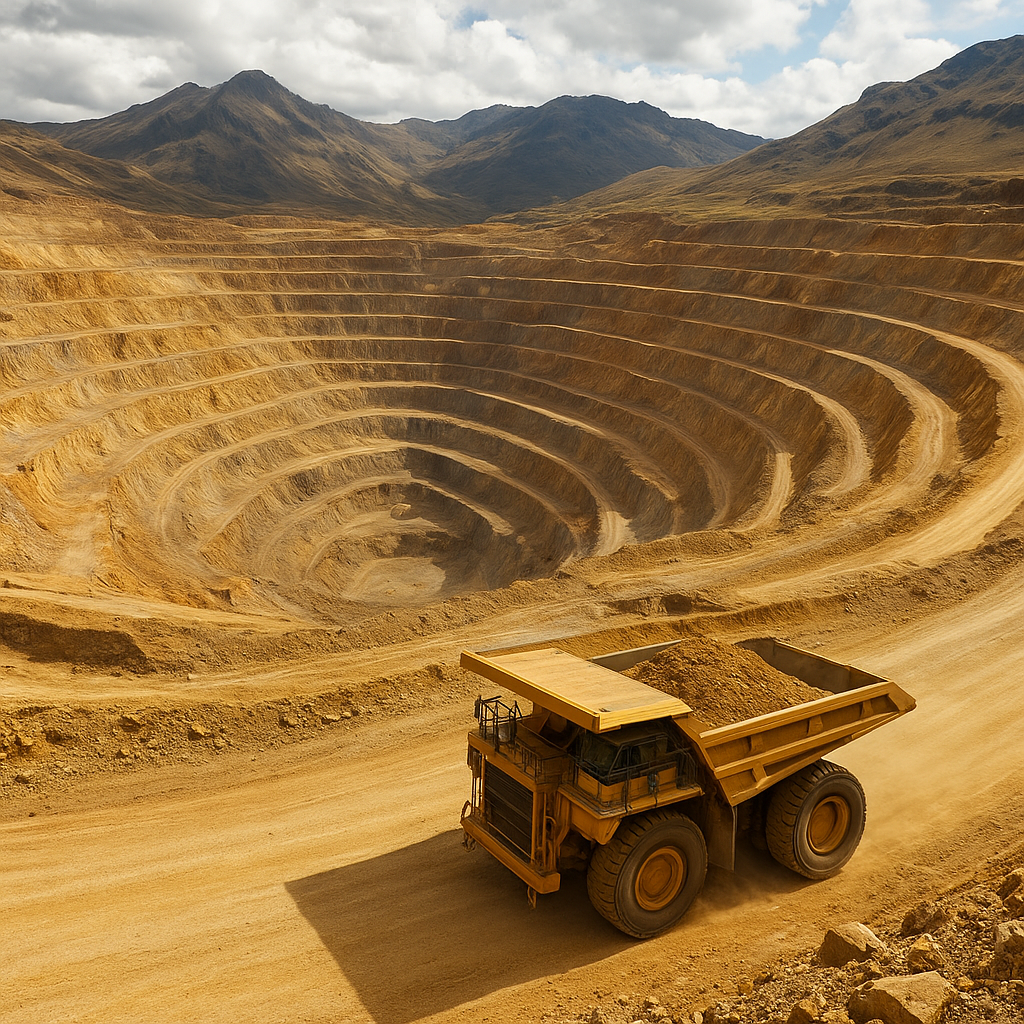
The following article examines the Yanacocha mining operation in Peru, exploring its location, geological setting, production profile, economic importance and the complex social and environmental issues that have surrounded it for decades. It aims to provide a balanced and informative overview of one of Latin America’s largest and most controversial mining projects, drawing on widely reported facts about its history, ownership, operations and the broader implications for the region.
Where Yanacocha is located and its geological setting
The Yanacocha deposit is situated in northern Peru, in the highlands of the Cajamarca region, approximately 45 kilometers northeast of the regional capital, Cajamarca city. The mine sits at elevations around 3,300–4,000 meters above sea level in the Andes, an area of steep terrain, intermontane valleys and important watercourses. The site occupies terrain that historically belonged to small-scale agriculture and pastoralism, with local communities dependent on agriculture, livestock and mountain water resources.
Geologically, the deposit is a classic example of an Andean epithermal-porphyry gold-silver system. Mineralization at Yanacocha formed through hydrothermal fluids associated with intrusive igneous activity during the Miocene and Pliocene. The deposit contains both near-surface low-sulfidation epithermal vein and disseminated mineralization and deeper porphyry-hosted mineralization. This range of mineralization styles contributed to the large scale and long-term viability of the project.
History, ownership and development
The modern development of Yanacocha began in the early 1990s after exploration activities by international mining companies identified a substantial resource of gold and silver. Significant capital, technical expertise and infrastructure were invested to convert the resource into a large open-pit mining complex with associated processing facilities, tailings management and access roads.
Ownership has been a mixture of international and local stakeholders. Historically, the project became widely known due to the involvement of a major U.S.-based mining firm, often cited in public documents and reporting. The mine’s development attracted global attention because of its size and the scale of foreign investment in the Peruvian mining sector.
What is extracted and how production works
Yanacocha is primarily a gold operation, although significant quantities of silver have been recovered as a by-product. The mine produces gold from open-pit operations, processing ore through conventional methods including crushing, grinding and heap leaching or carbon-in-leach (CIL) circuits, depending on the ore type and processing stage. The combination of epithermal and porphyry mineralization has allowed exploitation of varied ore types, enabling both surface open pits and, in some areas, deeper extraction where economically feasible.
Key operational features include:
- Large open pits designed to access extensive, low-to-medium-grade gold mineralization.
- Milling and leaching facilities tailored to the metallurgical characteristics of the ore.
- Tailings storage facilities and water management infrastructure due to the high water requirements and potential risks associated with tailings.
- Ancillary infrastructure including access roads, power supply arrangements and community engagement programs.
Over the years, the mine has implemented exploration and expansion campaigns aimed at extending mine life by discovering additional reserves and optimizing recovery. The scale of operations has made Yanacocha one of the largest gold producers in the region.
Economic significance at local and national levels
The economic footprint of Yanacocha has been substantial. The mine has contributed to Peru’s export earnings, fiscal revenues and employment. Gold is a high-value commodity, and large-scale mines like Yanacocha deliver important foreign exchange inflows and royalties for the national and regional governments. These revenues support public budgets, infrastructure projects and services at regional and national levels.
At the local level, the mine generated direct employment, contracting opportunities and business for local suppliers. Construction and ongoing operations created jobs for both skilled and unskilled workers, while indirect employment occurred through service industries such as transport, catering, equipment maintenance and small-scale commerce near the operations.
Key economic impacts include:
- Significant contribution to regional GDP in Cajamarca when operations are at full capacity.
- Generation of taxes, royalties and social investment funds intended for local development projects.
- Creation of a supply chain and local procurement opportunities for goods and services.
However, the distribution and perceptions of these economic benefits have been uneven. Some communities perceived that the wealth generated did not match local needs or compensate adequately for environmental and social costs, leading to tensions and protests at various times.
Environmental and social issues
Yanacocha has been at the center of national and international discussion about the environmental and social impacts of large-scale mining. The combination of highland ecology, fragile water resources and dense rural settlements created a context where any changes in water quality, availability or land use could directly affect local livelihoods.
Environmental concerns commonly raised include:
- Water quality and contamination: Allegations and investigations into mercury and cyanide contamination from mining processes have been a major source of controversy. Cyanide is used in gold leaching, and strict controls are required to prevent accidental releases. Some incidents and community claims led to independent testing, litigation and public debate.
- Water availability: Large water withdrawals for processing can affect local water users, particularly in dry seasons at high altitudes where water is both scarce and essential for irrigation and livestock.
- Landscape alteration: Large open pits, waste rock dumps and tailings ponds permanently change the landscape, with potential erosion, sedimentation and dust issues.
- Biodiversity impacts: High-elevation ecosystems are often home to specialized flora and fauna. Disturbance of these habitats can lead to biodiversity losses that are difficult to reverse.
Social issues have included:
- Community displacement and changes in land use patterns, especially where communal lands were affected by exploration and expansion.
- Perceived inequities in benefit distribution: Some local groups felt marginalized from the economic benefits while bearing disproportionate environmental risks.
- Protests and conflict: Years of community protests, strikes and blockades have periodically disrupted operations and required political and corporate responses, including negotiations, social investment agreements and mitigation commitments.
These issues spurred regulatory scrutiny, civil society campaigns and academic research focused on best practices for mining in sensitive regions. The situation underscored the need for robust environmental management, meaningful community consultation and transparent benefit-sharing mechanisms.
Community relations, mitigation and social investment
In response to conflicts and community demands, the mine’s operators and regional authorities advanced a range of initiatives intended to mitigate impacts and foster development. These have included:
- Compensation programs for affected landowners and households.
- Infrastructure investments such as schools, clinics, roads and water projects financed through company social responsibility programs and negotiated agreements with communities.
- Programs aimed at improving agricultural productivity and alternative livelihoods to reduce dependence on mining-generated income.
- Stakeholder engagement frameworks designed to involve communities in decision-making about expansion projects and environmental monitoring.
Despite these efforts, opinions remain mixed. Some local residents acknowledge improvements in certain public services and infrastructure, while others continue to demand stronger protections, more transparent benefit-sharing and remediation of legacy environmental issues.
Regulatory and legal context
The legal framework governing mining in Peru combines national laws, environmental regulations and regional permitting processes. Permitting for an operation as large as Yanacocha requires environmental impact assessments, water use authorizations and compliance with national environmental quality standards. Over time, legal actions, complaints before ombudsman agencies and international scrutiny have shaped both the mine’s obligations and public expectations.
Notable legal dynamics include:
- Litigation related to alleged environmental harm and demands for remediation.
- Regulatory reviews triggered by community complaints or reported incidents.
- Negotiated agreements under national rules that allow for social and environmental measures as part of project authorization and continuation.
Technological and operational aspects
The operation uses a range of mining and processing technologies typical of large-scale gold projects. Open-pit mining relies on drilling, blasting, load-and-haul operations and haulage to processing facilities. Metallurgical processes are designed to maximize recovery and handle complex ore types.
Key technological considerations include:
- Metallurgical variability: Different ore types require adaptation in processing, from heap leach for low-grade ore to milling for higher-grade material.
- Tailings management: Engineering of secure tailings storage and monitoring systems is crucial to minimize environmental risk.
- Water recycling and treatment: Technologies to treat process water and reduce freshwater withdrawals are central to sustainable operations in highland settings.
- Monitoring and data transparency: Environmental monitoring stations and third-party audits help build trust and demonstrate compliance with regulatory standards.
Interesting facets and lesser-known facts
Beyond headlines about production and conflict, Yanacocha has a number of notable and sometimes surprising aspects:
- Scale of discovery: The deposit was recognized as one of the largest gold discoveries in the Americas in the late 20th century, drawing major international investment and attention to the Peruvian mining sector.
- High-altitude operations: Working at elevations above 3,000 meters poses logistical and health challenges for workers and equipment, requiring specialized practices and considerations for altitude acclimatization.
- Complex geology: The coexistence of epithermal veins and porphyry-style mineralization within the same district created opportunities for phased development and sustained exploration campaigns.
- Research and capacity building: The project spurred geoscientific research, technical training and the growth of local service industries that support mining operations and exploration across Peru.
- Global lessons: Yanacocha has been studied internationally as a case of the social license to operate — the interplay of corporate management, government regulation and community acceptance that determines long-term viability.
Economic metrics and reserves
Estimates of the mine’s reserves and production have varied over time as exploration added resources and as ore was mined and processed. At peak production, Yanacocha ranked among the largest gold-producing mines in Latin America, contributing significant tonnage to national output. Reserve estimates and mine life projections depend on ongoing exploration success, gold price dynamics and operational cost structures.
Important economic considerations include:
- Gold price sensitivity: The operation’s profitability is strongly linked to international gold prices, which influence investment in expansions and exploration.
- Operating costs: High-altitude logistics, power supply and water management contribute to the cost base.
- Royalties and taxes: Fiscal contributions to national and local authorities form an important part of the economic bargain between the company and the state.
Controversies and international attention
Yanacocha became an international touchstone for debates over extractive industry governance, environmental protection and indigenous and rural rights. High-profile protests, media coverage and academic analyses drew attention from human rights groups, environmental organizations and development agencies. The controversies led both to legal actions and to renewed industry focus on best practices for environmental management and stakeholder engagement.
These debates often centered on the balance between the economic benefits of resource extraction and the rights of local populations to clean water, healthy environments and fair compensation. The project demonstrated how social and environmental governance can materially affect a mine’s operations and public reputation.
Future prospects and lessons learned
As long as mineralization remains economically extractable, mines like Yanacocha can continue to contribute to local and national economies. Future prospects depend on a combination of factors: continued exploration success, efficient processing of remaining resources, stable regulatory frameworks and constructive community relations. Increasingly, the mine’s future will also be shaped by expectations for environmental stewardship, transparency and the alignment of mining activities with local development priorities.
Lessons from Yanacocha that are relevant to other projects include:
- The importance of early, sustained and meaningful community engagement.
- The necessity of rigorous environmental safeguards and transparent monitoring.
- The value of investment in local capacity building and diversified economic opportunities beyond mining.
- The need for adaptive management that responds to evolving scientific knowledge and social concerns.
In summary, the story of Yanacocha illustrates both the economic power of large-scale gold mining and the complex responsibilities that accompany such projects. Its impacts span geology, engineering, regional development and social dynamics, making it an essential case study for policymakers, industry and civil society interested in the sustainable management of mineral resources and the rights of communities that host them.

