
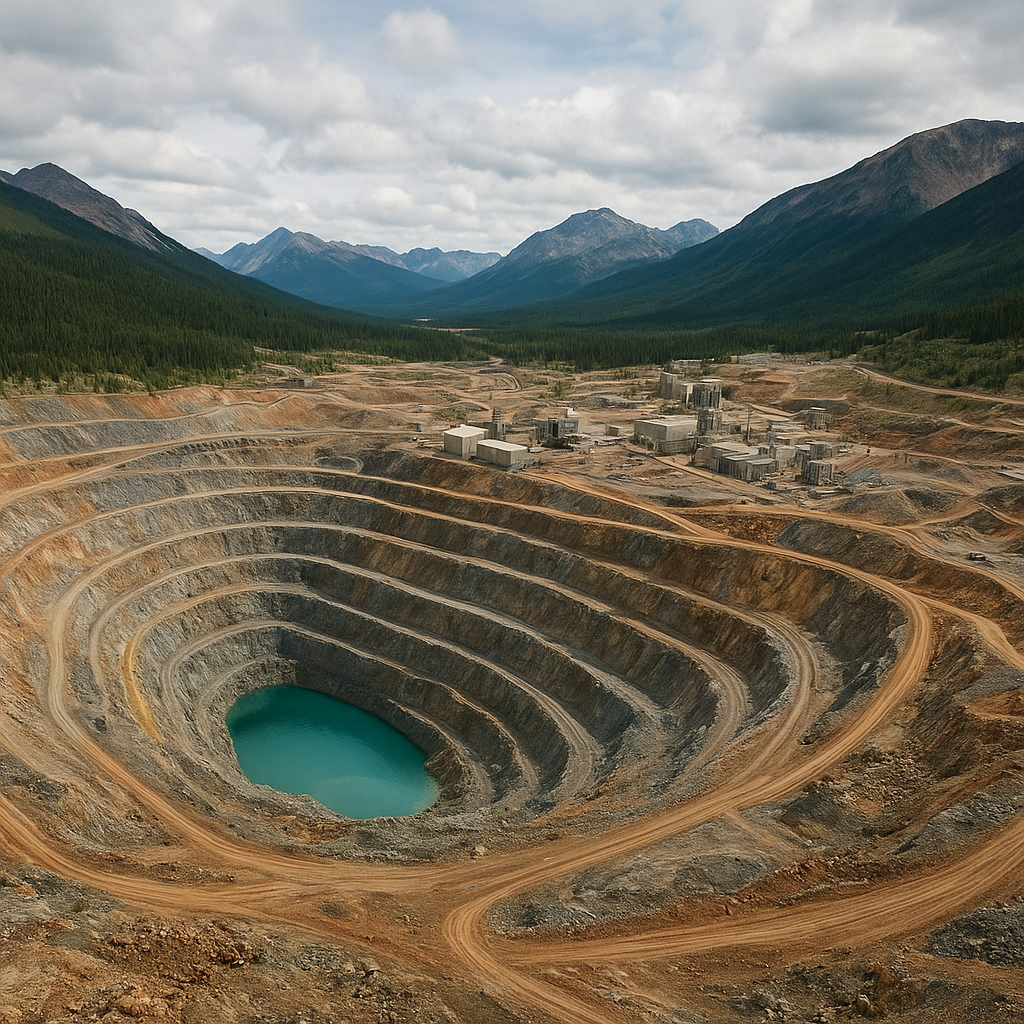
The Wolverine Mine is a notable example of a polymetallic mining operation in northern North America. Located in remote terrain of western Canada, the site has drawn attention for its combination of zinc, copper and lead mineralization and for the technical, economic and environmental questions it raises. This article explores the mine’s location and access, its geological setting and the minerals extracted, its role in the regional and national economic picture, and several operational and cultural facts that make Wolverine intriguing to geologists, engineers and local communities alike.
Location and Access
The Wolverine Mine sits in a remote, mountainous part of western Canada. While not adjacent to major urban centers, the site is reachable by a combination of seasonal roads, forestry access tracks, and helicopter support — a logistics pattern common to many northern and coastal British Columbia mining projects. Its isolation has shaped both the operational strategy and the social context for the mine: construction and heavy equipment had to be moved in carefully, and workforce rotations often relied on fly-in/fly-out schedules.
Because of its setting in rugged terrain, the mine has required significant planning for transport of ore concentrates, supplies and personnel. Historically, concentrate shipments were consolidated and trucked or barged to regional ports for export to smelters and refineries abroad. The nearest community infrastructure provided essential services — procurement, emergency response, and seasonal labour — but the site largely functioned as a self-contained industrial operation during active periods.
Geology and Mineralization
The Wolverine deposit is characteristic of polymetallic occurrences that host commercial quantities of multiple base metals. The deposit type most commonly associated with combined zinc, copper and lead mineralization in western Canada is the volcanogenic massive sulfide (VMS) style, but local geology can vary. At Wolverine, mineralization typically occurs as lenses and stockwork zones of sulfide minerals within host volcanic and sedimentary sequences.
Primary minerals and textures
- zinc commonly occurs as sphalerite (zinc sulfide), forming the bulk of the zinc metal in the ore.
- copper is typically present as chalcopyrite and bornite in more copper-rich zones.
- lead is present as galena, often associated with silver and other trace elements.
The sulfide zones are often interleaved with alteration halos — chloritic, sericitic and silicified rocks — that mark fluid pathways and can be used by geologists to trace continuity. High-grade cores in the deposit may contain visible mineralization and possess strongly anomalous metal ratios, making selective underground extraction attractive where underground methods are used.
Exploration history and resource estimation
Exploration at Wolverine combined airborne geophysics, surface mapping, trenching and diamond drilling to build an understanding of ore distribution. Drilling programs defined both shallow and deeper mineralized zones, enabling preliminary resource estimates that guided mine planning. In modern practice, resource calculations follow international reporting standards and combine assay results with geological models to determine reserves and inferred resources.
Mining Methods and Processing
Operations at a polymetallic site like Wolverine commonly utilize a mix of surface and underground methods depending on orebody geometry. Where mineralization is near-surface and horizontally extensive, an open pit approach can be economical. In contrast, steep, high-grade lenses are often mined by underground techniques such as cut-and-fill, room-and-pillar, or longhole stoping.
Ore handling and concentrator
Once extracted, ore from Wolverine would typically be hauled to a nearby processing facility. The plant would grind the ore and use flotation circuits to produce separate metal-enriched concentrate products — for example, a zinc concentrate and a copper-lead concentrate — that are suitable for smelting. Flotation reagents and circuit design are tuned to maximize metal recoveries while controlling deleterious elements that could penalize smelter payments.
Logistics and shipments
- Concentrates are usually trucked or barged to ports and then shipped to specialized smelters.
- Regional infrastructure limits influence the preferred concentrate routes and schedules.
- Seasonal weather and road conditions can require stockpiling or winter-only haulage windows.
Economic Significance
The Wolverine Mine contributes at multiple scales: locally through jobs and contracting, regionally through fiscal revenues and supply chain activity, and nationally as part of Canada’s base metals production. Base metals like zinc, copper and lead are critical to modern industry — zinc for corrosion protection, copper for electrical systems and renewable-energy infrastructure, and lead (though reduced in some uses) for batteries and specialty alloys.
Local and regional benefits
- Employment: Direct mining, processing and support jobs during development and production phases.
- Contracting: Local firms often supply trucking, camp services, equipment maintenance and environmental monitoring.
- Community investment: Royalties, land use agreements and impact-benefit arrangements provide funds for local programs and services.
For remote communities, a mine like Wolverine can be an anchor economic activity for decades, but that dependency carries risks if closures or commodity price downturns occur. Responsible operators aim to diversify local opportunities and invest in workforce training to leave long-term social and economic value.
National and global context
At a national level, the mine’s output feeds export markets and supports downstream industries. copper demand is projected to grow with electrification and green-energy deployment, while zinc remains essential for galvanizing steel in infrastructure. Even modest production from Wolverine-type operations contributes to Canada’s role as a reliable supplier of base metals and helps maintain critical mineral supply chains for North American manufacturing.
Environmental Management and Social Responsibility
Mining in remote regions demands rigorous environmental planning. Wolverine’s operations would involve water treatment systems to manage mine runoff, engineered tailings facilities, progressive reclamation of disturbed land and ongoing monitoring to prevent and detect contamination. Environmental assessments were required before construction, and continued monitoring ensures compliance with provincial and federal standards.
Indigenous engagement and land stewardship
Many northern Canadian mining projects are located on traditional territories of Indigenous peoples. A responsible approach at Wolverine includes early and sustained consultation, negotiated impact-benefit agreements, employment and training commitments, and collaborative stewardship programs. These partnerships help align project development with community priorities and cultural values.
Closure planning and legacy
From the start, operators must plan for eventual closure: reshaping waste rock piles, capping tailings, restoring vegetation and maintaining long-term water treatment when necessary. A thoughtfully executed closure plan reduces future liability and can transform former industrial sites into safe, stabilized landscapes.
Operational Challenges and Technical Innovations
Operating Wolverine has meant confronting technical challenges arising from its remote setting and polymetallic character. Key issues include fluctuating metallurgical recoveries when multiple metals compete in flotation, managing sulfide oxidation that can affect water quality, and keeping costs in check when transport distances are long.
Innovations that improve outcomes
- Advanced ore sorting and selective mining to upgrade feed and reduce processing costs.
- Modular, mobile concentrator components to fit remote logistics and reduce capital outlay.
- Real-time monitoring and predictive maintenance to increase equipment uptime and safety.
Such innovations make smaller or lower-grade deposits economically viable and can extend mine life while lowering environmental footprints.
Interesting Historical and Technical Facts
Wolverine’s story includes memorable episodes that highlight the human and scientific dimensions of mining. Early explorers and prospectors often noted visible sulfide outcrops and rusty staining, clues that led to focused exploration. Subsequent drill programs revealed continuity in mineralization that justified development.
- Discovery stories: Many finds in this region began with a prospector’s keen observation along creek beds and talus slopes; Wolverine’s discovery has similar roots in careful fieldwork.
- High-grade pockets: Polymetallic deposits often contain narrow, very high-grade shoots that are economically significant despite their limited size; targeting these requires precise geological modelling.
- Multiple metal credits: The combined revenue from zinc, copper, and lead (and sometimes silver or gold) often determines project viability, rather than reliance on any single commodity.
- Remoteness: The logistical puzzle of supplying crews, storing fuel and moving concentrates makes Wolverine a case study in remote-site engineering and planning.
Future Prospects and Considerations
The long-term outlook for Wolverine-type operations depends on several variables: global metal prices, advances in extraction and processing, regulatory frameworks, and the quality of local stakeholder relationships. Rising demand for copper in electrification and for zinc in protective coatings suggests that polymetallic mines will remain strategically important.
Exploration remains a continuing activity even after initial mining phases; new drilling can expand known zones or discover satellite deposits that extend the life of the operation. Meanwhile, improvements in metallurgical recovery, tailings technologies and renewable energy integration at remote sites can reduce both operating costs and environmental impacts.
Key factors to monitor
- Commodity price cycles and smelter contract terms.
- Advances in processing that can raise metal recoveries.
- Community and Indigenous partnerships that influence permitting and social license.
- Technologies reducing emissions and water usage at the mine site.
Why Wolverine Matters
Wolverine exemplifies the complexity and potential of mining in Canada’s remote regions. By producing meaningful quantities of base metals, the site feeds industrial chains that support construction, energy and transportation. Beyond pure metal output, Wolverine’s legacy includes lessons in geology, remote logistics, environmental stewardship and collaborative governance — topics that are central to the future of responsible resource development.
In a world that increasingly values resilient and diversified metal supplies, polymetallic projects like Wolverine provide both practical resources and a laboratory for better mining practices. Their continued operation and evolution help define how mining can contribute sustainably to local economies while adapting to modern environmental and social expectations.

