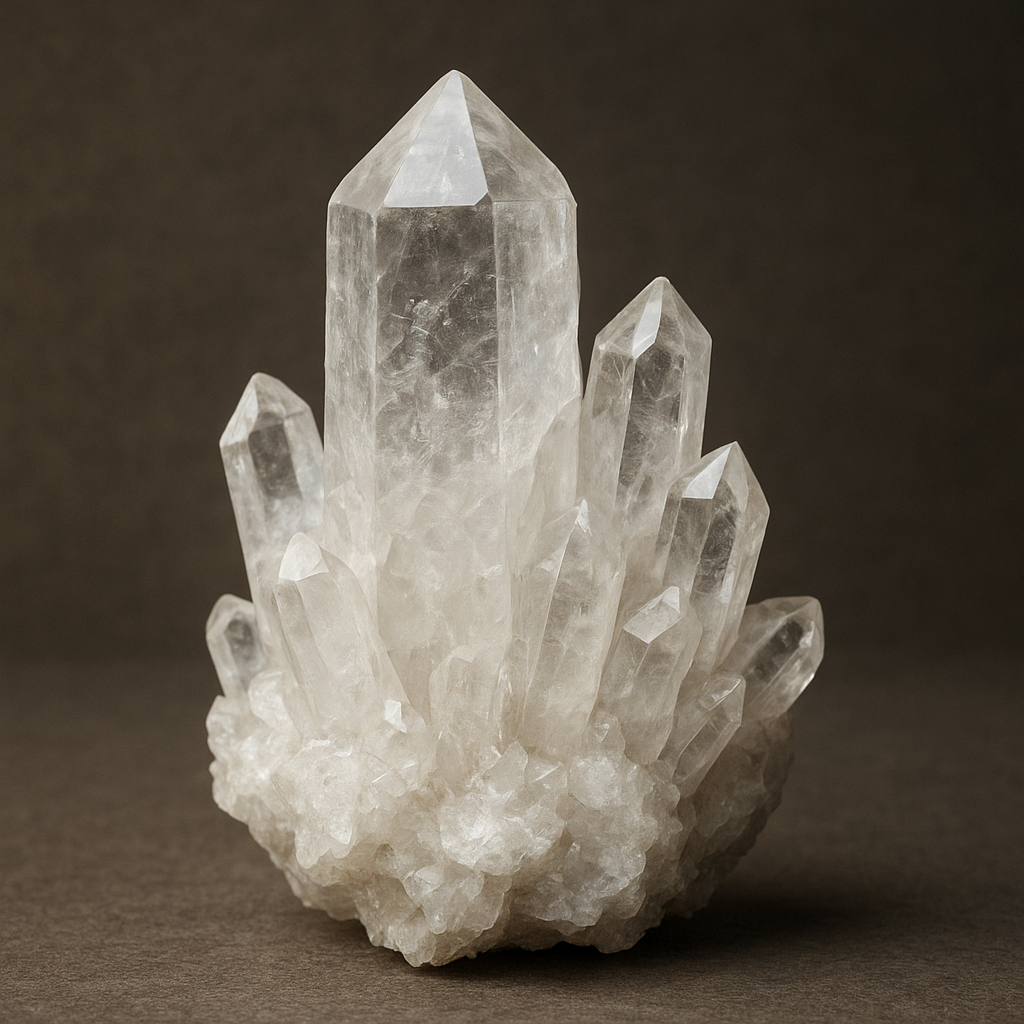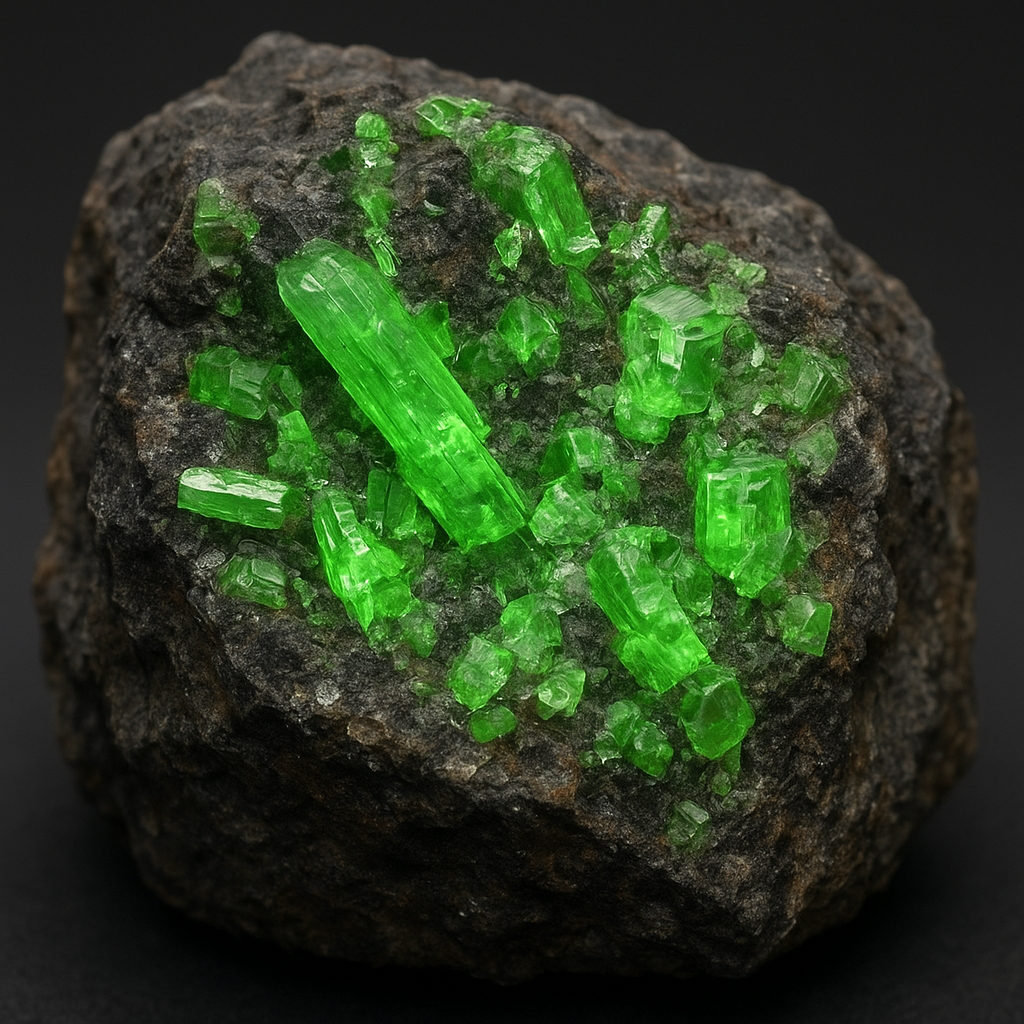
Willemite is an intriguing zinc silicate mineral that attracts the attention of geologists, mineralogists and hobbyists alike. Its combination of interesting crystal habits, economic importance as a zinc-bearing phase and spectacular fluorescence in ultraviolet light make it a subject worth exploring from several angles: mineralogy, geology, mining history, technological applications and the culture of mineral collecting. The following sections examine how willemite forms, where it is found, how it has been used, what gives it its famous glow, and why it remains important today.
Mineralogy, Chemistry and Physical Properties
Willemite is a zinc orthosilicate with the chemical formula Zn2SiO4. It typically occurs as crystalline or massive aggregates and may show a range of colors from colorless or white to various shades of green, brown or gray depending on impurities and the degree of alteration. It crystallizes in a structure related to the olivine group, and its crystals may be prismatic or barrel-shaped; more commonly, willemite appears as granular, botryoidal or massive crusts within oxidized zones of zinc-rich deposits.
Key physical properties that help identify willemite include a Mohs hardness of roughly 5.5, a specific gravity in the neighborhood of 3.9–4.2, and a vitreous to adamantine luster on fresh surfaces. One of the most diagnostic behaviors of willemite, however, is its tendency to glow bright green under shortwave UV light when Mn2+ ions are present as activators. The mineral can also appear dull under visible light but transform into a brilliant display when exposed to appropriate wavelengths of ultraviolet radiation. In thin section under petrographic microscope or by X-ray diffraction, the characteristic zinc-silicate lattice distinguishes willemite from other zinc minerals.
Formation and Typical Geological Environments
Willemite most commonly forms in the oxidized zones of primary zinc ore deposits. In these near-surface environments, primary sulfide minerals such as sphalerite (zinc sulfide) undergo weathering and oxidation; zinc released in the process recombines with silica-rich fluids to form secondary minerals including willemite, hemimorphite, smithsonite and others. The presence of silica, an oxidizing environment and the right pH conditions favor the formation of willemite over other zinc phases.
It is often associated with a distinctive paragenesis in which willemite coexists with minerals such as franklinite, zincite, calcite, hemimorphite and various manganese oxides. In many deposits, metasomatic processes and hydrothermal alteration play a role in concentrating zinc and silica together, enabling willemite to precipitate in veins, vugs and open spaces in the rock.
Associated Minerals
- Franklinite — an iron-zinc-manganese oxide commonly found alongside willemite in certain localities.
- Zincite (ZnO) — often appears with willemite in oxidized zinc ore zones.
- Calcite and other carbonates — fill cavities where willemite may also coat or penetrate.
- Hemimorphite and smithsonite — alternative secondary zinc minerals that form in similar conditions.
Where Willemite Occurs: Notable Localities
Willemite has a global distribution but is particularly famous from a few classic localities where specimens are abundant, historical mining has occurred, or the mineral displays especially attractive features.
Franklin and Sterling Hill, New Jersey, USA
Perhaps the most celebrated occurrences of willemite are the Franklin and Sterling Hill deposits in New Jersey. These localities are renowned not only for the quantity and variety of mineral species present but also for the spectacular fluorescent displays that many of the minerals exhibit. At Franklin and Sterling Hill, willemite is often found in close association with franklinite and calcite, and it is a key component of the local oxidized ore assemblage. The bright green fluorescence of willemite against the contrasting red glow of calcite under shortwave UV has helped make these sites landmarks in mineralogy and fluorescent-mineral collecting.
Other U.S. and International Localities
Across the United States, willemite is reported from several parts of the Tri-State mining district (Oklahoma–Kansas–Missouri), as well as isolated occurrences in Colorado and other zinc-bearing regions. Internationally, willemite has been identified in a variety of European localities, in parts of Asia and in some Mexican deposits. Although occurrences outside of the most famous sites may not always produce the showy fluorescent specimens prized by collectors, they are important in terms of the regional geology and the interpretation of zinc ore formation.
Economic Importance and Industrial Uses
As a relatively zinc-rich mineral, willemite has functioned historically as an ore of zinc where it occurs in significant quantity. Mining operations that targeted zinc often included willemite-bearing zones, and beneficiation methods were adapted to handle the mineralogy present in a given deposit. However, because willemite is a secondary mineral and other zinc ores (for example sphalerite) are often more widespread and easier to process, its role as a primary zinc source has been limited in many regions.
Beyond raw ore extraction, willemite has played a role in technological applications through its synthetic analogs and doped forms. The compound Zn2SiO4, when doped with small amounts of manganese or other activators, is an effective luminescent material. This doped zinc silicate has been used as a green phosphor in lighting and display technologies. In the mid-20th century, manganese-activated zinc orthosilicate was an important component in certain fluorescent lamp phosphor blends and in display phosphors for cathode ray tubes and other devices. Today, materials research continues to explore zinc silicate-based compounds for applications in scintillators, LEDs and other optoelectronic devices because of their favorable emission characteristics and thermal stability.
Fluorescence: The Glow of Willemite
One of the most fascinating aspects of willemite is its tendency to fluoresce green under ultraviolet light. This property is primarily due to trace amounts of manganese ions substituting into the zinc sites of the crystal lattice; under UV excitation, these ions undergo electronic transitions that lead to the emission of visible green light at wavelengths typically near 530–540 nm. The intensity and hue of the fluorescence depend on the concentration and oxidation state of manganese, the presence of other activators or quenchers (such as iron), and the excitation wavelength (shortwave vs. longwave UV).
The fluorescent response of willemite has made it a favorite of collectors and museums. Under a shortwave UV lamp, willemite specimens from Franklin and other classic localities can light up with an almost neon green brilliance that contrasts with adjacent minerals that fluoresce different colors. For educational displays, geological outreach and artistic installations, the dramatic response to UV makes willemite an especially striking example of mineral luminescence.
Practical Notes on Fluorescence
- Shortwave UV often produces the strongest green glow in manganese-activated willemite.
- Wear eye protection and limit direct skin exposure when using UV lamps; UV radiation can be harmful with prolonged exposure.
- Fluorescence can be used as a field indicator of zinc-rich zones in prospecting, but lab confirmation is still required for resource assessment.
Collecting, Conservation and Cultural Significance
Willemite occupies an important place in the world of mineral collecting. Large, well-formed crystals and particularly fluorescent specimens command interest from museums and private collectors. The historical Franklin-Sterling Hill complex has become a cultural touchstone for the study and appreciation of fluorescent minerals; institutions and local museums often feature illuminated displays to showcase how minerals respond to ultraviolet light.
Conservation issues arise in regions where historical mining left environmental legacies. Because willemite is associated with the oxidation of sulfide ores, mining operations often left behind waste rock with elevated concentrations of metals. Contemporary reclamation and remediation efforts aim to stabilize these sites, prevent acid drainage and reduce environmental contamination while preserving important scientific and educational features where possible.
Scientific Research and Future Directions
Modern research continues to investigate zinc silicate materials for advanced applications. Synthetic versions of Zn2SiO4 doped with various activators are studied for their luminescent efficiency, thermal stability and potential as scintillators for medical imaging or radiation detection. Nanostructured zinc silicates and thin films are also of interest for novel optical devices. On the geological side, detailed mineralogical and geochemical studies of willemite-bearing deposits can provide insights into supergene processes, fluid-rock interactions and the thermal histories of ore bodies.
There is also an educational and outreach component to ongoing work: using fluorescent minerals such as willemite to engage students and the public in earth sciences, mineralogy and materials science. Because fluorescence is visually appealing and immediately demonstrable, willemite serves as a bridge between recreational collecting and rigorous scientific training.
Interesting Facts and Anecdotes
- Specimens of willemite from certain localities can glow more vividly under shortwave UV than under longwave UV, highlighting the importance of excitation wavelength in fluorescence.
- The contrast between green-fluorescing willemite and red-fluorescing calcite from the same vein systems has made specific mines famous and inspired many museum displays designed to mimic that color contrast.
- Although gem-quality willemite exists, it is rare; most gem markets favor more durable or abundantly available stones, so faceted willemite pieces are uncommon and prized by specialists.
- Collectors and researchers often rely on portable UV lamps to examine specimens in the field, but institutional collections may also maintain controlled UV display cases for public viewing.
Practical Identification Tips
If you suspect a specimen might be willemite, consider the following practical checks:
- Observe the specimen under both visible light and shortwave UV; a bright green fluorescence strongly suggests willemite if the mineral contains manganese activators.
- Note the hardness (around 5.5) and specific gravity (~4.0); these values can help distinguish willemite from softer carbonate or oxide minerals.
- Check for common associations such as zincite, franklinite or calcite, especially if the specimen is from a known zinc deposit.
- For definitive confirmation, thin-section petrography, electron microprobe analysis or X-ray diffraction will identify the zinc silicate structure and composition conclusively.
Concluding Observations
Willemite combines practical significance with aesthetic appeal. As a secondary zinc mineral it contributes to our understanding of ore-forming processes, and as a luminescent material it has both inspired collectors and informed technological advances in phosphors and scintillators. Its vivid fluorescence and occurrence in famous mineral districts ensure that willemite will remain a subject of fascination for scientists and enthusiasts alike.