
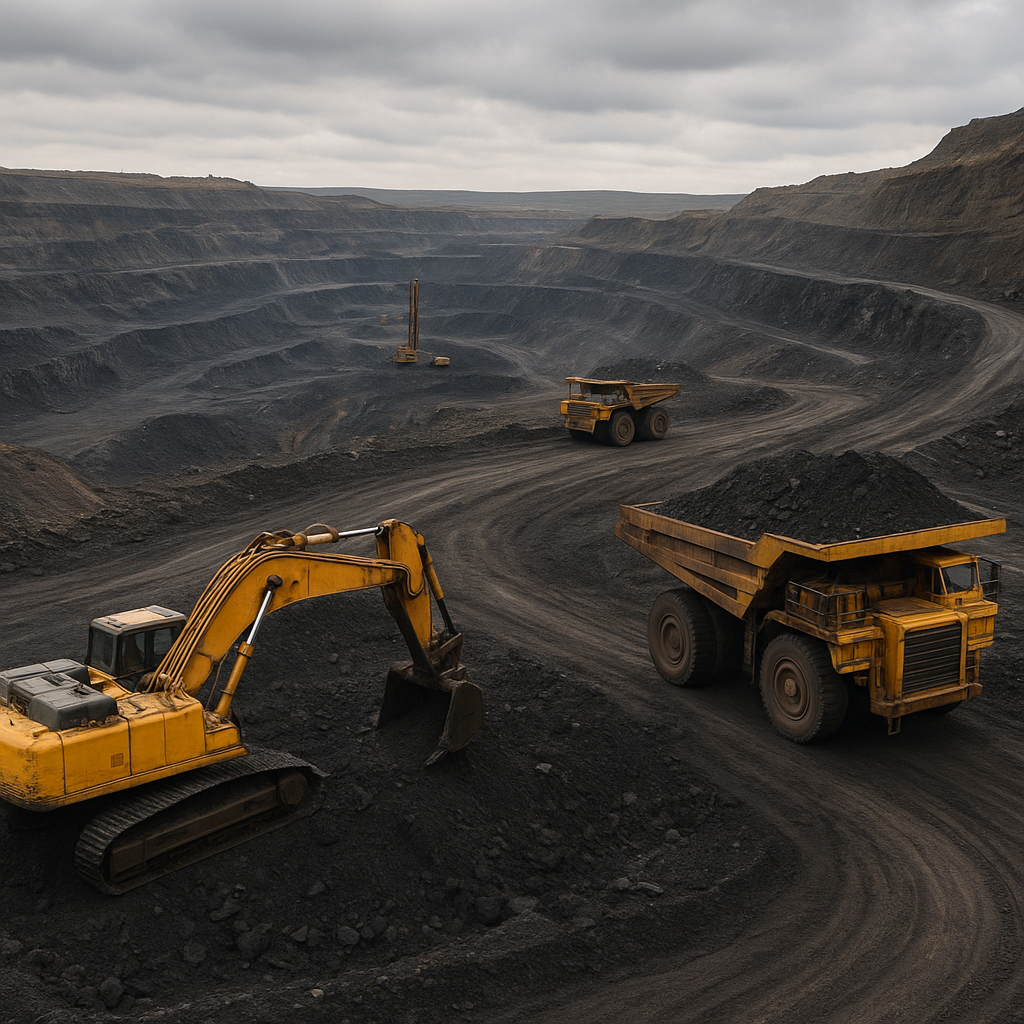
The Vostochny Coal Mine, situated in the coal-bearing territories of eastern Kazakhstan, occupies an important place in the country’s energy and industrial landscape. Drawing on regional geology, transport corridors and evolving market dynamics, this mine illustrates both the historical weight of coal in Central Asia and the contemporary challenges that mining operations face worldwide. The following sections outline where the mine sits geographically and geologically, what type of fuel it produces and how, its economic significance, logistical links, and some noteworthy details that reveal why Vostochny matters beyond the immediate pit.
Location and geological setting
The Vostochny operation is located in the eastern part of Kazakhstan, within a region known for extensive coal-bearing formations. Eastern Kazakhstan hosts several basins and deposits that were formed during the Paleozoic and Mesozoic eras; these sequences commonly contain layers of organic-rich sediments that, over geological time, transformed into different ranks of coal. The mine’s setting is typically characterized by gently dipping strata and sequences of interbedded shales, sandstones and carbonaceous seams.
Working in this part of Kazakhstan places Vostochny within logistical reach of regional industrial centers and export corridors to neighboring countries. The vicinity often features a mix of rural settlements, industrial towns and transport arteries such as rail lines and highways that connect to larger hubs. Climatic conditions in the region—cold winters and a continental climate—also influence mine planning, equipment selection and operating seasons.
Geological profile and coal rank
- The deposit typically contains seams of medium- to high-volatile bituminous coal and, in some parts, lower-rank lignite or sub-bituminous material. These variations determine the best end-uses—whether for electricity generation or for metallurgical processes.
- Seam thickness and lateral continuity influence the choice between open-pit and underground methods. Where seams are shallow and continuous, surface mining provides an economical approach; deeper or structurally complex seams may be exploited by underground techniques.
- Mineralogical content, ash yield and sulphur content are core parameters that affect how the coal is processed and marketed.
What is extracted and how it is processed
Production at Vostochny centers on various coal products tailored to domestic power generation and industrial consumers. The mine commonly yields both thermal coal for power plants and lower-volume coking or metallurgical grades when the coal rank permits. Operational procedures combine extraction, on-site handling and preliminary processing to meet buyers’ specifications.
Mining methods and equipment
- Where geology permits, large-scale surface mining with draglines, hydraulic shovels and haul trucks is used because it delivers higher daily tonnages and lower unit costs.
- In zones requiring underground access, longwall or room-and-pillar systems are deployed, with modern mechanized face equipment and ventilation systems to improve productivity and safety.
- Beneficiation units—coal washers and dense-medium separators—are often installed near the pit. These facilities reduce ash and impurities, producing cleaner, higher-value products.
Quality control and product range
Coal from Vostochny is typically sorted and blended to achieve consistent calorific values, ash content and volatile matter suitable for customers. For power utilities, the focus is on calorific value and combustion characteristics; for steelmakers, parameters such as coke yield, fixed carbon and sulfur are critical. Real-time monitoring and laboratory testing are integral to maintaining product standards and sustaining market access.
Economic importance and regional impact
The mine contributes to regional development in multiple ways: employment, local procurement and fiscal flows. As an employer, Vostochny supports hundreds to thousands of direct jobs during peak activity, and many more indirectly through supply chains—transport services, equipment maintenance, catering and housing.
Energy security and industrial supply
- Coal remains a significant component of Kazakhstan’s energy mix. Mines like Vostochny support thermal power plants that provide reliable baseload electricity to industrial and residential consumers, enhancing national energy security.
- When metallurgical-quality coal is available, it feeds domestic steel production, reducing dependence on imports and supporting heavy industry.
Exports, markets and revenue
Given its strategic location, Vostochny has the potential to serve both domestic markets and international customers. Neighboring countries—most notably large energy consumers in Eurasia—represent important export destinations. Revenues from sales translate into taxes and royalties for regional governments and enable reinvestment in local infrastructure.
Transportation costs, freight capacity and global coal price cycles determine the mine’s profitability. Consequently, close coordination with rail operators and improvements in loading/unloading facilities can materially affect competitiveness on export markets.
Infrastructure, logistics and trade routes
Efficient movement of coal from pit to end-user is as critical as extraction itself. Vostochny typically relies on an integrated logistics chain combining internal haul roads, conveyor systems and connections to the national rail network. Rail is the backbone for long-distance shipment, enabling deliveries to power plants, industrial customers and export terminals.
- Infrastructure investments—upgrading sidings, increasing wagon fleets and optimizing loading systems—reduce turn-around time and lower cost per tonne.
- Proximity to export corridors that connect Kazakhstan to ports on the Black Sea, Baltic Sea or Pacific-facing routes determines market reach. Overland trade to nearby large markets also remains important.
- Seasonal and weather-related constraints, such as freezing conditions in winter, require contingency planning for uninterrupted transport.
Environmental, safety and social considerations
Modern mining operations must address environmental stewardship and community relations. Vostochny implements practices aimed at reducing the environmental footprint while protecting worker safety.
Environmental management
- Dust suppression systems, water treatment plants and controlled waste dumps minimize air and water pollution. Reclamation plans restore disturbed land progressively as mining advances.
- Efforts to reduce greenhouse gas emissions focus on improving plant efficiency, reducing fugitive methane emissions and deploying cleaner combustion technologies at connected power stations.
Health, safety and community engagement
Robust safety programs, continuous training and mechanization reduce occupational risks. Engagement with local communities—support for schools, healthcare, road improvements and local businesses—helps sustain the social license to operate. Transparent grievance mechanisms and inclusive hiring policies are common facets of modern operations.
Interesting aspects and innovation at the mine
Several features make Vostochny noteworthy beyond raw extraction: advancing technology adoption, diversification of product streams and adaptation to changing market dynamics.
- Automation and digitalization: Remote-controlled equipment, real-time fleet management and predictive maintenance are increasingly deployed to improve uptime and reduce operating costs.
- Value-added processing: On-site beneficiation increases the proportion of higher-grade product, unlocking better prices and enabling access to stricter export markets.
- Community-driven projects: Local content programs prioritize hiring and procurement from nearby towns, fostering local economic multipliers.
- Rehabilitation and biodiversity: Progressive reclamation creates opportunities for post-mining land uses such as agriculture, forestry or recreational areas, which can leave a positive legacy.
Future outlook and adaptation
The future of a mine like Vostochny sits at the intersection of market demand for fossil fuels, national energy policy and technological change. Short- to medium-term prospects remain tied to regional demand for electricity and industrial coal. Over the longer term, adaptation pathways may include:
- Fuel diversification at power plants by co-firing biomass or blending with lower-carbon fuels.
- Investments in carbon management technologies where economically feasible, including pilot projects for carbon capture and storage (CCS) connected to large thermal units.
- Potential reorientation of the workforce and infrastructure toward alternative minerals or industrial activities should coal demand decline significantly in decades ahead.
Final remarks
Vostochny embodies many of the themes common to major coal operations worldwide: a dependence on geology and logistics, a vital economic role for local communities, and an urgent need to align operations with environmental and social expectations. While the mine continues to supply coal that powers industries and heats homes, its long-term trajectory will be shaped by evolving policy frameworks, international market trends and the pace of technological innovation. For Kazakhstan, balancing the advantages of natural-resource development with commitments to sustainability and economic diversification will determine how operations such as Vostochny contribute to national prosperity in the years ahead.

