
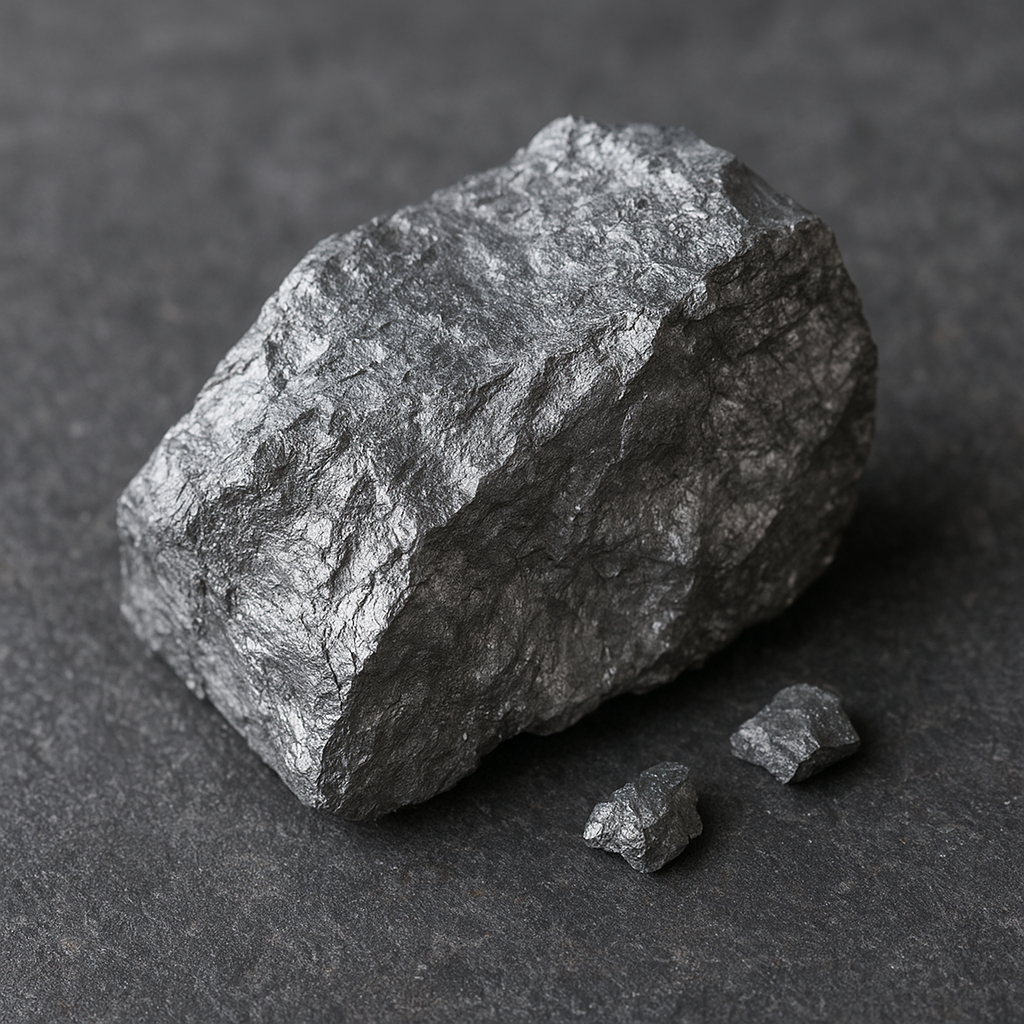
Vanadium quietly shapes many technologies and materials that underpin modern infrastructure, energy systems, and advanced manufacturing. Though seldom mentioned outside specialist circles, this transition metal plays outsized roles in strengthening alloys, catalyzing chemical reactions, and enabling novel approaches to large-scale energy storage. The following exposition explores where vanadium is found, how it is used, the supply chain and environmental context, and some lesser-known facts that highlight why this element is strategically important.
Occurrence and Geological Context
Vanadium appears in the Earth’s crust at low concentrations, typically measured in parts per million. It rarely occurs as a free element; instead it is bound within various mineral species and industrial residues. The majority of global supply is derived from three primary sources: magnetite-rich titaniferous ores, vanadium-bearing slags and residues from steelmaking and petroleum processing, and certain sedimentary deposits such as black shale and phosphate rock. Minerals that commonly contain vanadium include patronite (a vanadium sulfide), carnotite (a vanadium-uranium oxide), and various vanadates like vanadinite.
Major producing regions are influenced by geology and historical processing. China, Russia, and South Africa have been among the largest producers, with Brazil and some North American operations also contributing. China’s production profile is notable for recovery from low-grade “stone coal” and oil residues, while South Africa and Brazil often rely on large titanomagnetite deposits.
How vanadium is extracted
Extraction methods vary with feedstock. For titanomagnetite ores, the typical route involves smelting to produce a vanadium-rich slag followed by oxidation roasting and leaching to produce refined vanadium pentoxide (V2O5) or ferrovanadium. Petroleum residues and spent catalyst streams are often processed through oxidation and leaching to recover vanadium compounds. Advances in hydrometallurgy and bioleaching are expanding options for lower-grade sources, improving yields and reducing environmental footprints.
Reserves and resource security
Global reserves of vanadium are sufficient for current demand, but the mineral is geographically concentrated and the market can be volatile. Strategic interest in vanadium arises from its role in steel and potential growth in energy storage, prompting concerns about supply chain resilience. Secondary sources—recycling from steel slag and spent catalysts—are increasingly important for diversifying supply.
Industrial and Technological Applications
Perhaps the most familiar and longstanding use of vanadium is as an alloying element in steel. Adding small amounts of vanadium dramatically improves strength, toughness, and wear resistance in carbon and alloy steels. The effect comes from vanadium’s capacity to form fine carbide and nitride precipitates that obstruct dislocation motion, enabling high-strength steels with improved ductility. Microalloyed construction steels and specialized tool steels rely on this mechanism.
Another major application is in high-performance titanium alloys. Titanium-vanadium alloys such as Ti-6Al-4V are widely used in aerospace, medical implants, and high-performance engineering because they combine low density with excellent strength and corrosion resistance. The inclusion of vanadium stabilizes phases that enable superior mechanical properties after heat treatment.
- steel reinforcement and structural members
- automotive components for weight reduction and increased strength
- aerospace airframes and engine parts (titanium-vanadium alloys)
- tooling and cutting materials
Catalysis and chemical roles
Vanadium oxides, especially V2O5, are potent catalysts for oxidation processes. They are used in the contact process to oxidize sulfur dioxide to sulfur trioxide in sulfuric acid manufacture and in selective oxidation reactions in the chemical industry. Vanadium-based catalysts also play roles in the production of maleic anhydride and in various redox processes due to their multiple stable oxidation states.
Other industrial uses
Vanadium contributes to pigments, ceramics, and glass where vanadate compounds yield yellows, oranges, and greens. Vanadium-containing superconductors were historically researched and used in some niche applications (e.g., certain Nb-V alloys). In electronics and sensors, thin films and compounds of vanadium oxide are of interest for switching devices and bolometers because of their temperature-dependent electrical properties.
Vanadium in Energy Storage: Redox Flow Batteries
One of the most promising contemporary uses for vanadium is in redox flow batteries (RFBs), particularly the vanadium redox flow battery (VRFB). In a VRFB, both the positive and negative electrolyte contain vanadium ions in different oxidation states. Energy is stored and released through reversible redox reactions without changing the battery’s core materials, which significantly enhances cycle life and durability compared to many solid-electrode batteries.
Key advantages of VRFBs include long cycle life (tens of thousands of cycles), independent scaling of energy and power (tank size vs. cell stack), and improved safety because electrolytes are aqueous and non-flammable. This makes them well-suited for grid-scale energy storage, smoothing renewable generation, and providing long-duration storage to support decarbonization efforts.
However, widespread adoption requires addressing cost and supply considerations. Electrolyte quality and vanadium prices strongly influence system economics. Research focuses on lowering vanadium purity costs, improving membrane technologies, and increasing system energy density.
Comparisons with other storage technologies
Unlike lithium-ion batteries, which have high energy density and are optimized for mobile applications, VRFBs excel at stationary, long-duration use where longevity and rapid scalability are priority. The recyclability of vanadium electrolyte and potential for sustainability-oriented supply chains make VRFBs attractive for large utility projects and for integration with intermittent renewable sources.
Environmental, Health, and Recycling Considerations
Vanadium chemistry spans benign to hazardous, depending on oxidation state and compound solubility. Elemental vanadium and many low-valent compounds have limited bioavailability, but some vanadium compounds (notably vanadium pentoxide) are toxic and can cause respiratory irritation, lung damage, and other adverse effects with sufficient exposure. Industrial handling requires dust controls, ventilation, and personal protective equipment to limit inhalation exposure.
Environmental concerns center on mining impacts, processing waste, and vanadium in petroleum residues. Smelting and roasting can emit particulates and sulfur dioxide; proper controls and modern processing can mitigate these impacts. Recovering vanadium from industrial wastes—steel slag, fly ash, and spent catalysts—not only reduces environmental burdens but enhances resource efficiency.
Recycling and circular economy
Recycling vanadium from steel slag and spent catalysts is well-established and growing. Because vanadium is used in small but valuable concentrations in alloys, end-of-life recovery depends on collection systems and economic incentives. For VRFBs, electrolyte can theoretically be reused indefinitely or reprocessed, a major advantage versus single-use chemistries. Closing the loop for vanadium contributes to supply security and lowers the lifecycle environmental footprint.
Health, Safety and Regulatory Aspects
Occupational exposure limits and environmental regulations vary by jurisdiction, but most industrialized countries regulate airborne vanadium particulates and emissions from processing facilities. Monitoring and controlling worker exposure are critical in mining, smelting, and chemical processing operations.
In everyday human biology, vanadium exists at trace levels and has been studied for possible roles in enzyme function and glucose metabolism, though it is not an essential nutrient. High doses are associated with toxicity. Medical research has explored vanadium compounds for therapeutic uses, such as insulin-mimetic agents, but clinical application remains experimental because of safety and specificity challenges.
Interesting Facts and Historical Notes
The element takes its name from Vanadis, another name for the Norse goddess Freyja, reflecting the colorful compounds early chemists observed. Vanadium’s discovery history is colorful: Andrés Manuel del Río first isolated a vanadium-bearing compound in 1801 but misidentified it; the element was reassigned and properly named by Nils Gabriel Sefström in 1830.
Vanadium’s multiple oxidation states (commonly +2, +3, +4, +5) are at the heart of its chemical versatility. This redox flexibility allows it to function as a catalyst in oxidation reactions and to drive the chemistry in redox flow batteries. The unusual stability of redox couples makes vanadium uniquely suited to applications that rely on reversible electron exchange.
Vanadium’s role in strengthening steel played a pivotal part in 20th-century infrastructure development. High-strength, low-alloy steels containing vanadium allowed reductions in material use and weight in construction and transportation, contributing to efficiency gains across many industries.
Market Dynamics and Future Outlook
Demand for vanadium is shaped by trends in construction steel, aerospace, petrochemical processing, and emerging energy storage technologies. Price volatility has been a feature of the market, often driven by shifts in steel demand and by speculative investment tied to battery prospects. Efforts to diversify sourcing—including expanded recovery from secondary streams, improvements in extraction from low-grade ores, and increased recycling—may stabilize supply and dampen price swings.
Research directions that could reshape vanadium demand include advances in low-cost recovery methods, improved membrane and electrolyte formulations for VRFBs, and novel alloy designs that optimize vanadium use. Policy incentives for grid-scale storage and decarbonization could accelerate demand for VRFBs, driving further investment into vanadium supply chains.
Concluding Observations
Vanadium sits at the intersection of traditional metallurgy and emerging clean-energy technologies. Its ability to strengthen alloys and enable robust, long-life energy storage systems makes it a valuable material for both established industries and future-facing applications. Addressing environmental and supply-chain challenges through recycling, better processing, and responsible mining will determine how extensively vanadium contributes to the technological transitions ahead.