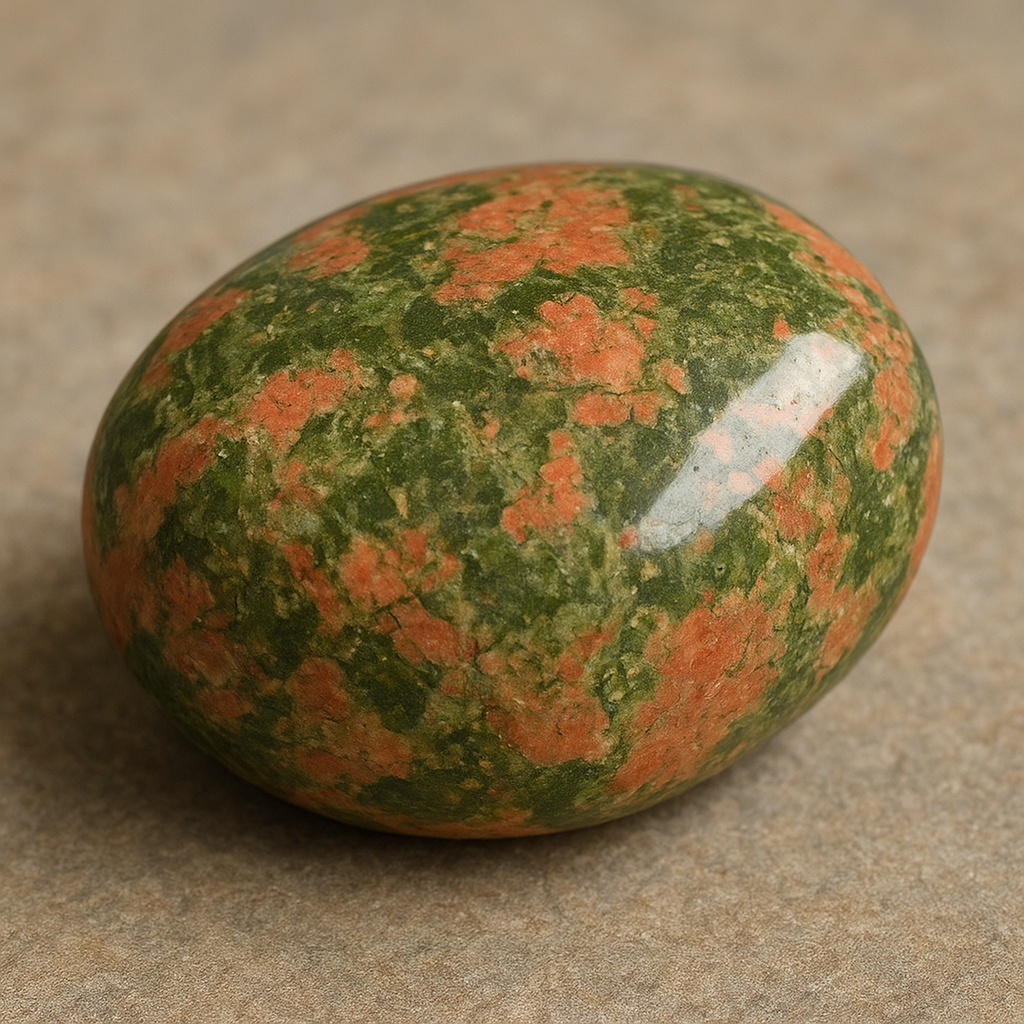
Unakite is a visually striking, mottled rock prized by collectors, lapidaries, and designers for its blend of pink and green tones. Though often marketed simply as a decorative stone, unakite has a fascinating geological story, a range of practical and ornamental uses, and a cultural footprint that stretches from local Appalachian quarries to metaphysical boutiques worldwide. This article explores the stone’s formation, distribution, properties, applications, and some lesser-known facts that make unakite more than just an attractive aggregate of minerals.
Geology and formation
At its core, unakite is an altered granite with a distinctive mix of minerals. The characteristic coloration—green patches against a pink or salmon-colored background—arises from a combination of minerals that replace or coexist with the original granite components. The most important constituents are epidote (green), orthoclase feldspar (pink), and quartz (clear to white). The interplay of these minerals gives the stone its attractive, speckled or banded appearance.
The formation process typically involves hydrothermal alteration. Hot, mineral-rich fluids percolate through fractures in granite, promoting chemical reactions that transform some feldspar into epidote and other secondary minerals. The texture is usually coarse-grained and somewhat porphyritic, reflecting the granite origin. Because unakite is not a single mineral but a rock composed of multiple constituents, its appearance and exact mineral proportions can vary from one deposit to another.
Geologically, unakite is associated with regions that have undergone significant tectonic activity and metamorphism. The presence of hydrothermal fluids and the right host rocks—usually granitic bodies—are critical. The resulting rock is often termed “unakite granite” or simply “unakite,” though some purists argue that the term should be reserved for the altered varieties where epidote is abundant enough to dominate the green coloration.
Where unakite occurs
The stone takes its name from the place where it was first recognized. Origins and naming trace back to the Unaka Range along the border between Tennessee and North Carolina in the southeastern United States. From there, mining and collecting expanded to several other localities.
- United States: The Blue Ridge and Appalachian regions, including North Carolina and Virginia, are historically important sources. Smaller occurrences are reported in other states such as California, where similar epidotized granitic rocks are found in the Sierra Nevada foothills.
- Africa: South Africa hosts deposits that are sometimes marketed internationally. These sources can produce unakite with slightly different textures and intensity of color.
- South America and Asia: Brazil and China have produced commercial quantities of similar epidotized granites marketed as unakite, often used in beads and cabochons for the lapidary trade.
- Other global occurrences: Scattered finds of epidot-rich altered granites or gneisses exist in Europe and elsewhere, but they are less commonly labeled or used as unakite in commerce.
Because similar-looking rocks exist worldwide, the label “unakite” can sometimes be applied loosely in the gem and mineral market. When provenance matters—such as for collectors or researchers—specifying the locality (e.g., “North Carolina unakite”) helps clarify the origin and typical characteristics.
Physical and optical properties
Unakite’s appearance is its most immediately recognizable property: a patchwork of green and pink with variable amounts of white or clear quartz. The green tones come from epidote, which can range from olive to deep bottle-green, while the pink comes from altered feldspar (orthoclase or microcline). Quartz fills in the remaining matrix or appears as grains and veins.
- Hardness: The rock’s hardness typically falls around 6–7 on the Mohs scale, reflecting the combination of quartz (7) and feldspar (6–6.5). This makes unakite reasonably durable for many decorative and lapidary uses, though it is not as hard as top-quality gemstones like corundum.
- Specific gravity: Typical values are near 2.7–3.0, depending on the proportions of constituent minerals.
- Luster and texture: Individual crystals show vitreous to pearly lusters, but the overall rock often presents a slightly dull to vitreous finish when unpolished. Polishing accentuates the contrast between the colored minerals and gives a pleasant sheen.
- Fracture and workability: Unakite usually breaks along irregular fracture surfaces. It can be cut, cabbed, and polished with common lapidary techniques, though the presence of different minerals can create varied responses to cutting and grinding.
Because unakite is a composite rock, specific optical and mechanical properties will vary. Identifying the stone in the field often relies on the color combination and the granular to porphyritic texture rather than a single diagnostic physical property.
Uses and applications
Unakite has a wide range of uses, from the ornamental to the metaphysical. Its combination of affordability, durability, and visual appeal has made it popular among jewelers, artisans, and designers.
Jewelry and lapidary
Probably the most visible application for unakite is in jewelry. Cabochons, beads, and tumbled stones appear in necklaces, bracelets, pendants, and earrings. Because the stone polishes well and displays color contrast, it is frequently used in statement pieces and artisan designs where pattern and texture are emphasized.
- Beads and cabochons: Unakite beads are common in beaded jewelry. Cabochons display the stone’s patterning and are often set in silver or other metals.
- Cameos and carvings: When slabs contain interesting patterns, lapidaries can carve them into small sculptures or decorative items.
- Limitations: Rings subject to heavy daily wear can expose unakite to abrasion and impact. Because the rock is heterogeneous, some pieces may have weaker zones that chip more easily than a homogeneous gemstone.
Decorative and architectural
At larger scales, unakite has been used in facing stones, small countertops, tiles, and inlay work. It can also be cut into bookends, paperweights, and decorative spheres. Because it is not as strong as granite used for heavy-duty countertops, its architectural application tends to be limited to smaller or less stressed installations.
Collecting and educational specimens
Collectors prize particularly fine or unusual specimens—such as those with especially vibrant epidote or rare textural patterns. Educationally, unakite offers an accessible example of hydrothermal alteration and the transformation of igneous rocks, making it a useful teaching specimen in geology classes.
Cultural and metaphysical associations
Beyond its physical uses, unakite has accrued symbolic and metaphysical meanings in contemporary crystal cultures. While these associations are not scientifically validated, they are an important part of how many people value and use the stone.
- Healing and emotional balance: Unakite is often associated with emotional healing, particularly relating to the heart and relationships. Practitioners of crystal healing claim it helps reconcile emotion with reason and promotes recovery from grief or trauma.
- Grounding and stability: The stone’s mix of earth tones lends itself to interpretations related to grounding and stable energy, making it a common choice for meditation and grounding practices.
- Fertility and pregnancy: In some communities, unakite is linked with gentle support for pregnancy and childbirth. Expectant mothers may wear it or keep it nearby as a talisman of calm and protection.
- Feng shui and home placement: Because of its balancing connotations, unakite is sometimes used in home décor with the aim of harmonizing spaces and providing a visual reminder of balance and patience.
It is important to present these cultural and metaphysical claims with context: their value largely rests in personal meaning and tradition rather than empirical evidence. Nevertheless, such beliefs contribute to unakite’s popularity and help explain its presence in gift shops and spiritual marketplaces.
Lapidary tips and care
Working with unakite requires some attention to its composite nature. Here are practical tips for cutting, polishing, and caring for pieces made from this stone.
- Cutting and shaping: Use sharp diamond tools. Because quartz and feldspar respond differently to abrasives, a steady technique and progressive grits produce the best results.
- Polishing: Start with coarse silicon carbide or diamond pastes and progress to finer grits, finishing with cerium oxide or tin oxide for a glossy surface.
- Drilling and beads: When drilling, use a water coolant to prevent heat buildup and cracking. Start with small pilot holes and increase bit size gradually.
- Cleaning: Mild soap and water with a soft brush are usually sufficient. Avoid harsh chemicals or strong acids that could affect certain mineral components.
- Storage: Keep unakite separate from much harder gemstones to prevent scratching. Wrapping pieces in soft cloth or storing them in padded compartments helps preserve delicate surfaces.
Sourcing, sustainability, and market considerations
Because unakite is relatively abundant compared with rarer gemstones, it tends to be affordable and widely available. However, a few market and ethical points are worth noting:
- Labeling: Not all green-and-pink stones sold as “unakite” come from the classic Unaka deposits. Sellers sometimes apply the name to similar epidotized granites from other countries. When provenance is important, ask for locality information.
- Treatments and imitations: Although unakite is generally sold in its natural state, dyed stones and composites can mimic its appearance. Purchasing from reputable dealers reduces the chance of acquiring treated or imitation material.
- Environmental impacts: Small-scale collecting and lapidary operations have limited environmental footprints, but larger-scale extraction—especially if undertaken irresponsibly—can affect local landscapes. Supporting ethically minded suppliers and asking about extraction methods encourages responsible sourcing.
- Value factors: Rarity of pattern, color intensity, polishability, and size influence the market value of unakite pieces. Unique patterns or very fine-grained material that polishes exceptionally well command higher prices among collectors and artisans.
Interesting facts and tips for collectors
Unakite offers a number of quirks and appeals that make it a favorite for certain collectors and artisans:
- Color contrast: The complementary pink and green palette is visually striking and works well in both rustic and modern jewelry designs.
- Variability: No two slabs are identical. This variegation is attractive to designers who seek unique pieces for one-of-a-kind work.
- Educational value: Because it demonstrates hydrothermal alteration, unakite can be a conversation starter for geology outreach and public education.
- DIY lapidary projects: Beginners often work with unakite because it is forgiving in cutting and finishes attractively with standard polishes.
- Careful selection: When buying unakite, inspect for fractures, voids, or weathered zones that could compromise durability. Pieces with evenly distributed mineral content typically handle cutting and polishing better.
Unakite in contemporary design and art
Designers and artists use unakite for both functional and purely aesthetic projects. The stone’s natural palette lends itself to organic and nature-inspired themes. It appears in bespoke jewelry lines, mosaic inlays, and limited-edition decorative items. Architects and interior designers sometimes incorporate small unakite elements into tabletops, fireplace surrounds, and accent pieces where a touch of natural color and pattern is desired without the cost of high-end gemstones.
Craft artists appreciate unakite for its availability, workability, and the way it pairs with metals such as sterling silver and copper. The warm pinks complement warm metals, while the green tones can be highlighted with oxidized or patinated finishes to create contrast.
Final notes on appreciation and study
Unakite exemplifies how a rock that might once have been overlooked can gain charm and value through its visual qualities, geological story, and cultural meanings. From a scientific perspective, it offers insights into hydrothermal alteration processes and the variable nature of granitic rocks. From a consumer perspective, it provides an accessible, attractive material for jewelry and decoration. Whether you are a collector seeking unusual specimens, a lapidary looking for a forgiving and pretty material, or simply someone attracted to its unique palette, unakite holds appeal on multiple levels.
Exploring local collections, visiting regional mineral shows, or contacting reputable lapidary clubs are good ways to see high-quality examples and learn more about the stone’s regional varieties and cutting behavior. With attention to provenance, care, and honest representation, unakite remains a rewarding and enduring choice in the world of semiprecious materials.