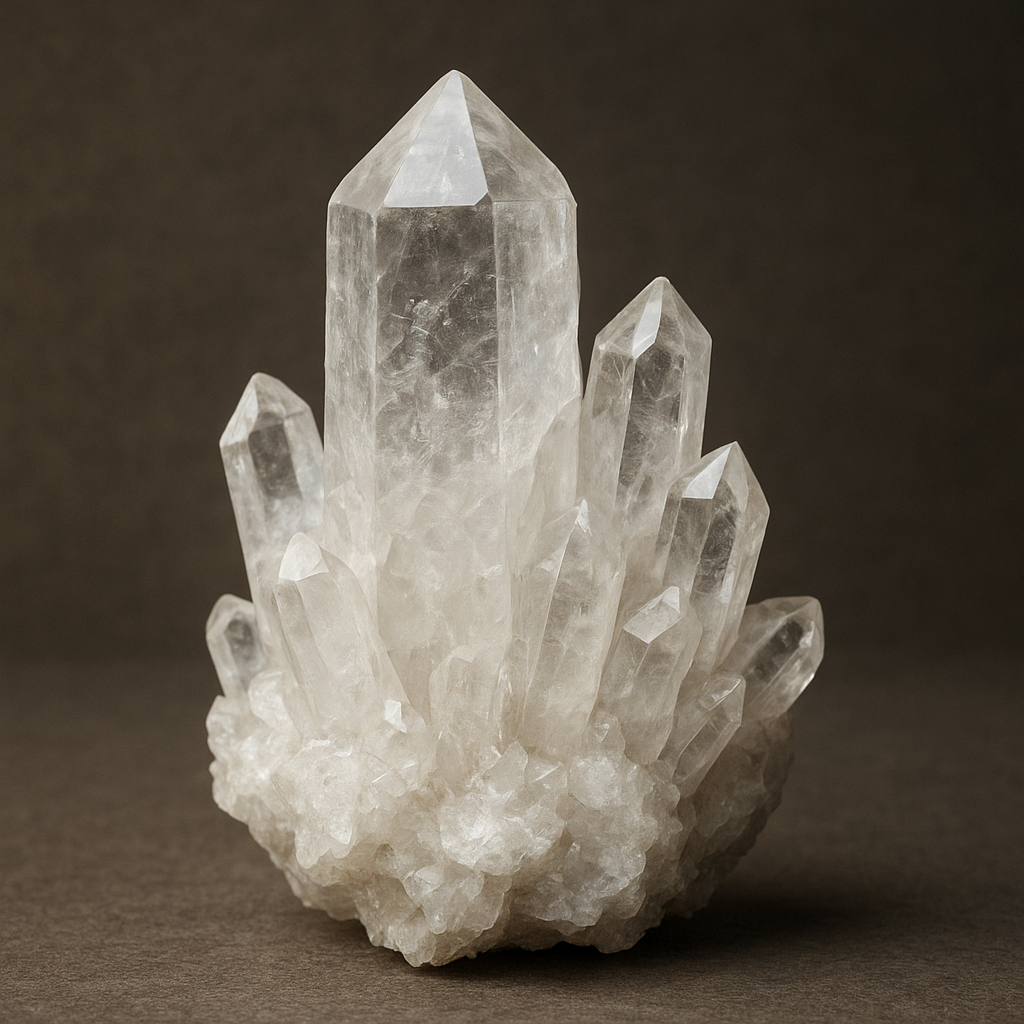
Ulexite is a remarkable and somewhat enigmatic mineral whose combination of chemical composition, physical structure and optical behavior has intrigued scientists, collectors and educators for over a century. While it is often admired simply as a pretty specimen, the story of ulexite reaches into geology, industrial chemistry and even early demonstrations of natural light transmission. This article explores the mineral’s identity, where it forms and is mined, its uses and applications, and a number of intriguing facts and research directions connected to this unusual borate.
What Ulexite Is: Composition and Properties
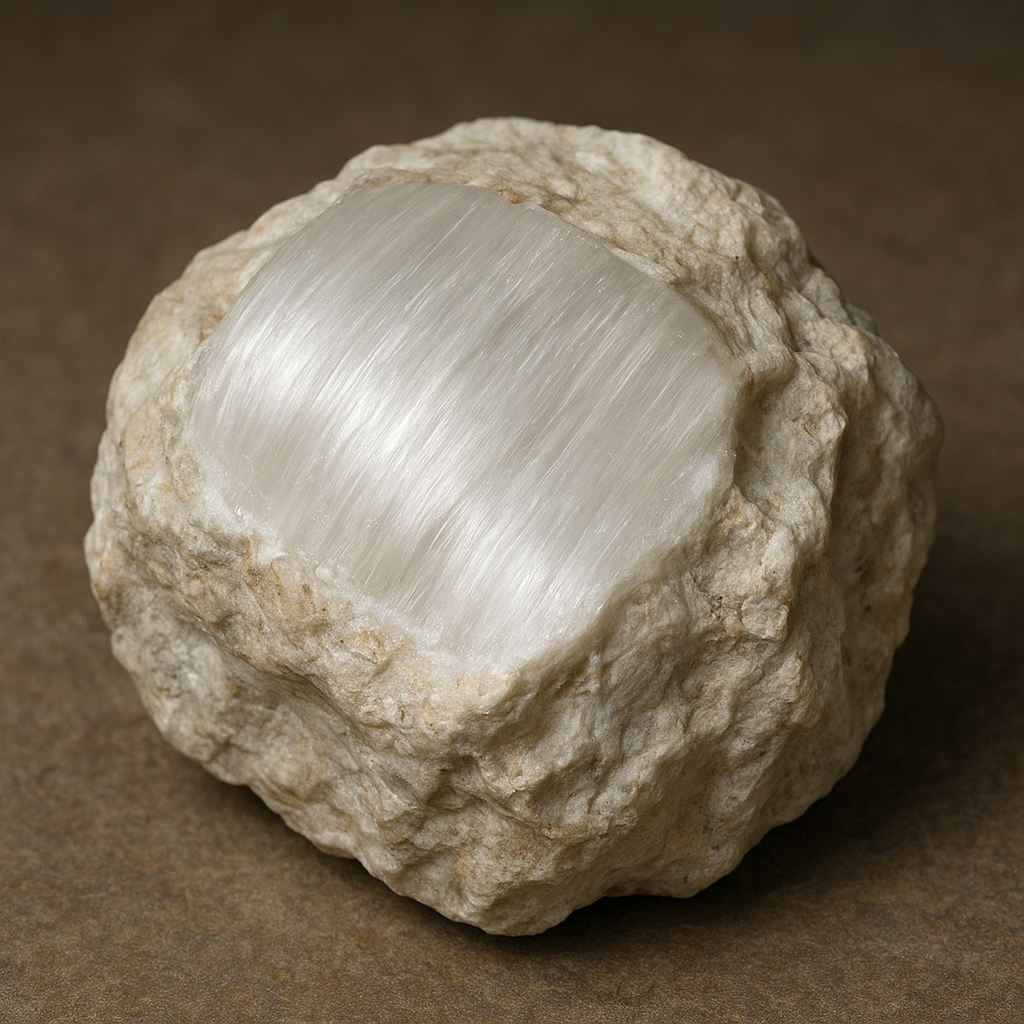
At its core ulexite is a hydrated sodium-calcium borate with the chemical formula NaCaB5O6(OH)6·5H2O. Its crystal habit is typically in fibrous aggregates, producing a silky or cotton-like appearance when seen in hand specimen. These fibers give rise to one of the mineral’s most famous traits: the ability to transmit an image from one surface to another by internal reflection along the fibers. For this reason ulexite acquired the popular nickname TV rock or television stone in early popular science demonstrations.
Key physical characteristics include a relatively low hardness (typically around 2.5 on the Mohs scale), a light specific gravity, and a generally translucent to white coloration. When cut and polished perpendicular to the fiber axis, ulexite can transmit printed images or patterns with surprising clarity, an effect produced by the alignment of tubular channels and internal reflection — a natural analog to the modern fiber-optic principle.
Crystallography and Microstructure
Ulexite crystallizes in the triclinic system, but it is the microscopic arrangement of hydrous borate units and channels of water that defines its optical behavior. The crystal fibers act as light guides: when a patterned surface is placed against a polished face, light entering the fibers is internally reflected along them and emerges on the opposite face, preserving spatial information. This light-guiding property is unique among many common minerals and is responsible for its educational and novelty appeal.
Where Ulexite Occurs: Geological Settings and Notable Deposits
Ulexite is a typical product of evaporitic environments where boron-rich brines concentrate and precipitate borate minerals under arid conditions. It commonly forms in the sediments of closed basin lakes (playas) and in volcanic terrains where volcanic glass and hydrothermal fluids provide boron to ground and surface waters.
- United States — Notable deposits occur in dry lake beds and borate-containing evaporites in California (Searles Lake and other playa deposits). The western US provided many of the first scientifically described specimens.
- Turkey — Turkey is a major global source of borates and hosts extensive borate deposits; ulexite is encountered in borate-bearing formations across parts of Anatolia.
- Peru — Coastal and high plain evaporites in Peru yield ulexite and other borate minerals, often associated with saline lake beds in arid regions such as the Ica region.
- Chile — Boron-bearing evaporitic environments in northern Chile are another locus for ulexite occurrences.
- Other regions — Ulexite is also reported from Mexico, Argentina, Russia, Kazakhstan, and various localized borate deposits worldwide.
The common thread tying these occurrences together is aridity, a supply of boron in solution and closed hydrologic basins where repeated evaporation concentrates brines until borate minerals precipitate. Ulexite often occurs with other borates such as colemanite, borax (tincal), and probertite, as well as salts like halite and gypsum.
Environmental and Sedimentary Context
In the context of sedimentary geology, ulexite is a secondary precipitate that can form during fluctuating lake levels. As shallow saline waters evaporate, borate minerals nucleate on the lake floor or in the capillary fringe of the sediment. Over time, repeated cycles of wetting and drying concentrate borates into layers or nodules. In some localities, ulexite forms nodules and crusts that can be mined directly from sedimentary beds.
Uses and Applications: From Ore to Curiosity
The commercial value of ulexite is primarily tied to its role as a boron source. Boron is a critical element in a variety of industrial applications, and ulexite has been used as an ore mineral where it is abundant and economical to extract. However, compared with other borate minerals such as colemanite and borax, ulexite is less commonly the primary feed for large-scale industrial processing because of its physical properties and geologic distribution.
- Industrial chemistry — Boron extracted from ulexite can be refined into borates used in the manufacture of glass (especially borosilicate glass), ceramics, enamels and glazes. Borates improve thermal stability and chemical resistance.
- Detergents and adhesives — Borates serve as buffering agents, bleaching stabilizers and multifunctional additives in detergents and industrial adhesives.
- Agriculture — Boron is an essential micronutrient for plant growth. Processed borate fertilizers help correct boron deficiencies in soils, particularly in crops sensitive to boron availability.
- Flame retardants and preservatives — Boron compounds are used as flame retardant additives in textiles and polymers and as wood preservatives in some formulations.
- Specimens and education — Polished ulexite pieces are popular with collectors and are often used as teaching aids to demonstrate natural light transmission and fiber-optic analogs.
Because ulexite contains water in its crystal structure, it is relatively thermally sensitive. Heating can remove structural water and alter or destroy the optical fiber-like channels. This limits some processing routes and affects its use as a raw material when compared to other borates that are more thermally robust.
Historical and Niche Uses
Ulexite’s most famous niche has been as a novelty and demonstration mineral. Early naturalists and educators used polished blocks of ulexite to demonstrate image transmission and to illustrate principles of refraction and internal reflection. Before the advent of engineered fiber optics, such demonstrations were valuable in explaining how light can be guided over distances without significant lateral spread.
Mining, Processing and Economic Considerations
When ulexite is present in economically significant concentrations, it is typically mined in open-pit operations that remove the evaporitic layers or nodules. Mining methods are straightforward in flat playa settings, but the mineral’s softness requires careful handling to avoid excessive loss of material to abrasion. Processing generally involves crushing, screening and washing to remove clays and salts, followed by chemical treatment depending on the target borate product.
- Extraction — Material is excavated and sorted; hand-picking is sometimes used for high-quality specimens destined for collectors.
- Concentration — Physical washing and classification concentrate ulexite from gangue minerals.
- Refining — Chemical conversion (e.g., reaction with sulfuric acid or other reagents) transforms ulexite into soluble borate products that can be further purified to form borax, boric acid or other derivatives.
Economic viability depends on deposit size, proximity to processing infrastructure and the presence of competing borate minerals. Global borate markets are heavily influenced by large-scale operations in Turkey and certain parts of the United States, where easier-to-process borates such as borax may dominate production. Nevertheless, ulexite remains locally important in some mining districts.
Interesting Phenomena and Scientific Research
Ulexite’s light-guiding properties are the subject of ongoing curiosity and occasional research. While engineered optical fibers built from glass or plastic now dominate telecommunications and sensing, ulexite provides a naturally occurring case study of how aligned microstructures can control light propagation.
- Optical demonstrations — Polished ulexite slabs reliably show image transport and are used to teach the basics of optical waveguides and total internal reflection.
- Mineralogical studies — Researchers examine ulexite’s structure and hydration behavior to understand how borates incorporate water, how channels form and how thermal dehydration affects crystal integrity.
- Biomimicry and materials science — Although synthetic fibers outperform natural minerals, the study of ulexite can inspire novel microstructured materials that mimic its light-guiding channels for niche optical or photonic applications.
Another area of interest is the mineral’s response to environmental change. Because ulexite formation is tied to closed-basin hydrology, its presence in the geologic record can be used by paleoenvironmental scientists to reconstruct past climate conditions, lake chemistry and cycles of evaporation and precipitation.
Notable Curiosities
Collectors prize well-formed ulexite specimens for their silky fibrous texture and the striking optical effect when a polished slice is laid over printed text or patterned paper. The image appears as if printed on the stone itself, a phenomenon that delights both laypeople and scientists. This display is sometimes used in museums and classrooms as an accessible way to connect mineralogy to everyday optical phenomena.
Environmental and Safety Considerations
Mining and processing borate minerals, including ulexite, carry environmental considerations similar to other evaporite mining operations. Dust control, management of saline process waters and rehabilitation of disturbed playa surfaces are important to minimize ecological impacts. Because ulexite is soluble to some degree and contains boron, improper disposal of processing residues can lead to localized increases in soil or water boron concentrations, which can be toxic to plants at elevated levels.
From a human health perspective, ulexite itself is not highly toxic, but standard occupational precautions should be used during mining and processing to limit inhalation of mineral dust and to control exposure to any chemical reagents used in refining.
Related Minerals and Comparative Notes
To understand ulexite fully it helps to consider related borate minerals and how they differ in composition, properties and industrial value:
- Borax (tincal) — A sodium borate hydrate commonly mined from evaporitic beds; widely used industrially and often more economically important than ulexite.
- Colemanite — A calcium borate prized for higher boron content and thermal stability, making it an important ore in some regions.
- Probertite and inderite — Other hydrated borates that occur in similar evaporitic settings and contribute to the mineralogical diversity of borate deposits.
Each of these minerals provides different processing challenges and advantages. Ulexite’s distinguishing feature remains its micro-fibrous structure and the resulting optical behavior — traits that set it apart from blocky or granular borates.
Final Thoughts and Contemporary Relevance
While ulexite may never be as economically dominant as some other borate minerals, it continues to fascinate because it occupies a point where chemistry, geology and optics intersect. It serves as a tangible reminder of how microstructure governs material behavior — a lesson relevant to modern materials science. Ulexite also retains value as a collector’s mineral and an educational tool. Its deposits provide insight into the environmental conditions of ancient evaporitic basins, and its boron content still contributes, in some regions, to the global supply of a highly useful industrial element.