
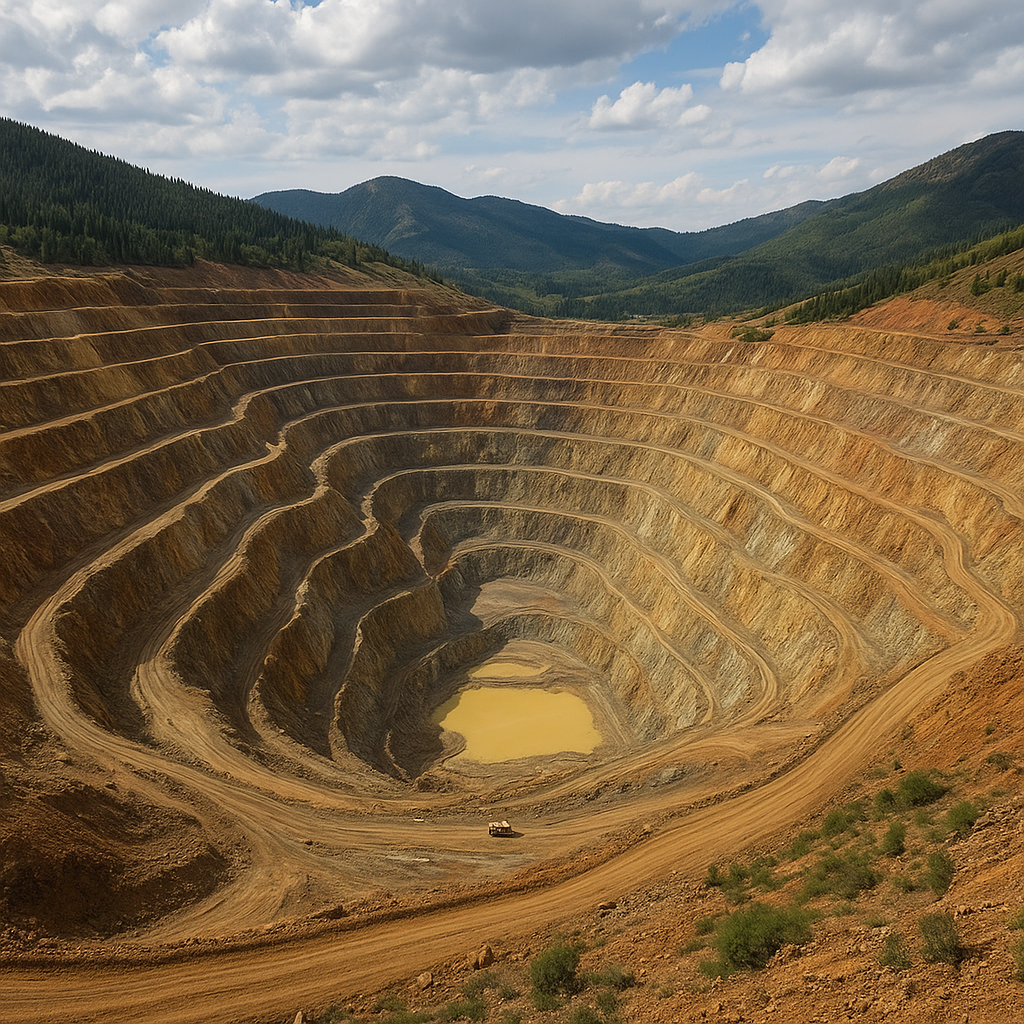
The Twin Creeks mine is one of the notable gold-producing operations in the western United States. Located in the rugged landscape of northern Nevada, it stands as a modern example of how large-scale mineral extraction shapes local economies, technology application, and environmental practice. The mine produces primarily gold, with ancillary recoveries of silver and other byproducts, and is operated by one of the major industry players in the region. This article explores the mine’s location and geology, the methods used to extract and process ore, its broader economic role, environmental management practices, and some of the more interesting technical and historical aspects associated with Twin Creeks.
Location and geological setting
Twin Creeks is situated in northwestern Nevada, within Humboldt County. Nevada is widely recognized as the most prolific gold-producing jurisdiction in the United States, and its deposits are world-class in both size and grade. The region around Twin Creeks is characterized by arid basins, rugged ranges, and a mining infrastructure that evolved over more than a century of exploration and development.
Geologically, Twin Creeks is part of the broader Nevada gold province that hosts a variety of deposit styles. The ore bodies feeding modern Nevada operations generally derive from hydrothermal systems that concentrated gold in favorable host rocks, fractures, and structural traps. Many deposits in the region show features of disseminated gold mineralization and are amenable to bulk-mining methods. While every deposit has unique attributes, the mineralization at Twin Creeks is consistent with the types of systems that have allowed miners to exploit large tonnages through open-pit and near-surface mining methods.
Mining methods and processing
Twin Creeks has been developed using open-pit operations suited to the geometry and depth of the ore bodies. The mine’s processing infrastructure reflects the efficiency priorities of modern oxide gold operations: ore is crushed and placed on engineered heap leach pads, where a leaching solution extracts gold from the ore. Adsorption and carbon recovery circuits (commonly carbon-in-leach or carbon-in-column in industry practice) follow the leaching stage to retrieve gold from solution. The final steps typically involve refining doré bars that meet commercial specifications.
Key features of operations that have become industry norms and are present in large Nevada mines such as Twin Creeks include careful ore characterization, size reduction, agglomeration of ore to improve leach solution percolation, and optimized cyanide management practices. The processing sequence is designed to maximize recovery while minimizing environmental footprint and operational costs. In addition to heap leaching, some nearby deposits and satellite zones may be treated through milling or gravity modules where higher-grade material warrants more intensive processing.
Byproducts and material streams
Although gold is the primary product, many Nevada operations also recover silver as a byproduct, along with small quantities of other elements. Recoveries and the relative value of byproducts can affect the economic performance of a deposit, especially when metal prices fluctuate. Modern metallurgical testing and mine planning integrate these multiparameter considerations to optimize value.
Economic significance and regional impact
Twin Creeks contributes to the regional and national economy in several ways. Directly, the mine employs a workforce that covers a spectrum of trades: equipment operators, geologists, metallurgists, environmental specialists, maintenance crews, and administrative staff. Indirectly, supporting businesses—including contractors, suppliers, trucking companies, and service providers—benefit from the mine’s presence. Together these layers of economic activity sustain rural communities and generate tax revenue for local and state governments.
At the commodity level, operations like Twin Creeks contribute to domestic production of gold, which has implications for trade balances, monetary assets, and the supply chain for electronics, jewelry, and industrial uses. Gold’s role as a financial asset also means that reliable production from established mines supports markets and investor confidence. The value generated at the mine is distributed through wages, procurement, royalties, and taxes—components that matter particularly in regions with limited economic diversification.
Employment, training, and community investment
A modern mine is also a center for workforce training and skill development. Employees at Twin Creeks and similar operations often receive training in heavy equipment operation, mine safety, environmental compliance, and technical fields. Mining companies frequently invest in local infrastructure, community programs, and education partnerships—measures that can leave a lasting benefit beyond the mine’s life-of-mine. These investments help create a more resilient local economy and promote workforce mobility.
Environmental management and regulatory framework
Mining in the United States operates under a comprehensive regulatory framework intended to protect air, water, wildlife, and public health. Twin Creeks must comply with state and federal permits addressing water use, effluent discharge, air emissions, waste rock and tailings management, and reclamation obligations. Contemporary mine design integrates environmental controls from the outset: engineered liners for leach pads, stormwater diversion systems, dust suppression protocols, and detailed monitoring programs.
Reclamation is a central obligation. After mining ceases in a given area, the operator is required to rehabilitate disturbed lands to a stable configuration. Reclamation techniques include recontouring, cover placement, topsoil replacement where available, and revegetation with species appropriate to local ecosystems. Financial assurance instruments—such as bonds—ensure that funds are available for reclamation even if a company’s financial condition changes.
Sustainability practices and technology
Modern mines are adopting technologies and practices that reduce environmental footprint and improve resource efficiency. Examples include water recycling systems that minimize freshwater withdrawals, improved cyanide destruction processes before tailings discharge, and energy-efficiency measures. Although no mine operation is impact-free, the industry trend is toward continuous improvement, seeking to balance resource recovery with ecological stewardship and community expectations.
History, ownership, and corporate context
The Twin Creeks operation has been part of the evolving ownership landscape of Nevada’s mining industry. Large multinational companies own and operate multiple sites across the state, bringing capital, technical expertise, and corporate governance structures that guide exploration, development, and operations. Twin Creeks has been associated with major corporate operators that manage a portfolio of assets and pursue long-term resource strategies.
Historically, the development of a mine like Twin Creeks follows a sequence: exploration and discovery, feasibility studies, permitting, construction, and then multi-year production phases. Over time, expansions, exploration successes, and technological innovations can extend a mine’s life. Conversely, fluctuating metal prices or resource depletion can reduce activity. The corporate context is important: global commodity markets, investor expectations, and corporate commitments to environmental and social governance (ESG) influence operational decisions.
Infrastructure and logistics
Operating in a relatively remote part of Nevada means that Twin Creeks relies on robust on-site infrastructure. This includes haul roads, power supply (often through regional grids or dedicated lines), fuel and parts storage, and water management systems. Logistics planning ensures steady movement of ore, supplies, and personnel. In many Nevada operations, access roads link sites to regional towns and rail or highway networks that transport metal concentrates, supplies, and equipment.
Seasonality and climate impact operations: arid conditions reduce some environmental liabilities such as overland flooding but increase concerns about dust control and water sourcing. Mines usually implement water-efficient processes and contingency plans for extreme weather events.
Interesting technological and operational aspects
Several features make Twin Creeks and comparable Nevada operations interesting from a technical standpoint. First, the application of bulk-mining techniques to low-grade, large-tonnage deposits represents a shift from the earlier focus on high-grade veins. Advances in heap-leach chemistry, pad engineering, and solution handling have made these deposits economically attractive.
Second, modern mine planning increasingly uses digital tools. Geologic modeling, fleet management systems, and automated data collection improve decision-making and operational efficiency. While not every site uses the most advanced autonomous equipment, the trend toward automation—ranging from drill guidance systems to real-time fleet optimization—has been notable across the industry.
Third, integrated environmental monitoring systems are increasingly sophisticated. Continuous water-quality sampling, real-time meteorological stations, and satellite-based land monitoring help operators and regulators ensure compliance and respond more effectively to potential issues.
Social license, community relations, and legacy
Maintaining a positive relationship with nearby communities is essential for sustained operations. Companies often enter agreements with local stakeholders covering employment opportunities, procurement policies favoring regional businesses, community development projects, and transparent reporting. These measures help secure a social license to operate—an informal but crucial form of public acceptance.
Legacy is another key consideration. Successful reclamation can convert former mining areas into wildlife habitat, grazing land, or other beneficial uses. Mines that plan for closure from the earliest stages can reduce long-term liabilities and improve post-closure land utility.
Future outlook and exploration potential
The future for Twin Creeks and other Nevada operations depends on a mix of geological potential, commodity markets, and technological advancement. Exploration remains central: new discoveries or extensions of known mineralization can sustain production while enhancing value. Meanwhile, evolving metallurgical techniques may unlock resources previously considered uneconomic.
Commodity prices also shape investment and operational intensity. Sustained high gold prices incentivize deeper investment in exploration and processing upgrades, whereas price downturns may slow activity. Nevertheless, Nevada’s long history of successful exploration and its well-established mining infrastructure give sites like Twin Creeks an advantage when market conditions are favorable.
Notable facts and curiosities
- Modern Nevada mines demonstrate how relatively low-grade ore can be profitably mined when operations achieve economies of scale and employ efficient processing methods.
- Operators in the region often combine historical data from decades of earlier small-scale mining with modern geophysical and geochemical techniques to refine target areas.
- Mines like Twin Creeks contribute to supply chains that feed multiple industries—from jewelry and finance to high-tech electronics that rely on gold for conductivity and corrosion resistance.
- Environmental engineering at contemporary heap-leach installations focuses heavily on liner integrity, leak detection, and solution management to protect groundwater.
- Although gold extraction has ancient roots, the technological toolkit used at modern mines—digital modeling, advanced metallurgy, and large-tonnage earthmoving equipment—represents a very different scale and complexity.
Conclusion
The Twin Creeks mine embodies many of the characteristics of modern gold mining in Nevada: a combination of significant economic contribution, sophisticated processing strategies such as heap leach recovery, ongoing environmental management, and a reliance on both local workforce skills and global market dynamics. Its presence in Nevada reinforces the state’s importance to national mineral supply, while its operations reflect ongoing industry trends toward efficiency, improved environmental performance, and technological adoption. For communities, companies, and policymakers alike, mines such as Twin Creeks illustrate the opportunities and responsibilities of extracting a resource that has value across finance, industry, and culture.

