Turquoise has fascinated humans for millennia with its range of blue-to-green hues, veined patterns, and cultural resonance. As both a gemstone and a material with geological and historical significance, turquoise intersects science, art, trade, and spirituality. This article explores where turquoise is found, how it forms and is treated, its applications in jewelry and ornamentation, and a selection of intriguing facts that highlight its enduring appeal.
Formation, Chemistry and Physical Characteristics
At its core, turquoise is a secondary mineral formed in the oxidation zones of copper-rich deposits. Its chemical identity is best described by the hydrated phosphate formula CuAl6(PO4)4(OH)8·4H2O, which reflects the presence of copper and aluminum bound with phosphate groups and water molecules. The characteristic blue and green colors arise mainly from varying amounts of copper and iron; copper tends to produce blue tones while iron can shift the color toward green.
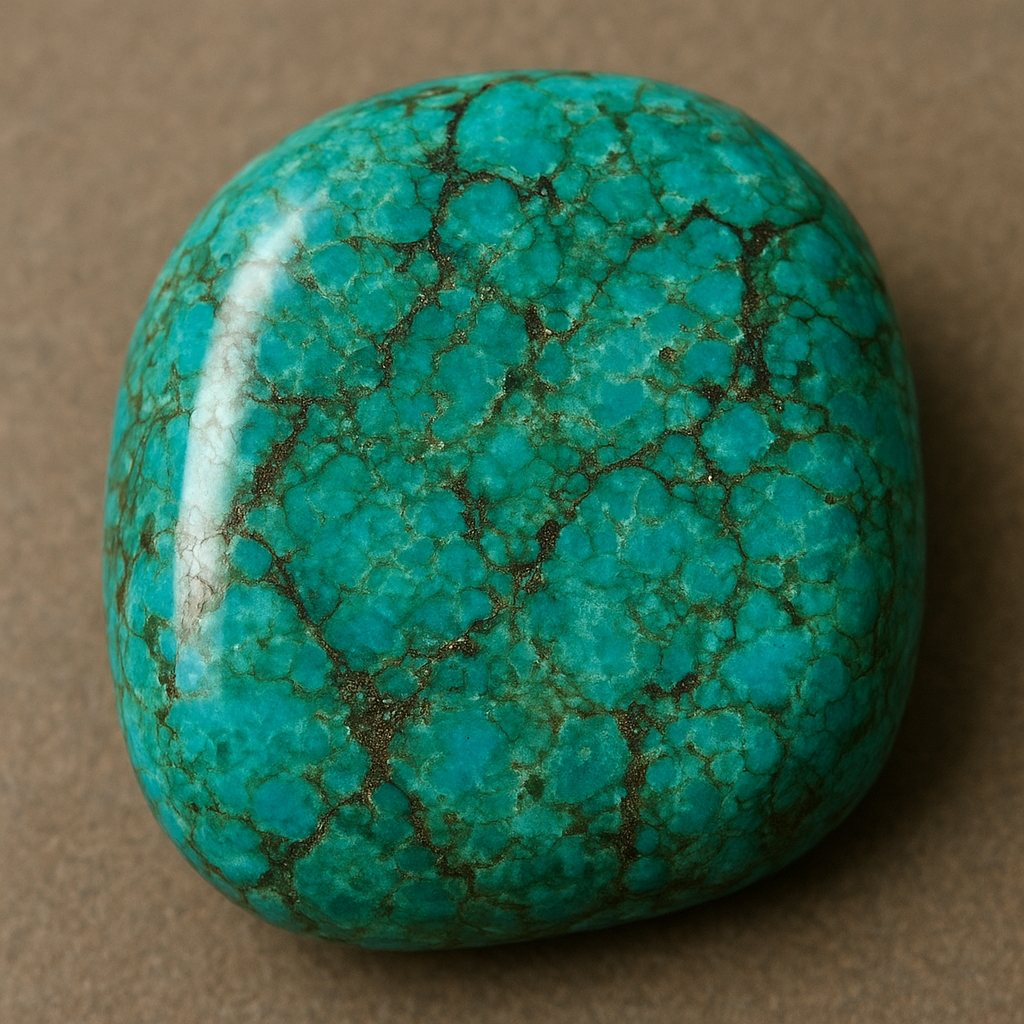
Turquoise typically occurs as nodules, crusts, or veins within host rocks such as limestones, sandstones, and altered volcanic rocks. Its texture is often compact and cryptocrystalline, which makes it suitable for carving and cabochon cutting. Hardness generally ranges from about 5 to 6 on the Mohs scale, making turquoise relatively soft compared with many gemstones. Its porosity and sensitivity to solvents and oils are important factors in both care and market treatment.
Where Turquoise Is Found: Major Locales and Geological Settings
Turquoise has a broad geographic distribution, occurring wherever the right combination of phosphate-bearing groundwater and copper-bearing source rocks interact. Some deposits are ancient and historically famous, while others have become significant in modern mining and the gem trade.
- Iran (historically called Persian turquoise) — The Nishapur region produced some of the most prized sky-blue turquoise known since antiquity. Persian material is often noted for its uniform, intense blue and minimal matrix.
- Southwestern United States — Significant mines in Arizona, New Mexico, and Nevada have produced a wide range of turquoise types. Mines such as Bisbee, Sleeping Beauty, and Kingman (Arizona) are known for distinctive colors and matrices.
- China — Modern deposits in Hubei and other provinces have become major sources for the global market, offering varied color and quality levels.
- Egypt and Sinai — Ancient mines supplied material for Pharaonic jewelry and artifacts; Sinai turquoise has a long archaeological record.
- Mexico, Chile, and other regions — Smaller but notable occurrences contribute to local use and the international supply chain.
The geological settings vary from oxidized porphyry copper systems to weathered sedimentary copper deposits. The scale of deposits ranges from small pockets to larger, mineable bodies, and many historically important find sites are no longer productive.
Varieties, Matrix Patterns and Color Variations
Not all turquoise looks the same. Collectors and jewelers distinguish varieties by color, matrix pattern (the host rock included in the turquoise), and physical properties. Key factors that influence appearance include the specific trace elements, the texture of the host rock, and the conditions of formation.
- Pure sky-blue turquoise — Often sought after for jewelry because of its vivid, uniform color.
- Green turquoise — Typically contains more iron or shows partial replacement with other minerals.
- Matrix-bearing turquoise — The dark veining or webbing, called matrix, can create striking contrast and is prized by many collectors; examples include spiderweb, patchy, and dendritic patterns.
- Composite or stabilized material — Because natural turquoise can be porous and soft, many specimens are treated or combined with resins or backing materials for durability.
Applications: Jewelry, Art and Functional Uses
Turquoise’s primary modern application is in jewelry and ornamental art. Its distinctive hues and historical associations make it popular for a variety of wearable forms, from inlaid bracelets and necklaces to carved amulets and cabochons set in silver and gold. Many Native American communities, particularly in the Southwestern United States, have long traditions of turquoise silverwork and stone inlay.
Beyond traditional jewelry, turquoise has been used for inlays in furniture, religious and ceremonial objects, mosaics, and even certain forms of architecture. In some cultures, small polished beads and amulets have been sewn into clothing or integrated into ceremonial regalia.
- Jewelry — Turquoise cabochons, beads, and inlay are staples of both fine and folk jewelry.
- Decorative carving — Larger nodules can be carved into beads, figures, or plaques.
- Healing and metaphysical items — Although not scientifically supported, turquoise is often used in talismans and alternative-medicine contexts.
- Industrial uses — Limited, mainly ornamental; turquoise is not common for mechanical applications because of its softness.
Treatments, Synthetics and Imitations
Because untreated turquoise can be porous and less durable, many specimens undergo treatments to improve appearance and stability. Common treatments include impregnation with resins or waxes, dyeing to enhance color, and reconstitution of crushed turquoise into stabilized blocks. When resin-impregnated material receives a durable backing, it becomes more suitable for everyday wear. The trade often distinguishes between natural, stabilized, and reconstituted material in pricing and labeling.
Imitations and synthetics complicate the market. Materials like howlite and magnesite are commonly dyed to mimic turquoise; glass and plastic imitations are also present. Synthetically grown turquoise exists but is less common than imitations. For buyers and collectors, testing methods such as magnification, specific gravity, refractive index, and spectroscopy help determine authenticity and treatment status.
Practical Tips for Buyers
- Ask for provenance or mine origin when possible; provenance can affect value.
- Request treatment disclosure — stabilized versus untreated affects price and care.
- Be cautious of overly perfect, uniformly colored pieces at low prices; these are often dyed or synthetic.
Care, Repair and Lapidary Work
Caring for turquoise requires attention due to the stone’s porosity and softness. Exposure to household chemicals, cosmetics, and prolonged moisture can alter color or damage the surface. Cleaning should be done with a soft cloth and mild soap; avoid ultrasonic cleaners and steam. For jewelry wearers, it is wise to remove turquoise pieces when applying lotions or engaging in activities that could scratch the stone.
From a lapidary perspective, turquoise is generally cut into cabochons, beads, and inlays rather than faceted gems because of its opacity and structure. Some craftsmen use backing techniques, such as doublets (thin turquoise sheet mounted to a harder base) or stabilized slabs, to create durable pieces. When drilling beads, care must be taken to avoid cracking; the use of lubrication, proper drill bits, and steady pressure are standard practice.
Cultural Significance and Folklore
Turquoise has a rich cultural history. Ancient Egyptians used it in jewelry and funerary objects; Persian turquoise symbolized heaven and was used in royal regalia. In the Americas, various Indigenous peoples have attributed protective and healing properties to turquoise and used it extensively in ceremonial and personal adornment.
Modern metaphysical communities often associate turquoise with protection, communication, and emotional balance. While such uses are cultural and subjective rather than scientific, they contribute to turquoise’s market demand and symbolic value.
Economic, Ethical and Environmental Considerations
The turquoise market encompasses large commercial operations, artisanal mining, and small-scale local extraction. Issues that often arise include responsible sourcing, mine reclamation, and the socio-economic impact on local communities. Some historically significant mines are exhausted or closed, which elevates the value of material from those sites and raises questions about preserving mining heritage.
Ethical concerns also touch on proper labeling and disclosure of treatments, as well as ensuring that local artisans and miners receive fair compensation. The rise of dyed imitations and low-cost synthetic material has expanded access to turquoise-style commodities but can undercut traditional producers and obscure provenance.
Interesting Facts and Lesser-Known Details
- Turquoise is the traditional birthstone for December in many modern lists, often paired with tanzanite and zircon in certain charts.
- Some of the most iconic museum pieces and royal ornaments include turquoise mined thousands of years ago, showing the durability of finished objects even if the stone itself is fragile in raw form.
- The term “turquoise” reflects historical trade routes: the stone was first widely known in Europe through Turkish traders, hence the name.
- Collectors often prize single-mine material for consistent color and historical value; provenance such as “Nishapur” or “Bisbee” can command premiums.
- Scientific analysis—such as isotope studies and trace-element fingerprinting—can sometimes link turquoise to particular deposits, aiding provenance studies and archaeological research.
Conclusion of Exploration
Turquoise remains a gemstone and cultural symbol that bridges geology, art, and human history. From its chemical formation in copper-bearing zones to its role in jewelry, ritual, and commerce, turquoise offers a multifaceted subject for collectors, artisans, scientists, and curious observers. Whether valued for its saturated blue hues or for the stories it carries across time and place, turquoise continues to evoke both material and intangible meanings that ensure its place in the human imagination.