
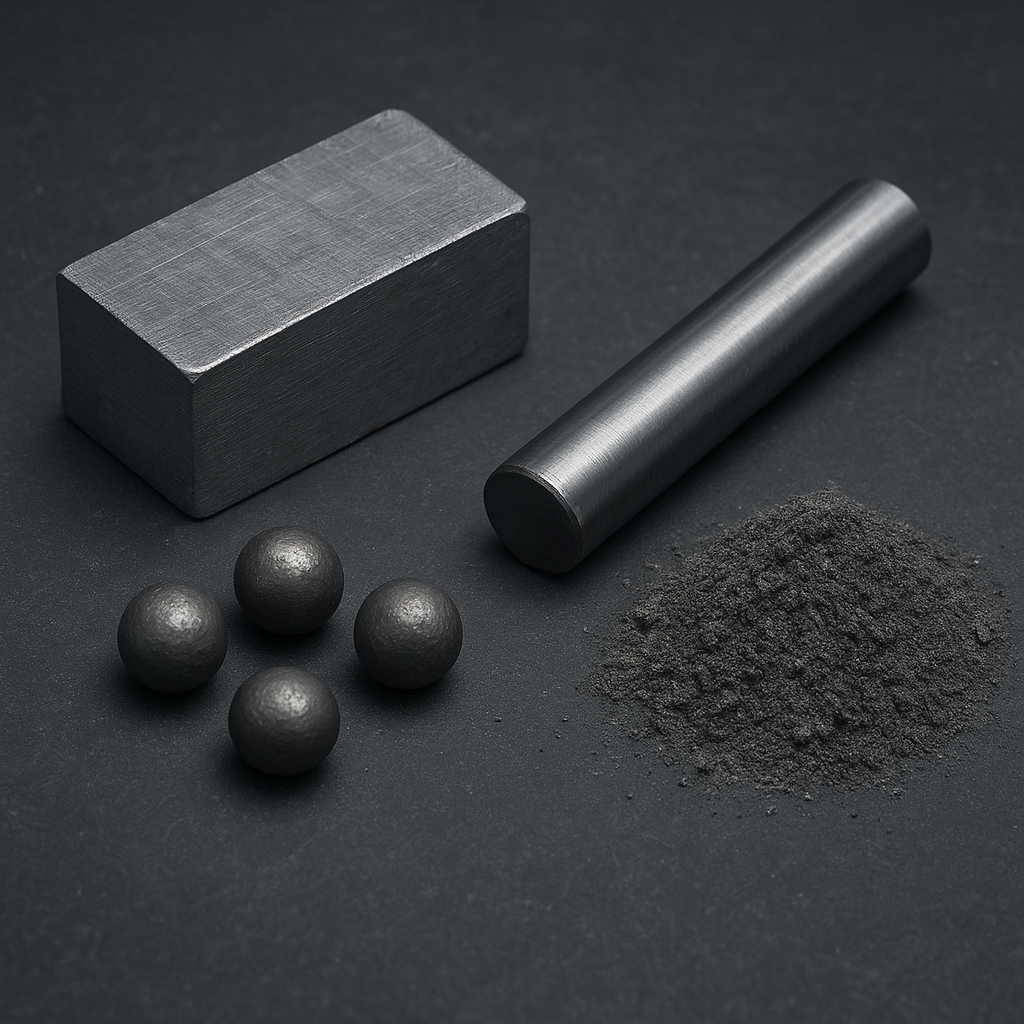
Tungsten sits among the most remarkable elements on the periodic table: heavy, resilient, and central to technologies that run from everyday electronics to the most demanding industrial environments. Known by the chemical symbol W and atomic number 74, this metal combines a unique set of physical and chemical properties that make it indispensable in both historical and cutting-edge applications. The following text explores where tungsten is found, how it is produced and processed, what it is used for across industries, and some lesser-known but intriguing facets of its chemistry and future prospects.
Properties and Chemistry
Tungsten’s name derives from Swedish tung sten, meaning “heavy stone,” while its chemical symbol W comes from the old name wolfram. Both names hint at its natural form and historical discovery. What sets tungsten apart are a handful of extreme physical attributes: extraordinarily high melting point, very high density, and a range of stable oxidation states in chemistry.
Key physical characteristics
- Atomic number: 74; symbol: W.
- One of the highest melting point metals known, allowing service at temperatures where most others would fail.
- Very high density, comparable to gold, which makes it useful for applications requiring compact mass or radiation shielding.
- Excellent thermal and electrical conductivity relative to refractory metals, though not as conductive as copper or silver.
- In pure form it is relatively brittle at room temperature but can be toughened by alloying or powder metallurgy.
Chemically, tungsten displays multiple oxidation states, from 0 in metal complexes to +6 in oxides such as tungsten trioxide (WO3). These oxides and chalcogenides (like WS2) exhibit rich electronic and catalytic properties. Compounds of tungsten are used in heterogeneous catalysis, electrochromic devices, and as precursors for high-performance coatings.
Where Tungsten Occurs and How It Is Extracted
Tungsten does not occur in nature as a free metal; it is found primarily in mineral forms such as wolframite ((Fe,Mn)WO4) and scheelite (CaWO4). These ores are mined around the world and processed to yield tungsten trioxide (WO3) and then reduced to metallic tungsten powder.
Principal producing regions
- China currently dominates global production and processing capacity, accounting for the majority of mined tungsten ore and refined products.
- Other notable producers include Portugal, Bolivia, Russia, and a few operations in North America and Europe.
- Because of its strategic importance, tungsten supply chains attract attention from governments and industries seeking diversification and security of supply.
Typical extraction and refinement steps
- Ore crushing and concentration by flotation to isolate wolframite or scheelite minerals.
- Roasting and chemical treatment to convert ore to tungsten oxide (WO3).
- Reduction of WO3 by hydrogen or carbon to produce metallic tungsten powder.
- Powder metallurgy processes (pressing, sintering, and infiltration) to create parts and composites like cemented carbides.
The powdered route enables complex shapes and composite materials that exploit tungsten’s strength and hardness while overcoming the brittleness of the pure metal.
Industrial and Everyday Applications
Tungsten’s niche is its ability to perform where heat, wear, and density matter. Over the decades it has migrated from niche laboratory uses to ubiquity in industrial tooling and specialized electronics. Below are categories where tungsten, or tungsten-based materials, are essential.
Cutting, drilling and wear-resistant tools
- Tungsten carbide (often abbreviated WC) — a composite of wolfram-derived carbide particles bonded with a metallic binder such as cobalt — is the standard material for cutting and drilling tools. Its combination of high hardness and toughness delivers long tool life in machining metals, stone, and composites.
- Cemented carbides are used for inserts, end mills, drill bits, and mining tools where abrasion resistance dictates performance.
Electronics, semiconductors and lighting
- Historically, tungsten wire was used for incandescent lamp filaments because of its high melting temperature and stability. While incandescent lighting has largely been supplanted by LEDs, tungsten retains roles in specialty lighting and vacuum tubes.
- In semiconductor manufacturing, tungsten is used as a barrier metal and interconnect material, as well as sputtering targets for thin film deposition.
- Tungsten’s high atomic number makes it an excellent material for x-ray tube anodes and radiation shielding in medical and industrial equipment.
Aerospace, defense, and high-temperature engineering
- Alloys containing tungsten are integral to high-temperature components, rocket nozzles, and parts in turbines or heat shields where stability under extreme heat matters. Here the metal’s refractory nature is decisive.
- Tungsten heavy alloys — dense mixtures of tungsten with nickel, iron, or copper — are used for counterweights, ballast, and kinetic energy penetrators in military applications due to their compact mass.
Specialty applications and advanced materials
- Tungsten disulfide (WS2) and related 2D materials act as solid lubricants with low friction coefficients, useful where liquid lubricants fail.
- Tungsten oxides are applied in electrochromic devices (smart windows) and photochromic systems because they change optical properties under electrical stimulation or light exposure.
- In nuclear fusion research, tungsten is studied extensively for divertor and first-wall components because it can withstand intense heat and sputtering from plasma.
Manufacturing, Alloys and Materials Science
Pure tungsten is rarely used on its own because of manufacturing challenges and brittleness. Instead, powder metallurgy and alloying create materials that retain tungsten’s desirable properties while improving ductility and manufacturability.
Cemented carbides and hardmetals
Cemented carbides are tungsten carbide particles bonded with a metal matrix (commonly cobalt). These materials combine the hardness needed to cut and shape other materials with the toughness to resist fracturing. They are central to the mining, construction, and machining industries, and their composition can be tailored for specific combinations of wear resistance and impact strength.
Tungsten-containing superalloys and steels
Small additions of tungsten to steels and nickel-based superalloys provide solid-solution strengthening and high-temperature stability. These alloys are vital in gas turbines, aerospace components, and other environments that subject materials to cyclic thermal and mechanical loads.
Powder processing and additive manufacturing
Advanced manufacturing techniques such as hot isostatic pressing, spark plasma sintering, and additive manufacturing (metal 3D printing) are expanding the ways tungsten and its composites can be shaped. These processes mitigate brittleness, allow near-net shaping, and reduce material waste, which is important given tungsten’s strategic value.
Environmental, Health and Supply Considerations
Tungsten’s strategic and environmental profiles are complex. On one hand, tungsten is considered less toxic than some heavy metals, but on the other hand, its mining and manufacturing create occupational hazards and environmental burdens if not managed properly.
Health and safety
- Metallic tungsten has relatively low acute toxicity, but inhalation of tungsten carbide and cobalt binder dust can cause lung disease; strict industrial hygiene is necessary.
- Tungsten compounds vary in toxicity; soluble forms can pose health risks and are subject to regulatory scrutiny.
Environmental impacts and recycling
Mining operations can disturb landscapes and generate waste streams. A critical mitigation step is robust recycling. Tungsten has one of the higher recycling rates among industrial metals because tungsten carbide scrap and manufacturing swarf are economically attractive to recover. Recycling reduces reliance on primary mining and helps stabilize supply.
Supply security
Because a large portion of global production is concentrated in a few countries, tungsten is often discussed as a critical raw material. Industries that depend on steady supplies — defense, aerospace, and industrial tooling — monitor geopolitical and market shifts closely. This dynamic has spurred investment in secondary processing, alternative mining projects, and material substitution research.
Interesting and Emerging Topics
Tungsten-related research continues to expand, touching fields from nanomaterials to sustainable engineering. A few intriguing directions include:
- 2D materials: Compounds like WS2 are being explored for electronics, lubrication, and photonics; they add a new dimension to tungsten’s already broad materials portfolio.
- Catalysis and chemistry: Organotungsten compounds and tungsten oxides are investigated for catalytic roles in biomass conversion and specialty organic transformations.
- Nuclear fusion: Tungsten’s refractory behavior and sputter resistance make it a prime candidate for plasma-facing components in fusion reactors; long-term material behavior under neutron irradiation and extreme thermal cycles is an active area of study.
- Substitution and sustainability: Research aims to reduce reliance on tungsten in certain applications through alloys, coatings, or alternate materials while maintaining performance and reducing supply chain risks.
Practical Tips and Lesser-Known Uses
Beyond industrial settings, tungsten finds surprising consumer and niche uses. Jewellery makers exploit tungsten carbide’s scratch resistance for rings and watches; hobbyists use tungsten shot as dense ballast in fishing and diving weights; medical devices and radiation shielding use the metal’s mass and high atomic number.
Handling and machining
Working with tungsten and its compounds requires specialized techniques. Conventional machining of tungsten is difficult because of its hardness and brittleness; manufacturers rely on grinding, EDM (electrical discharge machining), and powder-based shaping methods. Welding pure tungsten is challenging owing to its high melting point, so brazing or using tungsten inserts is common when joining to other materials.
Economic and market notes
Prices for tungsten and tungsten products can be volatile due to market demand, geopolitical factors, and production constraints. Industries with heavy dependence on cutting-tool grades or chemical-grade tungsten closely track inventory levels and recycling streams as part of risk management.
Final thoughts
Tungsten is more than a dense, heat-resistant metal: it is a linchpin of modern industry and an enabler of technologies both commonplace and highly specialized. Its collaboration with other elements—through alloying or as part of composites like wolfram carbides—creates materials that extend the limits of what machinery, electronics, and engineering structures can achieve. As demands for high-performance, high-temperature, and wear-resistant materials continue to rise, tungsten will remain a metal of intense interest, balanced by efforts in recycling, supply diversification, and sustainable processing.