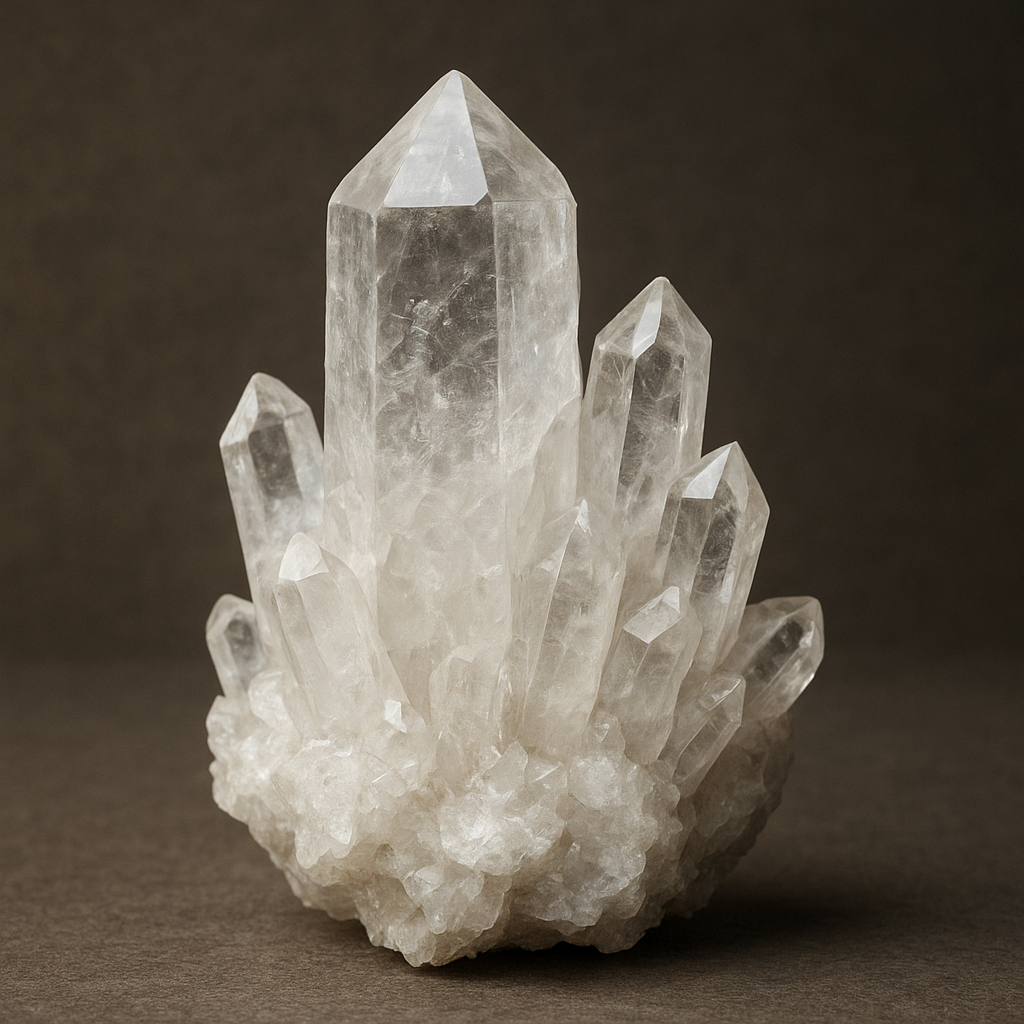
Tugtupite is a striking and unusual mineral prized by collectors and gem enthusiasts for its vivid colors, intriguing optical effects and rarity. It belongs to an uncommon group of minerals that form in highly alkaline igneous environments, where unusual chemistry produces specimens with distinctive physical and optical properties. This article explores the mineral’s chemistry and structure, the geological settings where it forms, its applications in gemology and science, and some of the aspects that make it especially fascinating to mineral lovers.
What is tugtupite?
Tugtupite is a framework silicate that contains chloride and beryllium as essential components. Its ideal chemical formula is often written as Na4Al3BeSi3O12Cl, reflecting a composition that places it close to members of the sodalite group while remaining chemically distinct. The mineral typically forms in masses or granular aggregates rather than as large well-developed euhedral crystals, although distinct crystals do occur in the best localities.
Physically, tugtupite ranges in color from pale pink to deeper cherry-red tones, sometimes approaching a soft raspberry hue. This color palette, combined with a glassy to greasy luster, makes the material attractive for cabochons and small faceted gems. On the Mohs scale it is relatively soft for jewelry use, generally reported at around 5 to 5.5, so it requires careful handling when set in rings or bracelets.
Two of tugtupite’s most remarkable properties are its strong fluorescence and its ability to exhibit tenebrescence (a reversible photochromic effect). Under long-wave and often short-wave ultraviolet light, many tugtupite specimens glow an intense red or crimson — an effect that can be startlingly bright. Tenebrescence, when present, causes specimens to change color upon exposure to sunlight or UV light and to revert slowly in darkness or when heated; this reversible color change has made tugtupite the subject of photochemical studies.
Geology and formation
Tugtupite forms in silica-undersaturated, alkaline igneous environments — especially in agpaitic (peralkaline) complexes and nepheline syenite pegmatites where the unusual chemical environment concentrates elements such as sodium, chlorine, and beryllium. These settings favor the formation of a suite of rare minerals, including eudialyte, sodalite-group minerals, and a variety of rare silicates containing beryllium and alkali metals.
The crystallization of tugtupite is typically linked to late-stage, volatile-rich fluids that percolate through the host rock, allowing chloride-bearing and beryllium-bearing species to concentrate and form discrete mineral phases. Its textural relationships with associated minerals often reveal complex paragenetic sequences in which tugtupite forms after or alongside sodalite, cancrinite-group minerals, and various zirconium and niobium silicates common in agpaitic assemblages.
Where tugtupite occurs
Although globally rare, tugtupite is known from several well-documented localities. The best-known and historically most important occurrences are associated with alkaline intrusions where the geochemistry is favorable for rare chloride-bearing silicates.
Greenland
The mineral was first discovered and is named for a locality in southern Greenland. The famed Ilímaussaq complex and nearby areas have produced some of the most collectible and intensely colored specimens. In Greenland, tugtupite is intimately associated with the suite of minerals that define agpaitic nepheline syenites, and specimens from these localities are highly prized for their strong fluorescence and attractive pink to red tones.
Canada
Notable material has been recovered from Mont-Saint-Hilaire in Quebec, a classic locality for rare alkaline minerals. Mont-Saint-Hilaire is world-famous among mineral collectors for hosting many unusual species, and tugtupite specimens from this site add to that diversity. Canadian specimens may vary in color and fluorescence intensity but are valued for their quality and relative accessibility compared with some remote Arctic localities.
Russia and other localities
The Kola Peninsula in northwestern Russia — another classic alkaline province — has produced tugtupite as part of the complex mineralogy of the Lovozero and Khibiny massifs. Smaller finds have been reported from other alkaline complexes worldwide where the unusual conditions for tugtupite formation are met. In many cases, occurrences outside the classic Greenland and Canadian localities are sparse and yield only small or less intensely colored specimens.
- Ilímaussaq complex (Greenland) — type and most famous locality
- Mont-Saint-Hilaire (Quebec, Canada) — notable collector material
- Kola Peninsula (Russia) — additional occurrences in alkaline massifs
- Other scattered finds — reported in localized alkaline intrusions
Associated minerals and paragenesis
Tugtupite rarely occurs in isolation; it is part of assemblages that include several other rare and distinctive minerals. Common associates include members of the sodalite group, various feldspathoids (such as nepheline), eudialyte, aegirine-augite, and other rare zirconosilicates and titanates that crystallize from peralkaline magmas. The presence of alkali-rich, chloride-bearing fluids during late-stage crystallization is a recurring theme in tugtupite-bearing systems.
Because tugtupite often forms late in the magmatic-hydrothermal evolution of an intrusion, its textural relationships can record changes in fluid composition, temperature and pressure. Detailed petrographic and geochemical studies of tugtupite-bearing rocks help geologists reconstruct the conditions that favor the concentration of chloride, beryllium, and alkali elements in unusual mineral assemblages.
Uses, value and applications
The primary uses of tugtupite are ornamental, scientific and educational rather than industrial. Its rarity and attractive optical effects make it sought after by mineral collectors and, to a lesser degree, by gem cutters. Because of its relatively modest hardness and the potential for tenebrescence and strong fluorescence, tugtupite is more commonly fashioned into cabochons and display stones than into durable faceted gems intended for everyday wear.
- Collector specimens: High-quality tugtupite with vivid color and strong fluorescence commands premium prices among collectors. Exceptional crystals from Greenland and Mont-Saint-Hilaire are especially prized.
- Gemstone use: Used sparingly in jewelry, most often as cabochons. Careful cutting maximizes color while minimizing exposure to abrasion or impact.
- Scientific research: Tugtupite’s tenebrescence and fluorescence make it a subject of mineralogical and photochemical study, providing insights into color centers and electron-transfer processes within silicate frameworks.
- Education and display: Museums and educational collections use tugtupite to illustrate the mineralogical diversity of alkaline igneous systems and to demonstrate fluorescence under ultraviolet lamps.
Cutting, care and market considerations
When prepared for jewelry, tugtupite is typically cut as cabochons to showcase its color and glow under ultraviolet light. Because of its relatively low hardness and often perfect or poor parting, stones must be set to minimize knocks and abrasion. Routine care involves avoiding ultrasonic cleaners and harsh chemicals; gentle cleaning with mild soap and lukewarm water is preferred.
The market for tugtupite is specialized and driven largely by collectors and gem enthusiasts who appreciate its uncommon properties. Prices vary significantly depending on color intensity, fluorescence, size and provenance. Small pieces suitable for niche jewelry markets are available, but large, intensely colored pieces are uncommon and often retained as specimens rather than set into mainstream jewelry.
Optical phenomena: fluorescence and tenebrescence
The bright fluorescence of tugtupite under ultraviolet light is one of its signature attractions. The mineral commonly emits a vivid crimson or deep pink glow when illuminated with long-wave UV, and many specimens respond to short-wave UV as well. This fluorescence is attributable to specific activator centers in the mineral’s crystal lattice — often trace elements or structural defects that absorb UV photons and re-emit visible light at characteristic wavelengths.
Tenebrescence — the ability of some tugtupite specimens to undergo reversible color changes when exposed to sunlight or UV light — is another fascinating effect. In tenebrescent tugtupite, prolonged exposure to strong UV or visible light can result in a deepening or alteration of color, followed by a gradual return to the original shade in darkness or upon heating. The phenomenon is of interest to mineralogists studying photo-induced electron transfers and the stability of color centers within mineral structures.
Scientific interest and ongoing research
Tugtupite occupies an intriguing niche in mineralogical research because it combines unusual chemistry with striking optical behavior. Studies of its crystal chemistry and defect structures contribute to broader understanding in areas such as:
- photochromic mechanisms and the nature of color centers
- the role of chloride and volatile elements in late-stage igneous mineralization
- zoning and fluid evolution in agpaitic intrusions
- trace-element partitioning involving beryllium and alkali metals
Because beryllium-bearing minerals are relatively scarce and often form in restricted geologic environments, tugtupite and its associates provide natural laboratories for studying how rare elements concentrate in evolving magmatic systems.
Interesting historical and collecting notes
Collectors often prize tugtupite not only for its color and fluorescence but also for its relative scarcity and the challenge of acquiring quality material. The Greenland localities produced many of the finest early examples, and consequent awareness of tugtupite’s properties led to greater demand among museums and private collections.
Collecting tugtupite in the field can be difficult because its best occurrences are often remote and embedded within hard, resistant alkaline complexes. Field collectors and mineralogists rely on careful mapping of intrusive bodies and knowledge of the characteristic mineral associations that hint at the presence of tugtupite-bearing veins or pockets.
Identification, imitations and similar minerals
Because tugtupite’s pink-to-red colors and fluorescence are distinctive, the mineral is usually identifiable to experienced mineralogists by a combination of color, fluorescence response, and its geological context. However, given the commercial interest in colored gemstones and fluorescent minerals, specimens may sometimes be confused with or imitated by other pink minerals or treated materials.
Diagnostic features used to confirm tugtupite include:
- its characteristic fluorescence under long-wave UV
- association with sodalite-group minerals and other alkaline assemblage members
- chemical or spectroscopic confirmation of the presence of beryllium and chloride
- crystallographic tests when well-formed crystals are available
Laboratory methods such as X-ray diffraction (XRD), electron microprobe analysis, and infrared or Raman spectroscopy reliably distinguish tugtupite from look-alikes and detect any treatments or enhancements.
Collecting tips and ethical considerations
If you are interested in acquiring tugtupite, consider the following practical and ethical guidelines:
- Seek specimens from reputable dealers and ask about provenance, especially when value is high.
- Understand that notable localities may have restrictions on collecting; always follow local regulations and respect protected sites.
- For jewelry use, choose settings that protect the stone from impact and abrasion and avoid everyday exposure to harsh conditions.
- When purchasing fluorescent minerals, request demonstrations of their response under UV light to verify descriptions and visual appeal.
Final remarks on rarity and appeal
Tugtupite remains a mineral of special interest due to its rare chemistry, vivid optical effects and the story it tells about alkaline igneous processes. Whether admired as a glowing cabochon, a hand specimen in a museum case, or a research sample in a laboratory, tugtupite continues to intrigue both collectors and scientists. Its combination of vivid fluorescence, occasional tenebrescence and association with some of the planet’s most geochemically curious rocks ensures that this mineral will remain a topic of attention and admiration in the mineralogical community.