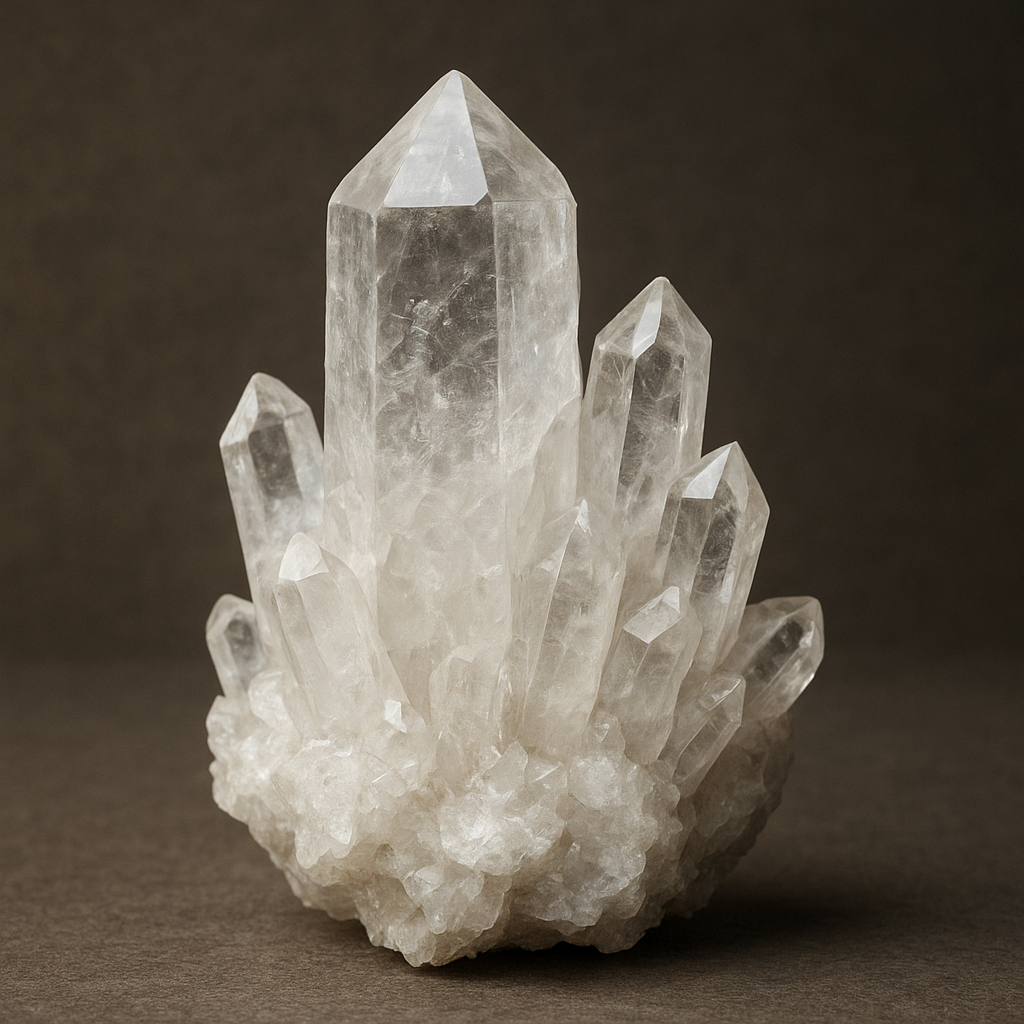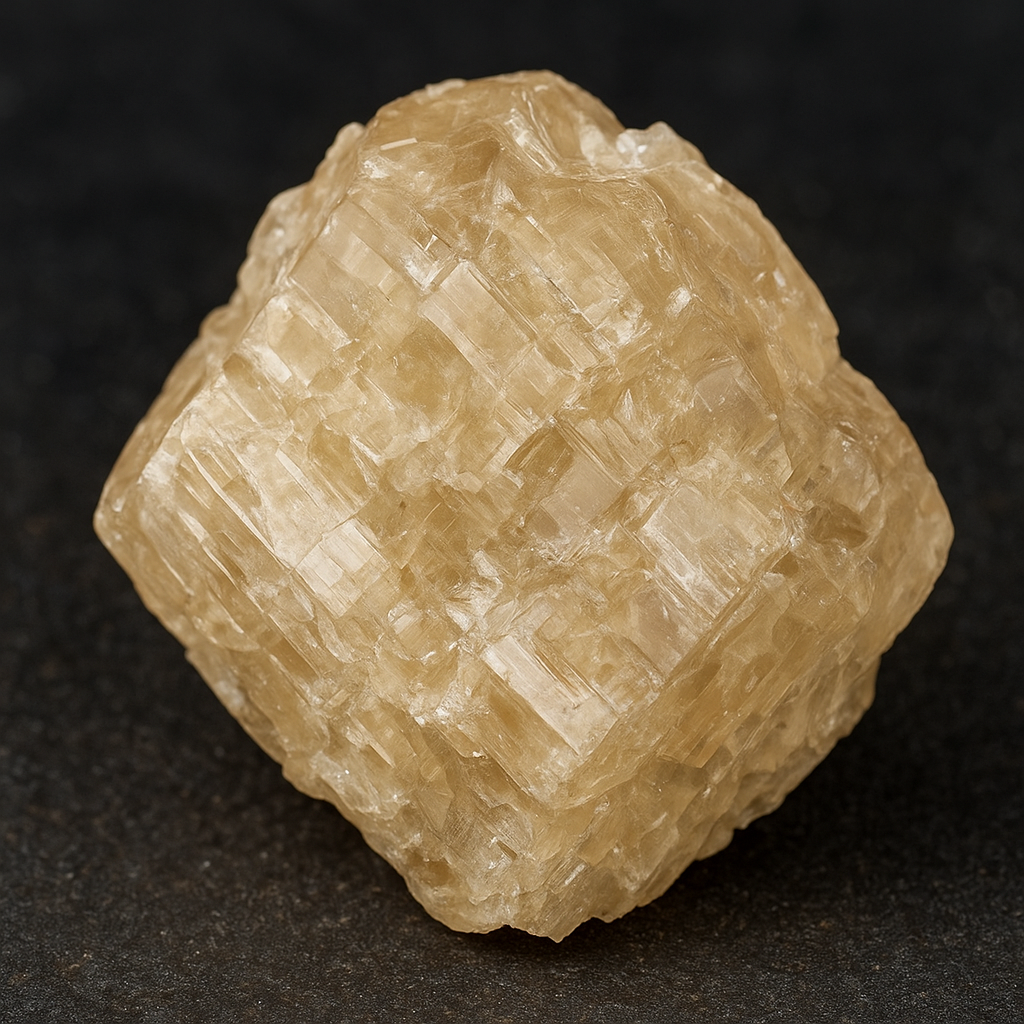
Triplite is a little-known but scientifically intriguing phosphate mineral that appears in a variety of igneous and metamorphic environments. Its variable chemistry and distinctive physical properties make it a subject of interest for mineralogists, collectors, and geochemists alike. This article explores where triplite is found, how it forms, its physical and chemical characteristics, uses and research applications, and a few fascinating details that highlight why this mineral deserves attention beyond its rarity.
Occurrence and geological settings
Triplite commonly forms in environments rich in phosphate and fluorine, typically associated with late-stage crystallization processes in granitic and pegmatitic systems. Because it incorporates manganese and iron in its structure, triplite is often found in zones where these elements concentrate during magmatic differentiation or hydrothermal alteration.
- Pegmatite bodies: Many notable occurrences of triplite are in phosphate-rich pockets and accessory zones of granite pegmatites. These late-stage melts concentrate incompatible elements, creating ideal conditions for triplite crystallization.
- Greisen and hydrothermal alteration zones: Where granitic rocks have been altered by fluids, triplite can form alongside other phosphate and fluoride minerals.
- Metamorphic settings: In some contact- or regionally metamorphosed rocks, phosphatic assemblages can include triplite, especially where manganese is available.
Well-known pegmatite districts worldwide, including areas in South America, North America, and parts of Europe, have produced triplite specimens. Collectors and researchers frequently cite occurrences in Brazilian pegmatites, several U.S. localities (especially in eastern states), and Scandinavian mineral districts. The mineral is generally scarce enough that most finds are of scientific or collector value rather than of economic significance.
Physical and chemical properties
Triplite is a member of the broader phosphate mineral family and is characterized by a formula that can be approximated as (Mn,Fe)2(PO4)(F,OH), reflecting substitution between manganese and iron and partial occupancy of fluorine and hydroxyl sites. Important physical and chemical traits include:
- Color and luster: Colors range from pale tan and yellow-brown to deep brown or nearly black; it commonly has a vitreous to subresinous luster.
- Crystal habit: Prismatic to stout prismatic crystals are common, but triplite also appears in granular or compact masses.
- Hardness and density: Triplite typically has a Mohs hardness around 5–5.5 and a relatively high specific gravity in the neighborhood of 3.6–3.9, reflecting its iron/manganese-rich composition.
- Cleavage and fracture: Cleavage is generally poor to indistinct, and the mineral fractures unevenly or conchoidally when broken.
- Crystal-structure: Triplite crystallizes in a lower-symmetry system (commonly monoclinic), and its crystal chemistry allows a solid-solution range controlled largely by Mn/Fe substitution and F/OH variation.
The chemical flexibility of triplite leads to subdivisions and modifiers in some classification schemes (for example, triplite-(Mn) vs. triplite-(Fe)), emphasizing which cation dominates. These variations affect color, density, and sometimes crystal habit.
Related minerals and solid-solution behavior
Triplite sits in a complex neighborhood of phosphate minerals and is often compared to or confused with several chemically similar species. Understanding these relationships is important for correct identification and for interpreting paragenesis in a rock.
- Triphylite and triploidite: These minerals share phosphate chemistry but differ in the dominant cations (for example, lithium-bearing triphylite) and in anion content (hydroxyl vs. fluorine). The proximity of these minerals in pegmatitic environments can make identification by appearance alone difficult.
- Solid-solution: The Mn–Fe substitution in triplite is a classic example of solid-solution in mineralogy. Small-scale chemical variations influence physical properties and stability fields.
- Secondary phosphates: Through weathering and alteration, triplite can alter to or be replaced by secondary phosphate minerals, which are often more hydrated and less dense.
Analytical methods and scientific importance
Although not an ore mineral in most settings, triplite provides valuable information about late-stage magmatic and hydrothermal processes. Researchers use a suite of modern analytical techniques to study triplite specimens and their host rocks:
- X-ray diffraction (XRD) is essential for determining crystal structure and confirming identity among closely related phosphates.
- Electron microprobe analysis (EMPA) and scanning electron microscopy (SEM) reveal chemical zoning, Mn/Fe ratios, and trace-element content at micron scales.
- Raman and infrared spectroscopy help characterize anion content (F vs OH) and local bonding environments within the crystal lattice.
- Isotopic and trace-element methods (e.g., LA-ICP-MS, SIMS) can be used to probe the origin of fluids, temperatures of formation, and element mobility during late-stage crystallization.
These techniques allow geoscientists to reconstruct the conditions in which triplite formed—such as fluid composition, temperature, and the redox state of the system. In pegmatite research, triplite can act as a fingerprint of late-stage enrichment processes and melt-fluid evolution.
Applications, uses, and economic considerations
Triplite is not commonly mined as an industrial resource, but it has a few niche applications and values worth noting:
- Collectors and gem use: Well-formed crystals and transparent fragments are prized by mineral collectors. On rare occasions, attractive pieces are cut as collector gems, though the mineral’s brittleness and cleavage limit mainstream jewelry use.
- Scientific specimens: Museums and research institutions value triplite for studies of pegmatite genesis, phosphate geochemistry, and crystal chemistry.
- Indicator mineral: In exploration geology, triplite can serve as an indicator of phosphate- and F-rich late magmatic fluids, which may in turn point to other rare-element mineralization in complex pegmatites.
- Potential resource aspects: While triplite contains manganese and phosphorus, the mineral typically does not occur in concentrations sufficient for economical extraction. Its rarity and typical occurrence as accessory mineral make large-scale recovery uncommon.
Identification and fieldwork tips
Identifying triplite in the field or in thin section requires careful observation and analytical support when possible. A few practical tips:
- Look for brown to dark-brown prismatic crystals in phosphate-rich pockets within pegmatites or altered granites.
- Use hardness and density estimates—triplite’s relatively high specific gravity and moderate hardness can help separate it from lighter phosphates.
- Associated minerals such as apatite, fluorinated phosphates, manganese oxides, and certain silicates often accompany triplite—these associations can be diagnostic.
- Laboratory confirmation with optical microscopy (thin section), XRD, or EMPA is recommended for definitive identification, especially because several phosphate minerals overlap in appearance.
Collecting ethics and conservation
Because triplite specimens are often scientifically valuable, collectors should follow responsible practices. Many pegmatite pockets are limited in size and fragile; reckless collecting can destroy unique parageneses and reduce scientific value. Always seek permission before sampling, document field context, and, when possible, donate significant finds to research collections or museums where they can be studied and conserved.
Interesting research directions and open questions
Triplite continues to raise questions that are relevant to broader topics in earth science. A few areas of active or potential research include:
- Fluid evolution in pegmatites: How do F/OH ratios in minerals like triplite record the chemistry of late magmatic fluids, and what does that imply for transport of incompatible elements?
- Redox-sensitive partitioning: The Mn/Fe ratio in triplite can be a proxy for redox conditions during crystallization—how consistent is this record across different pegmatite systems?
- Trace-element trapping: Triplite’s crystal chemistry may host trace elements of exploration interest (e.g., rare-earth elements at low concentrations). Mapping these distributions can inform models of element redistribution in evolving melts.
- Comparative mineralogy and evolution: Comparing triplite to its phosphate cousins helps refine models of mineral stability and transformation pathways under varying temperature, pressure, and fluid compositions.
Associated minerals and paragenesis
Understanding the paragenetic sequence in which triplite appears can be enlightening. It is typically a late-stage phase in complex pegmatitic systems and is often found alongside:
- Apatite and other phosphate minerals
- Manganese oxides and carbonates where oxidation occurs
- Accessory fluorides and hydroxyl-bearing phases
- Common pegmatite silicates and feldspars
The sequence of crystallization often reflects progressive concentration of incompatible elements and evolving fluid chemistry, with triplite representing a snapshot of that late-stage environment.
Practical examples from the field
Field reports and specimen records typically describe triplite as appearing in discrete pockets or veins within pegmatites, often in association with other rare phosphates. Collectors prize situations where triplite forms sharp, terminated crystals, while researchers prize specimens that preserve textural relationships with host minerals—these relationships help reconstruct temperature and fluid histories.
In summary, triplite is a compact window into the chemistry of late-stage magmatic and hydrothermal processes. While not economically important in most contexts, its combination of phosphate chemistry, pegmatite associations, and variable manganese/iron content make it an instructive mineral for studies in mineralogy, geochemistry, and crystal-structure analysis. Collectors and researchers continue to find value in triplite specimens, and modern analytical tools such as X-ray diffraction and microprobe analysis expand our ability to read the subtle records this mineral preserves about its geological past.