
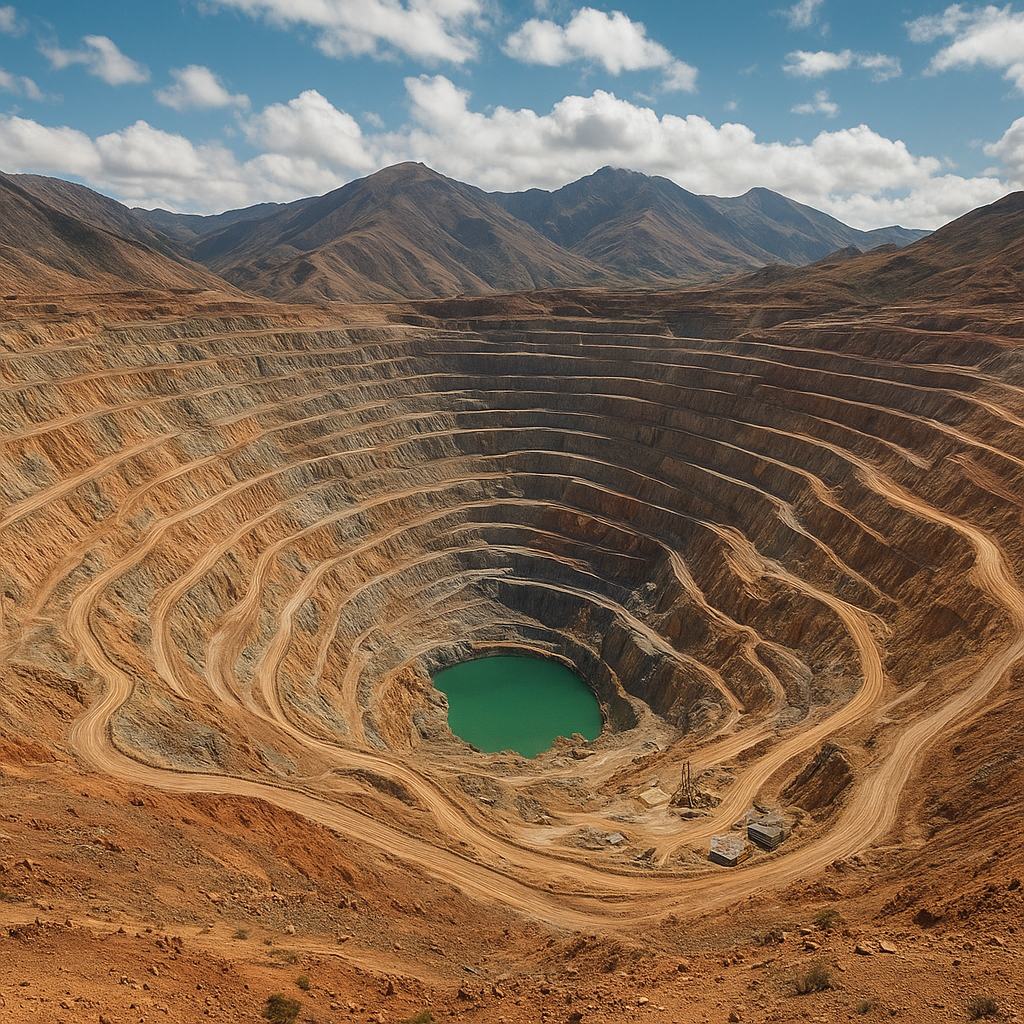
The Toromocho mine is one of the most significant copper projects in South America, located high in the central Andes of Peru. Its scale, ownership, and technical challenges make it a prominent example of modern open-pit mining in a high‑altitude environment. The mine combines geologic complexity, considerable reserves, and large-scale processing facilities, while intersecting with social, environmental, and economic dynamics that illustrate the trade-offs of resource development in the 21st century.
Location and geological setting
Toromocho is situated in the central highlands of Peru, within the Morococha district of Yauli province, in the Junín region. The deposit sits at an elevation of approximately 4,500 meters above sea level, on the western flank of the high Andean plateau. Its remote mountain setting poses logistical and engineering challenges but also places the project in a region with a long tradition of metal mining.
Geology and main commodities
The Toromocho deposit is a large porphyry-style copper system, typical of the Andes, where copper mineralization is associated with intrusive rocks and hydrothermal alteration zones. The ore contains primarily copper sulfides, with significant by-products including molybdenum and silver. Copper occurs mainly as chalcopyrite and associated sulfide minerals, amenable to conventional flotation concentration.
- Ore type: porphyry copper with disseminated and vein-hosted sulfides.
- Primary metals: copper (base product), with molybdenum and silver as common by-products.
- Mineralization scale: large, with reported resources and reserves that place Toromocho among sizable Andean copper deposits.
Mining operations and processing
Toromocho is developed as an open-pit mine. The sheer size of the deposit requires large-scale earthmoving, bench creation, and staged pit development. Mining uses standard surface-mining fleets: shovels, haul trucks, drills, and ancillary support equipment tailored for high-altitude operation.
Processing plant and concentrate production
Material extracted from the pit is crushed, ground, and treated in a flotation concentrator to produce copper concentrate. This concentrate is then transported to smelters and refiners, often internationally, to be processed into refined metal. The processing flow sheet is typical of porphyry copper operations, featuring coarse and fine grinding circuits followed by flotation stages to maximize copper recovery while separating molybdenum and other valuable minor metals.
Infrastructure and logistics
Operating at more than 4,000 meters elevation imposes constraints on workforce health, equipment performance, and logistics. Toromocho relies on strengthened access roads, power supply connections to the national grid, and water management systems adapted for arid, high‑altitude conditions. Concentrate logistics involve trucking to rail or port facilities for export, requiring coordinated contracts and transport corridors that connect the mine to coastal smelting and shipping infrastructure.
Ownership, investment and chronology
Control and funding have been pivotal in bringing Toromocho from exploration through construction to production. The project represents a major foreign investment in Peru, with its principal owner being the Chinese state-owned mining and metals company Chinalco (Aluminum Corporation of China), which acquired and developed the asset as part of a strategic expansion into copper supply. Development of the mine required a multi‑billion‑dollar capital program and complex project management to deal with the harsh climate and high‑altitude construction.
- Exploration and feasibility phases identified a large, mineable resource suitable for open‑pit methods.
- Construction included relocation of community infrastructure and building of processing and support facilities.
- Commercial production commenced after commissioning of the concentrator and supporting systems.
Economic significance
Toromocho contributes to both regional and national economic activity in several ways. As a large copper producer, it feeds into Peru’s position as a world-leading copper supplier, supporting export earnings, foreign exchange inflows, and national royalties and taxes. On a regional level, the mine supports jobs, local procurement, and development of roads, power lines, and community investments.
Employment and regional development
The mine provides direct employment in mining, processing, maintenance, and administration, and indirect employment through contractors and service providers. Local procurement policies often aim to strengthen the regional supply base, supporting small and medium enterprises in the highlands. Community development programs linked to the mine typically include investments in housing, water supply, education, and health services, although the effectiveness and sufficiency of such programs are frequent topics of local debate.
Fiscal impacts and exports
Taxes, royalties, and export earnings derived from the sale of copper concentrate contribute to national revenue. As copper remains a critical input for electrification and infrastructure worldwide, large mines such as Toromocho play a role in global metal markets and in the industrial strategies of importing nations. The mine’s output helps satisfy demand from steel, electrical, and electronics sectors where copper is essential.
Social and environmental considerations
Large mining projects in sensitive mountain environments inevitably raise environmental and social concerns. Toromocho’s high‑altitude location and scale have made issues such as water use, dust, tailings management, and community resettlement particularly salient.
Community relocation and social programs
The development of Toromocho required the relocation of parts of the town of Morococha to allow pit expansion. A designated resettlement program created a new settlement area, Nuevo Morococha, with housing and services intended to replace what was displaced. Resettlement processes often attract scrutiny: affected residents and civil society organizations monitor compensation adequacy, cultural impacts, and whether new livelihoods are sustainable. Social license to operate depends on continuous dialogue, transparent agreements, and long‑term commitments.
Environmental management
Key environmental management challenges include:
- Water resources: securing sufficient water for processing while protecting downstream users and ecosystems in an arid highland context.
- Tailings and waste rock: designing storage facilities that meet international safety standards, minimize seepage and dust, and are resilient to seismic activity.
- Air quality and dust control: mitigating particulate emissions from mining and hauling operations that can affect nearby communities and fragile high-Andean vegetation.
- Biodiversity and landscape impact: limiting the footprint of infrastructure and restoring disturbed areas where feasible.
Regulatory oversight by Peruvian authorities and adherence to lender environmental and social standards (for projects financed by international banks) shape mitigation measures, monitoring, and reporting obligations.
Technical and operational challenges at high altitude
Operating at elevations over 4,000 meters introduces unique engineering and human‑factors issues:
- Health and workforce performance: high altitude increases risks of acute mountain sickness and requires acclimatization programs, medical facilities, and adapted shift schedules.
- Equipment productivity: lower air density affects diesel engines and some equipment performance, necessitating specialized tuning and maintenance regimes.
- Cold climate effects: temperature extremes can impact lubrication, hydraulics, and materials, increasing the need for weather‑resilient designs.
- Seismicity and slope stability: Andean geology demands careful geotechnical design for pit walls and tailings facilities to minimize risk in an active seismic zone.
Market context and strategic importance
As global demand for copper grows—driven by electrification, renewable energy infrastructure, and electric vehicles—projects like Toromocho gain strategic importance. Copper is central to electrical grids, motors, and wiring, which makes reliable large-scale mines valuable for industrial supply chains.
Price sensitivity and operational planning
The mine’s economics depend on global copper prices, production costs, and recovery rates. Operators plan pit sequencing, processing throughput, and cost control measures to remain competitive during periods of price volatility. By-products such as molybdenum and silver provide additional revenue streams that can improve overall project resilience to copper price swings.
Interesting aspects and lesser-known facts
Several features make Toromocho noteworthy beyond its metal output:
- High‑altitude engineering: The project exemplifies adaptation of heavy industrial activities to extreme elevations—where human physiology, machinery, and materials all face constraints uncommon in lowland mines.
- Resettlement complexity: The relocation of Morococha residents to Nuevo Morococha is a case study in modern mine‑community negotiations, illustrating how infrastructure, cultural identity, and livelihood restoration are negotiated.
- Chinese upstream investment: Toromocho represents a larger trend of Chinese resource acquisition and capital deployment abroad, reflecting strategic commodity security goals.
- Integrated processing: The concentrator was designed to maximize recovery in a challenging setting, employing staged flotation and tailings control measures to balance recovery and environmental performance.
- Local geology insights: The deposit provides scientists and exploration geologists with valuable information about Andean porphyry systems, contributing to broader understanding and future discoveries in the region.
Future outlook and challenges
Looking ahead, Toromocho’s trajectory will be shaped by a mix of technical, economic, regulatory, and social factors. Key determinants include:
- Sustained global demand for copper and favorable prices that justify ongoing investment in equipment and mine life extension.
- Successful implementation of environmental management and social responsibility programs that maintain community relations and regulatory compliance.
- Operational improvements that reduce costs, increase recovery, and lengthen mine life—such as process optimization, energy efficiency, and possible resource expansions through exploration.
- Adaptation to evolving best practices for tailings management and water stewardship, particularly in a time of increasing scrutiny of mine closure and legacy impacts.
Toromocho’s importance is not limited to metal metrics; it also reflects broader dynamics in modern mining—how large-scale industrial projects operate in fragile environments, the role of transnational capital in resource development, and the balancing act between economic benefits and social-environmental responsibilities. As such, it remains a focal point for discussions about sustainable mining and the responsible supply of essential metals to a decarbonizing global economy.

