
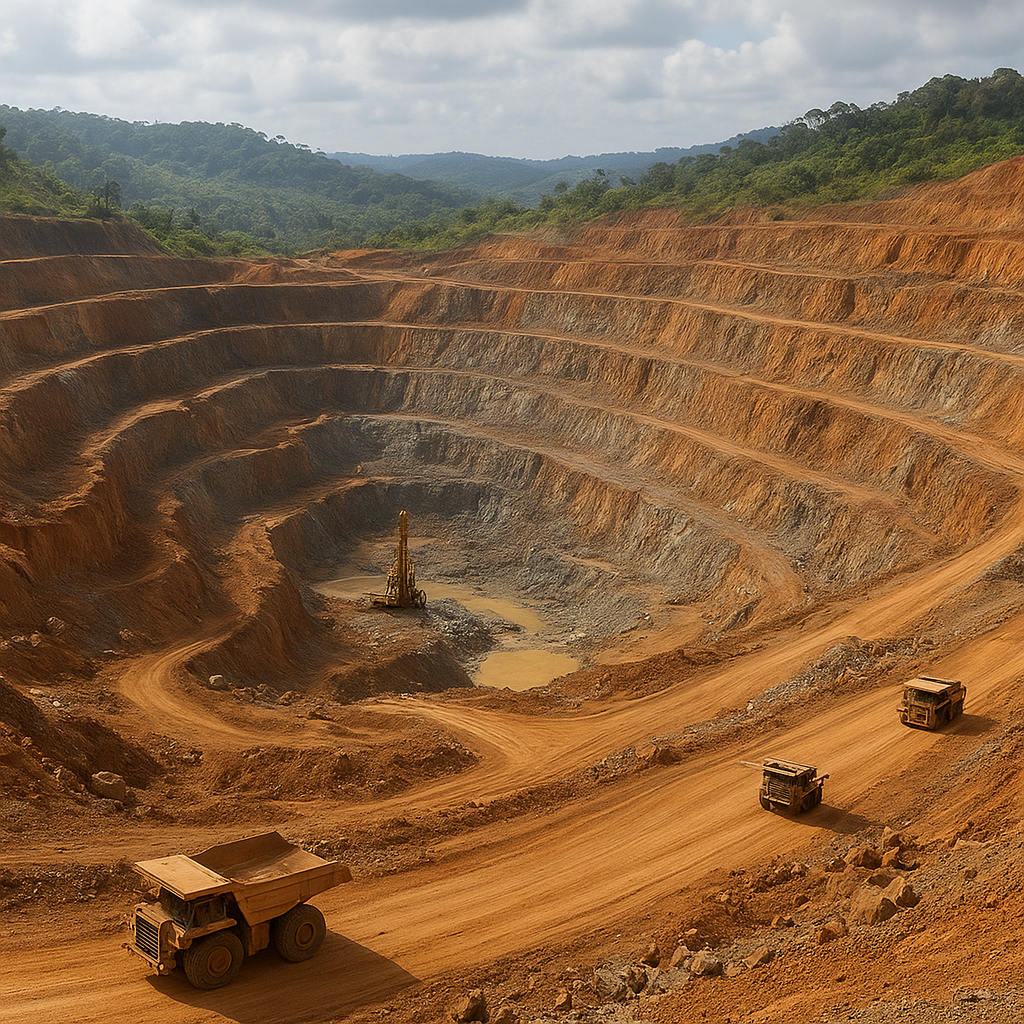
The name Tongon evokes one of the more important modern mining operations in West Africa. Located in the northern reaches of the country commonly known in English as the Ivory Coast (Côte d’Ivoire), the Tongon operation is a gold-producing mine that has played a notable role in regional development, government revenue and the local economy. This article describes where the mine is located, what is extracted there, the ways in which the mine matters economically, and several aspects and curiosities surrounding its geology, operations and social footprint.
Location and geological setting
The Tongon site sits in the northern part of Côte d’Ivoire, in a landscape of savanna, agricultural plots and smaller settlements. The mine is associated with crustal terranes and greenstone belts typical of West Africa, where ancient rocks host numerous gold deposits. These belts formed more than a billion years ago during the complex tectonic and metamorphic events that created the West African craton, and many of the region’s largest gold occurrences are concentrated along these structural corridors.
Geologically, Tongon is hosted within sequences of metamorphosed volcanic and sedimentary rocks with quartz-vein and shear-hosted gold mineralization. The deposit type is consistent with orogenic gold systems—disseminated and vein-controlled gold that is often found in folded and faulted greenstone sequences and adjacent granitoid intrusions. Prospecting and modern exploration techniques—including mapping, geochemistry and drilling—have enabled the delineation of ore bodies that are amenable to open-pit extraction.
Because of its geology, the mine’s development required a combination of surface excavation and a processing plant capable of treating oxide and transitional material. The mineralization at Tongon is typically free-milling to partially refractory, meaning that much of the gold can be recovered by milling and carbon-in-leach circuits after suitable comminution and sometimes modest pre-treatment.
What is mined and how it is extracted
The principal product of Tongon is, unsurprisingly, gold. The mine produces dore (semi-refined gold) that is further refined and sold on international markets. Extraction is carried out using conventional large-scale mining methods. The dominant approach is open-pit mining, which involves removal of overburden and extraction of ore in benches using wheel loaders, excavators, haul trucks and ancillary equipment.
Once ore is mined, it is transported to the process plant where it is crushed, milled and treated to liberate gold particles. Processing at modern operations typically uses a combination of gravity recovery, flotation in some cases, and a carbon-in-leach (CIL) circuit or similar cyanide-based leaching techniques to maximize recovery of fine gold. Tailings are managed in engineered containment facilities and subject to regulatory oversight and monitoring regimes.
As with many West African operations, a portion of recoverable gold can be amenable to gravity concentration — an important first-stage recovery that helps reduce cyanide consumption and operating costs. The plant design also reflects considerations for water balance, reagent supply, power reliability and waste management, given the remoteness of some infrastructure in northern Côte d’Ivoire.
Production, reserves and operational scale
Tongon is a major contributor to national gold output in Côte d’Ivoire. Annual production figures for a mine of this scale typically place it among the country’s leading metal producers, with many thousands of ounces of gold produced each year. The mine’s proven and probable reserves and additional resources support continued operations over multiple years, subject to commodity prices and ongoing exploration success.
The operation combines the mine, milling and support infrastructure such as access roads, accommodation camps, power supply arrangements, water treatment and tailings storage. Employment peaks during construction and then stabilizes during steady-state production, with a significant complement of technicians, operators, engineers and administrative staff represented from both the local population and expatriate expertise.
Economic significance at local, regional and national levels
The role of the Tongon mine extends well beyond rock and metal extraction. Its economic significance can be viewed across several vectors:
- Direct employment: The mine provides wages to hundreds—or in some operational phases to over a thousand—workers, creating livelihoods for families and stimulating local service industries.
- Indirect employment: Supporting industries such as transport, catering, equipment maintenance, security and contractors benefit from contracts and supply opportunities.
- Government revenue: Through royalties, corporate taxes, export revenues and permits, the mine generates fiscal income that can be allocated to public services and infrastructure.
- Infrastructure development: Roads, electrification projects, water supply improvements and communications upgrades implemented to support the mine frequently improve access for surrounding communities and can accelerate regional development.
- Local procurement: Where feasible, procurement policies prioritize local goods and services, stimulating entrepreneurship and the formalization of small businesses.
These impacts are not automatic; real benefits depend on corporate policies, government frameworks and the effectiveness of local procurement and training programs. Nonetheless, mining projects of this scale often represent some of the largest private investments in rural areas and can act as economic anchors for years.
Social and community dimensions
Social relations around a large mine are complex. The presence of an operation such as Tongon introduces both opportunities and stresses to rural communities. Positive outcomes frequently include wage income, improved local services and targeted community investments in education, health and small-scale farming programs. Mining companies commonly support community projects through corporate social responsibility programs, trust funds or direct investment, delivering new schools, clinics and water boreholes.
However, change can also be disruptive. Land access and compensation for agricultural areas affected by mine expansion are sensitive topics. The arrival of higher incomes for employees can inflate local prices and alter social dynamics. To manage this, effective stakeholder engagement, transparent compensation mechanisms and participatory development planning are essential. Community grievance mechanisms and independent monitoring can help maintain trust and reduce conflict.
Artisanal and small-scale mining (ASM) activity may be present in the broader region. ASM is driven by local opportunity and can create both cooperative arrangements and tensions with industrial operators. Responsible approaches aim to coordinate with local authorities, offer training and integrate ASM actors into safer, regulated frameworks where possible.
Environmental management and challenges
Large-scale mining inevitably raises environmental questions, and Tongon is no exception. Key environmental considerations include:
- Land disturbance: Open-pit mining alters landscapes and requires progressive rehabilitation planning to restore land for agriculture or natural vegetation.
- Water management: Processing plants need reliable water supplies and must ensure that water discharge meets environmental standards to protect downstream users and ecosystems.
- Tailings and waste rock: Secure containment and long-term stability of tailings facilities are critical to prevent contamination and minimize long-term liability.
- Chemical use: Cyanide is commonly used in gold processing and its safe handling, detoxification and monitoring are central to environmental stewardship.
- Biodiversity: Habitat loss and fragmentation may occur; environmental management plans aim to mitigate these impacts and sometimes include offset programs.
Modern operations implement environmental impact assessments (EIAs), continuous monitoring, and progressive rehabilitation. They also often adopt best-practice international standards and third-party verification where possible. Reclamation plans can include reshaping pit benches, replacing topsoil, revegetation with native species and converting certain disturbed areas to community uses such as grazing or agroforestry.
Governance, ownership and regulation
Mining in Côte d’Ivoire is governed by national mining codes, environmental regulations and contractual agreements between governments and mining companies. The sector typically involves multiple stakeholders: the operator, shareholders, national and local authorities, contractors and the affected communities. Concessions are granted with expectations around production targets, environmental performance, local employment and fiscal obligations.
Because of the scale of investment, major international companies and financial institutions are frequently involved as developers or financiers. These actors bring technical capacity and capital, but they also face scrutiny regarding transparency, benefit-sharing and adherence to social and environmental commitments. International frameworks such as the Extractive Industries Transparency Initiative (EITI) promote disclosure of payments and contracts to strengthen governance.
Interesting features and innovations
Several features make operations like Tongon interesting beyond their immediate commercial importance:
- Local-sourcing initiatives: Mines in West Africa often experiment with programs to train and equip local contractors, improving skills transfer and strengthening local supply chains.
- Community partnerships: Innovative community development agreements can formalize local expectations, co-fund infrastructure and create jointly managed development funds.
- Technical innovations: Adoption of remote sensing, digitized fleet management and improved processing technologies can boost recoveries and reduce environmental footprints.
- Renewable energy trials: To reduce carbon intensity and improve cost predictability, some mines in the region have trialed hybrid power systems that use solar arrays alongside diesel generation.
- Rehabilitation experiments: Progressive reclamation that integrates traditional land uses and agroforestry can provide prototypes for post-mining landscapes that support livelihoods.
Operationally, mines such as Tongon are living laboratories for adapting large-scale industrial practices to tropical and subtropical environments, seeking to balance economic returns with social responsibility and environmental protection.
Challenges and future prospects
The future prospects of a mine like Tongon depend on multiple, interacting factors:
- Gold price dynamics: Global bullion markets strongly influence project economics and extension decisions for underground or pit expansions.
- Exploration success: Ongoing exploration in and around the existing concession can add resources and extend mine life.
- Regulatory environment: Stability in mining laws, transparent permitting and predictable fiscal regimes encourage investment and operational continuity.
- Community relations: Continued positive engagement reduces the risk of disruption and increases the social license to operate.
- Environmental compliance: Effective environmental management and rehabilitation planning are essential for mine closure readiness and long-term sustainability.
If managed well, mines of this class can transition from being viewed only as extractive ventures to partners in regional development. The challenge lies in ensuring durable benefits for local populations and minimizing long-term liabilities that burden communities once extraction ends.
Notable social and cultural intersections
Mining projects inevitably intersect with culture and identity. In the area around Tongon, traditional land rights, clan affiliations and customary leadership structures play a role in access to land and the negotiation of benefits. Respectful engagement that recognizes these institutions and seeks to incorporate local knowledge into environmental and social planning tends to produce more stable outcomes.
Cultural heritage management is also a consideration. Prior to major earthworks, operations undertake surveys to identify archaeological and culturally significant sites so that they may be preserved or documented. In some instances, companies collaborate with local leaders to develop cultural preservation initiatives, festivals or education programs that celebrate local history while recognizing the realities of modern development.
Final observations and curiosities
Tongon exemplifies how a single mineral resource can shape economic geography. It demonstrates the technical complexity of modern gold production—blending geology, engineering and environmental science—and shows the multi-layered social impacts that large industrial activities bring to rural landscapes. From stimulating local commerce to prompting debates over land use and ecological stewardship, mines such as Tongon are focal points for development questions that many resource-rich countries face.
Some curious angles to consider:
- The interplay between industrial mining and artisanal activity nearby can generate entrepreneurial pathways but also regulatory headaches.
- Technological adoption—ranging from improved ore-sorters to remote operation tools—has the potential to reshape labour demands and skill requirements for host communities.
- Long-term closure planning is no longer an afterthought: forward-thinking operations work with stakeholders early to design post-mining land uses that support agriculture, biodiversity or recreation.
Overall, operations like Tongon are more than resource extraction sites: they are arenas where geology, economics, governance and society intersect. The choices made by operators, governments and communities will shape whether the mine’s presence becomes a long-term asset for regional development or a resource that delivers short-term gain with lingering costs. The stakes for sustainable outcomes are high, and the lessons learned here are relevant to resource projects across Africa and the globe.
Tongon, in the context of the Ivory Coast, remains an important example of modern gold mining—one that illustrates both the opportunities of mineral-led development and the responsibilities that accompany large-scale extraction. Its influence on production, local livelihoods and national economic planning ensures that the mine will continue to attract attention from policymakers, investors and communities for years to come. Responsible stewardship—covering environment, community relations and transparent management of reserves—will determine the ultimate legacy of this operation and others like it in the region.

