
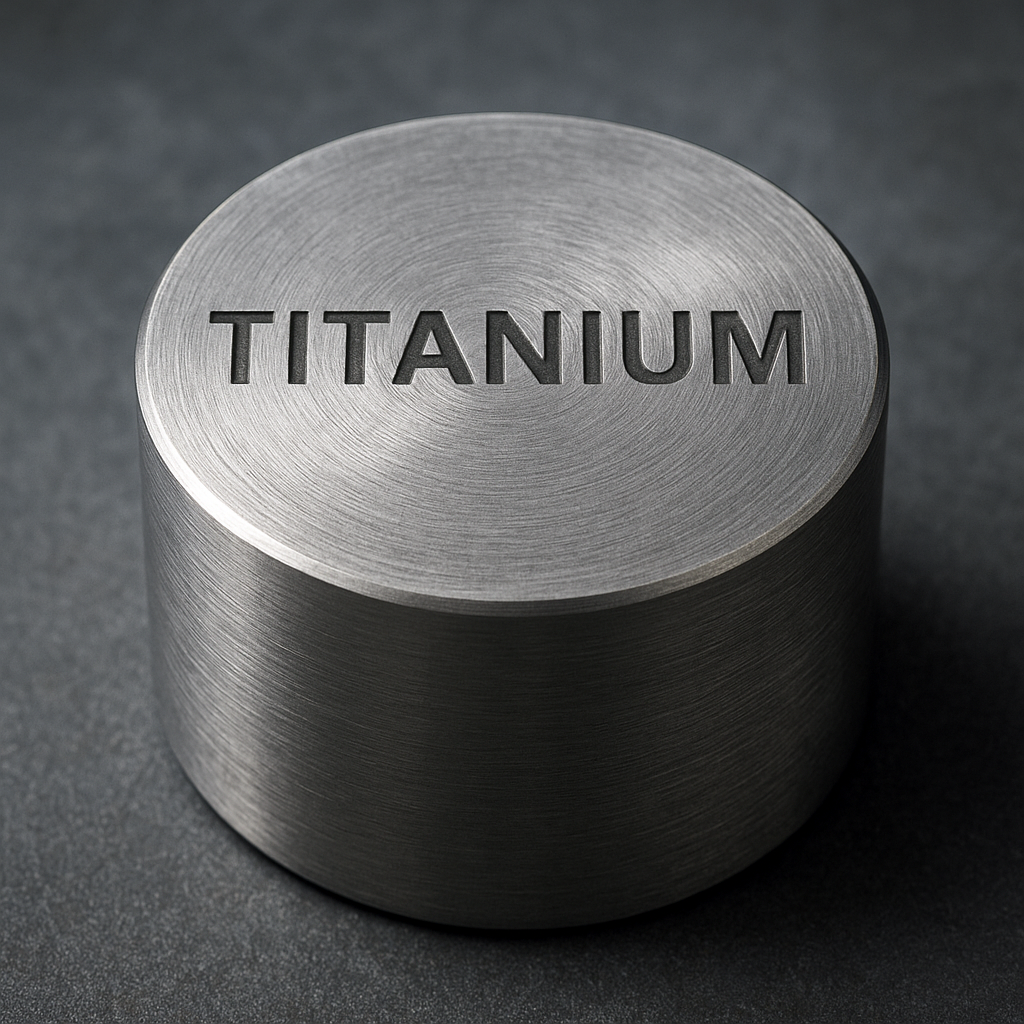
Titanium is a remarkable metal whose combination of properties has made it indispensable across a wide range of industries. From the deep sea to outer space, and from biomedical implants to everyday pigments, the role of this element extends far beyond its modest appearance. The paragraphs that follow explore the physical nature and geological occurrence of titanium, the technologies used to extract and process it, its principal and surprising applications, and ongoing innovations that hint at how its importance will continue to grow. Along the way, you will encounter technical, historical and environmental perspectives that illuminate why titanium remains a focus of materials science and engineering worldwide.
Physical and chemical characteristics
Titanium is a transition metal known for an outstanding balance of properties. It combines relatively low density with excellent mechanical performance: its strength-to-weight ratio is among the highest of commonly used metals. Pure titanium has a density roughly 60% that of steel but can match or exceed steel in tensile strength when alloyed. It has a high melting point (around 1,668 °C) and low thermal conductivity relative to other metals, which influences welding and heat-treatment practices.
A defining chemical feature of titanium is its tendency to form a stable, adherent oxide layer on exposure to oxygen. This thin film of oxide (mostly TiO2) confers exceptional corrosion resistance in many aggressive environments, including seawater and many chemicals. That oxide layer also enables surface treatments such as anodizing, which produces attractive, interference-based colors on jewelry and components without pigments.
Titanium has two primary crystallographic forms: the hexagonal close-packed alpha (α) phase at lower temperatures and the body-centered cubic beta (β) phase at higher temperatures. Alloying elements such as aluminum and vanadium stabilize the α phase, while elements like molybdenum and iron stabilize the β phase, enabling engineers to tailor mechanical and thermal behavior by composition and heat treatment.
Where titanium occurs and how it is produced
In nature, titanium does not occur as a free metal. It is most commonly found in minerals such as ilmenite (FeTiO3) and rutile (TiO2), and in less abundant minerals like anatase and perovskite. Large deposits of titanium-bearing ores are found in beach and heavy-mineral sands, as well as in hard rock deposits. The major global producers of titanium minerals include Australia, South Africa, China, and Canada.
Extraction and production routes
The pathway from mineral to metal is multi-step and energy-intensive. For pigment and chemical industries, TiO2 is extracted and processed into the white pigment that dominates paints, plastics and cosmetics. For metal production, ore is first converted to titanium tetrachloride (TiCl4) via chlorination, then reduced to metallic titanium using processes such as the Kroll or Hunter routes. The Kroll process, developed in the 1940s, remains the primary industrial method: TiCl4 is reduced by magnesium in an inert atmosphere to produce porous titanium sponge, which is then remelted and consolidated into ingots.
Recent decades have seen improvements in production efficiency and the development of alternative technologies, such as the chloride process (more selective and lower-waste for certain ores) and efforts to commercialize electrochemical and metallothermic reductions. However, primary titanium metal remains significantly more expensive than steel or aluminum, a factor that shapes its applications.
- Ilmenite — abundant feedstock, often processed to TiCl4 or refined to synthetic rutile.
- Rutile — higher natural TiO2 content, easier to process to titanium dioxide pigment or TiCl4.
- Titanium sponge — porous metal product after reduction, later melted into usable alloys.
Principal applications and industry sectors
Titanium and its compounds serve diverse roles. Here are the major application areas and why titanium is chosen:
- Aerospace: The low weight and high strength of titanium alloys make them ideal for airframes, engine components, and structural parts in both aircraft and spacecraft. The metal maintains mechanical integrity at elevated temperatures, which is critical for jet engines and high-performance components.
- Medical devices: Because of excellent biocompatibility and corrosion resistance, titanium is widely used for implants — hip and knee replacements, dental implants, bone plates and screws. Its ability to osseointegrate (bond with bone) is vital to long-term implant success.
- Marine and chemical processing: Titanium’s resistance to seawater and many corrosive chemicals makes it the material of choice for heat exchangers, desalination equipment, and chemical reactors where long life and reliability offset higher cost.
- Consumer products and sports equipment: Jewelry (often anodized), high-end bicycles, golf club heads, and other performance sports goods take advantage of titanium’s lightness and durability.
- Pigments and coatings: Titanium dioxide (TiO2) is one of the most produced white pigments worldwide, prized for brightness, opacity, and UV resistance. TiO2 is used in paints, plastics, paper, and sunscreens.
- Energy and power: Titanium is used in heat exchangers, steam condensers, and increasingly in components for nuclear and solar applications. Emerging alloys such as titanium aluminide (TiAl) are being studied for turbine blades in aerospace due to their low density and high-temperature capability.
Specialized alloys and engineering grades
The most famous structural alloy is Ti-6Al-4V (6% aluminum, 4% vanadium), balancing strength, toughness and corrosion resistance. Beta titanium alloys and near-alpha alloys are tailored for specific deformation, heat treatability or high-temperature performance. Additive manufacturing (3D printing) technologies have expanded design possibilities for complex, lightweight components and tool consolidation using titanium powders.
Titanium in medicine and biotechnology
Titanium’s combination of biocompatibility, corrosion resistance and mechanical properties has revolutionized orthopedics and dental medicine. Surgeons and implant designers value titanium for its capacity to integrate with bone tissue without provoking chronic inflammation. Surface modifications — from roughening and coatings to bioactive ceramics like hydroxyapatite — further promote bone ingrowth and implant longevity.
Beyond structural implants, titanium and TiO2 are used in medical device housings, surgical instruments, and implantable devices where MRI compatibility, non-magnetic behavior, and sterilizability are important. Research into porous titanium scaffolds, 3D-printed patient-specific implants, and antimicrobial surface treatments continues to expand the clinical roles of the metal.
Challenges: cost, processing and material limits
The primary barrier to wider adoption of titanium is cost. Extraction and reduction routes consume significant energy and require specialized handling (TiCl4 is corrosive and toxic). Machining titanium is also more difficult than machining aluminum due to low thermal conductivity and strong reactivity at elevated temperatures, which can cause tool wear and workpiece surface reactions.
Welding and joining require controlled atmospheres and attention to alpha-case formation (oxygen-stabilized brittle surface layer). Titanium is also sensitive to contamination by elements like oxygen, nitrogen and carbon during melting, which degrade mechanical properties. These processing restraints drive research into improved melting, refining, and additive manufacturing techniques to reduce waste and improve material consistency.
Environmental, health and regulatory aspects
Titanium dioxide as a pigment offers great benefits but has prompted regulatory attention. Inhalation of fine TiO2 dust at high concentrations has been associated with lung effects in animal studies; regulatory agencies have taken cautious steps — for example, classifying TiO2 as a suspected inhalation carcinogen under certain conditions. These classifications generally pertain to occupational exposures to dust, not to the use of finished paints or regulated sunscreen formulations, though they have influenced labeling and handling requirements in manufacturing.
On the broader environmental front, titanium mining and pigment production generate waste streams (e.g., chloride process slags, sulfuric acid effluents) that need careful management. Recycling of titanium metal, particularly from aerospace scrap and end-of-life components, is increasingly important for sustainability. Titanium is highly recyclable without loss of properties; improving collection and remelting processes reduces reliance on primary production and cuts the embodied energy of titanium products.
Innovations and interesting technological trends
Several developments make titanium an especially dynamic material today:
- Additive manufacturing: 3D printing with titanium powders enables complex geometries, optimized lattices and patient-specific implants that were impossible or uneconomical with traditional forging. This has spurred new component designs in aerospace and medical devices.
- Titanium aluminides and advanced high-temperature alloys are being refined for turbine and engine applications, offering potential weight and efficiency gains at elevated temperatures where conventional nickel superalloys dominate.
- Surface engineering: functional coatings, micro-texturing, and bioactive surface chemistries improve wear resistance, reduce bacterial colonization, and promote bone integration.
- Nanostructured titanium and TiO2 photocatalysts: research explores applications from self-cleaning surfaces to environmental remediation, where TiO2’s photocatalytic properties can degrade organic pollutants under UV or modified visible light activation.
- Hydrogen and energy storage research: titanium hydrides and lightweight titanium alloys are being investigated within hydrogen storage concepts and in components for hydrogen infrastructure, though metals with better hydrogen affinity are typically preferred for storage materials.
Cultural, historical and linguistic notes
Titanium was named after the Titans of Greek mythology, reflecting a sense of elemental strength and endurance. The element was first identified in mineral form in the late 18th century by the English clergyman and mineralogist William Gregor; the name “titanium” was given by the German chemist Martin Heinrich Klaproth in the 1790s. Pure metallic titanium became practically producible only in the 20th century, with industrial-scale methods such as the Hunter and Kroll processes enabling modern applications.
Outside industrial contexts, titanium captures public imagination because of its apparent paradox: a metal that is both lightweight and exceptionally durable, used for delicate surgical implants and for the harshest aerospace environments alike. Its physical and symbolic attributes have made it a metaphor for strength and resilience in popular culture.
Where researchers and engineers are focusing now
Current research priorities include reducing the cost and environmental footprint of titanium production, improving alloy performance for higher temperatures and fatigue resistance, and advancing surface treatments that extend component life and biological compatibility. Advances in computational materials science also support the design of new titanium-based materials with targeted microstructures and predictable performance. As manufacturing technologies evolve, particularly additive manufacturing and near-net-shape processes, titanium is likely to appear in more complex, optimized structures across industries.
Final remarks on innovation (no summary)
The story of titanium is one of continuous adaptation: from black sands and mineral concentrates to precision implants and jet engines. Its unique mix of properties ensures that it will remain a material of choice where performance outweighs cost. At the same time, technical challenges and environmental concerns push researchers to find cleaner processes, better recycling pathways, and smarter alloy designs that expand titanium’s utility while minimizing its footprint.