
Tin is a versatile and historically significant element whose quiet presence shapes technology, industry, and daily life. From the Bronze Age to modern electronics, tin’s physical and chemical properties have enabled a wide range of applications — often hidden, sometimes controversial, and frequently surprising. This article explores where tin is found, how it is processed and used, and several intriguing scientific and societal topics connected with this unassuming metal.
Occurrence, Extraction, and Historical Role
Tin is most commonly encountered in nature as the oxide mineral cassiterite (SnO2), which occurs in hard-rock lodes and secondary alluvial deposits. Historically, alluvial tin deposits — stream and river gravels — were easiest to exploit and gave rise to early mining centers. Archaeological and historical evidence links tin to the development of bronze (an alloy of copper and tin) during the Bronze Age, a transformation that reshaped tools, warfare, and trade networks across Eurasia. Maritime trade routes for tin were so important in antiquity that classical writers mention islands and trading partners specifically associated with tin supplies.
Modern primary tin production concentrates in a handful of countries. Major producers in recent decades have included China, Indonesia, Peru, Bolivia, and Myanmar. Tin ore is typically concentrated by gravity separation or flotation and then smelted or reduced to produce metallic tin. In addition to large-scale industrial operations, artisanal and small-scale mining (ASM) contributes a significant portion of global tin output. ASM can be an important livelihood in rural regions but also raises concerns about environmental degradation, unsafe working conditions, and regulatory compliance.
Global trade dynamics for tin are influenced by its classification as a non-ferrous industrial metal. Tin is traded on markets and through long-standing industrial supply chains; recycled tin and scrap recovery play important roles in meeting demand, particularly in developed economies with established metal recovery infrastructures.
Physical and Chemical Properties
Tin is the chemical element with atomic number 50. It is a post-transition metal known for its malleability and resistance to corrosion in many environments. The metal has a melting point of 231.93 °C and exhibits a relatively low density compared with many transition metals. Several features of tin are noteworthy from a materials-science perspective.
- Allotropes and low-temperature behavior: Tin exists in distinct allotropes. The metallic, ductile white tin (beta-tin) is stable at room temperature, while the brittle, nonmetallic gray tin (alpha-tin) becomes stable below about 13.2 °C. The transformation from white to gray tin — historically termed tin pest — can cause disintegration of objects made of poorly alloyed tin under long-term cold exposure. Although rare in everyday environments, the phenomenon has captured the imagination of metallurgists and historians.
- Oxidation states and compounds: Chemically, tin commonly exhibits +2 (stannous) and +4 (stannic) oxidation states. Compounds like tin(II) chloride (SnCl2) serve as reducing agents in synthesis, while tin(IV) oxide (SnO2) is a stable oxide used in ceramics and as a transparent conductive oxide when doped. Organotin compounds (organic molecules bonded to tin) have found industrial applications but also raised environmental concerns due to toxicity and persistence.
- Electrical and mechanical behaviors: Tin becomes superconducting at very low temperatures (critical temperature around 3.7 K for beta-tin). Mechanically, tin exhibits an audible “tin cry” — a squealing sound heard when a bar of tin is bent — due to crystal twinning and slip processes in the metal.
Major Uses and Applications
Tin’s properties have led to an array of practical uses across industries. Some applications remain traditional, while others are modern and technologically sophisticated.
Soldering and Electronics
One of tin’s signature roles in contemporary industry is in solder. Solder alloys based on tin have been essential for creating reliable electrical and mechanical joints. For many decades, the most common solder was a tin-lead alloy (typically Sn-Pb), prized for its favorable melting characteristics and mechanical properties. Health, environmental, and regulatory pressures led to widespread adoption of lead-free solders, often tin-silver-copper (Sn-Ag-Cu) or tin-copper blends. Lead-free solders present technical challenges — such as higher melting temperatures and changes in reliability — but have become standard in consumer electronics and regulatory contexts.
Electronics also reveal one of tin’s problematic behaviors: the formation of microscopic conductive filaments known as whiskers. Tin whiskers can spontaneously grow on electroplated tin surfaces and cause short circuits in high-reliability systems, including aerospace and medical devices. Mitigation strategies include using alloyed platings, nickel underlayers, conformal coatings, and careful design.
Alloys: Bronze, Pewter, and Beyond
Tin is a key alloying element. Bronze — an alloy of copper and tin — was historically transformative, enabling harder and more durable tools and weapons than pure copper. Today, bronze remains critical for bearings, springs, musical instruments, and artistic casting due to its wear resistance and attractive patina.
Pewter is a tin-based alloy combined with antimony, copper, or bismuth to create a low-melting, easily castable material used for decorative and functional objects. The balance of alloying elements can tune pewter’s hardness, color, and melting range.
Tin Plating and Packaging
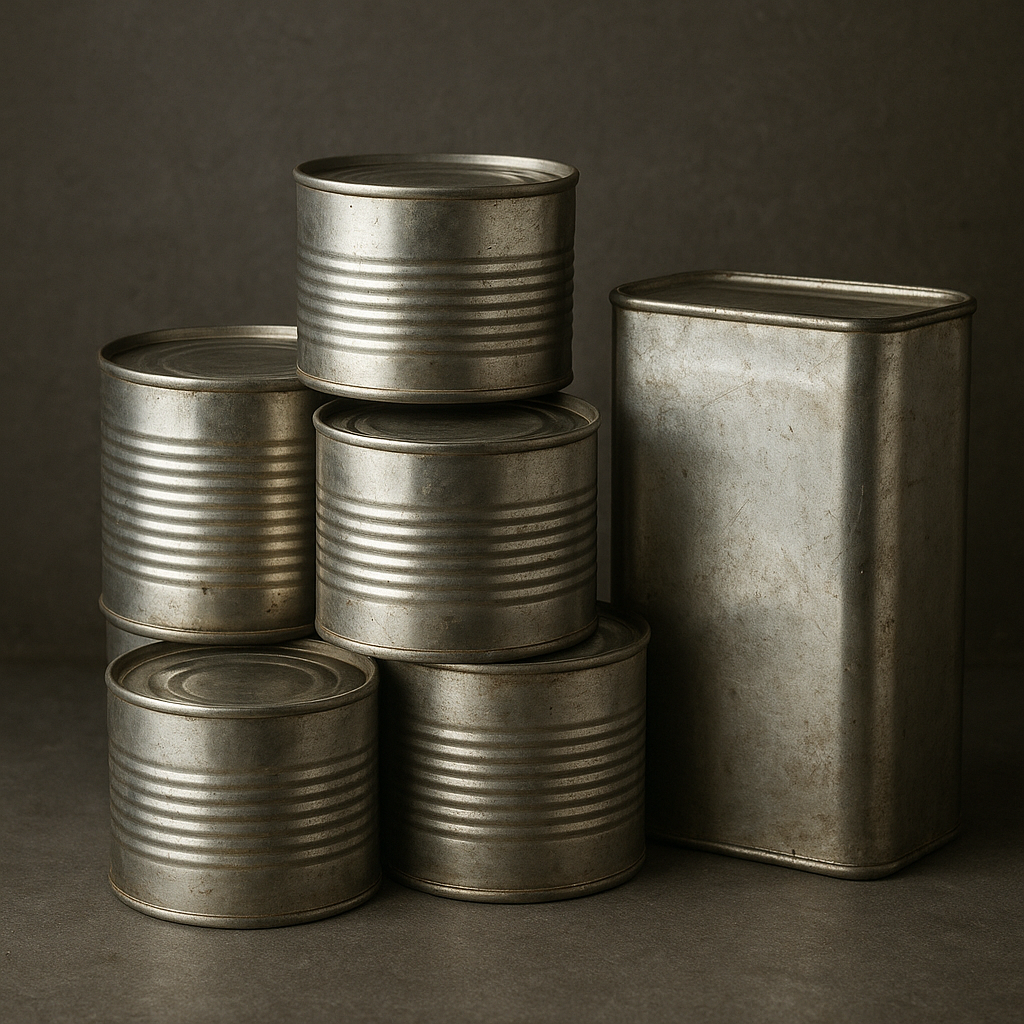
Tinplate — steel sheet coated with a thin layer of tin — revolutionized food packaging and preservation. The corrosion-resistant tin layer protects steel from rust and provides a food-safe surface for cans and containers. Even though many modern cans use other coatings, tinplate remains important for specific uses and offers a highly recyclable packaging material.
Specialty Uses: Optoelectronics, Glass, and Batteries
Tin dioxide (SnO2), when doped (for example with fluorine, producing FTO), becomes a transparent conductive oxide used in architectural glass, heated windows, and as electrodes for solar cells. Research into perovskite solar cells includes tin-based perovskites (as potential alternatives to lead-based perovskites) because tin can occupy similar lattice positions; however, tin oxidation and stability are major research challenges.
In energy storage, tin and tin oxides have been investigated as high-capacity anode materials for lithium-ion and other rechargeable batteries. Tin offers a high theoretical capacity compared with graphite, but large volumetric changes during lithiation lead to mechanical degradation. Contemporary approaches involve nanostructuring, alloying, and carbon composites to manage expansion and improve cycle life.
Chemistry and Environmental Health
Tin’s chemistry intersects with environmental and public-health concerns. Elemental tin and many inorganic tin salts have relatively low acute toxicity compared with heavy metals like lead or mercury. However, some organic tin compounds — collectively called organotin compounds — are highly toxic to aquatic life and humans. Tributyltin (TBT), once widely used as a marine antifouling agent on ship hulls, caused severe ecological damage (e.g., imposex in mollusks). Regulators have restricted the use of many organotins, and remediation and monitoring remain important.
Tin in canned food is typically present at trace levels and generally considered safe when packaging is intact and properly lined. Nevertheless, corrosion of poorly coated tinplate and contamination from unsafe manufacturing can introduce higher levels of tin or other harmful substances.
From a regulatory standpoint, tin is one of the “3TG” minerals (tin, tungsten, tantalum, and gold) that receive scrutiny in conflict-mineral legislation and supply-chain due diligence frameworks. Ensuring that tin is sourced ethically — avoiding funding armed conflicts or human-rights abuses — is a priority for many electronics manufacturers and purchasers.
Mining, Recycling, and Economic Aspects
Global tin markets are determined by production from mines, recycled scrap supply, and demand from electronics, packaging, and specialty sectors. Recycling plays a significant role: tin is relatively easy to recover from scrap, including solder dross, electronic waste, and tinplate cans. Recycled tin reduces the environmental footprint of production and can stabilize supply chains.
Environmental and social impacts of tin mining are notable where practices are poorly managed. Open-pit workings, sedimentation of rivers, and chemical pollution can damage ecosystems. Artisanal miners often work with simple equipment and limited protective measures, exposing themselves to hazards and creating challenges for traceability. International standards and certification schemes, along with buyer due diligence, aim to improve practices and reduce risks in supply chains.
Fascinating Phenomena and Future Directions
Tin is associated with several unique scientific and technological questions that continue to attract research attention.
- Tin pest: The low-temperature allotrope transformation remains an emblematic problem in materials science. Although modern alloys and operational temperatures minimize risk, the phenomenon provides insight into phase stability, kinetics, and historical failure modes.
- Whisker mitigation and reliability: Understanding and preventing tin whisker growth is an active area of study in electronics reliability. Mechanical stress, electrochemical factors, and microstructure influence whisker propensity; novel coatings and alloying strategies are continually evaluated.
- Lead-free solder innovation: As regulations tightened around lead usage, researchers pursued new tin-based solder chemistries and fluxes, balancing melting behavior, joint integrity, and long-term performance in diverse environmental conditions.
- Research into tin-based perovskites and other semiconducting tin compounds offers potential to reduce reliance on lead in next-generation photovoltaics, though chemical stability remains a barrier.
- Advanced battery research continues to explore tin-containing anodes and tin oxide derivatives as pathways to higher-capacity storage, where success could influence portable electronics and electric-vehicle technologies.
Practical Considerations and Everyday Encounters
Most people encounter tin indirectly: in the solder that holds circuit boards together, in metal cans lining grocery shelves, or in alloyed household objects like pewterware and bronze sculptures. Understanding tin’s properties helps explain why circuits fail due to whiskers, why certain solders require specific reflow profiles, and why recycling programs can reclaim a valuable industrial metal from spent products.
For hobbyists and professionals working with metals, appreciating tin’s behavior at low temperatures, its ductility, and its reactions with acids and halides aids in safe handling and effective processing. In cultural contexts, tin artifacts tell stories about trade, technology, and craftsmanship over millennia.
Concluding Thoughts
Although it rarely dominates headlines, tin remains a cornerstone of numerous technologies and traditions. Its role in enabling bronze shaped human history, while its modern applications in electronics, packaging, coatings, and energy technologies continue to make it an indispensable industrial metal. Ongoing challenges — from environmental impacts of mining to electronic reliability issues — show that tin’s story is both technical and societal. Researchers, manufacturers, regulators, and communities all have parts to play in ensuring that tin’s benefits are realized responsibly, sustainably, and with attention to the curious science that underlies this quiet but powerful metal.