
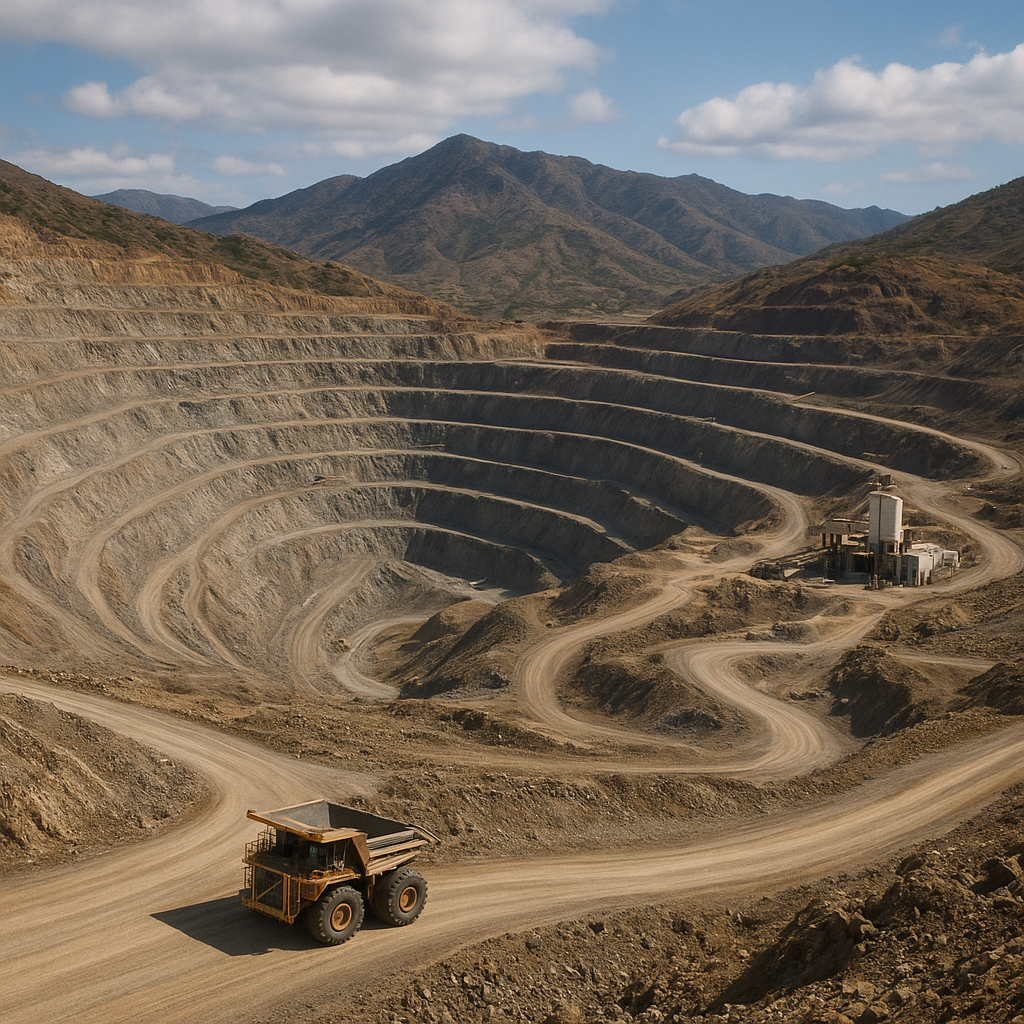
The following article examines the geology, operations, and broader significance of the Thompson Creek mine in the United States, focusing on its role as a source of molybdenum and the economic, technical and environmental dimensions of that activity. The mine has been an important component of the North American molybdenum supply chain and serves as a case study in modern open-pit mining of porphyry-style deposits. The text below explores where the operation is located, what is extracted, how it is processed, and several noteworthy aspects that illustrate the mine’s place in regional and global contexts.
Location and geological setting
The Thompson Creek mine is located in central Idaho, in Custer County, in the mountainous terrain of the northern Rocky Mountain region. It sits near small rural communities that developed historically around ranching and mining, and access is provided by regional highways and service roads built to support heavy equipment and concentrate transport. The mine occupies a landscape of high-elevation basins, ridgelines and valleys where glacial and fluvial processes have shaped access and site design.
Geology of the deposit
The resource at Thompson Creek is a classic porphyry-style molybdenum deposit. In this type of deposit, molybdenum-bearing minerals are distributed in a large, disseminated body of altered igneous rock rather than in narrow high-grade veins. The mineralization is hosted in intrusive rocks and associated hydrothermal alteration zones that spread the metal through broad volumes of rock, making them suitable for large-scale open-pit mining methods. The primary molybdenum mineral is molybdenite (MoS2), which occurs in association with quartz, feldspar, and various sulfide phases.
Exploration and resource characterization
Exploration of porphyry molybdenum systems like Thompson Creek typically involves systematic drilling, surface mapping, geophysical surveys and geochemical sampling to define the geometry and grade distribution of the orebody. The deposit’s physical characteristics—broad lateral extent, moderate grades and depth continuity—make it amenable to bulk mining. Resource and reserves estimates are continually updated by operators to reflect new drilling, improved geological models, and changing economic parameters such as metal prices and recovery rates.
Mining and processing operations
Thompson Creek has historically been developed as a large-scale mining operation that extracts and processes bulk ore to produce molybdenum concentrate. The mine’s infrastructure includes the open pit itself, waste rock storage facilities, a mill and concentrator, tailings management, water treatment facilities, and logistics systems for concentrate transport.
Mining methods and material handling
The mine uses conventional bench-based open-pit mining practices. Drilling, blasting, loading and hauling are the core activities that move ore to the mill and send waste rock to engineered dumps. Efficient pit design and slope stability analysis are crucial to ensure safe and cost-effective removal of overburden and ore. Modern mine fleets—large shovels and haul trucks—allow economies of scale that are necessary for extracting porphyry deposits with relatively low grades but high tonnages.
Processing and concentrate production
After extraction, ore is crushed and ground to liberate molybdenite particles from host rock. The mill typically employs flotation to separate molybdenite (molybdenum sulfide) from other minerals. The flotation process produces a concentrated product that contains a much higher percentage of molybdenum and is suitable for shipment to smelters and roasters where further refining transforms the sulfide concentrate into marketable molybdenum chemicals or metal. Robust on-site processing facilities, including reagent systems, thickeners and filtration equipment, are critical to producing a concentrate with acceptable grade and recoveries.
Logistics and downstream steps
- Transport: Concentrate is typically trucked to railheads or transshipment points and then shipped to smelters domestically or overseas.
- Smelting and refining: Concentrate is roasted to molybdenum oxide (MoO3) and then reduced or chemically processed to produce molybdenum metal and other products.
- Markets: The finished molybdenum products are sold to steelmakers, chemical producers and specialty alloy manufacturers worldwide.
Economic significance and market context
Molybdenum is a critical alloying element used primarily to strengthen steel and stainless steel, improve high-temperature stability, and provide corrosion resistance. Because of these properties, molybdenum is essential in infrastructure, energy, transportation, and industrial machinery. The Thompson Creek mine contributed to domestic supply of this strategic metal and helped reduce reliance on imports during periods of constrained global supply.
Contribution to regional and national economy
The economic footprint of a mine like Thompson Creek extends beyond direct payrolls and company profits. Local and regional effects include:
- Employment: Jobs for miners, mill operators, engineers, environmental specialists, and administrative staff.
- Service industries: Support from local contractors, trucking firms, maintenance providers and hospitality services.
- Municipal revenues: Property taxes, fees, and royalties that fund schools, roads and community services.
- Export earnings: Concentrate exports generate foreign exchange and support national mineral balances.
Fluctuations in molybdenum prices influence the operational decisions at porphyry mines. When prices are high, low-grade resources become economically viable and production typically increases; during price downturns, mines may scale back, place parts of the operation on care-and-maintenance, or suspend production while keeping infrastructure intact.
Market dynamics and strategic importance
Molybdenum’s demand is linked to global steel production, oil and gas activity (where high-strength, corrosion-resistant alloys are required), and emerging technologies that rely on specialty metals. Because relatively few mines produce molybdenum as a primary product—the metal is often recovered as a byproduct of copper mining—operations that are dedicated molybdenum producers are especially important for maintaining diversified sources. Mines like Thompson Creek have therefore been viewed as strategically valuable for national supply security.
Environmental management and reclamation
Mining operations carry environmental responsibilities that extend from active extraction through closure and post-closure monitoring. Thompson Creek’s operation has been subject to both regulatory oversight and voluntary best-practice initiatives aimed at minimizing ecological impacts and ensuring long-term site stability.
Key environmental considerations
- Water management: Preventing contamination of surface and groundwater through controlled tailings storage, water treatment plants and seepage collection systems.
- Tailings and waste rock: Designing secure storage facilities, monitoring geotechnical stability, and implementing measures to limit acid generation from sulfide-bearing materials.
- Dust and emissions control: Using water sprays, covers and vegetative buffers to reduce dust from haul roads and exposed surfaces.
- Progressive reclamation: Reclaiming disturbed land in stages during operations to reduce the final closure burden and restore habitat.
Reclamation planning typically includes contouring waste rock and tailings, establishing drainage, capping potentially reactive materials, and revegetation with native species to restore ecological function. Long-term monitoring is necessary to ensure that water quality and landscape stability meet regulatory standards.
Community engagement and permitting
Effective environmental management also requires sustained engagement with local stakeholders, including nearby towns, indigenous groups, recreational users and state and federal regulators. Permitting processes demand extensive baseline studies and performance guarantees to ensure that the company can complete reclamation and address unforeseen environmental liabilities.
Operational challenges and resilience
Operating a large molybdenum mine involves a range of technical, economic and social challenges. Market volatility is perhaps the most significant: molybdenum prices are cyclical and sensitive to global steel demand and macroeconomic conditions. Mines must maintain flexible cost structures and prudent capital management to navigate these cycles.
Technical and operational risks
- Geotechnical stability: Maintaining safe pit slopes and managing highwall conditions in an evolving open pit.
- Processing variability: Dealing with changes in ore mineralogy that can affect grindability and flotation performance.
- Water scarcity and quality: Ensuring reliable water supply for processing while protecting local water resources.
- Logistics constraints: Seasonal weather and remote location can complicate concentrate transport and access to skilled labor.
Mitigating these risks usually involves investment in engineering studies, contingency planning, and continuous improvement programs that adapt operations as conditions change.
Interesting aspects and lesser-known facts
Beyond its obvious role as a mineral producer, the Thompson Creek operation offers a number of intriguing angles for observers interested in mining technology, regional history and material science.
1. The nature of porphyry molybdenum deposits
Porphyry molybdenum systems represent one of the few deposit classes where large tonnages of a specialty metal can be recovered economically at relatively low grades because of their sheer size. The scale of ore bodies like Thompson Creek makes them interesting to geologists studying crustal fluid systems and magmatic-hydrothermal evolution.
2. Processing challenges and innovations
Continuous improvements in flotation chemistry and grinding efficiency can make a major difference in recoveries and concentrate quality. Even small gains in molybdenite recovery translate to significant revenue for a mine producing millions of tonnes of ore. Mines often adopt novel reagent regimes, automation and instrumentation to optimize plant performance.
3. Local cultural and historical ties
Many mining communities in Idaho have deep historical roots tied to earlier eras of mineral exploration and extraction. The presence of a modern mine often revives some aspects of that heritage while presenting opportunities for local economic diversification through supply contracts and services.
4. Supply chain implications
Because molybdenum is a component in many strategic industrial applications, mines like Thompson Creek are nodes in larger supply chains that affect steel mills, oil and gas fabricators, and manufacturers of high-performance alloys. Disruptions or expansions at a single mine can ripple through markets and influence sourcing decisions globally.
5. Remnant values: beyond the concentrate
Modern closure planning looks at mines as long-lived engineering projects that can be repurposed. Tailings footprints and water management infrastructure can sometimes be converted for other community uses after careful remediation, and some former mine sites have been transformed into wildlife habitat, recreation areas or even industrial real estate with proper planning.
Conclusion of exploration (no summary)
The Thompson Creek operation exemplifies many of the characteristics of contemporary molybdenum mining: a large porphyry deposit in a remote but accessible region, substantial milling and flotation infrastructure, and an integrated approach to economic contribution, environmental stewardship and community engagement. Its role in supplying molybdenum—an element essential to modern industry—demonstrates how a single mine can affect manufacturing, national strategic interests and local livelihoods. While cyclicality and environmental obligations present ongoing challenges, the technical solutions and regulatory frameworks developed around operations like Thompson Creek also reflect the maturity of modern mining practice.

