
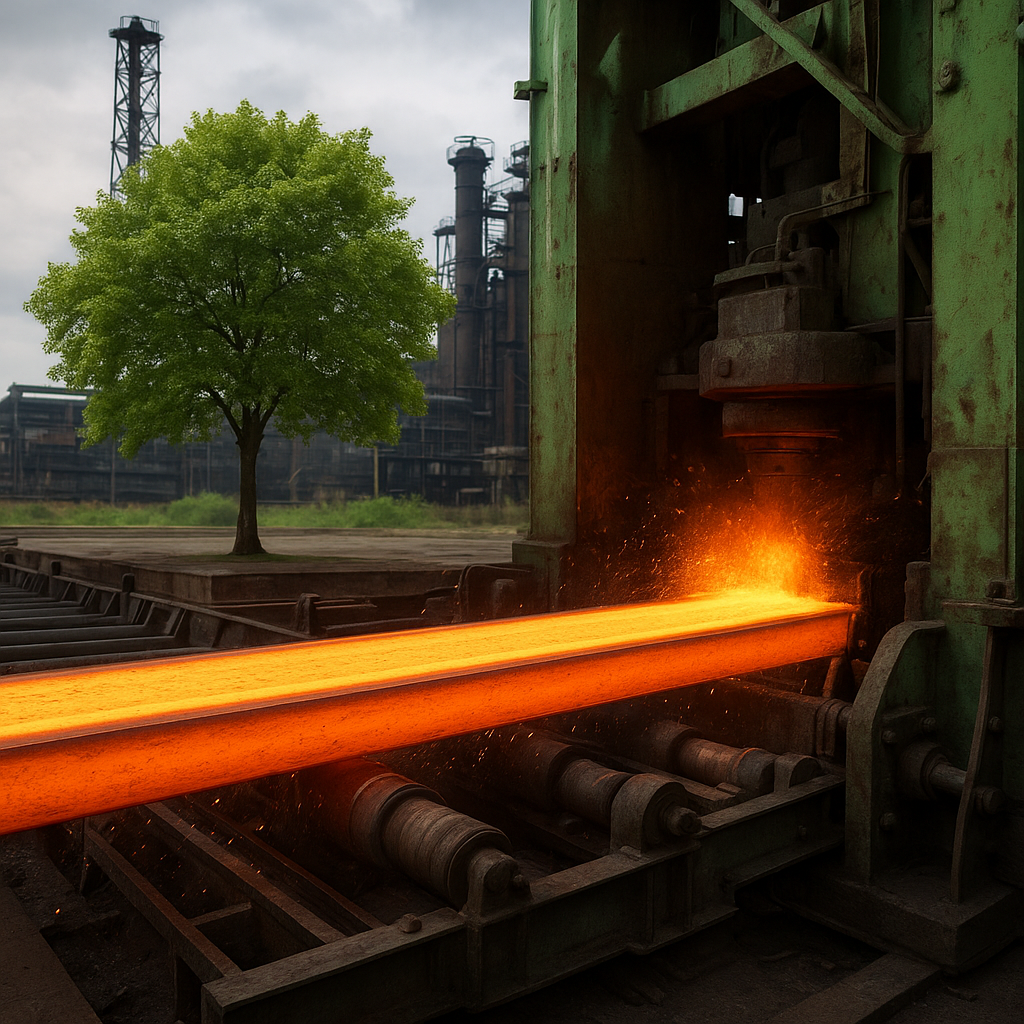
The global steel industry is undergoing a transformation driven by climate goals, technological innovation and changing market expectations. As companies and governments pursue pathways to cut carbon, a new generation of low-carbon and zero-carbon steel — often called green steel — is emerging. This transition will not only alter how steel is produced, but also reshape global metal markets, raw-material flows and industrial investment patterns. The following analysis explores the technological drivers, the implications for metal demand, the role of policy and finance, and the broader consequences for industrial supply chains.
Technological pathways to cleaner steel
Steelmakers can reduce greenhouse-gas footprints through several complementary pathways, each with distinct material and infrastructure implications. Two dominant near-term routes are electrification via Electric Arc Furnaces (EAFs) and Direct Reduced Iron (DRI) using low-carbon reductants. Longer-term options include carbon capture and storage (CCS) paired with existing blast furnaces, and process innovations that alter steel chemistry and recycling systems.
Electric Arc Furnaces and scrap reliance
EAFs melt steel scrap using electricity rather than relying on blast furnaces and coke. This approach reduces direct process emissions where electricity is decarbonized. A shift toward EAFs increases demand for high-quality scrap, incentivizes improved collection and sorting systems, and raises the value of scrap-processing equipment. However, global scrap availability is constrained by existing steel stocks in long-lived infrastructure and by the current mismatch between scrap quality and industry needs.
Hydrogen-based DRI and new iron feedstocks
DRI processes typically use natural gas or coal-derived reductants to remove oxygen from iron ore, producing sponge iron later melted in an EAF. Replacing fossil reductants with hydrogen produced via electrolysis (green hydrogen) creates a near-zero-carbon route. Hydrogen-DRI demands high-grade iron ores with low contaminants and may increase need for pelletisation and beneficiation plants. It also triggers demand for large-scale hydrogen production and proximate renewable generation.
Hybrid and CCS solutions
For existing blast-furnace capacities, CCS can be used to abate emissions while retaining current metallurgical practices. Such solutions maintain demand for metallurgical coal and coke to some degree, albeit paired with capture technologies and CO2 transport infrastructure.
How green steel shifts metal demand
The transition to low-carbon steel modifies demand patterns across a broad range of metals and materials. Some traditional inputs may decline, others will rise, and new materials and equipment will become significant. Key expected impacts include:
- Reduced demand for coking coal and coke: As hydrogen-DRI and EAF routes expand, metallurgical coal demand should fall, affecting countries and companies specialized in coking-coal mining.
- Increased demand for high-grade iron ore: DRI requires higher-grade concentrates and pellets. Producers of premium ores may capture price premiums and face pressure to scale pellet plants and beneficiation capacity.
- Greater value placed on scrap and recycling infrastructure: Scrap becomes a strategic feedstock for EAF-based systems, elevating the importance of collection, sorting, and processing technologies.
- More demand for copper and electrical metals: Electrification — from EAFs to electrolyzers and grid expansions — increases needs for copper, aluminium conductors, and other electrical infrastructure metals.
- Materials for hydrogen and storage systems: Electrolyzers, compressors and pipelines require metals such as stainless steels, nickel alloys and specialized coatings; grid-scale batteries and flow-battery technologies may raise demand for vanadium, lithium or other elements depending on chosen storage solutions.
- Continued niche demand for alloying elements: Elements like chromium, manganese and nickel remain vital for stainless and specialty steels, and their demand will be shaped more by end-use requirements than by decarbonization alone.
Overall, while demand for metallurgical coal is likely to decline substantially over decades, demand for certain metals — particularly high-grade iron ore, copper and materials linked to hydrogen and electrification — is expected to rise. The net volume of primary iron ore used may not fall in the near term because scrap limits and the need for high-quality virgin iron in many applications persist.
Supply chain transformations and geographic effects
Green steel does not exist in isolation; it requires new upstream and downstream linkages. Industrial geography will shift as steelmakers locate near renewable energy sources, water supplies for electrolysis, or existing gas grids for transitional hydrogen. This spatial reconfiguration will produce winners and losers among producing regions and service providers.
Concentration of renewable-linked production
Hydrogen-DRI benefits from proximity to abundant low-cost renewables. Regions with strong wind, solar or hydro resources may develop competitive advantage, encouraging investment in new steel complexes in locations that previously lacked heavy industry. This could alter global trade flows for semi-finished and finished steel, affecting mining-exporting countries and import-dependent steel-consuming regions.
Critical minerals and new dependencies
While the steel transition reduces reliance on coal, it increases exposure to metals associated with electrification and hydrogen technologies. That raises questions of criticality and resilience for materials like copper, certain stainless-steel alloy constituents, and elements used in electrolysis and energy storage. Strategic stockpiling, recycling programs and diversified sourcing will become part of industrial planning.
Industrial symbiosis and circular economy
Opportunities for co-locating steel production with renewable generation, hydrogen plants and industrial recyclers could create integrated clusters. These clusters can share heat, electricity, and by-products, improving overall resource efficiency. Municipal and industrial recycling centers will gain prominence as suppliers of high-quality scrap, encouraging circular material flows.
Policy, finance and market dynamics
Transforming an emissions-intensive industry requires coordinated policy support and substantial capital. The pace and distribution of green steel adoption will therefore depend heavily on regulatory frameworks, carbon pricing, and the availability of green finance.
- Carbon pricing and regulatory signals: Strong carbon prices, border adjustments (CBAM-style mechanisms), and procurement standards can create predictable incentives for low-carbon production and internalize environmental externalities.
- Capital allocation and risk management: Large-scale projects — hydrogen plants, electrolyzers, CCS facilities — require long-term off-take contracts and financing. Public guarantees, blended finance and supportive regulatory frameworks help de-risk first-mover investments.
- Standards and certification: Clear, internationally accepted standards for low-carbon steel will be crucial for market development. Certification enables buyers to attribute value to low-carbon inputs and supports price differentiation.
- Innovation and industrial policy: Targeted R&D funding and demonstration projects accelerate learning rates, bring down costs and enable modular scaling of technologies.
Buyer preferences in construction, automotive and appliances markets also matter. Corporates and governments that prioritize embodied carbon can help create demand for certified low-carbon steel, supporting premium pricing that compensates producers for higher initial costs.
Economic implications and transition risks
Transitioning to green steel is capital- and energy-intensive. Key economic considerations include the relative cost of green hydrogen vs. fossil reductants, the price trajectory of renewable electricity, and availability of investment. Regions and firms that move early may capture technological know-how and market share, but they also bear first-mover costs and operational risks.
- Stranded assets: Existing coking-coal supply chains, blast-furnace capacities and coke-oven plants may become underutilized, prompting economic disruption in communities dependent on those industries.
- Employment and skills: New production paradigms require different skill sets — from electrolyzer maintenance to grid integration — necessitating re-skilling programs and workforce transitions.
- Cost pass-through and competitiveness: Until green routes achieve parity, steelmakers will need to balance competitiveness with sustainability goals. Policy tools like carbon border adjustments can mitigate unfair competition from regions with weaker climate measures.
Strategies for stakeholders
Industry players, policymakers and investors can take concrete steps to navigate the transition:
- Steel producers should pilot multiple decarbonization routes, build partnerships with renewable suppliers, and secure long-term hydrogen and electricity contracts to stabilize input costs.
- Governments must provide clear regulatory frameworks, support early-stage demonstrations, and consider mechanisms to protect vulnerable regions and workers.
- Investors and financiers should develop instruments tailored to the sector’s long payback periods and technical risks, blending public and private capital where appropriate to mobilize investment.
- Downstream buyers can use procurement policies to reward low-carbon products, helping to scale demand and reduce cost premiums through volume.
Looking ahead
The rise of green steel is more than a technological shift; it is a structural reconfiguration of how metals are produced, traded and valued. As decarbonization proceeds, markets for traditional inputs like coking coal will contract while demand for high-grade iron feedstocks, copper and other electrification-related metals grows. The balance between scrap-led circularity and virgin iron demand will determine raw-material flows, while policy, finance and industrial strategy will shape who benefits and who loses. Managing this transition requires coordinated action across firms, governments and investors to ensure resilient supply chains, equitable economic outcomes and timely reductions in industrial emissions.
