
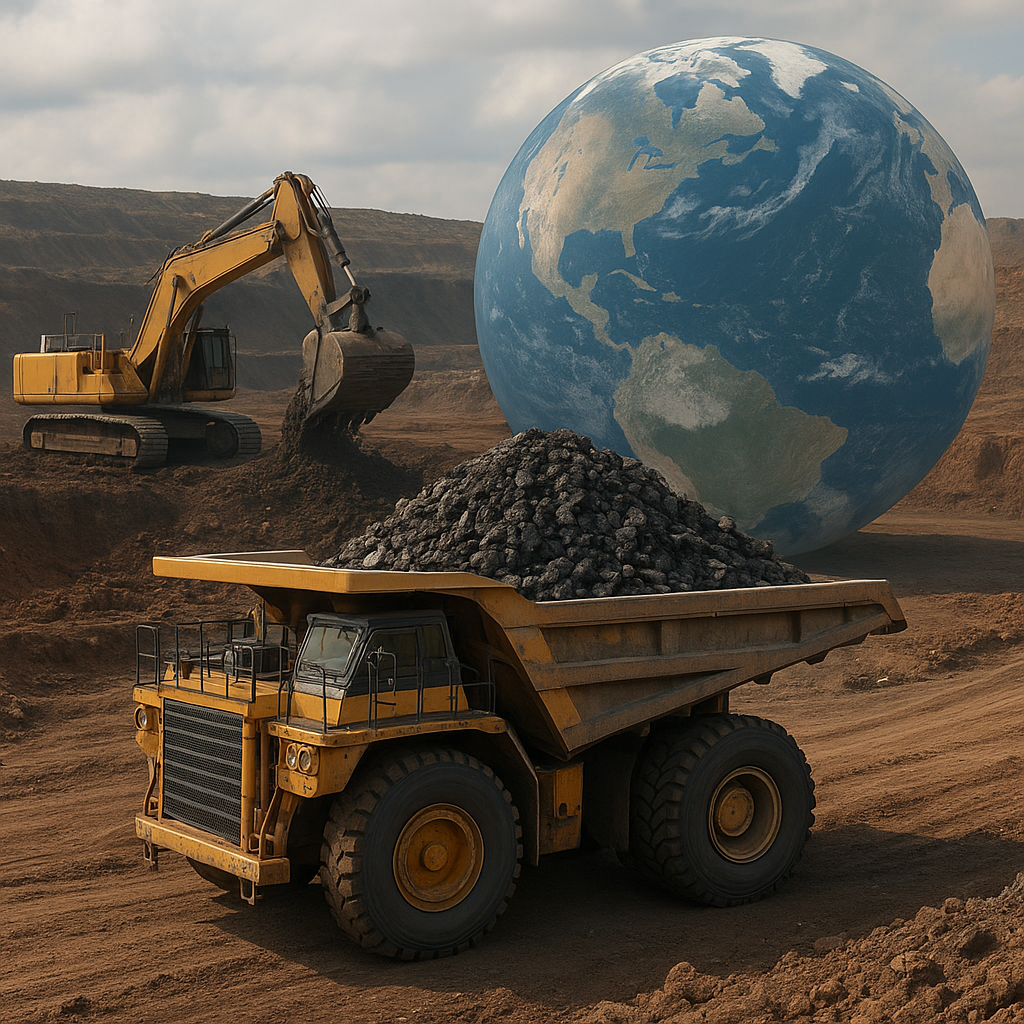
The global rush to secure access to manganese deposits is intensifying as industries around the world recognize the metal’s central role in modern technologies and industrial processes. Once regarded primarily as an alloying element in steelmaking, manganese is now prized for its applications in battery chemistry, renewable energy systems, and advanced alloys. This article explores the drivers behind the scramble, identifies key deposit locations and emerging frontiers, examines the geopolitical and economic consequences, and discusses the environmental and social challenges that accompany a rapid expansion of manganese extraction and processing.
Rising demand: why manganese matters more than before
Manganese has long been indispensable to the steel industry because of its ability to remove oxygen and sulfur during smelting and to improve strength and hardness. However, in recent years new demand centers have emerged. The proliferation of lithium-ion batteries—especially the variants that use high-manganese cathodes—has transformed manganese into a critical component of the energy transition. The rise of electric vehicles and grid-scale energy storage systems has accelerated interest in manganese-rich chemistries like NMC (nickel-manganese-cobalt) and innovative manganese-only cathodes under development.
Beyond batteries, manganese continues to be essential in a host of industrial and chemical applications: as a catalyst in fertilizers and chemicals, in non-ferrous alloys for specialized engineering, and in emerging clean technologies. These expanding uses have shifted manganese from a relatively stable commodity to a mineral with volatile price dynamics as supply and demand respond to technological change.
Key demand drivers
- Electric vehicles and battery manufacturing growth
- Infrastructure investments in renewable energy storage
- Traditional steel production and high-performance alloys
- Chemical industry demand for catalysts and pigments
Where the manganese is: major producers and emerging frontiers
The global distribution of manganese deposits is uneven, which contributes to the scramble for reliable sources. Historically, large deposits in Australia, South Africa, and Brazil have dominated global production. These countries possess both high-grade ore and developed mining sectors that can scale to meet demand.
- Australia: A leading producer with significant capacity for expansion, strategic investments in processing infrastructure, and relatively stable governance.
- South Africa: Home to some of the world’s largest manganese reserves, often associated with complex social and regulatory environments.
- Brazil: Important deposits and established mining companies, but subject to political and environmental sensitivities.
In addition to these giants, explorations are underway in West Africa, India, Gabon, Ukraine, and parts of Southeast Asia. Some of these regions, previously overlooked, are gaining attention because of new geophysical survey techniques, changing project economics, and the willingness of international firms to invest in frontier markets. There is also growing interest in deep-sea manganese nodules found across vast areas of the ocean floor, though commercial extraction raises thorny legal, technical, and environmental questions.
Notable emerging frontiers
- West Africa: Promising surface and near-surface deposits with potential for rapid development.
- India: Significant domestic reserves that could support regional industrial demand.
- Seabed manganese nodules: a controversial but potentially vast source of ore.
Geopolitics, strategic competition, and supply security
As manganese becomes embedded in strategic supply chains—particularly for energy storage—the mineral has attracted geopolitical attention. Countries seeking to secure long-term access to critical minerals are investing abroad, negotiating offtake agreements, and seeking equity stakes in foreign mines. This trend mirrors the broader geopolitics of the energy transition, where resource-rich states and resource-seeking states interact in complex and sometimes adversarial ways.
State-owned enterprises and sovereign wealth funds are increasingly present in manganese-rich countries, sometimes crowding out smaller private investors. Nation-states see control over manganese resources not only as an economic opportunity but also as a means of securing technological leadership in battery manufacture and clean energy deployment. Competition for deposits can generate diplomatic leverage, but it can also create friction, especially when host nations perceive exploitation or when foreign investors bypass local benefit-sharing expectations.
Implications for global supply chains
- Concentration of supply in a few countries creates vulnerability to political or logistical disruptions.
- Vertical integration—where mining firms partner with or are acquired by battery manufacturers—aims to reduce price volatility and ensure raw material quality.
- Trade policies, export controls, and strategic stockpiling are likely to increase as nations aim to hedge against supply shocks.
Environmental, social, and governance (ESG) challenges
The rapid expansion of manganese mining raises significant ESG considerations. While the metal itself supports the deployment of clean technologies, its extraction and processing can produce serious local environmental impacts if not managed responsibly. Issues include habitat destruction, water contamination, dust emissions, and the legacy of tailings from ore beneficiation. In developing regions, mining can exacerbate social tensions if communities are displaced or inadequately compensated.
Addressing these risks requires robust regulatory frameworks, transparent licensing processes, and meaningful community engagement. Investors and offtake partners increasingly demand adherence to sustainability standards and traceability across the supply chain. International frameworks and voluntary standards—while imperfect—are growing in prominence, and mining companies that embed strong ESG practices can gain competitive advantage through access to premium markets and reduced operational risk.
Social license and local development
- Local employment, skills training, and infrastructure investments are crucial to maintaining a social license to operate.
- Revenue-sharing mechanisms and community development funds can mitigate conflict, but require transparency and accountability.
- Indigenous rights and land tenure must be respected to avoid long-term legal and reputational damage.
Processing, refining, and technological bottlenecks
Raw manganese ore requires significant processing to meet the chemical and physical specifications demanded by modern manufacturers. Smelting and refining are energy- and capital-intensive, and current refining capacity is geographically skewed. Countries that produce ore often lack local processing facilities, exporting low-value concentrates while importing higher-value refined products. This dynamic creates opportunities for countries to capture more value through domestic processing—but it also introduces technical challenges and higher capital needs.
Innovations in battery chemistry that reduce reliance on cobalt or nickel may increase demand for high-purity manganese compounds. At the same time, recycling technologies that recover manganese from spent batteries can alleviate some supply pressure, though recycling rates today remain low compared to potential future volumes. Investment in processing, materials science, and recycling infrastructure will be critical to turning manganese resource wealth into long-term economic benefits.
Key technological needs
- Cost-effective beneficiation and smelting technologies that lower environmental footprint
- Refining capacity for battery-grade manganese sulfate and other precursors
- Advanced recycling systems capable of economically recovering manganese at scale
Investment, markets, and the role of private finance
Market participants—ranging from junior exploration companies to large mining conglomerates and battery manufacturers—are positioning themselves to benefit from higher manganese demand. Private equity and strategic investors are increasingly funding exploration in frontier regions, alongside state-backed financing that favors national champions.
However, investment risks remain substantial: commodity price volatility, permitting delays, community opposition, and the technical challenge of developing processing capacity. To attract patient capital, mining projects must present credible plans for risk mitigation and value capture. Furthermore, offtake agreements and long-term supply contracts are becoming the norm as buyers seek to de-risk their upstream supply of critical minerals.
- Investment is channeling into upstream exploration, downstream processing, and recycling
- Financing models increasingly tie capital to ESG performance and traceability
- Public-private partnerships can accelerate infrastructure development in host countries
Policy directions and strategic choices for host and consumer countries
Host countries with manganese resources face strategic decisions: whether to prioritize rapid extraction and export of concentrates, or to pursue policies that encourage domestic processing, technological upgrading, and broader industrialization. Consumer countries must decide how to secure supply—through diversification of sources, diplomatic engagement, stockpiling, or investment in alternative materials and recycling.
Policy instruments that can shape outcomes include tax regimes, local content requirements, environmental permitting standards, incentives for value-added processing, and international cooperation on responsible mining practices. Alignment between industry goals and public policy can foster stable investment climates, whereas poorly designed policies risk deterring capital or producing inequitable outcomes for host communities.
Areas where policy can make a difference
- Incentivizing local processing and skills development
- Strengthening environmental safeguards and monitoring
- Facilitating transparent contracting and revenue management
As the global scramble for manganese intensifies, the interplay of market forces, technological development, and geopolitics will determine whether manganese becomes a catalyst for sustainable development or a source of new conflict and environmental degradation. Stakeholders across the value chain—governments, companies, financiers, and communities—have powerful incentives to shape the scramble into an opportunity that delivers durable benefits. The coming decade will likely decide which regions capture the most value and how responsibly that value is extracted and shared.
