
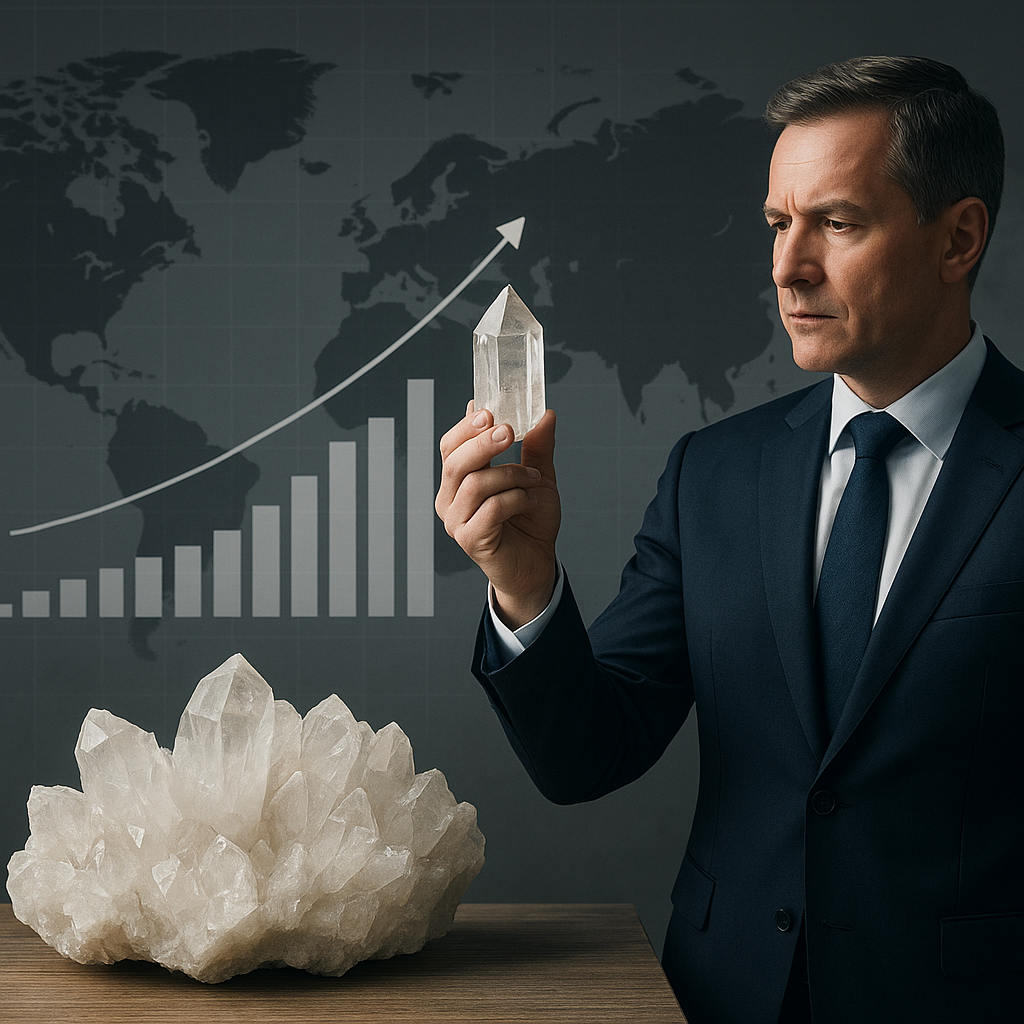
The global market for high-purity quartz is undergoing a period of rapid transformation as technological demand, geopolitical shifts, and environmental pressures reshape supply chains and production methods. High-purity quartz, a form of high-grade silica with extremely low levels of metallic and trace impurities, is a critical material for advanced electronics, optics, and energy technologies. This article examines the market dynamics, supply-side developments, technological innovations, and sustainability challenges that define the evolving landscape for this strategic mineral.
Market drivers and demand trends
Growth in sectors such as semiconductors, photovoltaics, optical communications, and specialty glass has expanded demand for ultra-high-purity quartz. Semiconductor fabrication requires raw materials with minimal contamination: even parts-per-billion levels of metals like iron, aluminum, and titanium can degrade wafer yields. Similarly, advanced optical and photonics applications rely on fused silica and precision-manufactured quartz components that preserve optical clarity and thermal stability.
Key demand drivers
- Semiconductor industry expansion driven by AI accelerators, 5G infrastructure, and edge computing—requiring more wafers and specialized quartz tooling.
- Growth in solar PV and concentrated solar power, which use high-grade silicon dioxide in glass, mirrors, and encapsulants.
- Optical fiber and laser systems for telecommunications and industrial applications.
- Emerging high-value uses in quantum technologies, sensors, and advanced photolithography equipment.
These drivers interact with cyclical forces: the semiconductor market is highly cyclical, amplifying short-term volatility for high-purity quartz suppliers. At the same time, long-term secular trends toward electrification and data-center expansion provide a strong foundation for continued demand growth.
Supply chain structure and regional shifts
The supply chain for high-purity quartz combines natural mining of quartz veins and deposits with industrial-scale production of fused silica and synthetic quartz. Natural deposits that yield low-impurity quartz are geographically concentrated, making sourcing vulnerable to regional disruptions. Regions with notable high-purity quartz production include Australia, the United States, Brazil, and China, while other players supply processed fused materials.
Natural vs synthetic supply
Natural high-purity quartz is mined, then crushed and milled before undergoing chemical purification and sorting. Synthetic routes produce fused silica through flame hydrolysis or electric-fusion processes using highly purified feedstocks such as silicon tetrachloride. Synthetic quartz offers consistent purity and tailored properties, but production is capital- and energy-intensive.
- Advantages of natural quartz: potentially lower initial capital cost, established mining operations, and large deposits in some regions.
- Advantages of synthetic quartz: tighter control of impurity profiles, superior optical qualities for specialty applications, and fewer natural variability issues.
Geopolitical and logistical factors
Recent years have seen manufacturers and governments adopt strategies to diversify suppliers and onshore critical material production. Trade tensions, export controls, and pandemic-driven logistics disruptions emphasized the strategic nature of supply chains for materials like high-purity quartz. Companies increasingly weigh the trade-offs between sourcing lower-cost material from overseas and building nearby processing capacity to mitigate risk and ensure continuity for high-tech customers.
Technological innovations shaping production and applications
Innovation is central to both meeting rising demand and enabling new applications. Advances span mining analytics, purification chemistry, furnace design, and component fabrication. Improvements in analytical instrumentation allow suppliers to certify impurity profiles at parts-per-billion resolution, which is essential for quality assurance in semiconductor and photonics supply chains.
Processing and purification techniques
- Chemical leaching and advanced flotation to reduce metal contaminants in natural quartz feedstock.
- High-temperature electric-fusion and flame hydrolysis processes for creating high-grade fused silica and synthetic quartz boules.
- Surface treatments and precision machining technologies to produce optical-grade components and crucibles for semiconductor processes.
Research into lower-energy production routes, improved furnace insulation, and waste-heat recovery is helping to reduce the environmental footprint and operating costs of synthetic quartz manufacture. These process gains also facilitate production scale-up to meet the needs of the semiconductor industry’s expanding wafer fab capacity.
Applications enabling premium markets
Beyond raw feedstock, value accrues through fabrication of critical components: quartz crucibles for silicon crystal growth, process tubes for diffusion furnaces, photomask blanks, and high-purity liners for chemical reactors. The ability to supply finished, certified components creates opportunities for vertical integration and higher-margin product lines.
Economic and pricing considerations
High-purity quartz is a niche, capital-intensive market with pricing influenced by impurity levels, form factor (powder, chunk, fused glass), and processing history. Premium materials used in semiconductor fabs command significant price premiums over industrial-grade silica. Price volatility often follows semiconductor capex cycles; shortages during capacity expansions can cause rapid price escalation. Conversely, inventory build-ups during downturns can compress prices sharply.
Business models and market strategies
- Diversification of product portfolios to include both raw materials and precision components.
- Long-term supply contracts and collaboration agreements with chipmakers to stabilize volumes and qualify materials.
- Investment in proprietary purification and fabrication technologies to secure high-margin niches.
Firms that invest in quality control, traceability, and certification capability gain competitive advantage by meeting strict fab acceptance criteria, thereby reducing customer qualification cycles and enabling deeper partnerships with end-users.
Environmental, social, and governance (ESG) considerations
Environmental concerns are rising as stakeholders scrutinize energy consumption, water use, waste management, and land restoration associated with both mining and synthetic silicon dioxide production. The intensive energy profile of electric-fusion processes, and the chemical reagents used in purification, create pressure to adopt cleaner energy and closed-loop chemical systems. Social license to operate is also increasingly important in communities hosting mining or processing activities.
Sustainability challenges and mitigation
- Reducing carbon intensity: electrification of furnaces paired with renewable energy reduces lifecycle emissions for synthetic quartz.
- Water and chemical management: recycling process water and minimizing hazardous effluents through advanced treatment systems.
- Rehabilitation and land stewardship: progressive reclamation of mine sites and engagement with local communities to support long-term development.
Investments in sustainability can also unlock commercial benefits: customers increasingly prefer suppliers with verifiable ESG credentials, and regulatory regimes in some jurisdictions favor lower-carbon supply chains.
Risks, bottlenecks, and strategic responses
Several risks threaten market stability: concentration of high-grade deposits, limited processing capacity for the very highest purity materials, and the specialized qualification processes required by semiconductor customers. To manage these risks, industry participants and policymakers are pursuing multiple strategies.
Common strategic responses
- Supplier diversification and regionalization of processing facilities to reduce geopolitical exposure and logistics risk.
- Vertical integration—downstream firms acquiring or partnering with raw-material suppliers to secure feedstock and accelerate qualification timelines.
- Investment in R&D to reduce impurity sensitivity of downstream processes and to develop recycled or alternative materials.
Recycling and recovery initiatives—such as reclaiming silica from industrial waste streams or repurposing used optical components—could become more economically attractive as raw material premiums increase. Meanwhile, coordination between government and industry (stockpiles, critical-minerals strategies, public incentives) is likely to influence where new capacity is sited.
Outlook and implications for stakeholders
Over the next decade, demand for high-purity quartz is expected to grow, driven primarily by advanced electronics and energy applications. Producers that can combine consistent quality, supply reliability, and strong ESG performance will be best positioned to capture value. End-users will continue to emphasize qualification speed, impurity transparency, and resilient sourcing.
Practical recommendations
- For suppliers: prioritize investments in precision purification, analytical labs, and process energy efficiency to move up the value chain.
- For buyers: develop multi-sourcing strategies and long-term agreements to manage price and availability risk while collaborating on qualification.
- For policymakers: support critical-materials mapping, facilitate public-private partnerships for domestic processing capacity, and promote standards for traceability and environmental performance.
The evolving global market for high-purity quartz is defined by technological opportunity and strategic complexity. Stakeholders across the value chain must adapt through innovation, partnership, and prudent investment to ensure that supply keeps pace with the accelerating needs of advanced technologies.
