
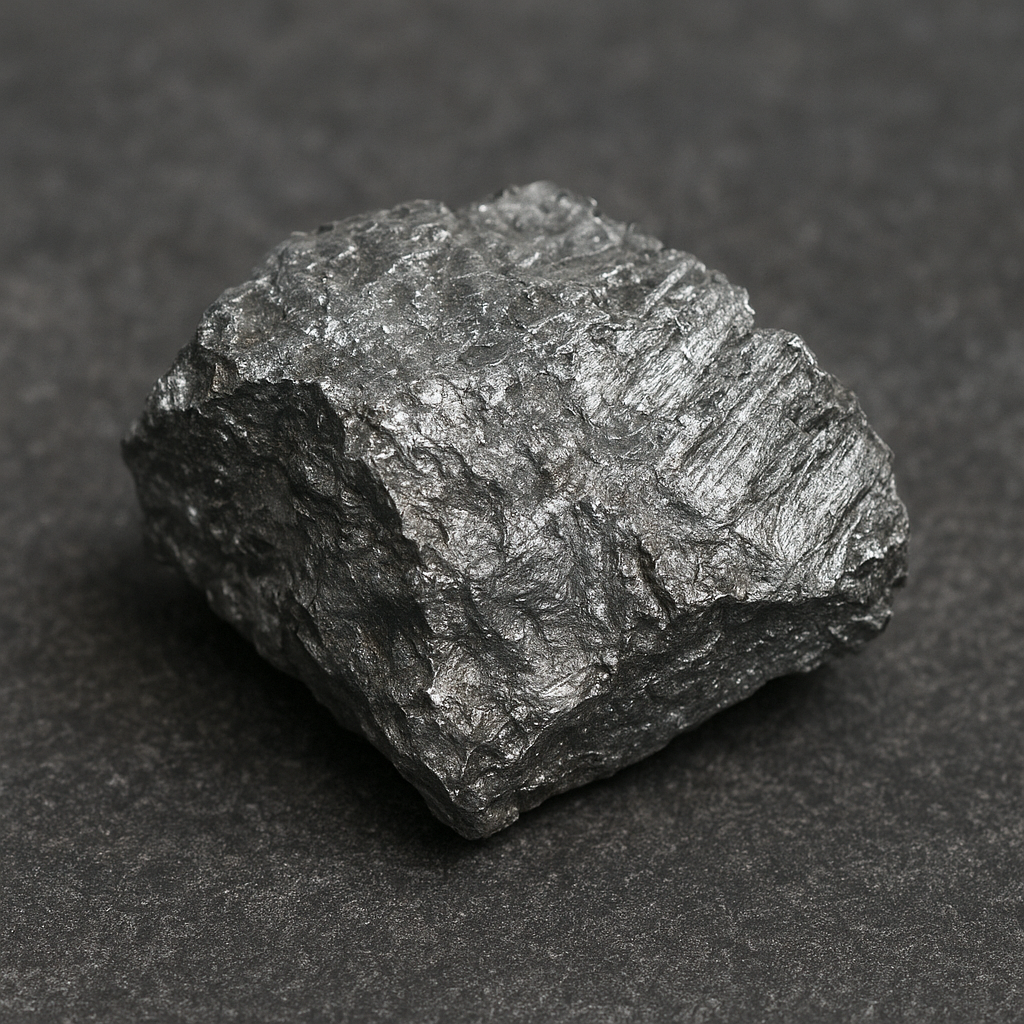
Tellurium is an intriguing chemical element that sits at the crossroads between metals and nonmetals, bringing together unusual physical properties and a surprisingly broad range of technological uses. With the symbol Te and atomic number 52, this lustrous, brittle element belongs to the same family as oxygen and sulfur and has been quietly indispensable in fields ranging from renewable energy to advanced electronics. The following sections explore where tellurium is found in nature, how it is refined and used, and several scientific and industrial developments that make it a material of growing interest.
Occurrence and Geochemistry
Tellurium is relatively scarce in the Earth’s crust, often described as rare compared with more common industrial elements. It is classified as a metalloid — a category that blends metallic and nonmetallic characteristics — and its chemical behavior places it among the chalcogens, the chemical group that also includes sulfur and selenium. In nature, tellurium rarely appears as a pure native metal; instead it is most commonly encountered as part of mineral compounds, especially tellurides in association with precious metals.
Primary minerals and geological settings
- Gold telluride minerals, such as calaverite (AuTe2) and sylvanite (AgAuTe4), are important sources where tellurium concentrates.
- Tellurium also occurs in tellurobismuthite and other native or alloyed minerals containing bismuth, lead, and copper.
- It frequently coexists with sulfide ores; therefore, tellurium is commonly recovered as a byproduct of copper, lead, nickel, and gold mining rather than mined from dedicated tellurium deposits.
Because tellurium is often dispersed in low concentrations, its recovery depends on the processing of large volumes of ore and on modern refining practices. An important industrial pathway for recovery is through the electrorefining of copper, where tellurium concentrates in the anode slimes and can subsequently be separated. This byproduct route means that tellurium supply is tied to production trends in other metals, particularly copper.
Natural cycles and microbial interactions
In the environment, tellurium exists in various oxidation states and chemical forms; soluble tellurite (TeO3 2–) and tellurate (TeO4 2–) species are more mobile than elemental tellurium. Microorganisms interact with tellurium in fascinating ways: some bacteria and fungi can reduce toxic tellurite to elemental tellurium, producing nanospheres or nanorods of the element. These biological reduction processes are of interest both for bioremediation and for biosynthesis of nanoscale materials, demonstrating that biological systems can be harnessed to manipulate an element once thought to be purely industrial.
Applications and Technological Uses
Tellurium’s value has increased in modern technology because a small amount can dramatically modify the electronic, optical, and mechanical properties of materials. A handful of applications account for the majority of industrial demand, and several emerging areas could expand that demand further.
Energy technologies
One of the best-known commercial applications is in thin-film solar cells based on cadmium telluride. CdTe photovoltaic modules are widely manufactured and have competitive cost and performance profiles; they are responsible for a significant share of global solar module production thanks to their high absorption coefficient and mature manufacturing processes. Tellurium’s role in CdTe enables efficient sunlight conversion using very thin active layers, which reduces material usage and manufacturing costs.
Tellurium is also central to several classes of thermoelectric materials—substances that convert heat directly into electricity or vice versa. Compounds such as bismuth telluride (Bi2Te3) are industry standards for near-room-temperature thermoelectric devices, while lead telluride (PbTe) and other telluride-based alloys are used at higher temperatures. Thermoelectric modules made from these materials are employed in niche power generation, waste-heat recovery, and refrigeration applications where reliability and compactness are essential.
Electronics, memory, and optics
Tellurium-containing alloys play a central role in data storage and emerging memory technologies. Chalcogenide glass alloys that combine germanium, antimony, and tellurium (known as GST materials) are the basis of phase-change optical discs and non-volatile phase-change memory (PCM). These materials can be switched rapidly and reversibly between amorphous and crystalline states with distinctly different electrical and optical properties, enabling rewritable optical media and promising solid-state memory technologies.
In the semiconductor world, tellurium contributes to compound semiconductors and detectors. Some tellurides serve as infrared detectors and thermoelectric generators. Research into topological insulators has highlighted certain bismuth and antimony telluride compounds for their unusual surface electronic states, which may enable novel electronic devices.
Metallurgy and industrial additives
Small additions of tellurium to copper, steel, and lead alloys can improve machinability and help control grain structure. Because tellurium segregates at grain boundaries and affects fracture behavior, alloy designers sometimes employ tellurium to tailor mechanical properties. In lead-free solder development and specialty brazing, tellurium can modify wetting behavior and alloying characteristics.
Nanomaterials and research frontier
Recent years have seen growing interest in two-dimensional and nanostructured forms of tellurium. “Tellurene,” a monolayer or few-layer allotrope, exhibits promising electronic mobility and anisotropic properties that could be exploited in future nanoelectronics and sensors. Additionally, biologically produced tellurium nanoparticles and novel heterostructures combining tellurides with other layered materials are active topics in materials science, aiming to harness quantum, optical, and catalytic phenomena.
Health, Environmental and Safety Aspects
Tellurium and its compounds require careful handling because of potential health and environmental impacts. Elemental tellurium is of relatively low toxicity compared to some of its chemical forms, but many organotellurium and inorganic tellurium compounds can be harmful in sufficient doses. Occupational exposure in mining, refining, and manufacturing environments is the primary human-health concern.
Toxicological characteristics
- Exposure to many tellurium compounds may cause nausea, headaches, and other acute symptoms at high concentrations.
- A characteristic sign of tellurium exposure is a persistent garlic-like odor on the breath and skin, caused by formation of volatile organotellurium metabolites such as dimethyl telluride.
- Chronic exposure can affect the liver and kidneys in animals; human data are more limited, leading to conservative safety approaches in industry.
Environmental mobility depends on chemical speciation: oxidized tellurium oxyanions are more soluble and can be transported in water, while elemental tellurium and many tellurides are relatively immobile. Proper waste handling and effluent controls are used where tellurium processing or cadmium telluride solar module production takes place to minimize environmental release.
Supply, Economics and Sustainability
Because tellurium is commonly recovered as a byproduct of other metal production rather than mined directly, its supply is concentrated and somewhat volatile. Market availability therefore reflects the broader mining industry’s rhythms, particularly copper and gold refining. This byproduct status can create supply constraints when demand for tellurium-containing technologies grows sharply.
Global production and recycling
- Major producers are countries with significant copper, gold, or lead production and the refining infrastructure to capture tellurium from anode slimes and other residues.
- Recycling—especially of end-of-life CdTe photovoltaic modules—offers a route to recover tellurium and mitigate supply risk. The photovoltaic industry has invested in recycling programs to reduce raw-material vulnerability.
Long-term sustainability for tellurium-dependent technologies combines improved extraction efficiency, recycling, material substitution where possible, and research into lower-te tellurium content materials. Advances in material science that reduce the amount of tellurium required per device or that enable efficient recovery at end-of-life will be important for scaling technologies such as CdTe photovoltaics and thermoelectrics.
Interesting Scientific and Historical Notes
Tellurium has an intriguing discovery and naming history. The element was recognized in the late 18th century and named from the Latin word tellūs, meaning “earth.” Its compounds were identified in minerals associated with gold and silver long before modern refining made it possible to isolate elemental tellurium in usable quantities.
From a scientific perspective, several aspects of tellurium are particularly noteworthy:
- Isotopic diversity: Tellurium has multiple stable isotopes, a fact exploited in basic nuclear and geochemical studies.
- Topological and quantum materials: Bismuth and antimony telluride compounds were among the first materials studied as topological insulators, a class of materials with protected surface states that may enable new electronic paradigms.
- Biogenic nanomaterials: The biological reduction of soluble tellurium species to produce elemental tellurium nanostructures presents an unexpected bridge between microbiology and nanotechnology.
As research continues, tellurium may find additional roles in catalysis, photonics, and quantum devices. Its unique chemical characteristics—intermediate electronegativity, multiple oxidation states, and strong influence on alloy and compound electronic structure—mean that even small amounts can have outsized technological impact.
Practical Considerations for Working with Tellurium
For laboratories and industries that work with tellurium or its compounds, standard precautions include appropriate ventilation, personal protective equipment, and monitoring to prevent inhalation of dusts and aerosols. Waste containing tellurium should be managed according to local regulatory requirements, with particular attention to soluble tellurium species that can enter wastewater streams.
From a procurement and design perspective, engineers and supply managers should account for tellurium’s byproduct supply chain when planning long-term projects. Wherever possible, incorporating recycling loops and considering material alternatives can reduce exposure to market swings.
Emerging Research Directions
Several research avenues could reshape how tellurium is used in the coming decades. Promising themes include:
- Development of low-te or tellurium-free thermoelectric materials that retain high conversion efficiency.
- Scaling up biologically mediated synthesis of tellurium nanomaterials for use in catalysis and electronics.
- Harnessing two-dimensional tellurene and heterostructures for next-generation transistors and sensors.
- Improving CdTe photovoltaic module recycling to secure secondary tellurium supplies and reduce environmental impact.
The intersection of materials science, environmental chemistry, and industrial practice will determine whether tellurium remains a niche critical material or becomes a mainstream component of sustainable technologies. Either way, its curious chemistry and continuing relevance to high-performance materials ensure that tellurium will remain a subject of scientific and technological interest for some time to come.