
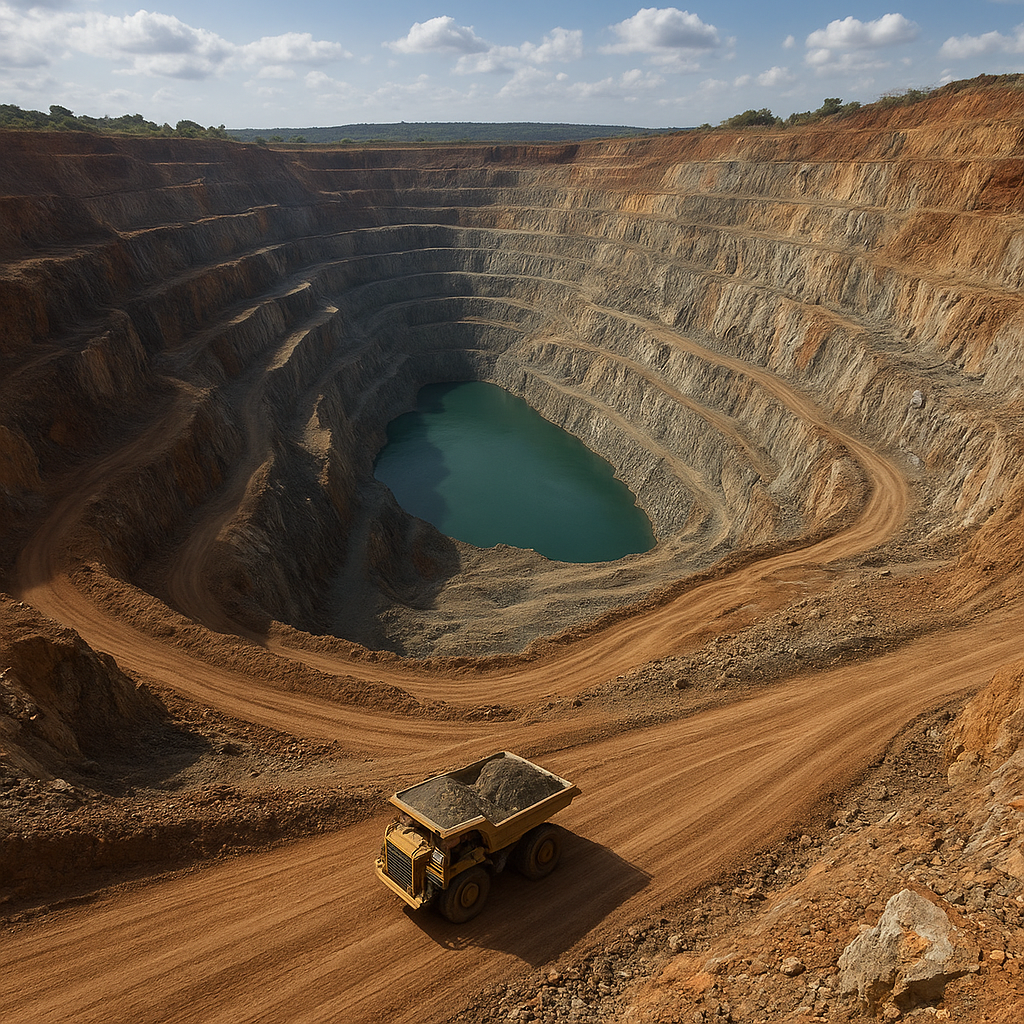
The Tcheji Mine is part of Angola’s rich diamond landscape, located within the country’s northeastern diamond belt. While not as internationally famous as some larger operations, Tcheji plays a meaningful role locally and regionally as a source of both industrial and gem-quality stones. This article explores where Tcheji is situated, what is extracted there, its economic footprint, and a selection of compelling technical, historical and social details that make this operation an interesting case study in modern African mining.
Location and geological setting
The Tcheji Mine lies in the broader diamondiferous provinces of northeastern Angola, within the geological provinces often collectively referred to as the Lunda region. Angola’s diamond occurrences are concentrated in two principal forms: primary kimberlite deposits (pipes and dykes) and secondary alluvial deposits in river systems and ancient terraces. Tcheji sits in an environment where both primary and alluvial processes have influenced the distribution of diamonds, and the site’s geology typifies the mixture of weathered kimberlite and riverine concentrators that characterises the district.
Kimberlite pipes that source diamonds originate from deep mantle processes and were emplaced during the Precambrian and later tectonic activity; subsequent erosion liberated diamonds into river channels and sedimentary basins. The Tcheji area includes remnants of these processes: weathered rock profiles, gravels, and localized concentration zones where mining efforts are focused. The mine’s setting is tropical to sub-tropical, with seasonal rains that affect both access and operations, and with landscapes ranging from wooded savannah to gallery forests along watercourses.
What is mined at Tcheji and how
The core product of the mine is, unsurprisingly, diamonds. These range from small industrial-grade stones to gem-quality diamonds of variable clarity and colour. Like many Angolan sites, the deposit mix at Tcheji yields stones across a spectrum of carat sizes and qualities. Mining methods employed typically reflect the deposit type:
- Alluvial operations: Extraction from river gravels and terraces using dredges, suction equipment and conventional excavators. Alluvial mining at Tcheji targets concentrated gravels where natural hydraulic sorting has already enriched diamond content.
- Primary/kimberlite mining: Where weathered kimberlite or shallow pipe material is exposed, open-pit methods are used. A combination of drilling, blasting, loading and crushing moves material to processing plants.
- Artisanal and small-scale mining: Around larger concessions there are often local miners using hand tools, sieves and small sluicing systems. These artisanal activities can be significant at a community level and sometimes feed small local trading networks.
After extraction, material is processed through primary screening, dense media separation (DMS), X-ray transmission (XRT) sorting and final hand-sorting for gem-quality stones. Modern operations increasingly combine mechanized sorting with traditional gemological assessment to maximise value recovery. Bulk sampling and grade-control drilling are used to characterise ore bodies and plan operations, and rehabilitative works are scheduled alongside production in compliance with environmental standards and social commitments.
Economic significance
Tcheji contributes to several layers of economic activity. At the most immediate level it supplies direct employment — from mine technicians and engineers to plant operators and administrative staff. Indirectly, the mine supports local service industries: transport, housing, food supply and equipment maintenance. For communities near the mine, wages and local procurement can represent vital income streams.
At the regional and national scale, diamonds extracted from operations like Tcheji feed into Angola’s broader export economy. Diamonds remain one of Angola’s top foreign exchange earners, and sales through official channels help generate revenue for the state. In many cases, state participation in mining ventures (through national companies or royalty arrangements) ensures a portion of value remains within Angola’s public finances.
- Exports: Processed stones are typically sold through national or international trading houses; Angola’s established marketing routes help mines convert production into hard currency. The proceeds feed public budgets and often finance infrastructure projects.
- Local economies: Spending by the mine and its workforce stimulates local markets and micro-enterprises.
- Investment and technology transfer: Mines bring capital investment, technical expertise and modern equipment to regions that might otherwise lack industrial infrastructure.
These contributions are, however, not automatic. The scale of the economic benefit depends on governance frameworks, transparency in revenues, the degree of local hiring and procurement, and effective management of environmental and social externalities.
Social and environmental considerations
Mining in the Tcheji area raises the usual set of social and environmental issues associated with resource extraction. On the environmental front, removal of overburden, alteration of river courses for alluvial mining, and tailings generation are key concerns. Vegetation clearance and soil disturbance can lead to increased erosion, sedimentation of waterways, and impacts on aquatic ecosystems. Water usage for processing—alongside potential chemical or fuel contamination—requires strict management.
Socially, the presence of a mine can produce both positive and negative outcomes. Positive effects include job opportunities, improved road access and the potential for local development projects financed by mining revenues. Negative outcomes can include displacement, unequal distribution of benefits, and social tensions between formal operations and artisanal miners. Artisanal activity commonly coexists with larger operations and can lead to unsafe working conditions, informal economies and, in some cases, conflict over access to resources.
Measures and mitigation
- Environmental management plans, including progressive rehabilitation of mined areas and replanting programs.
- Water management systems that monitor and treat effluents, and that maintain downstream flow regimes to protect communities and ecosystems.
- Community engagement strategies: consultation, benefit-sharing, hiring local labour, and supporting healthcare and education initiatives.
- Formalization and support for artisanal miners through cooperatives, safer working practices and controlled access to concession areas.
Responsible operators at Tcheji and in the wider Angolan diamond industry increasingly adopt international standards and voluntary schemes to demonstrate compliance and social responsibility, but implementation varies and remains a focal point for civil society and regulators.
History and geopolitical context
Angola’s diamond story is deeply intertwined with its colonial past and the political upheavals of the post-independence period. Diamonds discovered in the late 19th and early 20th centuries became an economic mainstay under Portuguese rule. After independence in 1975, the long civil war that followed saw diamond revenues being exploited by various factions, earning Angola a troubled reputation in the era of “conflict diamonds.”
Reforms, international pressure, and mechanisms such as the Kimberley Process Certification Scheme were implemented to reduce the laundering of conflict diamonds. Mines like Tcheji operate in a transformed landscape compared with the war decades, with more formal regulatory oversight, state participation and international investment. The presence of major operations such as Catoca in the region has also helped to professionalize parts of the sector, creating a benchmark for technical practice and compliance.
Understanding Tcheji therefore also requires appreciation of the local legacy: communities with long histories of artisanal mining, the memory of wartime disruptions, and a national trajectory moving from extraction-focused growth toward greater governance and economic diversification.
Interesting facts and technical highlights
Tcheji and sites like it offer a number of technically and culturally interesting aspects:
- Geological time capsules: Diamonds recovered from kimberlites are literal time capsules from the deep Earth — some are formed at depths exceeding 150 kilometers and can be billions of years old. Each stone provides geoscientists with clues about mantle chemistry and Earth history.
- Varied gem types: Angola is known for producing stones with a wide range of hues and qualities. While many diamonds are colourless to faintly tinted, rare fancy-colour stones can appear and significantly increase economic value.
- Technological advances: Modern optical sorting (including X-ray and XRT technology) and automated recovery systems have improved the efficiency of diamond recovery at small and large operations alike, reducing waste and improving yields.
- Traceability efforts: The post-conflict era has seen renewed emphasis on provenance and ethical sourcing. Blockchain pilots and enhanced chain-of-custody procedures aim to assure consumers that stones from operations like Tcheji are conflict-free and responsibly produced.
- Artisanal ingenuity: Local miners often combine traditional knowledge with improvised technology to locate and recover diamonds. This ingenuity is culturally significant and underscores the importance of integrating artisanal communities into formalized systems.
Additionally, discoveries of exceptionally large or high-quality stones in Angola occasionally make international headlines. While Tcheji may not be known for single extraordinary finds on a blockbuster scale, the cumulative value of many smaller gem-quality stones contributes substantially to overall production. The presence of both gem and industrial diamonds in the deposit mix makes the mine versatile from a market perspective.
Regulation, stakeholders and value chain
The Angolan diamond sector involves multiple stakeholders: the national government and its mining agencies, private mining companies (domestic and foreign), local communities, artisanal miners, and international buyers and gemological institutions. State institutions often hold equity stakes or regulate production through licensing, royalties and export controls. Key elements of the value chain include:
- Exploration and resource definition: geophysical surveys, drilling and bulk sampling to define economic potential.
- Extraction and processing: the on-site work of mining, recovery and initial sorting.
- Valuation and sale: grading, certifying and selling through national channels or international auctions.
- Cutting and polishing: some stones are sent abroad for finishing, while there is growing interest in developing domestic cutting capacity to capture more value locally.
Improvements along this chain — particularly in in-country value addition — present economic opportunities. If Angola and operators at mines like Tcheji can expand cutting, polishing and jewelry manufacturing domestically, more of the final gemstone value could accrue locally, rather than being captured further down the chain by foreign processors and retailers.
Future prospects and challenges
The outlook for Tcheji depends on a combination of geological, economic and governance factors. On the geological front, continued exploration could reveal additional resources or deeper targets suitable for development. Economically, global diamond demand and pricing dynamics influence the viability and profitability of operations; diversification into industrial markets, or niche markets such as ethically-sourced stones, may buffer commodity price swings.
Key challenges include maintaining rigorous environmental and social safeguards, formalizing artisanal activity constructively, and strengthening local benefits from the value chain. Advances in mining technology and better integration with national development planning can help translate resource wealth into longer-term regional development.
As global consumers increasingly value transparency and sustainability, mines that demonstrate strong governance, community engagement and environmental stewardship — characteristics that stakeholders often seek at Tcheji and other Angolan operations — will be better positioned to access premium markets and attract responsible investment. Continued collaboration among government agencies, private operators, local communities and international partners will shape whether the mine’s resources become a durable engine for local improvement or remain a short-term extractive endeavour.

