
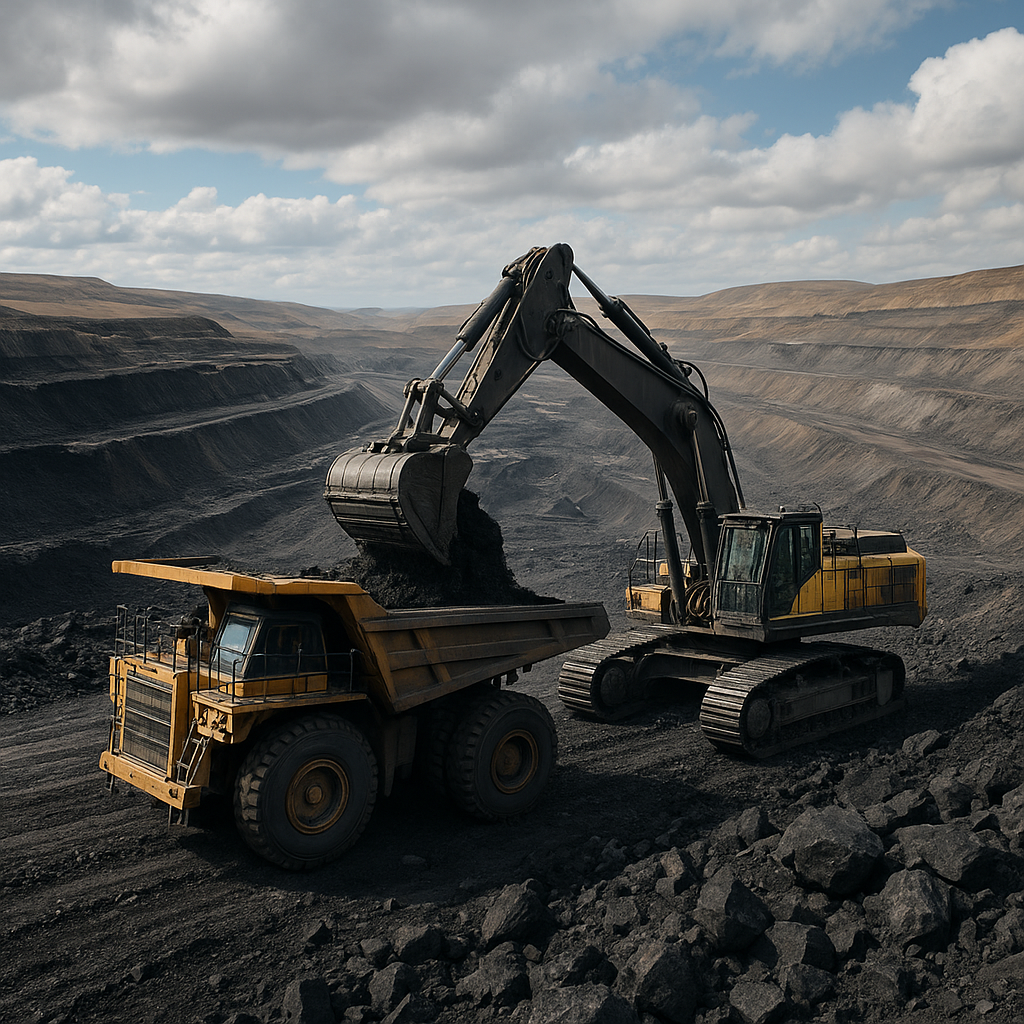
The vast plains of southern Mongolia host one of the world’s most significant coal deposits: Tavan Tolgoi. This massive complex, whose name means “Five Hills” in Mongolian, is a focal point of national development, international investment and geopolitical interest. The deposit’s scale, quality and strategic location near the Chinese border have made it a central player in Mongolia’s modern economic story. This article explores where Tavan Tolgoi is located, what is mined there, its economic importance, and several compelling and sometimes contentious aspects of its development.
Location and Geological Overview
Tavan Tolgoi lies in the South Gobi region of Mongolia, within the administrative boundaries of Ömnögovi (Umnugovi) Province. The mine field is situated roughly 300–400 kilometers south of Ulaanbaatar and some 100–200 kilometers north of the Mongolian-Chinese border, depending on the chosen route. Its geographic coordinates place it in an arid, high-altitude steppe and desert environment dominated by plateaus and sparse vegetation.
From a geological standpoint, Tavan Tolgoi is remarkable for its enormous reserves of both thermal and metallurgical coal. The coal seams are associated with Mesozoic and Paleogene strata that extend across the South Gobi Basin. The deposit is divided into several major blocks or sections, often referred to as the East, West, and other satellite pits. The East field is particularly notable for high-quality coking coal, while the West field primarily contains lower-grade thermal coal suitable for power generation.
Structure of the Deposit
The deposit’s readable structure includes a series of near-surface seams accessible to open-pit mining. Seam thickness, depth and coal rank vary across the fields:
- East field: predominantly high-grade coking coal with higher carbon content and fewer impurities, making it valuable for steelmaking.
- West field: larger in terms of tonnage but lower in quality, mainly used for thermal applications.
- Peripheral deposits and satellite deposits: smaller-scale reserves that can supplement production and be used to optimize mining logistics.
The combination of shallow burial depths and broad lateral extent makes Tavan Tolgoi suitable for large-scale, mechanized open-pit operations, which are less costly per tonne than underground mining.
What Is Extracted: Coal Types and Quality
Coal at Tavan Tolgoi can generally be categorized into two main types: coking (metallurgical) coal and thermal (steam) coal. Each has different industrial applications, market values and processing requirements.
Coking Coal
Coking coal is a critical input for steel production because it produces coke with the mechanical strength and chemical properties required in blast furnaces. The East field of Tavan Tolgoi contains high-quality coking coal with favorable attributes:
- High carbon content and calorific value.
- Low sulfur and ash content relative to many thermal coals, which reduces impurities in steel production.
- Good coking properties that attract buyers in metallurgical centers, especially in neighboring China.
Because coking coal commands significantly higher prices than thermal coal, the East field is one of Mongolia’s most valuable mineral assets.
Thermal Coal
The West field produces large quantities of thermal coal, which is primarily used for electricity generation and heating. While cheaper per tonne, thermal coal from Tavan Tolgoi remains economically important due to:
- High volumes that can satisfy local and cross-border energy needs.
- Lower processing requirements compared with coking coal, enabling faster dispatch to market.
- Potential use in coal-to-liquid or coal-to-chemical projects, depending on investment and technology deployment.
Economic Significance for Mongolia
The economic implications of Tavan Tolgoi for Mongolia are profound. The mine represents one of Mongolia’s largest single contributors to potential GDP growth, export earnings and fiscal revenues. It has shaped national economic strategies, foreign policy considerations and social expectations about the benefits of natural resource wealth.
Export and Foreign Exchange
A significant share of Mongolian coal exports originate from Tavan Tolgoi. Most of the exported coal is destined for China, which is an energetic consumer of both thermal and metallurgical coal. The proximity to the Chinese market reduces transportation costs and supports competitive pricing. Export revenues strengthen Mongolia’s foreign exchange reserves and support macroeconomic stability when markets and logistics perform well.
Government Revenues and Local Development
Tavan Tolgoi generates income for the Mongolian government through royalties, taxes, and state participation in project structures. The government has historically held direct stakes in parts of the deposit and has used revenue streams to finance infrastructure investments, public services and social programs. At the local level, revenues have potential to fund:
- Roads, rail links and power projects to support mining and communities.
- Health and education enhancements in mining regions.
- Employment and training programs for residents of Ömnögovi Province and beyond.
However, the allocation and management of mining revenues remain contentious, with debates over transparency, equitable distribution and the balance between saving and spending.
Investment, Jobs and Industrial Growth
Large-scale development of Tavan Tolgoi has attracted substantial domestic and international investment. Mining companies, infrastructure firms and logistics providers participate in an expanding value chain. Job creation spans direct mining employment, contractors, service providers and indirect roles in trade and logistics. Moreover, development of the deposit can facilitate broader industrialization:
- Stimulating downstream industries such as coal processing and transportation.
- Potential establishment of power plants or steel processing facilities linked to coal supply.
- Encouraging vocational training and technical education in mining-related fields.
Infrastructure and Logistics
Delivering coal from the South Gobi to domestic users and export customers requires substantial logistical capacity. Infrastructure investment is therefore central to extracting full value from Tavan Tolgoi.
Roads and Haulage
Initial coal movements from mine pits relied heavily on truck haulage along unpaved and partially paved roads. Trucking provides flexibility but is costly per tonne over long distances. Road-based logistics also contribute to wear, dust and environmental impacts along transport corridors.
Railway Development
Rail infrastructure is the most efficient long-term solution for mass exports. Discussions and investments have focused on constructing a rail link connecting Tavan Tolgoi to the existing Mongolian railway network and onward to the Chinese border. Completed or planned rail projects aim to:
- Reduce transportation costs and time, increasing competitiveness in export markets.
- Enable year-round, high-volume shipments buffered against weather and road conditions.
- Encourage further industrial investment by guaranteeing access to logistics networks.
Financing and building cross-border rail connections often involve complex negotiations between Mongolia, Chinese partners and private investors, reflecting broader geopolitical and commercial interests.
Environmental and Social Considerations
Large-scale coal mining inevitably raises environmental and social questions. Tavan Tolgoi’s development has presented both challenges and opportunities in these areas.
Environmental Impacts
Open-pit mining dramatically alters landscapes, affects groundwater regimes and generates dust and emissions during extraction and transport. Key environmental concerns include:
- Land degradation and habitat disruption in a fragile desert-steppe ecosystem.
- Dust pollution affecting air quality for workers and nearby communities.
- Water use and potential contamination, particularly in arid regions where water is scarce.
- Greenhouse gas emissions linked to coal use, especially when burned for power generation or exported to neighboring industrial centers.
Mitigation measures — such as dust suppression, progressive land rehabilitation, water management plans and emissions monitoring — are essential to reduce the environmental footprint and meet international standards.
Social Impacts and Community Relations
Mining projects bring jobs and investment but also social change. Inflows of workers, shifts in traditional livelihoods (e.g., pastoralism), and inequalities in benefit-sharing can cause tensions. Key social issues are:
- Ensuring local communities receive fair compensation, employment and services.
- Managing migration and pressure on local infrastructure and housing.
- Protecting cultural heritage and grazing lands used by nomadic herders.
Effective stakeholder engagement, transparent revenue-sharing mechanisms and community development programs can help reconcile mining growth with social well-being.
History, Governance and Controversies
Development of Tavan Tolgoi has been intertwined with political decisions, commercial negotiations and occasional public controversy. The mine’s ownership structure and management have evolved as Mongolia sought to balance national control with foreign capital and technical expertise.
State Involvement and Privatization Debates
The Mongolian government has maintained substantial interest in Tavan Tolgoi, often asserting a role in major transactions and contract approvals. Debates have centered on:
- How much equity the state should retain versus offering stakes to strategic investors.
- Transparency in tendering, contract terms and revenue forecasting.
- Balancing short-term fiscal needs against long-term national interests and sovereign control.
High-profile sales and negotiations involving foreign companies have occasionally sparked public debate and calls for stronger oversight and equitable benefit-sharing.
Legal and Commercial Disputes
Like many large natural resource projects, Tavan Tolgoi has been the subject of legal disputes over concession terms, royalties and alleged irregularities. International arbitration, parliamentary inquiries and media scrutiny have played roles in resolving or prolonging these disputes. Such controversies underscore the importance of clear legal frameworks and robust governance structures in resource-rich countries.
Interesting and Lesser-Known Facts
Beyond its economic headline value, Tavan Tolgoi offers several intriguing angles:
- Scale: The deposit ranks among the world’s largest coal resources, making Mongolia a noteworthy presence on the global coal map despite its relatively small population.
- Strategic Location: Proximity to China’s industrial heartlands turns geographic location into a commercial advantage; even modest improvements in rail or border-crossing logistics can dramatically increase export revenues.
- Technological Choices: The mine’s development exemplifies the trade-offs between rapid, export-oriented growth and investments in cleaner, value-added processing that could retain more value in Mongolia.
- Climate Paradox: While the coal industry generates revenue for public spending, global decarbonization trends challenge long-term demand for fossil fuels, forcing Mongolia to consider diversification and cleaner alternatives.
- Human Stories: The region is home to nomadic herders whose lives intersect with mining expansion, creating narratives of adaptation, displacement and negotiation that are often overlooked in macroeconomic analyses.
Future Outlook and Strategic Choices
The future of Tavan Tolgoi will be shaped by global energy markets, bilateral relations (especially with China), national policy choices and the pace of infrastructure rollout. Several strategic options present themselves:
- Prioritizing infrastructure like rail and border facilities to maximize export volumes and reduce unit costs.
- Investing in value-added industries — such as steelmaking, coal processing or chemical conversion — to keep more economic benefits within Mongolia.
- Pursuing environmental safeguards and progressive rehabilitation to reduce long-term ecological liabilities.
- Establishing transparent fiscal rules (sovereign wealth funds, stabilization funds) to manage volatility in commodity revenues and ensure intergenerational equity.
Balancing these choices will require careful governance, international cooperation and attention to local communities. Tavan Tolgoi can be a major engine for Mongolian prosperity, but realizing that potential depends on both domestic policy and external market conditions.
Additional Considerations for Policymakers and Investors
Policymakers and investors eyeing Tavan Tolgoi should weigh multiple dimensions beyond immediate profitability:
- Risk assessment: commodity price volatility, geopolitical risk and regulatory shifts can affect project returns.
- Social license to operate: ensuring community buy-in through benefit-sharing and transparent consultation reduces the risk of protests and disruptions.
- Environmental compliance: aligning with international environmental standards and financing opportunities for cleaner technologies can open new markets and lower the cost of capital.
- Long-term fiscal planning: using revenues to diversify the economy, invest in human capital and build resilient public finances is crucial for sustainable development.
For investors, partnerships that integrate technical expertise, local knowledge and responsible environmental-social frameworks are more likely to succeed in the complex operational and political environment surrounding Tavan Tolgoi.
Closing Remarks
Tavan Tolgoi stands at the intersection of geology, economics and geopolitics. As one of Mongolia’s most consequential mineral assets, it offers both immense opportunity and significant challenges. Its development path will influence Mongolia’s economic trajectory, regional trade dynamics and local communities for decades to come. Observers and participants alike should consider not only the size of the resource but also the quality of institutions, transparency of governance and investments in sustainable infrastructure that determine whether the benefits of this great deposit are widely and durably realized.

