
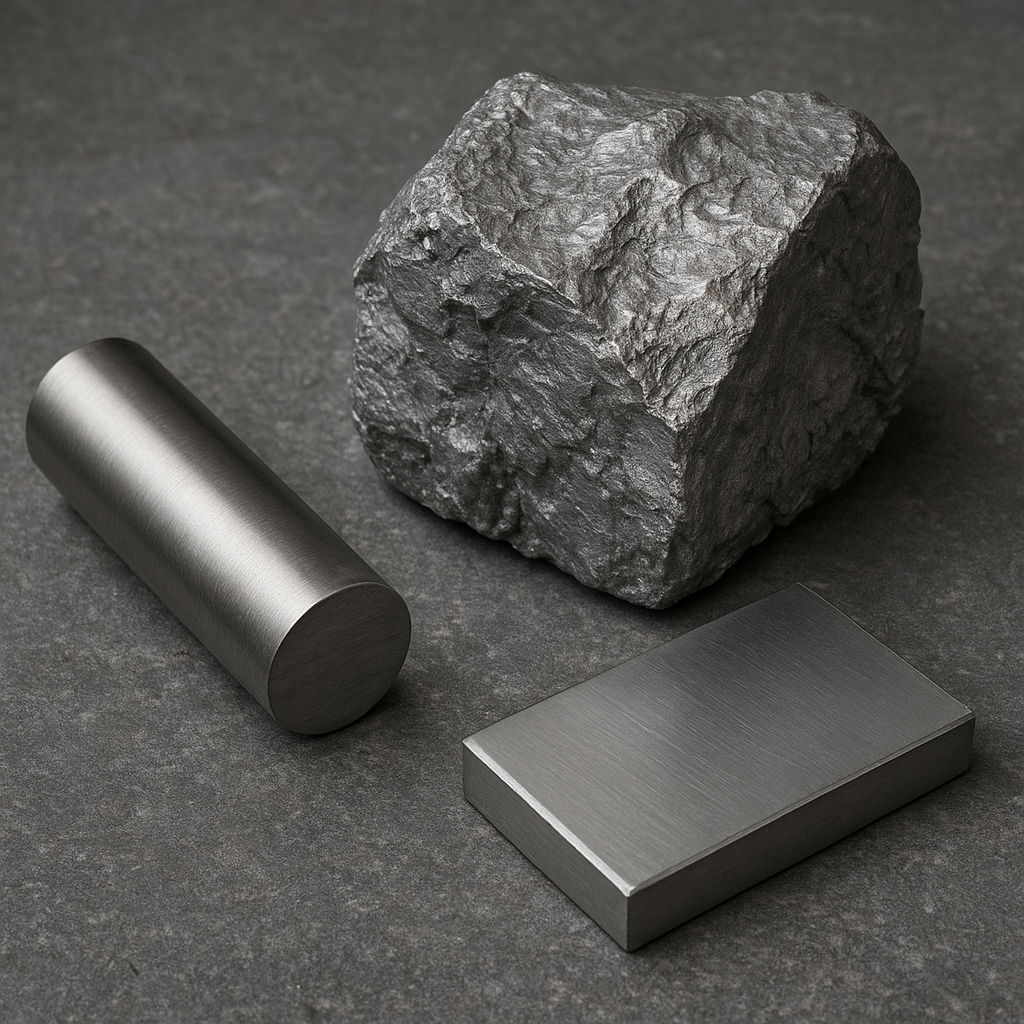
Tantalum is a rare, lustrous metal prized for its exceptional physical and chemical properties. It plays a subtle but critical role in many modern technologies, from tiny electronic components to high-performance aerospace parts and medical devices. This article explores where tantalum is found, how it is extracted and processed, its unique characteristics, diverse applications, and some lesser-known aspects of its history, supply chain, and future prospects.
Geology and Global Occurrence
Tantalum rarely occurs as a native element; instead, it is typically found in mineral forms associated with complex igneous and metamorphic processes. The most important tantalum-bearing minerals are coltan (a colloquial term usually referring to columbite-tantalite), tantalite, and pyrochlore. These minerals often occur together with niobium, making mineral processing and separation an important step in obtaining pure tantalum.
Key geological settings
- Granite pegmatites: Many commercial sources of tantalum are associated with coarse-grained pegmatites, where large crystals concentrate rare elements.
- Carbonatites and alkaline complexes: These unusual igneous rocks can host significant quantities of tantalum and niobium.
- Alluvial deposits: Weathering of primary deposits releases heavy mineral grains that accumulate in riverbeds and stream deposits and can be mined by placer methods.
- Metamorphic terrains: High-temperature metamorphism can re-concentrate tantalum-bearing minerals.
Major producers have varied over time. Historically, Australia, Brazil, Canada, and some African countries have been important sources. In recent decades, much attention has focused on the Democratic Republic of Congo (DRC) and Rwanda because of artisanal mining of coltan. In addition, substantial resources exist in Australia (notably the Greenbushes and Wodgina regions), Brazil (e.g., the Araxá complex), and China. The geographic distribution affects economics, politics, and supply security.
Extraction, Processing, and Refining
Turning ore into high-purity tantalum metal or chemically pure powders requires multiple steps. The challenge lies in separating tantalum from niobium and removing impurities that would compromise its performance in demanding applications.
Mining methods
- Large-scale open-pit and underground mining at pegmatite and carbonatite deposits.
- Artisanal and small-scale mining (ASM) operations, particularly in parts of Africa, often involving manual excavation and panning of alluvial gravels.
- Placer mining for alluvial deposits using sluices, dredges, and other gravity separation techniques.
Concentration and separation
After extraction, ores are crushed and milled to liberate mineral grains. Gravity, magnetic, and electrostatic separation concentrate tantalum-bearing minerals. Because tantalum and niobium are chemically similar, separation typically uses complex chemical processes:
- Hydrometallurgical treatment: Leaching with hydrofluoric and sulfuric acids dissolves tantalum and niobium into solution.
- Solvometallurgical and solvent extraction methods: Chemical reagents selectively partition tantalum and niobium between aqueous and organic phases.
- Ion exchange and fluorination can be used to further purify and convert intermediate salts into usable precursors.
Refining to metal and powders
Tantalum is often produced as tantalum pentoxide (Ta2O5) intermediates that are then reduced to metal by high-temperature methods, such as reduction with sodium (in the Kroll-like processes) or via electron-beam melting and vacuum arc remelting to produce ingots. Powder metallurgy techniques, including hydrogen reduction of ammonium paratungstate-like compounds followed by sintering, produce fine, high-purity powders used for capacitors and other components.
Physical and Chemical Properties
The combination of properties that makes tantalum valuable includes a high melting point, excellent corrosion resistance, and good ductility. These intrinsic characteristics determine its suitability for demanding environments.
- Melting point: Tantalum melts at around 3017 °C, one of the highest among metals, supporting applications at elevated temperatures.
- Corrosion resistance: A passive oxide layer (tantalum pentoxide) confers outstanding resistance to acids, making it useful in chemical processing equipment and medical implants.
- Electrical conductivity: While not as conductive as copper, tantalum’s conductivity is sufficient for certain electronic applications, especially when combined with its capacitance properties.
- Mechanical properties: It is ductile and can be drawn into wires and foil or formed into complex shapes through powder metallurgy.
At the atomic and electronic levels, tantalum’s d-electrons contribute to its refractory nature and its usefulness in alloys and thin-film technologies. The oxide Ta2O5 is a high-dielectric-constant material exploited in electronic components.
Primary Applications and Technologies
Tantalum’s most famous role is in electronic capacitors, but its utility spans multiple sectors.
Electronics and capacitors
One of the principal uses of tantalum is in the manufacture of electrolytic capacitors. Tantalum capacitors offer high capacitance per volume, stable electrical properties, and long life, making them indispensable in portable electronics, computers, mobile phones, and automotive electronics. The dielectric is an anodic layer of Ta2O5, grown on a high-surface-area tantalum foil or powder structure. The exceptional properties of Ta2O5 enable compact, reliable capacitors used in situations where space and reliability are critical.
Aerospace, defense, and superalloys
Because of its high melting point and compatibility with other refractory metals, tantalum is used in high-temperature alloys and coatings. It forms part of superalloys and serves as an additive or coating material for turbine blades, rocket nozzles, and other components exposed to extreme thermal stress. It also has specialized uses in vacuum furnace equipment and as filaments for electronic tubes and specialized cathodes.
Medical devices and implants
Tantalum’s biocompatibility and corrosion resistance have established it as a valuable material for medical implants and surgical instruments. It is used in bone plates, hip and knee replacements, and porous scaffolds that promote bone ingrowth. The metal’s radiopacity also allows for imaging after implantation. In some applications, tantalum’s surface can be engineered to encourage cellular adhesion and tissue integration, supporting its role in orthopedics and reconstructive surgery. Many of these uses hinge on the metal’s inertness and ability to withstand bodily fluids without degrading.
Thin films and electronics manufacturing
Thin-film tantalum and tantalum nitride are widely used as barrier layers, diffusion barriers, and adhesion layers in semiconductor fabrication. Sputtered tantalum provides robust interfaces in integrated circuits and advanced packaging. These films contribute to the performance and miniaturization of modern microelectronic devices and are crucial in multilayer ceramic capacitors and chip-scale components.
Chemical processing and corrosion control
Because of its resistance to strong acids, tantalum is used to line vessels, pumps, and piping in the chemical industry. Tantalum equipment survives exposure to aggressive chemicals such as sulfuric and hydrofluoric acids where other metals would rapidly corrode. This role leverages the same passive oxide film that makes Ta2O5 an excellent dielectric.
Economic, Ethical, and Environmental Considerations
Tantalum’s value and concentration in certain regions raise a complex set of issues around supply chain integrity, sustainability, and environmental impact.
Supply chain and geopolitics
The nickname coltan is embedded in narratives about conflict minerals, particularly in central Africa. Artisanal mining can finance armed groups and create human rights abuses in fragile states. Global efforts to manage these risks include regulatory frameworks, responsible sourcing initiatives, and industry-led traceability programs. Companies increasingly seek certified conflict-free sources and invest in supply chain transparency.
Environmental impact
Mining and processing tantalum can lead to habitat disruption, water pollution from acid and heavy-metal-containing effluents, and soil degradation. Proper environmental management, rehabilitation of mine sites, and stricter controls on processing waste are essential. Advances in hydrometallurgical processes and closed-loop systems aim to reduce chemical use and waste.
Recycling and circular economy
Given its critical role in electronics, recycling tantalum from end-of-life products is economically and environmentally sensible. Recovering tantalum from capacitors and electronic scrap helps diversify supply and reduce pressure on primary ores. However, recycling rates remain modest due to the technical difficulty of separating tantalum from complex assemblies and the small quantities in each device. Improved design for recyclability, collection programs, and advanced chemical recovery methods are areas of active development.
Research Frontiers and Future Trends
Scientists and engineers continue to find new ways to exploit tantalum’s properties and to overcome supply challenges.
- Advanced ceramics: Ta-containing ceramics and composites are being developed for high-temperature and wear-resistant applications.
- Nanostructured films: Research into nanoscale tantalum oxides and nitrides aims to improve dielectric properties, capacitance densities, and integration with next-generation semiconductors.
- Biomedical surface engineering: Porous tantalum coatings and 3D-printed tantalum scaffolds are under investigation to enhance osseointegration and develop patient-specific implants.
- Alternative materials and substitution: In contexts where supply risk is high, researchers explore substitutes or hybrid materials that can match tantalum’s performance at lower cost or greater availability.
- Improved recycling: New leaching, selective extraction, and electrochemical recovery techniques aim to boost reclaimed tantalum yields from electronic waste.
Technical and Cultural Anecdotes
A number of curious and informative facts highlight tantalum’s role beyond raw statistics.
- Because of its resistance to chemical attack, tantalum was used in the internals of early vacuum tubes and continues to appear in specialized laboratory equipment.
- Tantalum’s name derives from Tantalus, a figure from Greek mythology, reflecting the metal’s resistance to absorption of acids—an irony mirrored in the etymology.
- Miniaturization in electronics would have been much slower without the compact and stable capacitors that tantalum enables; tiny devices retain functionality partly because of this metal.
- Despite its rarity, only a few grams of tantalum are typically required per smartphone, yet aggregated demand places significance on global production streams.
- Ongoing debates around the term coltan reflect broader tensions between economic opportunity for local miners and the need to prevent exploitation and conflict.
Practical Considerations for Industry and Consumers
For engineers, procurement officers, and informed consumers, understanding tantalum’s properties and provenance can guide decisions and foster responsible practices.
- Design choices: Where corrosion resistance and high-temperature stability are needed, tantalum and its compounds often outperform alternatives, but designers must weigh cost and availability.
- Sourcing: Companies should evaluate suppliers for traceability and compliance with conflict-free sourcing standards to mitigate ethical risks associated with coltan.
- End-of-life planning: Incorporating collection and recycling strategies for electronic products containing tantalum supports circular economy goals and reduces dependency on primary mining.
- Regulatory compliance: Users of tantalum-based chemicals must account for handling risks associated with fluorinated acids and other hazardous reagents used in processing.
Closing Notes on Innovation and Stewardship
Tantalum occupies a strategic niche in the modern material landscape: small in mass per device but outsized in importance. Advances in materials science continue to expand its utility in electronics, biomedical engineering, and high-temperature applications. At the same time, ethical sourcing, improved recycling, and environmental management are essential to ensure that the benefits of this remarkable element do not come at an unacceptable human or ecological cost. Continued interdisciplinary work—spanning geology, metallurgy, engineering, policy, and community engagement—will determine how tantalum contributes to technology and society in the decades ahead.