
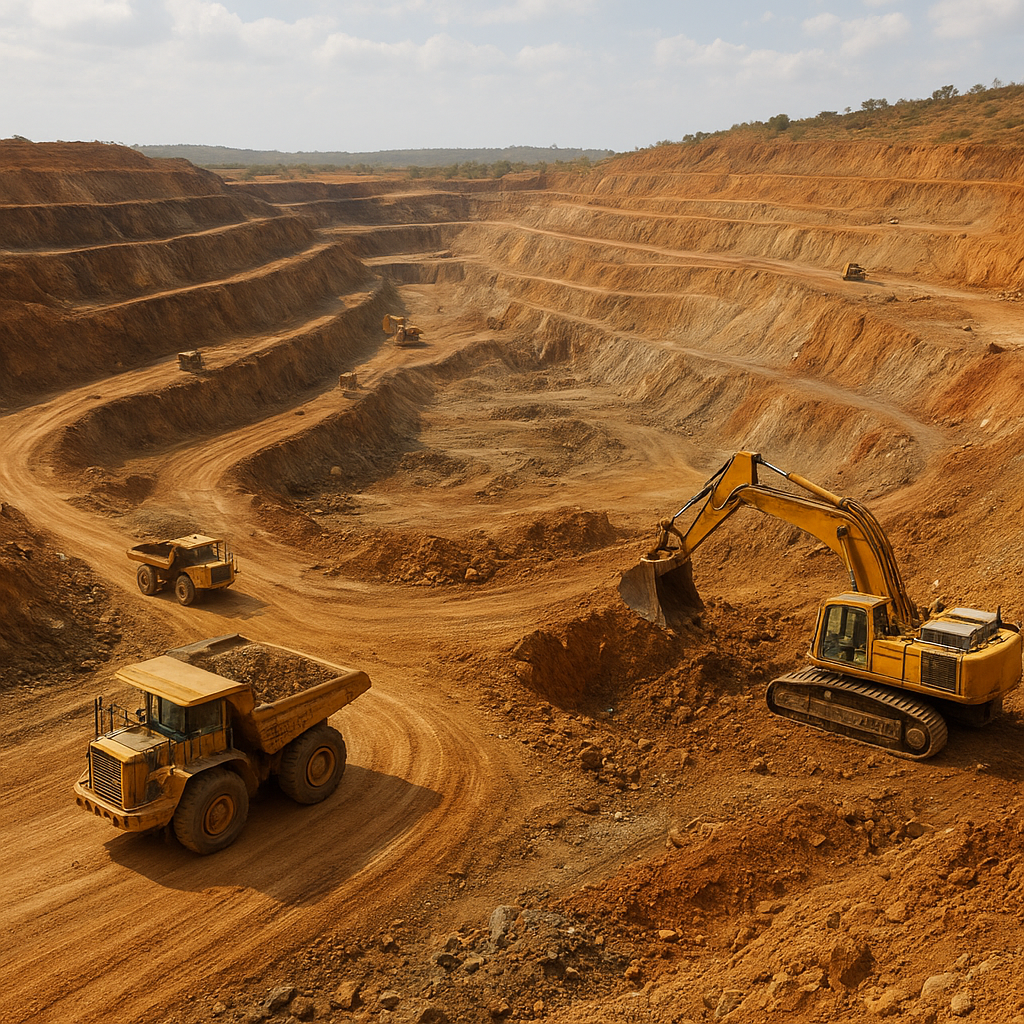
The Syama Mine stands as one of the most prominent mining operations in West Africa, blending modern engineering with deep local roots. Located in southern Mali, this complex is a focal point for the country’s mineral sector and a significant source of foreign revenue. The mine’s story spans discovery, technical innovation, and sustained interaction with local communities and the national economy. Below are detailed sections that explore where Syama is, what is extracted there, its economic importance, and several aspects that make the site particularly noteworthy.
Location and geological setting
Geographical position
The Syama Mine is situated in the southern part of Mali, in the region commonly referred to as Sikasso. It lies several hundred kilometres southeast of the national capital, and its proximity to regional transport routes has helped shape its development. The mine sits within a landscape of savannah and wooded plains, an environment typical of Mali’s southern provinces. Its location places it within a belt of West African gold deposits that extend through neighboring countries and have been mined historically by both industrial and artisanal operators.
Geological characteristics
The mineralization at the Syama site is typical of many West African gold provinces: gold is hosted in a mix of shear zones, quartz veining and sulphide-bearing rocks within metamorphosed greenstone belts and adjacent sedimentary units. The deposit includes both oxide and primary sulphide zones, which has allowed operators to use a combination of open-pit and underground mining methods at different stages of the operation. These geological conditions give rise to ore bodies that can be amenable to conventional gravity, flotation and cyanidation processing methods, depending on the ore type and metallurgical characteristics.
What is mined and how
Primary commodity
The Syama complex is primarily a gold-producing operation. Gold occurs in multiple forms at the site, often associated with quartz veins and sulphide mineralization. Over the life of the mine, production methods have been adapted to target near-surface oxide ores via open pits and deeper, higher-grade sulphide ores via underground workings. Processing facilities on site are tailored to recover gold effectively from the range of ore types present.
Mining methods and processing
Mining at Syama has combined surface and underground approaches. Early stages of the project relied heavily on open-pit extraction where oxide ores were accessible and economically viable to mine. As the deposit was further explored and developed, the operation transitioned to include extensive underground development to access deeper sulphide-hosted ore. The adoption of underground operations allowed the extraction of higher-grade material that prolongs mine life and improves overall production economics.
- Open-pit mining for oxide and near-surface material.
- Underground mining to access deeper, high-grade sulphide ore.
- On-site processing that typically includes crushing, grinding, gravity recovery and chemical extraction (leaching or flotation followed by cyanidation or smelting).
Economic significance
Contribution to national and regional economy
The Syama operation is an important contributor to Mali’s mineral sector. Mali ranks among Africa’s larger gold producers, and large-scale mines such as Syama are key components of that standing. Revenues from gold production translate into export earnings, government royalties, taxes and potential dividends for foreign and domestic investors. The mine also generates foreign direct investment, supporting local suppliers and logistics chains that reach beyond the immediate mine site.
Employment and local procurement
One of the tangible impacts of a major mine like Syama is on employment. The operation provides direct jobs for technical, operational and administrative staff, many of whom are hired from the surrounding region. Indirect employment is generated through contracting, transportation, catering and other service industries that support the mine. Local procurement policies often aim to source goods and services from Malian businesses where feasible, which can stimulate small and medium enterprise development in the area.
Exports and fiscal impact
Gold extracted at Syama contributes to Mali’s export portfolio and is a crucial component of foreign exchange earnings. The fiscal regime applicable to mining operations creates streams of revenue for the national budget in the form of royalties, corporate taxes, and other levies. These funds, when effectively managed and allocated, can support public services, infrastructure projects and development programs across the country.
Social and environmental aspects
Community relations
Interactions between the mining operation and local communities are central to the project’s social license to operate. The mine typically engages in community development projects that include investments in education, healthcare, water supply and local infrastructure. Mining companies operating major projects often establish community liaison offices, grievance mechanisms and participatory programs to ensure that local voices are heard and benefits are distributed as fairly as possible.
Environmental management
Large-scale mining presents environmental challenges such as land disturbance, water use, tailings management and the potential for water and soil contamination. Syama and comparable operations are generally subject to environmental regulations and are expected to implement management plans for waste rock, tailings storage facilities, water treatment and progressive rehabilitation of disturbed areas. Environmental monitoring and compliance are ongoing tasks designed to minimize long-term impacts and to meet national and international standards.
Artisanal and small-scale mining interface
The presence of a commercial mine often intersects with local artisanal and small-scale mining activities. These interactions can be cooperative but can also create conflict over land access, resource rights and safety. Mines sometimes work with local authorities and communities to formalize artisanal operations, provide training, and delineate clear zones for industrial and small-scale activity to reduce friction and improve safety standards for artisanal miners.
Operational innovations and notable features
Automation and modern technologies
Syama has been notable for embracing modern mining technologies. The introduction of automation in underground mining equipment, remote operations centers, and advanced fleet management systems has improved productivity and safety while reducing the exposure of workers to hazardous underground conditions. These technologies permit more precise ore extraction and can extend mine life by enabling access to more complex or previously uneconomic parts of a deposit.
Energy solutions
Energy requirements for mining are substantial, and Syama has been part of broader industry trends toward integrating renewables into power supply chains. The adoption of solar generation and hybrid power systems reduces reliance on diesel, cuts greenhouse gas emissions and lowers operating costs over time. These hybrid systems often combine solar farms with diesel generators and battery storage to provide stable and more sustainable power to remote operations.
Safety and training
Large operations invest considerably in safety systems, training and skills development. For Syama, workplace safety protocols, regular training programs and efforts to develop local talent are central pillars of the operation. These programs help build a workforce that can manage modern mining equipment and contribute to sustained operational performance.
Challenges and future prospects
Operational and market risks
Like any mine, Syama faces a range of risks: commodity price volatility, operational costs, orebody uncertainties and potential interruptions due to social or political factors. Gold price movements directly influence project economics and decisions about investment in extensions or new infrastructure. Effective risk management requires adaptive operational planning and robust stakeholder engagement.
Community and regulatory expectations
As public awareness of environmental and social issues grows, mines are increasingly expected to deliver demonstrable benefits to local populations while minimizing negative impacts. Compliance with evolving regulatory frameworks and meeting international best practices for environmental stewardship and corporate social responsibility are ongoing imperatives for operations like Syama.
Prospects and exploration potential
Beyond current production areas, exploration in the surrounding region often aims to identify extensions of known mineralization and new deposits. Continued exploration success can underpin future expansions of the mine or the development of satellite deposits, further enhancing the project’s longevity. Investment in exploration, geology and engineering is therefore a critical part of the mine’s strategic outlook.
Interesting facts and lesser-known details
- The Syama operation represents a blend of traditional mining techniques and cutting-edge technologies, illustrating how modern mines can evolve.
- Integration of renewable energy into mine power systems demonstrates a commitment to reducing carbon intensity and operational costs.
- Large mines in Mali often serve as hubs for local economic activity beyond mineral extraction, including service industries and smallholder supply chains.
- Training and capacity-building initiatives associated with the mine can leave a lasting legacy by improving local technical skills and employability.
The Syama Mine remains an influential asset within Mali’s mining landscape. Its combination of geological potential, modern operational practices and socio-economic integration provides a case study in how resource projects can shape regional development. While challenges remain, the mine’s ongoing evolution will likely continue to attract attention from industry observers, policymakers and local stakeholders alike.

