
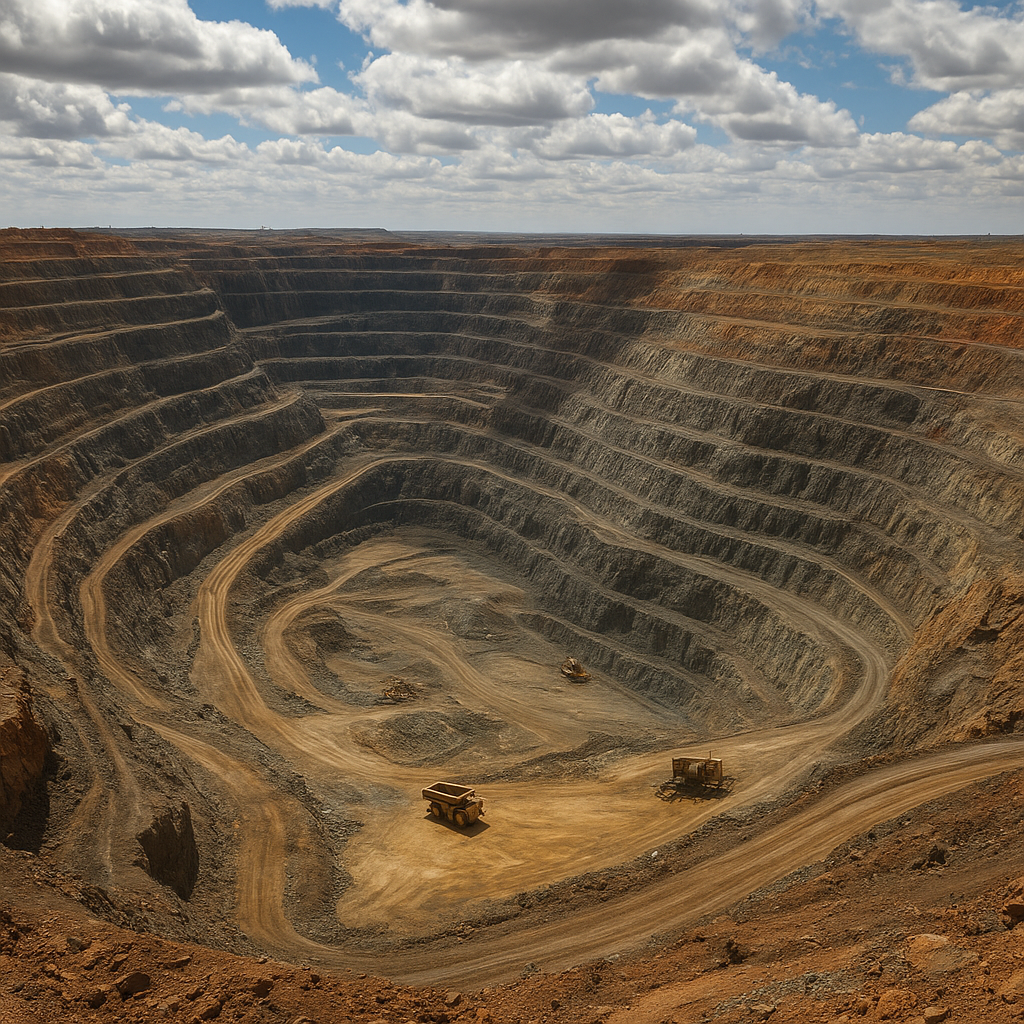
The Super Pit is an iconic symbol of Australia’s mining heritage, a vast open-cut operation that has shaped the landscape, economy and identity of the Goldfields-Esperance region. Located near the historic town of Kalgoorlie-Boulder, the site is not only one of the country’s most famous mineral workings but also a focal point for discussions about technology, environment, community and the long-term future of mining in Australia. This article explores where the Super Pit is situated, what is extracted there, its economic importance and a collection of intriguing facts that highlight why the pit is so remarkable.
Where the Super Pit is located and its geological setting
The Super Pit lies on indigenous lands in the heart of the Goldfields region of Western Australia, immediately adjacent to the town of Kalgoorlie-Boulder. Kalgoorlie itself is roughly 600 kilometres east-northeast of Perth and has been a magnet for prospectors and miners since the late 19th century gold rush. The Super Pit occupies what was once a crowded patchwork of small underground mines and shafts; over decades those individual operations were consolidated and eventually transformed into the enormous open-cut seen today.
Geologically, the area is part of an ancient greenstone belt. Gold there is typically found in structurally controlled quartz veins and associated sulphide zones within metamorphosed volcanic and sedimentary rocks. These mineralised zones formed during complex tectonic and hydrothermal events hundreds of millions to billions of years ago. Over time, prospecting and modern exploration have defined a series of ore bodies that are amenable to large-scale, mechanised extraction, which is why an open-cut model such as the Super Pit became economically feasible.
Physical dimensions and landscape impact
The Super Pit’s scale is staggering: it stretches for kilometres and has cut deep into the bedrock, creating a dramatic scar on the otherwise flat goldfields plain. Although dimensions have changed as operations progressed, the pit is many hundreds of metres deep and several kilometres across. The excavation transformed not only the topography but also local hydrology, dust patterns and vegetation cover. From the town’s lookout points visitors can see the terraced benches and the massive haul roads where life-sized mining machinery appears almost toy-like from a distance.
What is mined at the Super Pit and how it is processed
As its name suggests, the Super Pit’s primary product is gold. The ore extracted from the pit is processed through a sequence of comminution (crushing and grinding), gravity separation and chemical recovery methods such as cyanidation and carbon-in-pulp. These well-established metallurgical processes allow operators to recover gold from both free-milling ores and more refractory materials that require more complex treatment.
- Gold: the primary metal produced, recovered as doré bars or refined bullion.
- By-products: depending on the ore composition, small amounts of copper, silver or other trace elements may be recovered during processing.
- Waste rock and tailings: a significant volume of non-ore material is generated and managed on site using engineered storage facilities.
Mining is conducted with large-scale equipment: hydraulic shovels, haul trucks, graders and drilling rigs form the backbone of daily operations. Modern practices increasingly incorporate automation and remote operation for safety, efficiency and cost control. The ore is transported from pit benches to a processing facility where metallurgists tailor circuits and reagents to the mineralogy encountered, continually optimising recovery rates.
Operational cycles and resource life
Like any major mine, the Super Pit operates in cycles shaped by commodity prices, ore grades and operational costs. Extraction plans are updated frequently as exploration adds new resources or as economic conditions change. The longevity of a mine is a function of remaining ore reserves, metallurgy and market conditions; in the case of the Super Pit, decades of activity and ongoing exploration have meant that it has had a lengthy and evolving operational life.
Economic significance and regional impact
At multiple scales the Super Pit matters: locally, regionally and nationally. The mine is one of the most recognisable contributors to the economic fabric of Kalgoorlie and the surrounding shires. The operation employs a sizeable workforce, directly and indirectly supporting jobs in mining services, logistics, retail and hospitality. Payrolls and company spending feed local businesses and underpin public services.
Beyond direct employment, the Super Pit’s output contributes to Australia’s export earnings. Gold remains a strategic commodity: it supports financial reserves, provides wealth to shareholders and governments via royalties and taxes, and can act as a hedge in turbulent markets. Revenue derived from large mining operations flows into local infrastructure projects, community development funds and regional health and education initiatives.
Supply chain and skill development
The operation’s scale fosters a broad supply chain: engineering firms, parts suppliers, drilling contractors, metallurgical consultants and environmental specialists all rely on the continuing activity of the pit. That ecosystem encourages skill retention and development in a region where technical competence in heavy industry is a competitive advantage. Training centers, apprenticeships and vocational programs in Kalgoorlie are strongly linked to the mine’s presence, creating career pathways across mining disciplines.
Community, heritage and tourism
The Super Pit is entwined with Kalgoorlie-Boulder’s identity. The town’s origin in the 1890s gold rush means mining history is woven into both the urban fabric and local culture. Many residents have multi-generational ties to the industry. The site is visible from public lookouts, making it a popular destination for visitors who want to witness the scale of modern mining.
- Lookouts and tours: public viewing points offer sweeping panoramas of the pit; guided tours have historically allowed visitors to learn about the mining process and the town’s heritage.
- Museum and heritage sites: local institutions document the gold rush era, the transition to mechanised mining and personal stories from miners and their families.
- Events and education: mining themes appear frequently in community events, school programs and interpretive signage, reinforcing the link between geology, economy and daily life.
While the Super Pit is celebrated by many, it also prompts debate about post-mining futures. As operations eventually wind down, communities face the challenge of economic diversification, reclamation of disturbed land and preservation of heritage. Local planners and stakeholders work to balance continued mining activity with a long-term vision for sustainable regional development.
Environmental management and technological innovation
Large open-cut mines generate significant environmental responsibilities: habitat disturbance, dust and noise, water management and the handling of tailings and waste rock. The Super Pit has been the subject of focused environmental management efforts, including air quality monitoring, dust suppression systems, progressive rehabilitation programs and engineered tailings storage. Effective management is necessary both to satisfy regulatory requirements and to maintain a social licence to operate.
Technological innovation plays an important role in minimising impacts and improving efficiency. Automation of haul trucks and drilling rigs reduces workforce exposure to hazards, while real-time monitoring systems enable managers to make rapid decisions about blasting, water use and emissions. Advances in ore-sorting, selective mining and improved metallurgical processes can also lower energy consumption per ounce and reduce the volume of material requiring chemical treatment.
Rehabilitation and future land uses
Mine closure planning is an essential part of the lifecycle. Rehabilitation aims to stabilise slopes, re-establish vegetation, manage water quality and repurpose infrastructure where possible. Creative post-mining land uses—such as recreational lakes, industrial estates, solar farms or cultural sites—are often explored with community input. The scale and depth of the Super Pit present unique engineering and planning challenges for eventual closure and reuse.
Interesting facts and notable aspects
- Historical consolidation: the Super Pit originated from the merging of many smaller underground mines, which were gradually incorporated into a single large open-cut operation—a striking example of how mining landscapes evolve over time.
- Local identity: Kalgoorlie’s history as a gold town makes mining a central thread in local arts, museums and community narratives.
- Engineering spectacle: the terraced benches, enormous haul roads and continuous operations give the pit a periodically theatrical quality, especially at dawn or dusk when light and dust highlight contours.
- Workforce culture: shift-work patterns and FIFO (fly-in fly-out) arrangements have shaped community rhythms, accommodation needs and social services in the region.
- Tourist draw: despite being an industrial site, the Super Pit draws international visitors keen to understand modern mining at scale—some aspects of the operation are interpreted for tourists through lookouts and informational displays.
- Continuous adaptation: the operation has adapted to changing commodity prices, regulatory frameworks and ownership structures over decades, showing how large mines must evolve to survive.
Challenges and the path forward
Like many large mines, the Super Pit faces multiple challenges: fluctuating gold prices that affect profitability and life-of-mine decisions; environmental and water management constraints in an arid landscape; and social expectations around rehabilitation and the equitable sharing of benefits. Ongoing exploration is critical to extending the mine’s life, but sustainable futures will also depend on diversifying regional economies and investing in post-mining opportunities.
Technological trends—such as electrification of vehicles, increased automation, improved processing chemistry and data-driven efficiency—offer pathways to reduce the operation’s environmental footprint and improve worker safety. In parallel, meaningful engagement with Traditional Owners, residents, governments and regulators is necessary to navigate cultural heritage, land access and long-term land use planning.
Final observations
The Super Pit occupies a unique place in Australia’s mining story. It is a living laboratory for industrial-scale extraction, an economic engine for a regional community, and a reminder of the tensions and possibilities inherent in resource development. As the industry moves forward—shaped by technology, markets and societal expectations—the Super Pit will likely continue to evolve, remaining both a source of yellow metal and a point of conversation about how to balance prosperity, stewardship and heritage in the resource-rich landscapes of Western Australia.

