
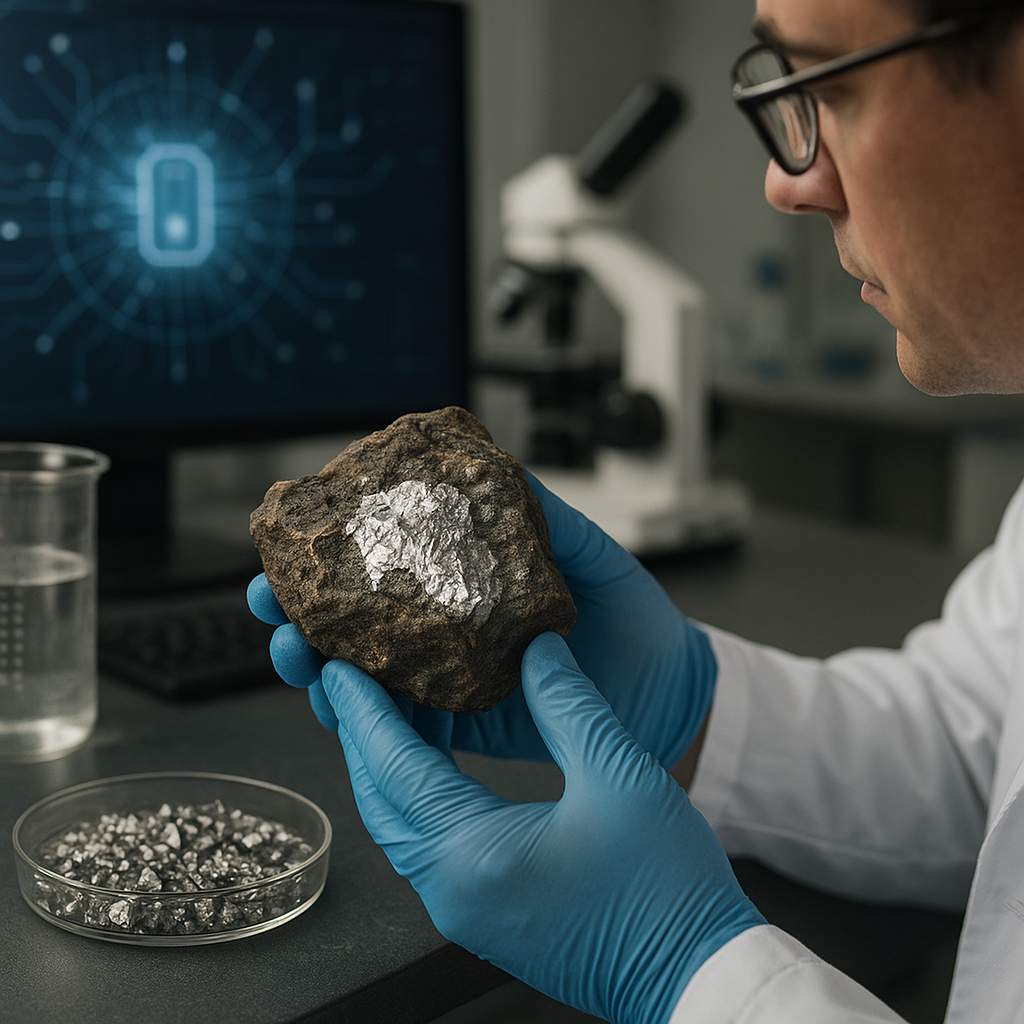
The rapid advancement of quantum technologies has transformed the landscape of computing, sensing, and secure communications. Alongside breakthroughs in qubit design and error correction, a quieter but equally critical challenge has emerged: sourcing the specialized materials that make high-performance quantum devices possible. This article examines the demand for quantum computing materials, the specific rare metals and elements required, the vulnerabilities in current procurement pathways, and practical strategies for creating resilient, ethical, and environmentally responsible supply chains.
Essential materials and their roles in quantum devices
Different quantum platforms impose distinct material requirements. Superconducting circuits, trapped ions, topological qubits, spin defects, and photonic systems each depend on high-purity metals, dopants, and tailored substrates. Meeting the performance targets of modern quantum processors demands not only the right elements but also exceptional control over purity, crystal quality, thin-film deposition, and isotopic composition.
Key metals and elements
- niobium: Widely used for superconducting films and wiring due to its favourable critical temperature and robust fabrication properties. Ultra-pure niobium films are central to resonators and qubit electrodes.
- tantalum: Emerging as a promising alternative for superconducting qubits because of its ability to form stable, high-quality oxide interfaces that reduce decoherence.
- rare earths: Elements such as erbium, ytterbium, and europium are critical for quantum memories, optical frequency conversion, and certain spin-based qubit schemes. Their sharp optical transitions enable long-lived coherent storage.
- indium: Used in low-temperature bonding, soldering, and certain semiconducting heterostructures. Indium-based compounds are important for hybrid device architectures.
- platinum group metals and noble metals (gold, palladium): Employed for high-quality contacts, microwave components, and in some nanofabrication processes where chemical inertness and conductivity are vital.
- isotopically enriched materials: While not a metal per se, isotopically pure silicon-28 and carbon-12 are crucial where nuclear spin-free environments are needed to lengthen coherence times for donor or spin qubits.
The technical bar for these materials is unusually high: impurities at the parts-per-billion (ppb) level or trace magnetic contaminants can degrade coherence, increase noise, and reduce device yields. This drives demand not only for specific elements but for specialized refining, machining, deposition, and certification services.
Supply chain vulnerabilities and geopolitical concentration
The global distribution of mining, refining, and manufacturing capacity for many of these materials is highly concentrated, creating systemic risks. A handful of countries dominate the production of particular elements, and the upstream mining processes for some metals carry environmental and social concerns that complicate procurement.
Concentration and risk drivers
- Geographic concentration: For example, large shares of rare earth processing occur in a few countries, while the bulk of niobium production comes from Brazil. This concentration exposes supply chains to geopolitical shifts, export controls, and regional disruptions.
- Refinement and specialty processing bottlenecks: High-purity quantum-grade metals require advanced refining and finishing. These capabilities are limited and often located separately from raw-material mines, creating fragile logistics and single-point failure modes.
- Environmental and ethical issues: Mining for certain elements can be associated with significant ecosystem damage, water use, tailings, and in some regions, human-rights concerns. Procurement policies increasingly demand traceability and responsible sourcing.
- Price volatility and scarcity: Demand spikes from new technology deployments can trigger rapid price increases, making capital planning and long-term device cost projections uncertain.
Supply chain resilience requires recognizing these drivers and building layered mitigation strategies, from supplier diversification to investments in local processing and stockpiles.
Strategies for responsible sourcing and resilience
Organizations building quantum devices must balance technical requirements with supply risk management, cost control, and environmental commitments. The following strategies offer a practical roadmap.
Diversification and strategic partnerships
- Develop multiple sourcing routes across regions and suppliers for critical metals. Encourage competition and contractual redundancy to reduce dependence on single suppliers.
- Form long-term partnerships with specialized refiners and thin-film foundries to secure priority access to high-purity materials and services.
- Collaborate with governments and industry consortia to support domestic or allied capacity-building for mining and refinement where feasible.
Circular economy and recycling
- Implement design-for-recycling approaches: choose device architectures and bonding techniques that facilitate material recovery at end-of-life.
- Invest in recycling streams for discarded electronics and manufacturing scrap; reclaiming small quantities of rare metals can reduce net demand and exposure to raw-material shocks.
- Support research into chemical and mechanical recovery methods tailored to thin films and cryogenic-compatible materials, where existing recycling techniques are not optimized.
Material substitution and reduction
- Fund R&D into alternative materials and architectures that reduce or eliminate reliance on constrained elements. For instance, engineering superconducting films to use lower volumes of critical metals or using composite layers that dilute supply risk.
- Optimize device designs and fabrication processes to minimize material waste; thinner films, higher deposition yields, and smaller junctions all lower per-device material needs.
Traceability, certification, and ethical sourcing
- Require supplier traceability to mining sources and refining cascades. Use independent audits and certification frameworks to verify responsible practices.
- Adopt procurement policies that integrate social and environmental criteria, even if near-term costs are higher—reputational and regulatory risks make this prudent for long-term operators.
Technical prerequisites for procurement
Acquiring materials suitable for quantum applications is more than buying a commodity grade. It involves specifying:
- Purity metrics (chemical and magnetic), often at ppb levels.
- Controlled grain structure and surface morphology for films and foils.
- Isotopic composition, such as high-purity isotopic enrichment for silicon-28 or controlled ratios for other isotopes that affect spin environments.
- Compatibility with cryogenic processing and long-term stability in vacuum and low-temperature environments.
Procurement teams need to partner closely with materials scientists and process engineers to translate device performance targets into measurable supplier specifications. This often requires bespoke contracts and co-development arrangements rather than off-the-shelf purchases.
Environmental, ethical, and regulatory considerations
Expanding quantum technology at scale must reckon with the environmental footprint and ethical implications of raw-material extraction. Mitigation strategies include:
- Prioritizing suppliers with strong environmental management, tailings control, and community engagement practices.
- Advocating for and participating in certification schemes that guarantee no-child-labour and fair-labour standards in upstream mining.
- Designing lifecycle analyses to quantify the environmental cost per qubit or per device, enabling informed trade-offs when choosing materials and manufacturing pathways.
Regulatory landscapes can also influence sourcing: export controls on critical technologies and materials, sanctions, and strategic stockpile policies all affect availability. Staying informed and engaging with policymakers can reduce surprises.
Practical recommendations for organizations
- Integrate materials sourcing into early-stage design decisions to avoid late-stage surprises that derail production timelines.
- Create cross-functional teams that include procurement, materials scientists, process engineers, and legal/compliance experts to evaluate suppliers holistically.
- Invest in supplier development programs and joint ventures to cultivate local refining and specialty processing capacity where strategic.
- Implement pilot recycling programs focused on recovery of the most critical and expensive elements.
- Secure contingency stockpiles for the scarcest items and use hedging strategies where appropriate.
- Support open standards and shared test methodologies for qualifying quantum-grade materials to lower the barrier for new suppliers to enter the market.
Research directions and future outlook
Meeting the material needs of quantum technologies will require sustained research into both fundamental and applied areas: advanced purification methods for superconducting metals, scalable isotopic enrichment techniques, low-impact mining and circular extraction, and materials-science breakthroughs that reduce dependence on constrained elements. As device architectures evolve, some materials may fall out of favor while others become essential; keeping procurement strategies adaptable and grounded in technical foresight will be decisive.
Scaling quantum systems from laboratory prototypes to commercial products is as much a materials and supply-chain challenge as it is a physics and engineering one. By treating sourcing, supply chains, and sustainability as integral elements of technology strategy, organizations can reduce risk, control costs, and align the deployment of quantum technologies with broader societal values.
