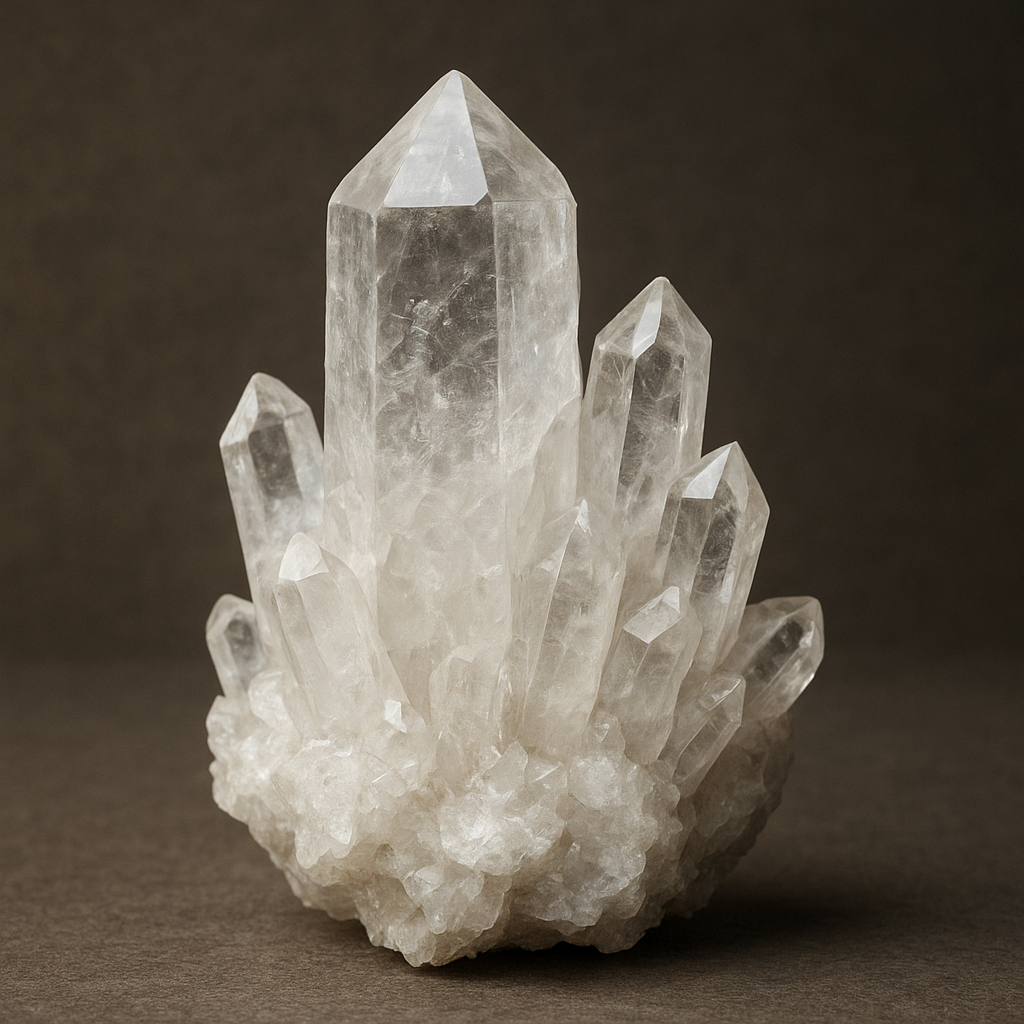
Smithsonite is a striking and historically important mineral that often delights collectors and scientists alike. Chemically a zinc carbonate (ZnCO3), it forms in the oxidized zones of zinc-bearing ore deposits and displays a wide palette of colors and habits. This article explores its chemistry, physical characteristics, global occurrences, economic roles as an ore of zinc, uses in jewelry and collecting, and several intriguing geological and historical facets that make smithsonite a mineral of continuing interest.
Overview and Chemical Character
Smithsonite belongs to the calcite group of carbonates, crystallizing in the trigonal system with a typical rhombohedral structure. The ideal formula is ZnCO3, though natural specimens commonly contain varying amounts of manganese, iron, cadmium, and other elements substituting for zinc. These substitutions influence not only the chemistry but also the color and physical properties of smithsonite. For instance, manganese-rich smithsonite may appear pink to rose, while iron substitution can lead to greenish hues. Cadmium can impart yellow to orange tones.
Smithsonite typically forms as botryoidal, globular, mammillary, or stalactitic masses and less often as well-formed rhombohedral crystals. Its luster ranges from vitreous to pearly, and it exhibits a conchoidal to subconchoidal fracture. On Mohs hardness scale it is relatively soft, around 4.5 to 5, and has a specific gravity generally between 4.3 and 4.5, reflecting the presence of zinc.
Formation Processes and Geological Settings
Smithsonite is a product of supergene alteration — the chemical weathering and oxidation of primary sulfide minerals in the upper parts of ore bodies. When primary zinc sulfide minerals such as sphalerite (ZnS) are exposed to oxygenated waters, they oxidize and release zinc into solution. Under suitable pH and carbonate availability, zinc ions react with carbonate to precipitate smithsonite.
Typical Environments
- Oxidized zones above and around primary sulfide deposits
- Hydrothermal veins where carbonate-bearing fluids are present
- Replacement deposits where smithsonite replaces carbonate host rocks or other carbonates (e.g., calcite)
- Secondary fillings in vugs and cavities of host rocks
Associated minerals often include hemimorphite, cerussite, malachite, azurite, limonite, and various iron oxides. Smithsonite can form pseudomorphs after other minerals and can itself be pseudomorphically replaced by other phases over geological time.
Global Distribution and Notable Localities
Smithsonite is found on every continent where suitable zinc deposits have been subjected to oxidation and weathering. Some of the most celebrated localities for high-quality or uniquely colored specimens include:
Notable Localities
- Tsumeb, Namibia — famous for its vivid colors and variety of mineral associations, producing rare and highly sought-after smithsonite specimens.
- Broken Hill, Australia — historic ore field with abundant smithsonite in a range of forms.
- Kelly Mine and other localities in New Mexico, USA — notable for botryoidal and pink smithsonite.
- Laurium (Lavrio), Greece — classical European locality with archaeological mining history.
- Butte, Montana and other southwestern US sites — notable for mineral diversity.
- Mexico (Ojuela Mine and others) — produces colorful smithsonite and interesting cabinet specimens.
Different localities often show characteristic colors and habits due to their unique geochemical environments. For example, the presence of cobalt or manganese at certain sites yields pink or violet tones, while cadmium-rich environments produce sunny yellows or oranges.
Physical, Optical, and Spectroscopic Properties
Smithsonite has several diagnostic properties that aid identification: its rhombohedral cleavage is often imperfectly displayed in massive forms, but the mineral’s density, reaction to acid (effervescence is typically weak or absent because carbonate is in tight crystal lattices), and characteristic streak (white) help distinguish it from look-alikes.
Color and Zoning
One of smithsonite’s most alluring features is its range of colors, including white, gray, green, blue, pink, purple, yellow, and brown. These colors often occur in concentric zones and are caused by trace-element substitutions and microscopic inclusions. Optical microscopy and spectroscopy (e.g., infrared, Raman, and electron microprobe analyses) reveal complex internal compositions and subtle zoning patterns that record fluid chemistry changes during growth.
Fluorescence and Luminescence
Certain smithsonite specimens exhibit fluorescence under ultraviolet light, offering spectacular displays in mineral shows. Fluorescent responses depend on impurities and structural defects; typical responses can range from blue to violet under shortwave UV. Luminescence makes smithsonite popular among collectors who value display specimens.
Economic Importance and Uses
From an economic perspective, smithsonite has historically been important as a zinc ore. Prior to improved methods of extracting zinc from primary sulfide ores, secondary carbonates like smithsonite were valuable sources of zinc for local metallurgy. Although modern industrial zinc is most often produced from sphalerite, smithsonite remains an ore-of-interest where it occurs in substantial concentrations and is easily mined.
Zinc Production and Metallurgy
Zinc produced from smithsonite has been used in galvanizing, brass manufacture, alloys, batteries, and numerous chemical applications. Processing smithsonite for zinc extraction involves crushing, concentration, and either hydrometallurgical leaching or roasting followed by reduction depending on the specific ore and impurities present.
Gemstone and Ornamental Use
While smithsonite’s low hardness limits its use in everyday jewelry, well-polished cabochons and carvings are prized for their colors and luster. Collectors and lapidaries often use smithsonite for pendants, earrings, and display pieces that are worn occasionally rather than subjected to daily wear. In the lapidary market, carefully stabilized smithsonite (impregnated with resins) can be fashioned into attractive gems.
Scientific and Industrial Roles
Beyond direct extraction, smithsonite has roles in scientific research. Isotope and trace-element studies on smithsonite can reveal details of fluid evolution in ore-forming environments. Environmental geologists also study smithsonite formation as part of understanding the mobility and sequestration of zinc and other heavy metals in contaminated sites.
Mining, Environmental Considerations, and Processing
Mining smithsonite typically involves open-pit or underground extraction depending on the deposit geometry. Because smithsonite commonly occurs near the surface, many deposits have been exploited historically by small-scale miners. Modern environmental regulations require careful handling of wastes and leachates, especially because zinc and associated elements can impact local water quality.
Processing Techniques
- Gravity and flotation concentration to produce zinc-rich concentrates.
- Hydrometallurgical leaching using weak acids to dissolve the carbonate for recovery of zinc.
- Roasting and subsequent reduction in certain metallurgical flowsheets where carbonate decomposition is required prior to smelting.
Remediation and reclamation of old smithsonite-rich mine sites can involve immobilization of metals, pH control, and revegetation to reduce erosion and heavy metal mobility. Understanding smithsonite formation can inform strategies to predict zones of metal accumulation and guide remediation efforts.
Collecting, Display, and Care
Collectors prize smithsonite for its colorful botryoidal forms, delicate crystal aggregates, and fluorescent specimens. When acquiring and caring for smithsonite specimens, keep in mind the mineral’s sensitivity:
- Smithsonite is relatively soft and can scratch easily; handle specimens gently and avoid abrasive contact.
- Avoid prolonged exposure to acids or strong household cleaners; carbonate minerals can be altered chemically.
- Limit exposure to direct sunlight for long periods if color fading is a concern — some trace-element-rich specimens can be light-sensitive.
- Display under moderate lighting; for fluorescent pieces, use proper UV-safe lamps and limit exposure to preserve specimen integrity.
For jewelry, smithsonite cabochons should be set securely and worn with care. Many lapidaries use stabilizing resins to strengthen fragile or porous smithsonite before cutting and polishing. These treatments should be disclosed when specimens are sold.
Historical and Cultural Context
The mineral was named in honour of the British chemist and mineralogist James Smithson, whose bequest founded the Smithsonian Institution in Washington, D.C. It was first described in the early 19th century and has since captured attention both as an ore and for its aesthetic appeal. In some regions, smithsonite played a role in early metallurgical efforts to extract zinc for brassmaking and other alloys.
Smithsonite also appears in the history of mineralogy as an example of how supergene processes create economically significant secondary minerals that can be mined independently of primary sulfide ore. Its colorful varieties are frequently featured in museum exhibits highlighting secondary mineral paragenesis and mineral aesthetics.
Interesting Mineralogical Phenomena and Research Topics
Several aspects of smithsonite attract ongoing research and provide fascinating natural laboratory settings:
- Pseudomorphism — smithsonite can form pseudomorphs after other carbonate minerals or be replaced by other phases itself; such transformations preserve external shapes while altering internal composition.
- Zoning and growth histories — fine-scale chemical zoning preserved in smithsonite records changes in fluid chemistry and temperature during mineral growth.
- Biologically mediated precipitation — in some settings, microbial activity is implicated in the mobilization and deposition of zinc carbonates, blurring the lines between abiotic and biotic mineral formation.
- Trace element partitioning — studies of how elements like cadmium, manganese, and iron partition into smithsonite help reconstruct ore-forming processes and can be useful for exploration geochemistry.
Practical Advice for Students and Amateur Mineralogists
For those studying smithsonite in the field or laboratory, a few practical tips help ensure accurate identification and meaningful observations:
- Combine field context (oxidation zones, associated minerals) with hand-specimen observations (color, habit, density) for identification.
- Use non-destructive analytical methods where possible: portable XRF, Raman spectroscopy, and UV lamps for fluorescence are valuable tools in the field or museum settings.
- When sampling, document precise locality data and host-rock relationships; smithsonite’s paragenesis is intimately tied to environment and host-rock chemistry.
- Collaborate with local museums or universities if high-precision analyses (electron microprobe, stable isotopes) are needed — these can yield insights into fluid origins and temperatures.
Notable Specimens and Collections
Museum collections around the world host spectacular smithsonite specimens prized for their color, form, and provenance. Display pieces often highlight the crystal’s botryoidal surfaces and vibrant hues, sometimes paired with UV displays to reveal latent fluorescence. Important private collections also contain rare forms such as crystalline rhombohedral specimens and bead-like aggregates that illustrate the variety smithsonite can present.
Further Reading and Related Minerals
For readers interested in exploring related minerals and deeper technical literature, consider looking into works focusing on carbonate mineralogy, supergene ore formation, and secondary zinc minerals. Related zinc minerals of interest include hemimorphite, willemite, and zincian variants of calcite and aragonite. Detailed mineralogical databases and regional mining reports provide locality-specific information that can be invaluable for collectors and researchers.