
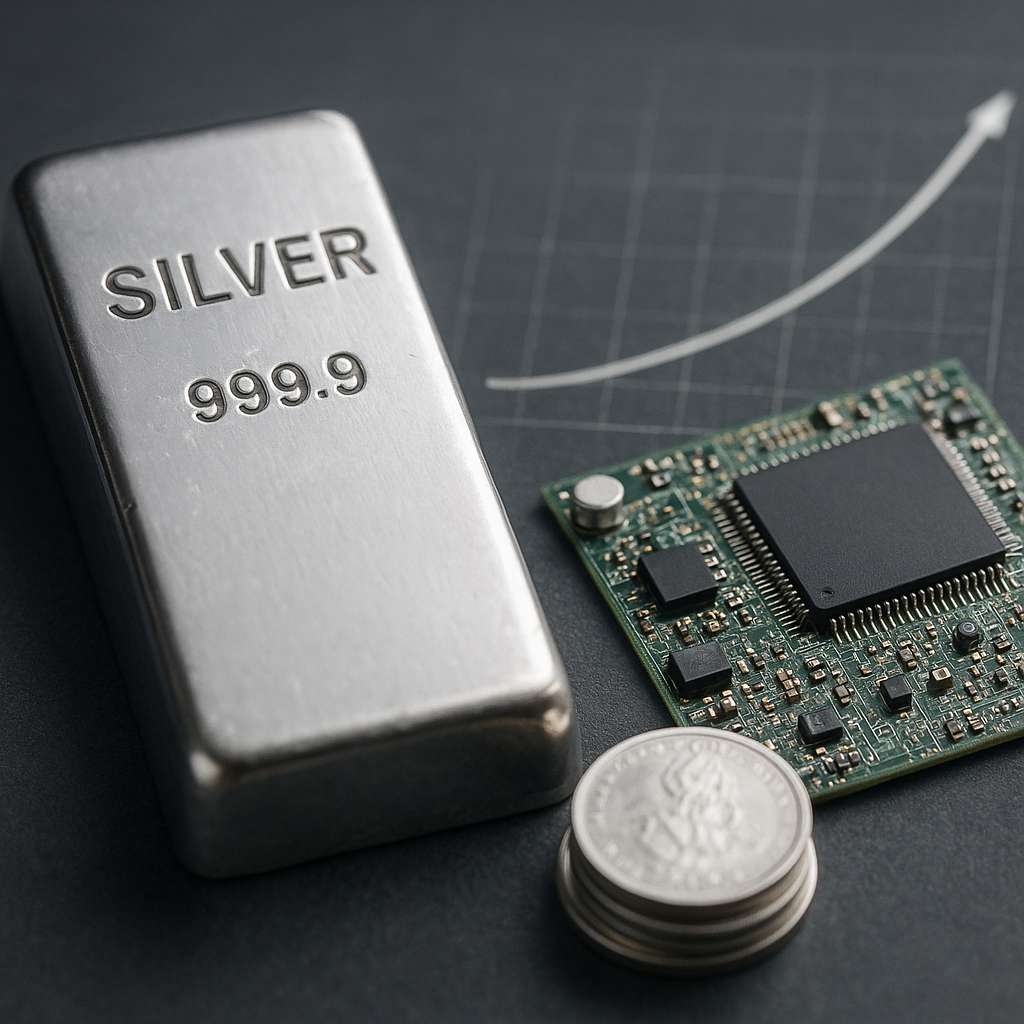
The rapid expansion of electronic devices — from smartphones and laptops to electric vehicles and Internet of Things sensors — is reshaping demand for critical materials. Among these, silver occupies a special position because of its unmatched electrical and thermal conductivity, antimicrobial properties, and versatility in manufacturing processes. As global consumption of electronics accelerates, mounting pressures on the supply chain and structural constraints threaten to create bottlenecks, price spikes, and long-term strategic challenges for manufacturers, recyclers, policymakers, and investors.
Drivers of demand in a burgeoning electronics market
Several converging trends are amplifying the need for silver in electronic applications. First, miniaturization and higher circuit densities increase the use of conductive materials in packaging, printed circuit boards, and interconnects. Second, the global shift toward electronic alternatives to mechanical systems (for example, touch sensors, RFID tags, and MEMS devices) places a premium on reliable conductive paths and contact materials. Third, regulatory shifts such as the RoHS directive and the move to lead-free solders have elevated demand for silver-containing solder alloys and conductive pastes. Fourth, the surge in electric vehicles (EVs) and advanced driver-assistance systems multiplies the number of high-reliability connectors and switches per vehicle, each of which often uses small quantities of silver or silver alloys.
Key demand drivers include:
- Consumer electronics proliferation: smartphones, tablets, laptops, wearables.
- Automotive electrification: EVs, power electronics, and sensors.
- Industrial IoT and automation: sensors, actuators, and control modules.
- Renewable energy and storage: although photovoltaic demand can fluctuate, silver is essential in many PV cell types and in power electronics.
- Medical and antimicrobial uses: silver coatings and nanoparticles in medical devices.
Structural constraints on silver supply
The global supply of silver is shaped by geological, economic, and institutional factors that limit how quickly production can expand in response to rising demand. Unlike metals whose production scales directly with exploration success, much of the world’s silver is produced as a byproduct of mining for base metals such as copper, lead, and zinc. This linkage means that silver output is often decoupled from silver-specific price signals and instead tied to the economics of other metal markets.
Byproduct nature and limited responsiveness
Because a substantial share of silver is a co- or byproduct, ramping up primary silver output is difficult when demand spikes. Mines targeting copper or zinc will not necessarily increase throughput solely to extract silver. This creates an inelastic short-term supply response: even sizeable price increases may not immediately translate into proportionate production gains.
Ore-grade decline and exploration shortfalls
Average ore grades for many metal deposits are declining, increasing the cost per ounce of extracted silver. Exploration investment in new silver-dominant projects has been modest relative to demand forecasts, driven by capital allocation to larger, lower-risk projects in other commodities and by the long lead times to develop new mines. Environmental permitting, land access, and community opposition further delay or block new mines, especially in regions with strict regulations.
Environmental, social and governance (ESG) constraints
Mining faces intensifying scrutiny over water use, tailings management, and community impacts. Projects that might materially increase silver output can be stalled by water scarcity concerns, stringent tailings dam rules, or requirements for greater community engagement and benefit-sharing. These constraints increase development costs and lengthen timelines, tightening the availability of new supply.
Geopolitical and concentration risks
Production and refining capacity can be geographically concentrated. Top producing countries and dominant refiners can influence trade flows and create risks if political shifts, export controls, or sanctions arise. While silver is not as geopolitically fraught as some other metals, concentration in a handful of regions elevates vulnerability to supply disruptions.
Recycling, circularity and the challenge of reclaiming silver
Recycling is often presented as a solution to supply stress, and silver has the advantage of being technically recoverable from end-of-life electronics. However, practical and economic barriers limit the contribution of recycled silver to total supply.
Low concentrations and collection hurdles
Silver content per device has typically declined as components shrink and processes improve. Many devices contain minute amounts of silver dispersed across contacts, coatings, and pastes — making economical recovery technically challenging. Collecting end-of-life products at scale depends on robust take-back systems, consumer behavior, and efficient logistics, which are uneven across countries.
Separation and processing complexities
Recovering silver from complex printed circuit boards and multi-material assemblies requires specialized hydrometallurgical and pyrometallurgical processes. These can be capital intensive and environmentally sensitive. In many cases, it is cheaper to recover higher-value metals like gold and palladium, leaving silver unrecovered or downcycled.
Policy levers to improve recycling rates
Policies such as Extended Producer Responsibility (EPR), deposit-return schemes, and incentives for urban mining can improve collection and processing of silver-bearing devices. Industry design changes — like modular designs that ease disassembly, standardized connectors, and labeling of material content — can also facilitate recycling. Without such interventions, recycling will likely remain a partial, though important, buffer against supply constraints.
Market dynamics: prices, investors and substitution pressures
When supply tightens and demand rises, the price of silver can become volatile. Beyond industrial demand, investor flows — via ETFs and speculative trading — can amplify price moves. Price volatility has consequences for manufacturers: sudden cost increases can squeeze margins or prompt redesigns to reduce silver content.
Technical and material substitution
Substitution is a natural market response to scarcity. Engineers and materials scientists are advancing alternatives to reduce reliance on bulk silver usage without sacrificing performance:
- Silver-coated copper offers cost savings but risks corrosion unless properly plated.
- Conductive polymer inks and carbon-based materials (e.g., graphene) can replace silver in some printed electronics applications.
- Gold remains attractive for high-reliability contacts but is more expensive; in some cases, thin gold plating can reduce overall silver use by replacing thicker silver layers.
- Process innovations, such as laser welding, improved bonding techniques, and microfabrication, reduce the amount of conductive material needed.
However, substitutes often involve trade-offs in conductivity, reliability, cost, and manufacturability. For critical applications — particularly where oxidation resistance and low contact resistance are essential — silver retains advantages that are hard to match at scale.
Industry and policy responses to mitigate constraints
Industry stakeholders and policymakers are deploying a variety of strategies to manage the tension between rising electronic demand and limited silver supply.
Design for material efficiency
Electronics manufacturers are investing in designs that optimize the use of conductive materials. This includes thinner coatings, targeted plating only where necessary, and component consolidation. Such efficiency measures can materially reduce silver per unit without sacrificing function.
Strategic sourcing and supply-chain transparency
Firms are mapping their supply chains to identify critical pinch points and engaging with suppliers to secure long-term contracts, diversify sourcing, and support upstream investments. Improved traceability also supports ESG compliance and helps firms respond to regulatory changes or trade disruptions.
Encouraging recycling infrastructure
Public-private partnerships and incentives can lower the barriers to urban mining. Grants, tax credits, and regulatory frameworks that favor closed-loop processes make it more financially attractive to recover silver from electronics and other waste streams.
R&D and substitution investment
R&D funding, both private and public, is accelerating development of lower-silver or silver-free conductive technologies. Breakthroughs in printed electronics, advanced coatings, and novel alloys could alter long-term demand trajectories.
Risks and scenarios for the near to medium term
Projecting the future course of silver supply and its intersection with electronics demand requires scenario thinking because of the many interacting variables.
High-demand, constrained-supply scenario
Rapid adoption of EVs, expansion of IoT, and continued consumer electronics growth combined with slow mine development and weak recycling could produce persistent deficits. Outcomes include sustained higher prices, accelerated substitution efforts, and increased geopolitical maneuvering for sources and refining capacity.
Managed transition scenario
Moderate demand growth paired with aggressive efficiency measures, improved recycling, and steady mine investment could balance the market. Prices would be less volatile, and substitution would proceed gradually as cost-benefit calculations evolve.
Disruptive-innovation scenario
Breakthroughs in materials science (for example, cost-effective conductive polymers or scalable graphene printing) could dramatically reduce silver intensity across many applications. This would relieve pressure on physical supply but could disrupt incumbent suppliers and refineries.
Practical steps for stakeholders
Different actors should prepare targeted strategies:
- Manufacturers: audit silver intensity across product lines, invest in design efficiency, and diversify material suppliers.
- Recyclers and entrepreneurs: pursue modular processing solutions, partner with electronics OEMs, and scale urban-mining operations.
- Policymakers: implement EPR, streamline permitting for environmentally responsible recycling facilities, and incentivize research on alternatives.
- Investors: monitor production profiles, exploration pipelines, recycling capacity, and technology trends that could affect long-term demand for silver.
The intersection of escalating electronic demand and finite, complex silver supply chains creates a strategic challenge that spans technology, finance, and public policy. Addressing the issue will require coordinated action across the value chain: smarter product design, aggressive recycling and urban-mining efforts, targeted R&D into alternatives, and risk-aware sourcing strategies. Only through such a multi-pronged approach can manufacturers hope to sustain innovation while managing the material constraints that now shape the global electronics landscape.
