Shungite is a remarkable and enigmatic form of carbon-rich rock that has attracted attention from geologists, chemists, health enthusiasts and designers alike. Often dark and lustrous, it carries a mix of ancient geological history, unusual molecular structures and a variety of practical uses. This article explores the origins, composition, global occurrences, traditional and modern applications, and the scientific debates that surround this unique material.
Origins and geology
What shungite is and how it formed
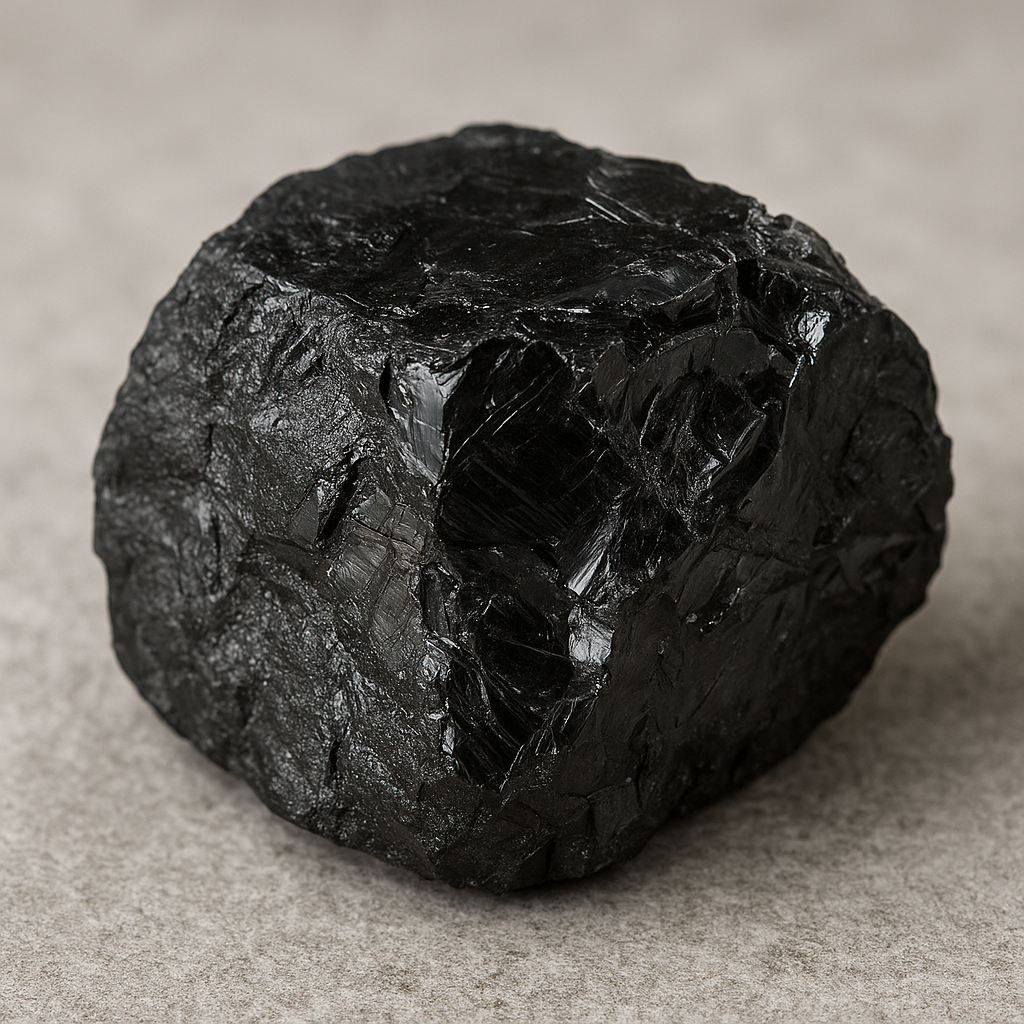
At first glance, shungite looks like a dense, black mineral, but it is best described as a rock composed predominantly of carbon mixed with silicate and sulfide minerals. Geologists consider much of the shungite found in large deposits to be metamorphic in origin: organic matter deposited in a sedimentary basin was transformed through burial, pressure and heat into a carbon-rich rock during Precambrian geological events. The processes involved include diagenesis and low- to medium-grade metamorphism, which altered primary organic compounds into concentrated carbon phases.
Structure at the microscopic level
What sets shungite apart from ordinary coal or graphite is its internal carbon structure. Analyses reveal a complex mixture of amorphous carbon, fragments of graphene-like sheets and nanostructures commonly associated with closed-cage carbon molecules. Fullerenes, spherical carbon molecules such as C60, have been reported in natural shungite deposits, and their presence contributes to ongoing interest from the materials science community. The bulk rock is often a matrix of mineral grains and carbon-rich aggregates, giving it both a stony hardness and a degree of conductivity.
Where shungite is found
Major deposits and the geography of shungite
The most famous and economically significant accumulation of shungite is located in the Republic of Karelia in northwestern Russia, near Lake Onega. The village of Shunga, from which the rock takes its name, sits close to the largest and most studied deposits. These formations formed in an ancient basin and are typically exposed in outcrops, quarries and river valleys in the region.
Other occurrences worldwide
Although Karelia hosts the most extensive and commercially exploited shungite deposits, carbon-rich rocks with shungite-like characteristics or small amounts of similar material have been reported elsewhere. These occurrences are generally much smaller in scale and less well characterized. The uniqueness of the Karelia deposits—both in volume and in the particular geochemical signatures—makes them the central focus of mining, research and cultural attention.
Composition and classification
Chemical makeup
At its core the defining component of shungite is carbon, but the rock also contains silicates, sulfides, mica, quartz and traces of transition metals. The carbon content can vary significantly between samples, and this variation forms the basis of classification schemes used by miners and collectors. Some pieces contain nearly pure carbon, while others are heavily intermixed with non-carbon minerals.
Types of shungite
- Elite shungite (or “Type I”): very high carbon content, often above 90–98%, typically dense and lustrous; prized for collectors and some technical uses.
- High-carbon shungite (Type II): substantial carbon content but more mineral inclusions, common in commercial material used for filtration and industrial applications.
- Low-carbon shungite (Type III): appears more like a typical rock with less pronounced black color and is commonly used as crushed stone or decorative material.
Traditional and modern applications
Water purification and filtration
One of the most historically well-documented uses of shungite is for cleaning and improving water. In local lore and in some practical settings, pieces of shungite have been placed in water to reduce turbidity and remove certain contaminants. Modern investigations attribute these effects to a combination of physical adsorption on carbon surfaces, ion exchange with minerals present in the rock and potential catalytic reactions at mineral interfaces. Because of this, shungite is used commercially in water purification systems, household filters, and in small stones sold as water conditioners.
Industrial and technological roles
Beyond filtration, shungite’s conductive carbon phases and unique nanostructures make it of interest for various industrial applications. Powdered shungite and its concentrates can serve as components in conductive inks, paints and coatings, and as a carbon additive in metallurgy. Research explores using shungite-derived materials in electrodes, lubricants and composite materials where a combination of carbon content and mineral matrix provides useful mechanical and electrical properties.
Decorative, therapeutic and consumer uses
Shungite has also become popular in jewelry, ornaments and interior design because of its deep black sheen. In the wellness market, shungite is marketed as a stone with supposed protective, detoxifying and antioxidant qualities. These claims range from improving water quality to blocking electromagnetic fields; while the rock’s adsorption capacity and carbon chemistry can explain some interactions with water and chemicals, other assertions (especially health and EMF-protection promises) are controversial and not uniformly supported by rigorous scientific evidence.
Scientific research and controversies
What science supports
Analytical studies confirm that shungite contains a spectrum of carbon phases and a mixture of silicate and sulfide minerals. Laboratory work demonstrates adsorption of certain organic molecules and heavy metals onto shungite surfaces, lending credibility to its use in filtration. Investigations into natural fullerenes and nanoscale carbon in shungite have stimulated materials science research, where natural analogues of engineered carbon nanostructures are of fundamental interest.
Open questions and debated claims
Some marketed properties of shungite—particularly broad medical benefits and strong electromagnetic shielding—remain disputed. Controlled experiments show that shungite can attenuate certain frequencies when configured as a conductive layer or mixed into polymers, but the efficacy of small decorative stones as personal EMF shields is unproven. Health claims that rely on direct physiological effects are often anecdotal. Scientists emphasize the need for well-designed studies to separate measurable chemical activity from placebo and marketing effects.
Mining, economy and environmental impacts
Extraction and local industry
Mining in Karelia supports local employment and provides raw material for a range of products, from industrial concentrates to jewelry. Quarrying techniques vary from open-pit extraction to more selective hand collection for high-grade pieces. The economic value of elite shungite can be high relative to bulk rock, incentivizing both legal and informal collection.
Environmental and social considerations
As with any mineral extraction, shungite mining raises environmental concerns: landscape alteration, waste rock generation and potential contamination from associated sulfides. Sustainable practices include controlled quarry restoration, monitoring of runoff and efforts to minimize dust and habitat disturbance. Socially, the rise of shungite products has brought tourism and small business opportunities to the Karelia region, but it has also created demand pressures that require management to avoid resource depletion and inequitable economic outcomes.
Laboratory methods and modern analyses
How researchers study shungite
Geoscientists and materials scientists use a variety of techniques to characterize shungite. Common methods include petrographic microscopy, X-ray diffraction (XRD) to identify mineral phases, scanning and transmission electron microscopy (SEM/TEM) for nanostructural imaging, and spectroscopy (Raman, FTIR, XPS) to probe carbon bonding states. Chemical assays quantify carbon content and trace elements, while adsorption experiments test filtration performance. These approaches together build a picture of both the macroscale geology and the atomic-scale carbon structures.
Implications for nanotechnology
Natural carbon nanostructures in shungite—particularly fullerene-like molecules and fragmented graphene—have inspired curiosity about their potential utility in nanotechnology. While purified, engineered fullerenes and graphene remain the primary materials for high-performance electronic and photonic applications, naturally occurring shungite provides an inexpensive source for exploratory studies and may find niche uses where mixed mineral matrices are acceptable or desirable.
Practical advice: buying, using and caring for shungite
How to recognize real shungite
- Density and feel: Real shungite is relatively dense, with a stony feel. Highly porous or very light black pieces may be other materials.
- Appearance: Look for a natural lustre and a mix of carbon-rich and mineral textures—purely uniform black beads may be dyed or synthetic.
- Reputable sourcing: Purchase from dealers who can document origin (Karelia sources are the most established.)
Common consumer forms and uses
Shungite is sold as raw chunks, polished cabochons, beads, powder, and as components in water filters. For water-contact applications, certified filter products and manufacturer instructions should be followed. For decorative or jewelry uses, standard cleaning with gentle soap and water is usually sufficient; store items dry to prevent surface staining from mineral inclusions.
Interesting cultural and historical notes
Local traditions and modern myths
In the Karelia region shungite has a long cultural presence, from traditional uses in local households to modern tourism centered around its perceived special qualities. The stone has inspired folklore, stories of healing springs and has become a symbol of regional geological heritage. Its rise in global markets reflects both genuine scientific interest and the power of modern wellness trends to amplify local traditions into international commodities.
Artistic and design appeal
Designers prize shungite for its visual impact: deep black surfaces, sometimes with metallic flecks, lend a dramatic accent in jewelry, decorative objects and architectural elements. When combined with metals, glass or lighter stones, shungite’s contrast provides a striking aesthetic that resonates with minimalist and contemporary styles.
Future directions in research and application
Emerging studies
Questions that motivate ongoing research include the detailed mechanism of contaminant adsorption in complex water matrices, the true abundance and formation pathways of natural fullerenes, and processes for integrating shungite-derived carbon into engineered composites. Interdisciplinary projects involving geologists, chemists and materials scientists aim to translate fundamental knowledge into scalable, sustainable technologies.
Potential technological innovations
Innovations may include low-cost conductive fillers for printable electronics, composite materials for corrosion protection, and niche filtration media tailored to specific contaminants. The challenge for applied research is to harness the unique combination of natural carbon nanostructures and mineral matrix in a controlled, reproducible manner suitable for industry.
Where curiosity leads
Shungite sits at the intersection of ancient geology and cutting-edge materials science. Whether studied as a geological curiosity, used as a filtration medium, worn as a decorative stone, or marketed for wellness, it provokes questions about how natural materials can inform technology and culture. Its story encompasses deep time, regional identity and modern scientific inquiry, making it a subject worthy of continued attention from researchers, industry and curious consumers.