The mineral world offers many visually striking and scientifically interesting species, and among them the vibrant blue-green mineral Shattuckite stands out. This attractive copper-bearing material is prized by collectors, lapidaries and those drawn to the aesthetic and symbolic qualities of minerals. Formed in the oxidative zones of copper deposits, it often occurs in fibrous or radiating masses that display an intense sky- to teal-blue color. Although not as widely known as azurite or malachite, Shattuckite has an established place in mineralogical literature and the gemstone market because of its unique texture, color and associations with other secondary copper minerals. In the paragraphs that follow, the article explores where it occurs, how it forms, how to identify and care for it, and why collectors and artisans value it.
Occurrence and notable localities
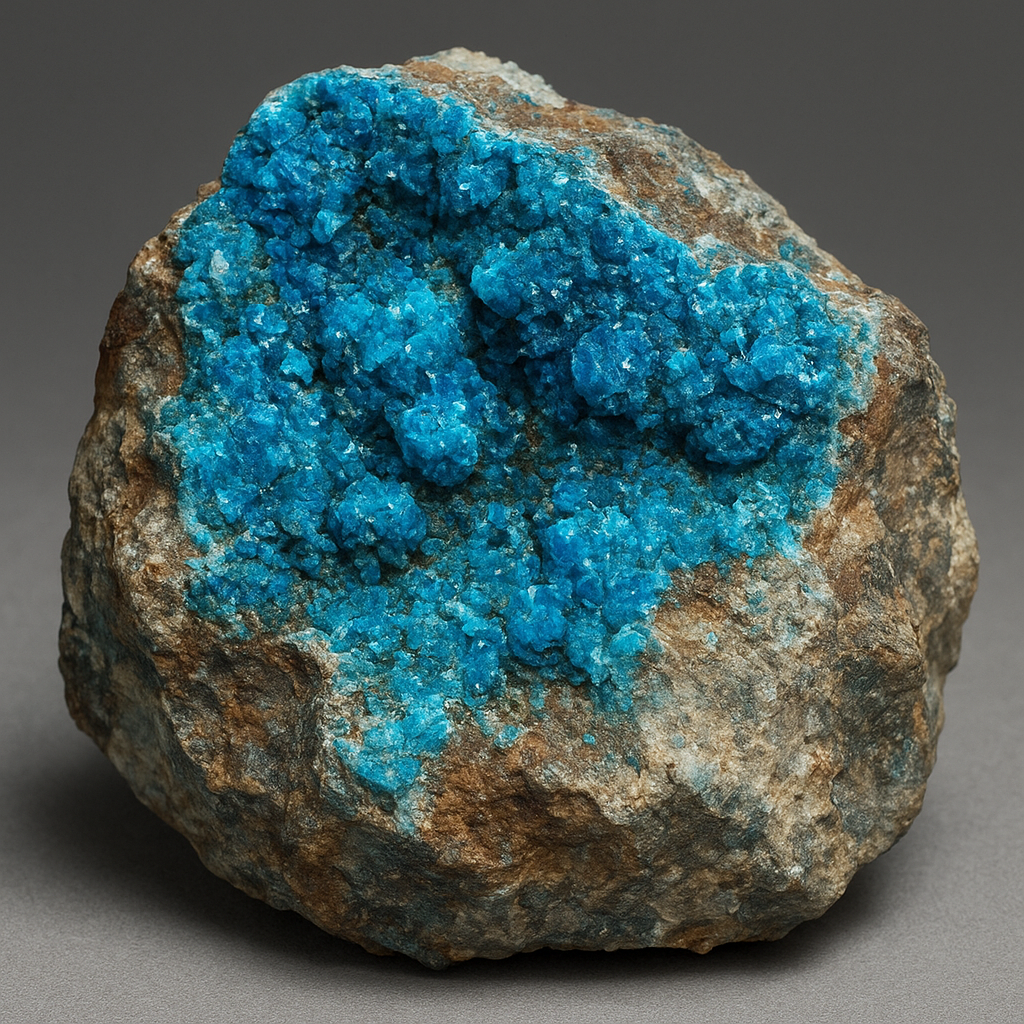
Shattuckite is typically a secondary mineral, developing where primary copper minerals have been altered by weathering or low-temperature hydrothermal fluids. It is associated with oxidized portions of copper deposits and is most commonly found as encrustations, radial acicular aggregates, or botryoidal masses rather than large euhedral crystals. Some localities have produced fine quality material sought after by collectors and gem cutters.
- Shattuck Mine, near the town of Jerome and the Bisbee district in Arizona, USA — the type locality and the source of the mineral’s name.
- Tsumeb, Namibia — famous for producing excellent, richly colored specimens often intergrown with other copper minerals.
- The Katanga (formerly Katanga Province) region of the Democratic Republic of Congo — a prolific copper belt yielding many attractive secondary copper minerals.
- Various mines in Peru and Mexico — locations that have contributed cabochon-grade material for the lapidary trade.
- Smaller, scattered occurrences in parts of Europe, Africa and Asia where copper ores underwent weathering and supergene alteration.
The combination of abundant copper sources and suitable oxidizing conditions governs where Shattuckite can form. In many mining districts the mineral appears alongside other copper silicates, carbonates and sulfates, which contributes to the visual diversity of specimens from the same locality.
Formation, chemistry and associations
Chemically, Shattuckite is a copper silicate hydroxide — a product of the interaction between copper-bearing solutions and silica under oxidizing, near-surface conditions. Its composition places it within the broader family of secondary copper minerals that crystallize as a consequence of supergene alteration. The exact chemical formula varies slightly in the literature due to natural substitutions and small compositional ranges, but the defining components are copper and silica combined with hydroxyl groups.
Formation typically occurs when primary copper sulfides or oxides are exposed to oxygenated groundwater or surface waters. Silica, either from surrounding host rocks or from silica-rich fluids, reacts with dissolved copper to precipitate Shattuckite in fractures, vugs and cavities. Temperature and pH conditions are relatively mild compared to deep magmatic processes; this is why the mineral is commonly associated with the upper, weathered zones of copper deposits rather than high-temperature ore environments.
Association with other minerals is common and telling of the geochemical environment. Typical mineral companions include:
- Azurite and malachite — classic copper carbonates that frequently coexist with copper silicates.
- Chrysocolla — another copper silicate that can form patchwork mixtures or layered specimens with Shattuckite.
- Cuprite and native copper in less oxidized portions of the deposit.
- Quartz and other gangue minerals that acted as silica sources or mechanical hosts for mineral growth.
Physical properties and identification
Identification of Shattuckite in the field or from a specimen requires attention to color, habit, hardness and luster. Its hallmark is a vivid blue to blue-green coloration, which can range from sky-blue to deep, slightly green-tinged tones depending on trace chemistry and weathering. Typical physical and optical properties include:
- Color: strong blues and blue-greens — often silky in fibrous aggregates.
- Habit: commonly fibrous, acicular, radial aggregates or crusts; botryoidal forms occur but well-formed single crystals are rare.
- Hardness: relatively soft — generally around 3.5 to 4 on the Mohs scale, meaning it can be scratched by a pocketknife and is not suitable for high-wear uses without stabilization.
- Luster: silky to vitreous on fractured or polished surfaces; fibrous specimens can display a chatoyant sheen when cut en cabochon.
- Specific gravity: relatively high compared to many silicates because of the copper content, although values vary with porosity and associated minerals.
Because many blue copper minerals share similar hues, distinguishing Shattuckite from look-alikes requires a combination of visual clues and, ideally, simple tests or laboratory confirmation. Unlike azurite (a carbonate) which effervesces with cold dilute hydrochloric acid, Shattuckite will not react aggressively. Microscopic examination reveals its fibrous habit, and X-ray diffraction or Raman spectroscopy will confirm its silicate structure. Collectors should treat identification with care; mixed specimens containing chrysocolla, malachite and other copper minerals can be visually complex.
Uses: jewelry, lapidary work, and collecting
Due to its intense color and interesting textures, Shattuckite has become valued for several uses, though its physical properties limit how it is applied. Typical uses include:
- jewelry — Polished cabochons and beadwork are the most common jewelry uses. Because the mineral is relatively soft and sometimes brittle, it is usually set in protective bezel settings or used in pieces that avoid heavy abrasion. High-end pieces often feature slabs showcasing radial fibrous patterns and attractive color zoning.
- lapidary work — Lapidaries prize specimens with dense, cohesive material that can be cut and polished to a glossy finish. The silky sheen of fibrous material can produce striking chatoyance, especially when cut as cabochons.
- Collector specimens — From microcrystalline crusts to dramatic radial sprays, mineral collectors seek fine specimens for cabinet display. Famous localities and specimens with attractive associations command higher prices.
- metaphysical applications — In crystal healing circles, the mineral is associated with calming energies and is sometimes used in meditation or energy work. These uses are cultural and spiritual rather than scientific, but they contribute to demand in certain markets.
Because raw Shattuckite can be fragile, many items on the market are stabilized or backed with resins to enhance durability. Composite pieces combining Shattuckite with more robust minerals such as agate or jasper are also common, offering both protection and striking contrast.
Care, treatments and trade considerations
Anyone who owns a piece of Shattuckite should be aware of its vulnerabilities and common market treatments. Proper care preserves color and structural integrity:
- Avoid exposure to acids, prolonged sunlight and extreme heat — these can alter color and damage the mineral’s surface.
- Do not use ultrasonic cleaners or steamers; gentle cleaning with a soft cloth and mild soapy water is preferred.
- Keep separate from harder gemstones and metals that could scratch it — because of its modest hardness, Shattuckite is susceptible to abrasion.
Treatments commonly encountered include stabilization with epoxy or resin to consolidate friable material and prevent cracking. This practice is acceptable and often necessary for practical use in jewelry; however, stabilized pieces are usually sold and priced differently from untreated, specimen-grade material. Imitations and assembled pieces (thin slivers of the mineral glued onto backing materials) also exist, so buyers should prefer reputable dealers, request disclosure of treatments and, when possible, examine stones under magnification.
Collecting, valuation and market trends
Value in the world of Shattuckite depends on several variables: color intensity and uniformity, size and quality of the piece, the presence of desirable mineral associations, rarity of the locality, and whether the item has been stabilized or altered. Collector-grade crystalline sprays from prestigious localities such as Tsumeb or historic Arizona finds will command premium prices. Conversely, material sold for the lapidary trade is often priced by the pound when rough and by piece when cut, with stabilized cabochons and beads being widely available at modest prices.
Recent market interest in colorful copper silicates and the blending of mineral aesthetics with wearable art have kept demand steady. The metaphysical market also supports demand, sometimes driving interest in visually appealing but commercially modest pieces. For collectors, provenance — documentation of where and when a specimen was found — can significantly increase the desirability and value of an item.
Interesting facts and lesser-known aspects
Several aspects of Shattuckite make it intriguing beyond its color. Its fibrous habit can produce silky or chatoyant effects when cut properly, creating cabochons that show subtle bands or shimmer. In numerous specimens, Shattuckite forms intimate intergrowths with other copper minerals, resulting in multi-colored patterns that are attractive for inlay work and decorative objects.
From the perspective of mineralogy, the presence of silica in combination with copper in a low-temperature environment provides insights into supergene geochemical processes — how metals migrate, precipitate and transform near the Earth’s surface. For educators and students, high-quality specimens make excellent teaching aids to illustrate mineral paragenesis and the visual consequences of mineral replacements.
Finally, for those who appreciate the intersection of art and geology, Shattuckite offers an aesthetic that is both earthy and jewel-like. Uses in bespoke jewelry and art objects demonstrate how a mineral with modest hardness and limited industrial use can nevertheless inspire creative applications when valued for color, texture and rarity.