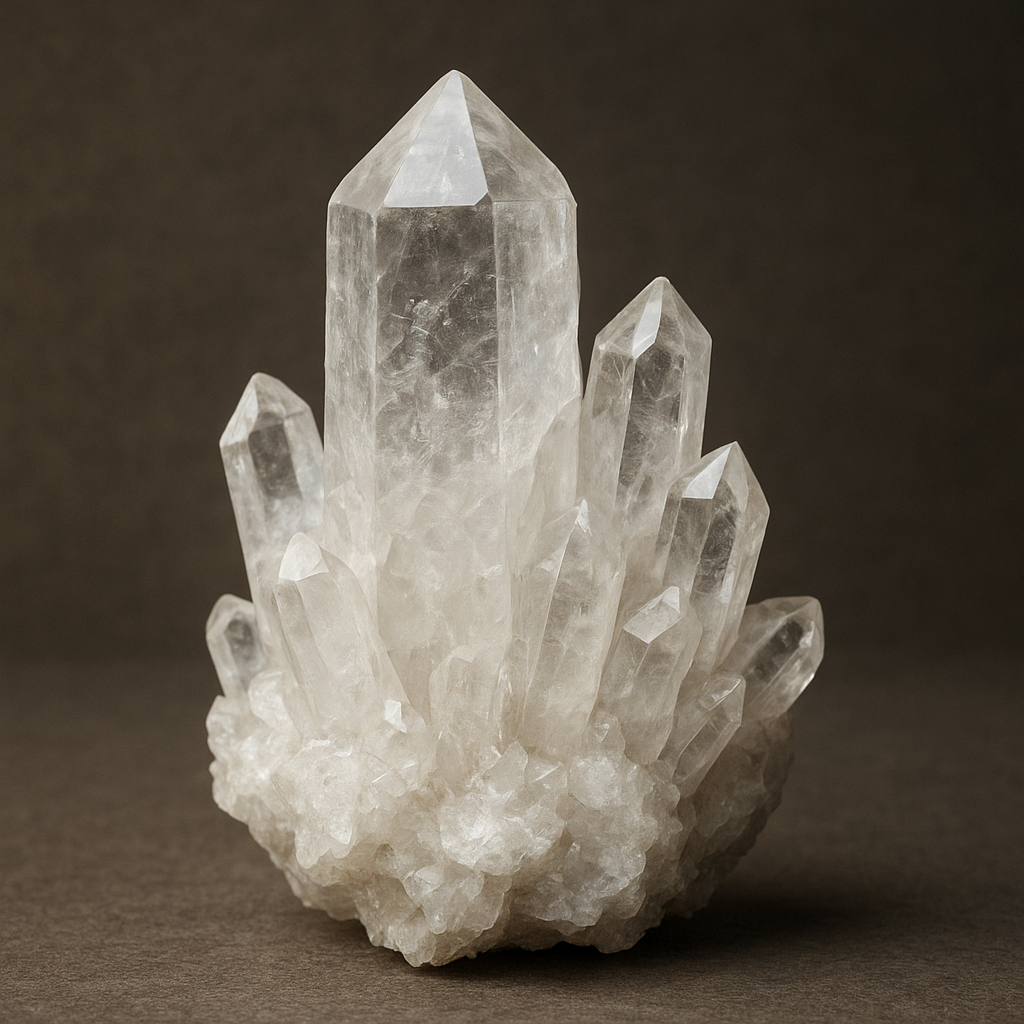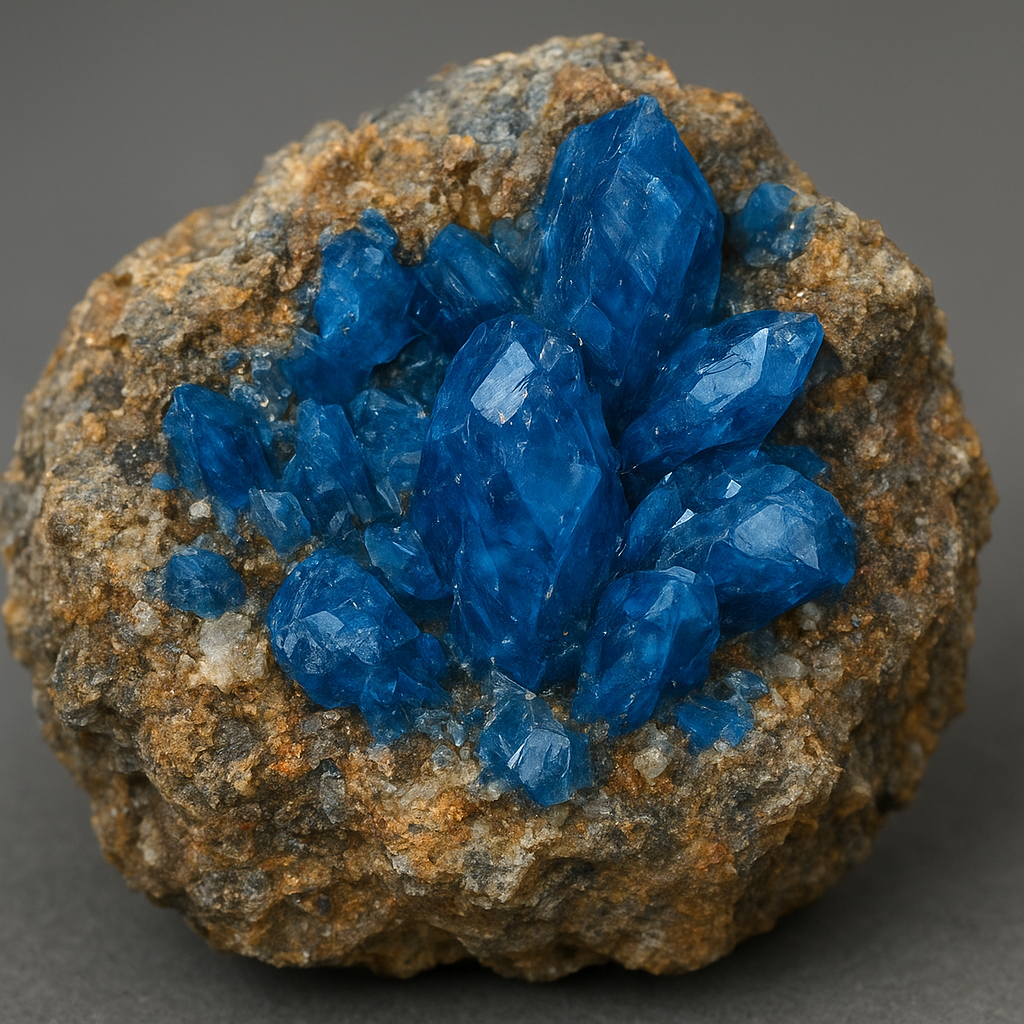
Scorodite is a fascinating and consequential mineral that links the worlds of mineralogy, environmental science and industrial waste management. Often overlooked outside specialist circles, it plays an outsized role wherever arsenic-bearing ores and acidic waters interact. This article explores where scorodite forms in nature, what makes it chemically and physically distinctive, and how those characteristics have been harnessed — and studied — in efforts to manage toxic arsenic in mine drainage, smelter wastes and contaminated groundwater.
Occurrence and Geological Setting
Natural occurrences of scorodite are typically tied to the oxidative weathering of sulfide minerals that contain arsenic. The mineral is commonly found in the oxidized zones above hydrothermal ore deposits, in the gossans and in secondary mineral assemblages that develop where oxygenated waters contact arsenic-rich primary minerals.
Typical geological environments
- Oxidation zones of sulfide deposits: Scorodite frequently appears where arsenopyrite (FeAsS) and other arsenic-bearing sulfides are exposed to oxygen and water.
- Hydrothermal veins and their supergene envelopes: As hydrothermal fluids cool and weather, arsenic and iron can recombine to form secondary arsenate minerals including scorodite.
- Mine wastes and tailings: In abandoned or active mine sites, natural weathering of tailings often leads to scorodite and other arsenates precipitating from acidic runoff.
- Acidic groundwater and springs: In areas with acid-generating minerals, scorodite can form as a precipitate within iron-rich, acidic waters.
Scorodite’s presence is therefore a geochemical flag for arsenic mobility and the oxidative transformation of metal sulfides. Because it typically forms as a secondary mineral, its distribution can be widespread across mining districts and is not restricted to a single climate or tectonic setting. Localities with long histories of metalliferous mining — in parts of Europe, South America, Africa and Asia — often report scorodite among their secondary arsenate minerals.
Physical and Chemical Characteristics
At the core of scorodite’s identity is its chemistry: it is an iron arsenate with water of crystallization. Its general chemical composition allows it to tie together dissolved iron and oxidized arsenic in a solid phase, which is central both to its natural role and to engineered remediation strategies.
Chemistry and formula
- Chemical formula: typically written as FeAsO4·2H2O, indicating iron paired with arsenate groups and bound water molecules.
- Oxidation state: arsenic is present as As(V) (arsenate), the more oxidized form of arsenic, while iron is Fe(III).
Crystallography and appearance
- Crystalline habit: Scorodite forms well-defined crystals as well as compact, earthy, or fibrous aggregates. Crystal faces can be lustrous, and crystals are often prismatic to tabular.
- Color and luster: Colors range from green to bluish-green and brown, sometimes with a vitreous to subadamantine luster.
- Physical properties: It is relatively soft compared with many rock-forming minerals and has a moderate specific gravity. The mineral is brittle and can exhibit perfect to good cleavage in certain directions.
The combination of iron and arsenate chemical motifs gives scorodite specific solubility behavior: it is less soluble than many arsenic compounds under acidic conditions but can still dissolve when conditions change (for example, through dilution, pH shifts, or ligand complexation). This constrained solubility makes it particularly interesting to environmental scientists and engineers.
Formation Processes and Stability
Understanding how scorodite forms and under what conditions it remains stable is critical for predicting arsenic mobility in both natural and anthropogenic environments. Its formation is governed by redox chemistry, pH, availability of ferric iron, and kinetic factors that control nucleation and crystal growth.
Natural formation pathways
- Oxidation of arsenic-bearing sulfides: When arsenopyrite and related minerals oxidize, arsenic is released as arsenite (As(III)) or arsenate (As(V)). In the presence of ferric iron and suitable pH, arsenate can react with Fe(III) to precipitate scorodite.
- Direct precipitation from acidic waters: In mine drainage settings, iron and arsenic co-precipitate as waters become saturated with respect to Fe-As phases, and scorodite can form when conditions favor the As(V) form.
- Hydrothermal alteration and supergene processes: Oxidation at or near the surface transforms primary minerals into secondary arsenates, often including scorodite among a suite of oxidation products.
Factors affecting stability
- pH: Scorodite is relatively stable at low to moderate pH values where Fe(III) remains dissolved enough to form the mineral. Extreme pH changes can destabilize it.
- Redox conditions: Reducing environments that convert As(V) back to As(III) or reduce Fe(III) to Fe(II) can promote scorodite dissolution or transformation to other phases.
- Temperature and pressure: Elevated temperatures (as in hydrothermal systems) can influence the kinetics of formation and the crystallinity of scorodite.
- Solution chemistry: Presence of complexing anions (phosphate, sulfate), organic ligands, or competing metal ions can inhibit or change scorodite formation pathways.
Because scorodite formation requires both oxidized arsenic and trivalent iron coordination, the kinetics can be slow: instead of forming instantaneously, stable, dense scorodite often develops under controlled conditions or over extended periods in nature. This kinetic sluggishness can be both an advantage and a complication when scorodite is used intentionally to immobilize arsenic.
Applications: From Geological Indicator to Engineered Remediation
Scorodite’s role reaches beyond natural mineralogy: it has been studied and sometimes produced deliberately to manage arsenic contamination. Researchers and practitioners exploit its relatively low solubility and crystalline form to lock arsenic into a less mobile phase.
Environmental remediation
- Stabilization of arsenic wastes: Industrial arsenic-bearing residues, such as arsenic trioxide from smelters, have been treated to produce scorodite as a final waste form that reduces arsenic leachability.
- In situ and ex situ precipitation: Water treatment strategies can be designed to promote scorodite precipitation — for example, by controlling pH, redox, and ferric iron concentration to favor scorodite over more soluble arsenic species.
- Long-term immobilization: Because well-crystallized scorodite can resist dissolution under a range of conditions, it is considered a promising phase for long-term containment of arsenic, provided environmental conditions do not shift to favor dissolution.
Industrial and research uses
- Waste form research: Laboratories and pilot plants examine scorodite formation under different temperatures and pressures — including autoclave-assisted processes — to optimize its crystallinity and minimize leachable arsenic.
- Geochemical indicators: In mineral exploration, presence of scorodite can signal oxidized arsenic-rich zones and potential ore bodies, aiding geological mapping and assessment.
Engineered production of scorodite often involves controlled oxidation of arsenic-bearing solutions in the presence of iron. Techniques include low-temperature precipitation and hydrothermal synthesis; the latter can produce denser, more crystalline material that is less prone to later redissolution. The term hydrothermal conditions is frequently used to describe such processes in a research and treatment context.
Analytical and Experimental Studies
Much of our detailed understanding of scorodite comes from laboratory experimentation and analytical techniques. Electron microscopy, X-ray diffraction, spectroscopy, and leaching tests all contribute to a nuanced view of the mineral’s nature.
Characterization techniques
- X-ray diffraction (XRD): Used to confirm the crystalline structure and assess crystallinity and phase purity in synthetic and natural samples.
- Scanning and transmission electron microscopy (SEM/TEM): Provide imagery of crystal habit, texture and nanoscale interactions that influence stability.
- Spectroscopy (e.g., FTIR, Raman, and X-ray absorption): Reveal local bonding, oxidation states and the nature of the arsenic and iron coordination.
- Leaching and solubility tests: Standardized tests such as TCLP or specific long-term leaching assays evaluate how much arsenic can be mobilized from scorodite under varying conditions.
Experimental studies have focused on parameters that improve scorodite stability: elevated temperatures during synthesis, slow crystal growth to form well-ordered lattices, and minimizing impurities that might promote dissolution. These efforts intersect directly with practical questions about whether scorodite can serve as a durable arsenic sink in legacy waste repositories.
Health, Safety and Environmental Considerations
Although scorodite itself binds arsenic in the As(V) state and can lower immediate arsenic mobility, it remains an arsenic-bearing phase and must be handled and managed with care. The presence of scorodite on mine sites or in treatment facilities signals that arsenic is present in the system.
Risks and precautions
- Potential for remobilization: Changes in pH, redox or complexing chemistry can release arsenic from scorodite back into water.
- Handling: Dust control and proper personal protective equipment should be used when sampling or processing scorodite-bearing materials, as inhalation or ingestion of arsenic compounds is hazardous.
- Disposal: Even stabilized scorodite wastes must be assessed for long-term containment performance before being considered safe for landfilling or other disposal routes.
Regulatory frameworks for arsenic management increasingly take into account the solid phases present and their long-term behavior. Scorodite alters the risk profile relative to soluble arsenic but does not eliminate the need for robust environmental monitoring and containment strategies.
Interesting Intersections: Mineral Collecting, Cultural History and Future Prospects
Beyond technical applications, scorodite has a role in mineral collections: well-formed crystals with attractive colors are sought by collectors. Historically, arsenic minerals have influenced metallurgy (both as ores and troublesome contaminants), and scorodite can be part of that narrative in districts where arsenic-bearing ores were processed.
Mineralogical intrigue
- Collectible specimens: Intact crystals showing good form and color are prized in collections and museums.
- Paragenetic stories: The mineral assemblages that include scorodite tell stories about fluid chemistry, redox evolution and the history of ore deposition and weathering in a district.
Future research directions
- Improved synthesis for waste immobilization: Finding energy- and cost-efficient ways to produce highly crystalline scorodite at scale remains an active research goal.
- Predictive stability modeling: Integrating scorodite solubility and kinetic data into reactive transport models helps forecast arsenic behavior in contaminated sites.
- Hybrid remediation approaches: Combining biological, chemical and mineralogical strategies could promote safe long-term sequestration of arsenic, with scorodite formation one component of a multi-faceted solution.
The interplay of fundamental mineralogy, practical engineering and environmental stewardship makes scorodite a compelling case study of how a naturally occurring mineral can be central to solving modern contamination challenges. Whether it is appearing as a tiny green crystal on a specimen sheet or forming in kilograms within a treatment plant, scorodite embodies the junction of geochemistry and human impact on the environment.