
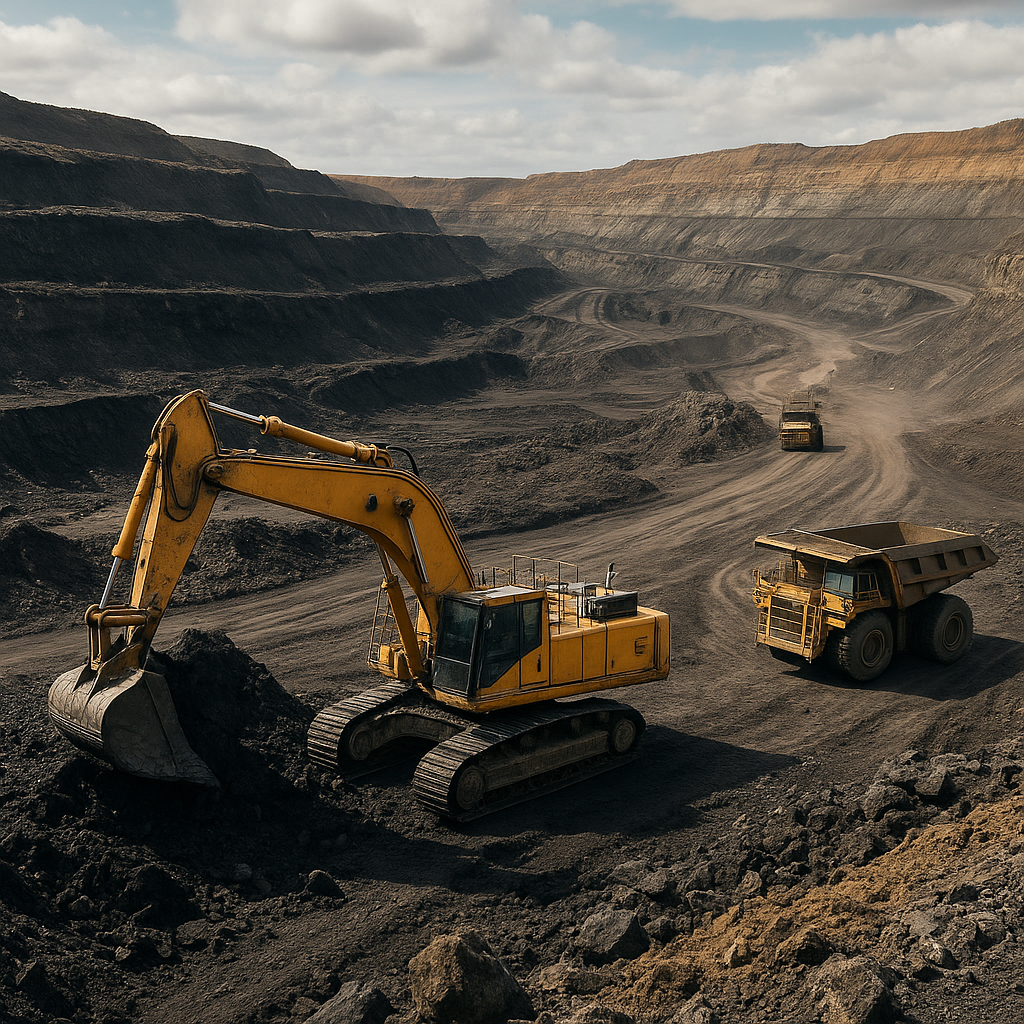
The Saraji Mine sits as one of the major coal operations in central Queensland, Australia. Located within the expansive Bowen Basin, Saraji has been an important node in Australia’s coal industry for decades. This article examines the mine’s location and geology, the nature of what is extracted and how it is processed, its broader economic significance, and several notable and interesting aspects of its operations, community links and environmental management.
Location and geological setting
Saraji is positioned in central Queensland, within the heart of the Bowen Basin — a prolific geological province that hosts numerous coal deposits. The mine is accessible from regional service towns and connected to the broader Queensland coal-transport network that links inland mines to coastal export terminals. The Bowen Basin’s layered sedimentary rocks preserve vast seams of coal formed during the Permian period, and Saraji exploits some of those economically valuable horizons.
Regional context
The mine lies among a cluster of other large operations and forms part of the greater mining landscape of Central Queensland, an area characterized by extensive open-cut and underground coal mining activity. Infrastructure such as regional roads, rail corridors and port facilities were developed to enable the steady movement of coal from mining sites like Saraji to international markets, mainly in Asia. The mine’s position in the basin allows it to draw on established logistics, skilled labour pools and service industries.
Geology and coal types
Coal seams mined at Saraji are typical of Bowen Basin stratigraphy: several relatively thick and continuous seams that can be mined efficiently by surface methods where overburden is shallow or by underground techniques where seams are deeper. The deposit produces coals used for both power generation (thermal coal) and metallurgical purposes (coking coal), depending on the seam and processing. Quality parameters such as calorific value, ash content, moisture and volatile matter determine how particular coal parcels are blended, washed and marketed. The ability to produce coal with desirable physical and chemical properties has helped maintain demand for material from this part of Queensland.
Mining operations and production
Saraji has been operated as a large-scale mining complex employing modern open-cut extraction methods, along with a suite of processing facilities to prepare coal for market. Operations typically include drilling and blasting, excavating with large shovels and haul trucks, on-site coal handling and processing plants where raw run-of-mine material is sized and washed, and then stockpiled for rail loading.
Processing and quality control
On-site processing plants separate waste rock from salable coal using density separation and other beneficiation techniques. The objective is to produce consistent product streams that meet the specifications demanded by end-users — power stations or steelmakers — both domestically and overseas. Quality control laboratories operate continuously to track ash levels, moisture, sulfur and other indicators, and to help determine optimal blends for shipment.
Logistics: rail and port linkages
Coal from Saraji is transported to coastal export terminals via heavy-haul rail networks. These rail systems are an essential part of the mine’s value chain; reliability, scheduling and maintenance of the rail corridor directly influence how product is allocated to shipping programs. At the coast, coal is loaded onto large bulk carriers and exported to international customers, making the mine part of a global supply chain.
Employment and skills
Large operations such as Saraji require a wide range of skills: operational operators, geologists, engineers, environmental scientists, tradespeople, truck and rail logistics coordinators, and support staff. The mine typically employs a mix of fly-in fly-out (FIFO) workers and locally based employees, supporting families and businesses in nearby towns. Training programs and apprenticeship initiatives help sustain a pipeline of skilled labour capable of operating advanced equipment and meeting regulatory standards.
Economic significance
The contribution of Saraji to local, regional and national economies is multi-layered. Direct employment provides wages and household spending power that supports shops, services and community infrastructure. Indirect economic effects arise through demand for contractors, maintenance services, engineering consultants, supply of consumables and fuel, and spending by visitors and contractors. Royalties and taxes paid by mining operations generate government revenues used for public services.
Exports and global trade
Coal remains an important export commodity for Australia, and mines in the Bowen Basin are major contributors to the country’s export ledger. Saraji’s output—routed through port terminals—reaches international buyers in Asia and beyond, supporting energy security and industrial processes overseas. Revenue from exports helps stabilize the national trade balance and supports investment in transport and port infrastructure.
Local and regional development
Revenue flows from the mine have a direct impact on local councils and regional planning. Investment in roads, community facilities, education and housing often accompanies long-term mining operations. Local suppliers expand their operations to meet increased demand, and service sectors such as hospitality and retail benefit from the presence of a stable workforce. In many cases, mining companies contribute to community projects and sponsor local events as part of their social investment strategies.
Environmental management and rehabilitation
Modern coal mines operate under strict environmental regulations designed to mitigate impacts on land, water, air and biodiversity. Saraji is subject to these regulatory frameworks and typically implements a suite of measures aimed at minimizing its environmental footprint. These measures include progressive rehabilitation, water management systems, dust control, and biodiversity offsetting where required.
Water and tailings management
Water use and management are critical in the life of a mine. Systems for capturing and reusing water, treating runoff and preventing contamination of local waterways form an important part of site operations. Tailings, coarse rejects and stockpiles are managed to reduce the risk of dust and leachates, and containment structures are monitored to ensure stability.
Progressive rehabilitation and closure planning
Rehabilitation is planned from the earliest stages of mine development. Progressive rehabilitation aims to return disturbed land to a stable, productive state during the life of the operation rather than leaving all restoration to the end. Techniques include reshaping landforms, replacing topsoil, establishing native vegetation, and monitoring for erosion and ecosystem recovery. Closure plans outline how the site will be managed after mining ceases and how long-term risks will be controlled.
Air quality and emissions
Dust management and reduction of greenhouse gas emissions are a core focus. Techniques such as water sprays on haul roads, covered conveyors, enclosed processing equipment and strategic vegetation barriers help reduce particulate emissions. Companies also implement energy-efficiency measures and examine opportunities for reducing diesel use in trucks and generators, sometimes trialing electric or hybrid equipment for specific tasks.
Community engagement and social responsibility
Engagement with local communities, Traditional Owners and stakeholders is a continuing priority. Mining operations often maintain formal community engagement programs that include regular consultations, community development agreements, funding for local projects and support for indigenous employment and cultural heritage protection.
Employment opportunities and training
Targeted programs help local residents access employment and apprenticeships. Initiatives can include school outreach, scholarships, vocational training, and partnerships with regional TAFE institutions. Ensuring that local people benefit from employment opportunities is a key part of maintaining the social license to operate.
Cultural heritage and Indigenous partnerships
Respecting Indigenous cultural heritage is integral. Sites with cultural significance are identified and protected, and mining companies work with Traditional Owner groups to ensure that operations proceed with appropriate recognition of rights and heritage. Agreements can include land use arrangements, employment commitments and support for cultural programs.
Notable aspects and innovations
Several aspects of Saraji’s operation stand out as particularly noteworthy or reflective of broader trends in mining technology and management.
- Automation and digital monitoring: Modern mines increasingly incorporate automated systems for haulage, real-time performance monitoring, and process control. These systems can improve safety and efficiency while reducing operational variability.
- Safety culture: Large mines emphasize safety systems, training and procedures to minimize incidents. Investments in behavioural safety programs and improved equipment ergonomics help reduce workplace injuries.
- Rehabilitation innovation: Trials of novel rehabilitation techniques — including native seed propagation, erosion control fabrics and biological soil improvements — aim to accelerate ecosystem recovery on rehabilitated benches and waste landforms.
- Community partnerships: Long-term investment in educational and social infrastructure demonstrates how mines can act as partners in regional development, supporting health, education and cultural programs.
- Supply chain integration: Close coordination between mine planning, rail scheduling and port operations shows how complex logistics chains are managed to meet shipping windows and customer contracts.
Challenges and future considerations
Mining at Saraji, as for many large coal operations, must navigate multiple long-term challenges. Market volatility for coal prices, shifts in global energy and steelmaking demand, evolving environmental regulations and community expectations all influence decision-making. Strategic planning involves adapting to changing demand, diversifying skill sets within the workforce, and investing in technologies that reduce environmental impacts while maintaining economic viability.
Market dynamics
Global demand for coal, especially the split between thermal and metallurgical markets, affects how production is scheduled and which seams are prioritized. Mines may adjust their product mix or processing regimes to optimize returns based on prevailing prices and contractual commitments.
Regulatory and environmental pressures
Increasing scrutiny on greenhouse gas emissions and land use means that coal operations must continually evaluate mitigation and adaptation strategies. Companies may participate in emissions reporting schemes, explore carbon-offset projects, or invest in lower-emission technologies for onsite energy use.
Legacy and long-term land use
Planning for closure and post-mining land use remains a defining issue. Successful rehabilitation, clear ownership of long-term liabilities, and arrangements for community use of former mine land are all necessary to ensure that the legacy of the operation is managed responsibly.
Closing observations
Saraji represents a significant and multifaceted coal operation within Queensland’s mining landscape. Its role extends beyond extraction: the mine is a centre of employment, a participant in international trade, an influence on regional infrastructure and a focal point for environmental management and community relations. While the precise shape of the industry’s future will be determined by global markets and technological change, operations like Saraji illustrate the complexity of modern mining — where geology, engineering, economics and social responsibility intersect.

