
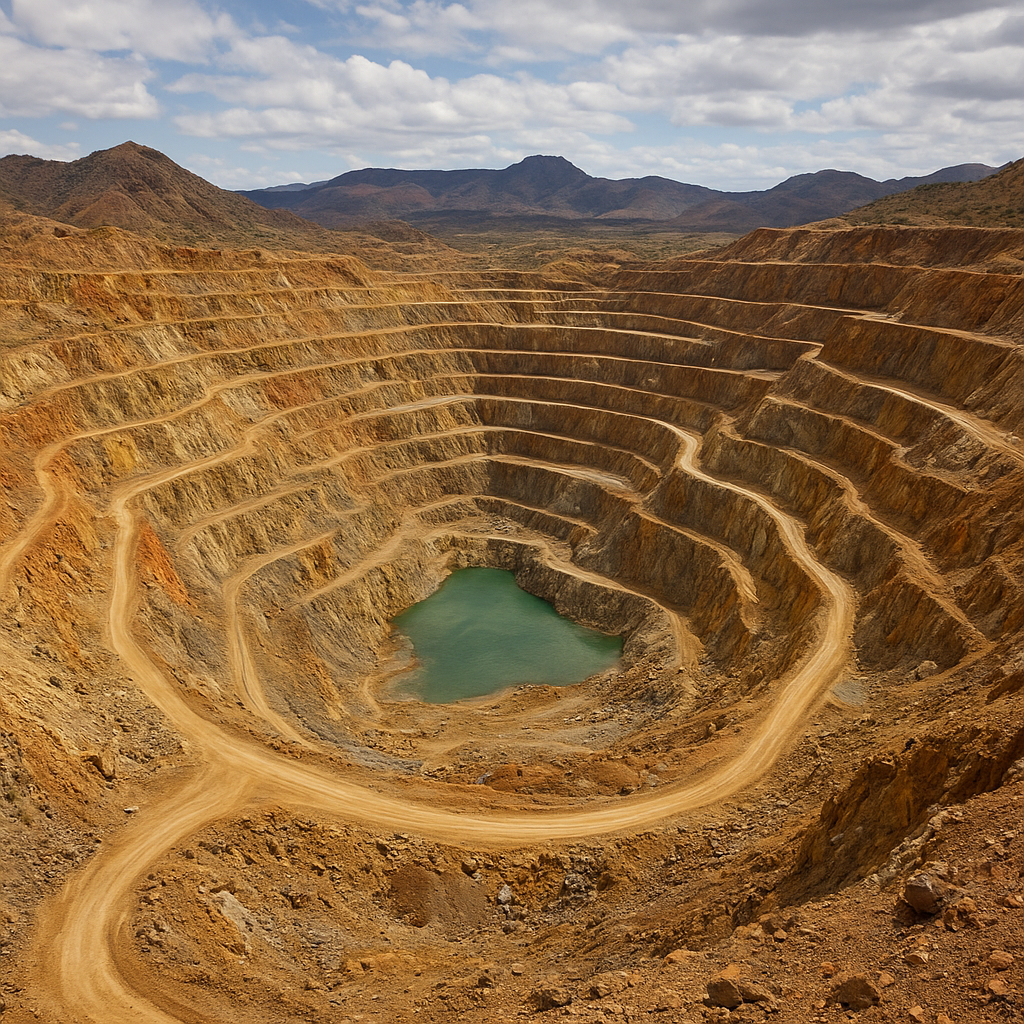
The San Dimas mine, set in the mountainous terrain of northern Mexico, is one of the country’s most noted high-grade precious metals operations. Known primarily for its rich veins of silver and gold, the site exemplifies the combination of long mining tradition and modern underground techniques. Its geological setting, operational history, and continuing role in regional economies make San Dimas a useful case study in how a single mine can shape local communities, national mineral output, and broader commodity markets. Below the surface lie ore bodies that have driven decades of investment and innovation; above ground, the mine has influenced employment patterns, infrastructure development, and environmental practices in the surrounding region.
Location and Geological Setting
San Dimas is located in the Sierra Madre Occidental mountain range of Mexico, within the state of Durango and bordering mountainous zones that extend into neighboring states. The mine sits at high elevation among rugged peaks and valleys, offering both logistical challenges and strategic advantages. The broader region has been part of Mexico’s silver district network for centuries, hosting a string of vein-hosted deposits that were worked in colonial times and reactivated under modern mining methods.
Geology and Ore-Type
- San Dimas is characteristic of a low- to intermediate-sulfidation epithermal vein system, where precious metals precipitated from hydrothermal fluids in structurally controlled veins and stockworks.
- The deposit geometry typically includes steeply dipping veins, shoot-like concentrations of high-grade mineralization, and associated sulfide minerals such as galena, sphalerite, and pyrite, often with native silver and electrum or gold-bearing minerals.
- Vein widths can vary considerably, with high-grade pockets that have historically driven mine economics despite moderate overall tonnages. This high-grade nature is what makes San Dimas notable compared with lower-grade, bulk-tonnage deposits.
Exploration at San Dimas focuses on extending known vein systems along strike and at depth, identifying parallel structures, and delineating the three-dimensional shoots that control the richest ore. Modern geological mapping, 3D modeling, and targeted drilling have continuously refined the understanding of the deposit and extended mine life.
Mining Methods and Metallurgy
Mining at San Dimas is dominated by underground methods tailored to high-grade, structurally complex ore. Because ore bodies are concentrated in vein systems rather than disseminated throughout large volumes, selective mining techniques are most efficient and economical.
Underground Operations
- Typical access includes declines, ramps, and a network of drifts and stopes that follow the vein systems.
- Cut-and-fill, shrinkage stoping, and long-hole stoping are common stope methods, selected based on vein geometry, stability, and dilution control needs.
- Ventilation, ground support, and mine-water control are important engineering considerations in the high-elevation environment.
Processing and Recovery
Ore from San Dimas is processed in a nearby concentrator where conventional milling, gravity concentration, flotation, and cyanide leach circuits may be used, depending on the ore’s mineralogy. Gravity recovery is particularly valuable for coarse native silver and free gold; flotation can concentrate sulfide-hosted precious metals for further processing. Final recovery typically involves cyanide leaching of concentrates or whole-ore tailings to extract gold and silver with high recoveries when ore is amenable.
Metallurgical testing and optimization are ongoing to maximize recovery rates and minimize reagent consumption. Waste rock and tailings management technologies are employed to reduce environmental risks and comply with regulatory standards.
Production, Reserves and Economic Importance
San Dimas is renowned for its relatively high grades of precious metals. While the overall tonnage may be smaller compared to large, low-grade open-pit mines, the concentration of valuable metal per tonne means that even modest production rates can yield significant revenue. This combination of grade and selectivity has important implications for both mine economics and regional development.
Role in Regional and National Output
- As a producer of both silver and gold, the mine contributes to Mexico’s standing as one of the world’s leading silver producers.
- San Dimas helps diversify the national precious metals portfolio, adding high-grade underground production to Mexico’s mix of open-pit and underground operations.
- Revenues from mine output support government fiscal incomes via taxes, royalties, and export duties where applicable, and influence local economies through wages and procurement.
Employment and Local Economies
The mine is a significant source of direct and indirect employment in the area. Direct jobs include miners, engineers, metallurgists, geologists, and administrative staff. Indirect employment arises from contractors, transport services, supply chains for consumables and equipment, and local businesses that serve mine workers and their families.
- Payroll and local procurement often act as economic multipliers, supporting construction, shops, schools, and medical services in nearby towns.
- Infrastructure improvements — such as roads, communications, and power supplies — that support the mine also benefit the broader community.
Environmental Management and Community Relations
Mining at San Dimas requires careful attention to sustainability and social license. Responsible environmental practices are essential to mitigate impacts on water, soil, and local ecosystems and to maintain good relations with nearby communities.
Water and Tailings
- Water management is critical in mountainous regions: protecting local watersheds from contamination and ensuring adequate supply for both operations and communities.
- Tailings storage facilities must meet modern engineering standards, including seismic resilience and long-term containment plans, to prevent seepage or catastrophic failure.
- Progressive rehabilitation of disturbed areas and reuse of treated water are common mitigation strategies.
Community Engagement
Engagement with local communities often includes employment opportunities, training programs, support for local schools and clinics, and transparent communication about environmental monitoring results. Effective grievance mechanisms and consultation processes are central to maintaining trust.
Economic Multipliers and Broader Significance
The economic significance of San Dimas extends beyond its immediate payroll. Mines of this nature catalyze a range of secondary industries and fiscal benefits:
- Local suppliers and service providers see sustained demand for goods, equipment, and services, strengthening the regional supply chain.
- Taxation and royalties support municipal and state budgets, enabling investments in public services and infrastructure.
- Export revenues tied to precious metals can bolster national balance-of-payments positions and contribute to broader economic resilience.
In aggregate, the mine’s activity supports both short-term consumption in local markets and longer-term capital formation through infrastructure and business development.
Exploration, Innovation and Future Outlook
Continued exploration at San Dimas aims to extend the life of the mine by discovering new shoots and adjacent vein systems. Modern exploration technologies—such as 3D geophysical imaging, structural modeling, and targeted deep drilling—allow geologists to find extensions of existing mineralization more efficiently than in past decades.
Technological Advances
- Automation and remote monitoring in underground operations can improve safety, reduce costs, and increase productivity.
- Advances in mill circuit optimization and reagent management help increase metal recoveries while lowering environmental footprints.
- Data analytics and mine modeling enable better prediction of ore grades and dilution, improving economic planning and resource stewardship.
These innovations can help San Dimas remain competitive as precious metal markets fluctuate, with the mine’s high grades providing a buffer against low metal prices that would otherwise challenge lower-grade operations.
Interesting Historical and Technical Facts
- Mining in the region around San Dimas has a long history; while precise colonial-era timelines can vary, many Mexican silver districts trace activities back several centuries, and the persistence of high-grade veins has made the area attractive across multiple mining eras.
- The mine’s episodic high-grade shoots can produce spectacularly rich intercepts for short intervals, a characteristic that has historically attracted explorers and speculators alike.
- Because San Dimas-type veins are structurally controlled, understanding local fault and fracture patterns is as crucial as traditional geochemistry for discovering new ore.
- San Dimas often requires creative engineering solutions for ventilation and access due to elevation, narrow valley corridors, and variable geology.
- Precious metal markets are sensitive to global economic conditions; as a high-grade producer, San Dimas can react relatively quickly to price incentives by ramping up development of newly discovered shoots.
Challenges and Opportunities
Like any modern mining operation, San Dimas faces challenges: fluctuating commodity prices, the need for ongoing capital investment to develop new underground infrastructure, environmental compliance, and the imperative to maintain positive community relations. However, each challenge comes with opportunities:
- Exploration upside remains significant in structurally complex epithermal systems; new targets are often found near existing workings or at depth.
- Operational efficiencies and technological upgrades can lower per-ounce production costs, enhancing profitability through the cycle.
- Stronger partnerships with local stakeholders and investments in community development can provide social stability and a more predictable operating environment.
Why San Dimas Matters
San Dimas stands as a compelling example of how a high-grade precious metals mine contributes far beyond metal extraction: it shapes local labor markets, creates secondary economic activity, and offers a laboratory for mining engineering and metallurgical innovation. Its combination of geological richness and logistical complexity highlights why targeted underground operations remain a vital part of the global supply of silver and gold. For policymakers, investors, and communities, the mine illustrates the balancing act between economic benefits and environmental and social responsibilities that defines modern mining in Mexico and around the world.
Resources for Further Study
Those interested in deeper technical or historical details can consult geological surveys of the Sierra Madre Occidental, mining engineering case studies on underground epithermal vein operations, and government publications on mineral production and taxation. Academic papers on epithermal systems provide in-depth analyses of ore-forming processes and exploration strategies, while industry reports illuminate operational practices, processing technologies, and environmental standards that shape the performance of mines like San Dimas.

