
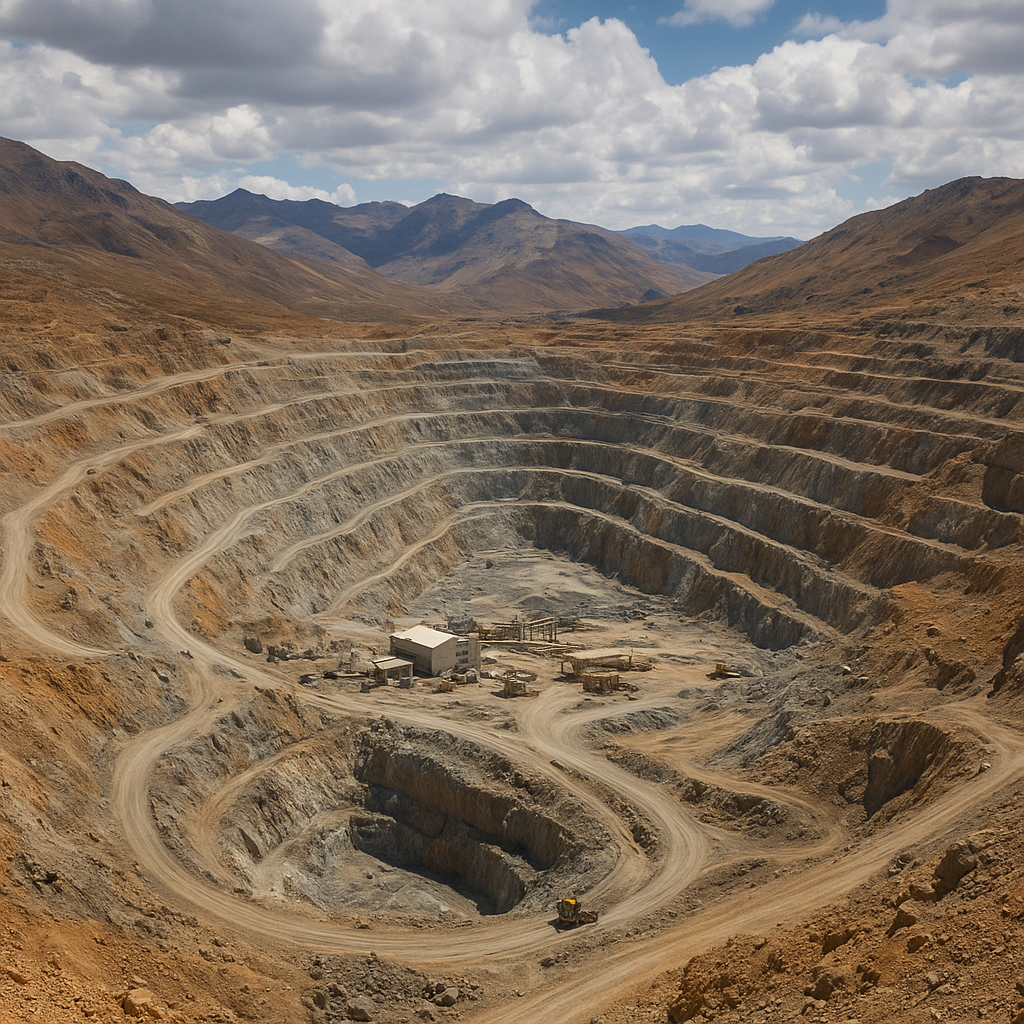
The San Bartolomé mine, set amid the high plateau and rugged ridgelines of the Bolivian Andes, is an important node in the country’s long and complex relationship with silver. Operating in a region where mining has shaped landscapes, societies and economies for centuries, San Bartolomé exemplifies the technical challenges and economic opportunities of extracting metal resources at high altitude. This article explores the mine’s location, the types of ore recovered, its broader economic role, and a selection of historical and technical details that make San Bartolomé noteworthy.
Location and geographic setting
San Bartolomé is located on the Altiplano of southwestern Bolivia, within a broader mineralized belt that includes the famous Potosí district and other historic mining centers. The mine sits at a significant elevation typical of Andean operations — often above 3,500–4,000 metres — where thin air, strong solar radiation and cold nights are part of daily life for miners and engineers. The topography combines high plateaus, steep hills and folded volcanic and sedimentary sequences that control the distribution of mineralization.
The mine’s proximity to historic mining towns means it is integrated into a network of roads, services and local labour pools that have long supplied the region’s mines. Access can be seasonal and sometimes difficult, with weather and road conditions affecting logistics and ore transport. Despite logistical challenges, the region’s long history of mining infrastructure — small smelters, concentrators and local processing facilities — supports operations at San Bartolomé.
Geology and the types of mineralization
The mineralization exploited at San Bartolomé is typical of many Andean silver deposits: veins and stratabound lenses of sulphide minerals that carry silver together with other associated metals. The ores are generally described as polymetallic, often containing significant concentrations of lead, zinc and occasionally tin and copper in different horizons. The gangue and host rocks can range from volcaniclastics to altered andesite and rhyolitic units, with hydrothermal alteration halos that mark the pathways of mineralizing fluids.
Common ore minerals include argentiferous galena (silver-bearing lead sulphide), sphalerite (zinc sulphide) and various silver sulfosalts. In places, supergene enrichment and secondary oxidized zones produce oxide minerals that are more amenable to simple processing. Structural controls — faults, shears and breccia zones — localize high-grade shoots that miners target with underground workings.
Mineral processing and metallurgy
Given the polymetallic nature of the ore, typical processing at San Bartolomé combines mechanical concentration with metallurgical treatments to separate and recover target metals. Primary steps often include crushing and grinding followed by flotation to produce concentrates for silver, lead and zinc. For oxidized ores or small free-milling silver, cyanidation or other leaching approaches may be applied to recover metallic silver. Smelting and refining of concentrates can occur locally or the concentrates can be exported to regional smelters.
Mining methods and operational practices
Underground mining predominates at high-elevation Bolivian silver operations like San Bartolomé. Techniques include development of declines and shafts, drift-and-fill, cut-and-fill and room-and-pillar methods adapted to the geometry of ore veins and the strength of host rock. Ventilation, dewatering and ground support are critical components, and mechanization varies from fully mechanized fleets to a mix of mechanized and more labour-intensive methods depending on orebody shape and investment levels.
Surface infrastructure comprises concentrators, tailings storage facilities, workshops, fuel and reagent storage, and accommodation for workers. Power supply may be from the national grid where available, or supplemented with diesel generation. Given the high altitude, equipment performance and human acclimatization are operational considerations; companies often implement health and safety protocols to manage altitude-related risks.
Economic significance
San Bartolomé contributes to Bolivia’s status as one of Latin America’s most historically important mining nations. Silver has been a cornerstone of Bolivian mineral exports since the colonial era, and modern operations like San Bartolomé continue to provide export earnings, foreign exchange and employment. The mine supports direct jobs in extraction and processing and indirect employment in services, transport and supplier networks in nearby towns.
- Employment: Mining provides well-paid skilled and unskilled positions relative to other rural employment opportunities, and local economies often depend heavily on mine-related wages and contracts.
- Exports: Concentrates and refined metal contribute to national export revenues; silver sales help balance trade and bring in foreign currency.
- Fiscal revenue: Taxes, royalties and other payments from mining operations support regional and national budgets, financing public services and infrastructure projects.
Beyond direct economic metrics, the mine plays a role in technological and skills development. Engineers, geologists and technicians trained at operations like San Bartolomé often circulate through the Bolivian mining sector, raising technical capacity and contributing to the modernization of local mining practices.
Social and cultural dimensions
Mining in Bolivia is intertwined with indigenous communities, local identities and colonial legacies. Around San Bartolomé, the continuity of mining activity links current workers with generations of miners who worked the same districts under very different systems. Traditional beliefs and rituals — offerings to the earth mother, or pachamama — persist alongside modern safety meetings and industrial protocols. These cultural practices are a visible reminder that mining is not only an economic activity but also a social one.
Community relations are a major focus for contemporary operations. Mines typically engage with local stakeholders through employment, community development programs, and infrastructure investments such as roads, water projects and health clinics. At the same time, conflicts can arise over land use, water rights, environmental impacts and revenue sharing. Effective engagement that respects indigenous rights and local governance structures is crucial to long-term social license to operate.
Environmental impacts and mitigation
Hard-rock silver mining presents environmental challenges that are especially acute in fragile high-altitude environments. Key concerns include:
- Tailings management: The storage of tailings from concentration processes carries risks of seepage, dust generation and catastrophic failure if not properly engineered.
- Water use and contamination: Processing and dust suppression require water; discharge of contaminated process water can affect downstream ecosystems and communities.
- Acid mine drainage: Sulphide-rich wastes can oxidize and generate acidic, metal-rich waters harmful to aquatic life and potable water supplies.
- Air quality: Fugitive dust and emissions from smelting or diesel power can affect local air quality.
Responsible operations mitigate these impacts through robust engineering, environmental monitoring, progressive reclamation of disturbed areas, water treatment plants, lined tailings facilities and community consultations. Advances in tailings technology and water recycling have been prioritized in modern projects to reduce freshwater demand and limit potential contamination.
Historical background and continuity
Bolivia’s identity as a silver-producing country dates to the 16th century, with the Cerro Rico of Potosí at the heart of colonial extraction. While San Bartolomé is a modern, industrial operation, it sits within a centuries-old landscape of extraction. Traditional methods such as mercury amalgamation were once widespread; today, modern metallurgy and stricter environmental controls have replaced many of the most hazardous practices, though artisanal and small-scale miners may still use rudimentary techniques in peripheral areas.
The continuity of mining traditions affects skill transmission and local economies. Former mineworkers often become contractors, small-scale operators or suppliers, maintaining a complex local economy that revolves around mineral cycles. This long timeframe also means that legacy environmental issues are common: old tailings piles, abandoned workings and historic smelter sites can present remediation challenges for present-day operators and governments.
Interesting technical and human elements
Several features make San Bartolomé and similar Andean silver mines particularly compelling:
- High-altitude engineering: Equipment and infrastructure must be adapted to thin air and extreme daily temperature fluctuations, affecting engine performance and human labour capacity.
- Complex metallurgy: Recovering silver from polymetallic sulphides demands multi-stage processing circuits and careful metallurgical design to maximize recovery while controlling costs.
- Integration with artisanal mining: In many areas around larger mines, artisanal miners operate in parallel or in the margins, creating both synergies and tensions over access, safety and environmental impact.
- Historic continuity: The cultural practices and social memory tied to mining make operations like San Bartolomé focal points of living heritage.
- Innovation opportunities: The combination of remoteness, geologic complexity and social sensitivity encourages innovation in tailings technology, water recycling and community engagement models.
Regulatory and market context
Operations such as San Bartolomé function within a national framework of mining law, environmental regulation and royalty regimes. Bolivia has pursued a mix of state involvement and private participation in mining, and regulatory frameworks can influence project economics through taxes, royalty rates and environmental compliance costs. On the market side, silver is both an industrial metal and an investment asset; price volatility affects project revenues and capital investment decisions. Secondary markets for lead and zinc concentrates produced alongside silver also affect the mine’s profitability.
Future prospects and challenges
The future of San Bartolomé will be shaped by geological, economic and social factors. Exploration potential in the surrounding district could extend the mine’s life if new vein systems or ore shoots are discovered and delineated. Technological factors — such as improved processing to recover silver from low-grade or refractory ores, and advances in tailings and water treatment — could enhance economic returns and reduce environmental footprints.
Conversely, continued community expectations for benefits, stricter environmental regulations, commodity price fluctuations and the technical limits of accessing deep or narrow vein structures can present constraints. Investment in local capacity-building, transparent revenue sharing and robust environmental management will be central to maintaining operations and maximizing benefits to nearby communities.
Why San Bartolomé matters
As a modern expression of Bolivia’s long-standing mineral wealth, San Bartolomé connects past and present: it extracts silver from geological systems that miners have targeted for centuries while using contemporary technology to manage risks and returns. The mine contributes to local and national economies through jobs, exports and fiscal revenue, yet it also raises important questions about sustainability, equity and environmental stewardship. Its story — technical, economic and cultural — is emblematic of the broader challenges facing mining regions in the Andes and around the world.

