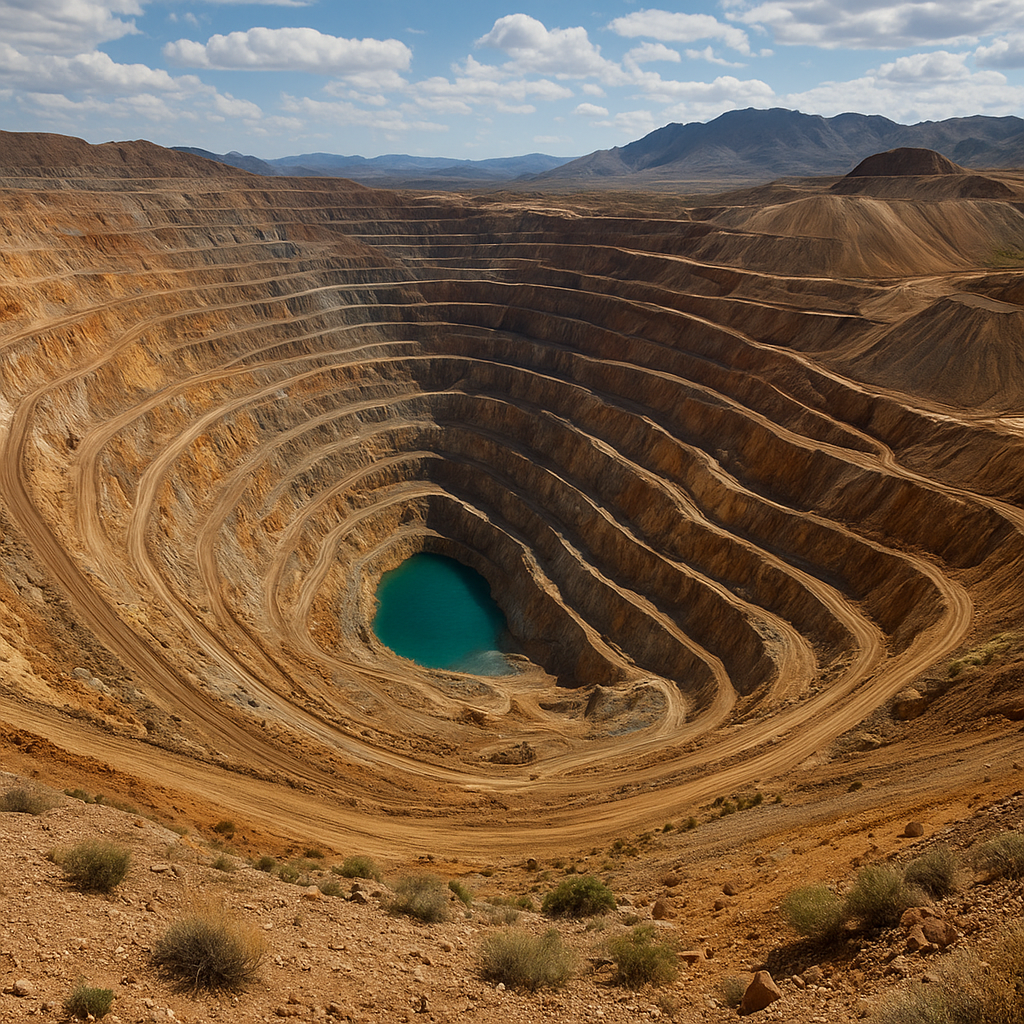
The Safford Mine is a significant copper-producing operation located in the American Southwest. Nestled in southeastern Arizona, it has become an important part of the regional mining landscape and a noteworthy contributor to the national supply of copper
The Safford Mine lies in Graham County, close to the towns of Safford and Thatcher in southeastern Arizona. The region is part of a broader mining province that includes other well-known copper districts in the state. Geologically, the deposit is characteristic of the Laramide and related magmatic-hydrothermal events that produced many of the Southwest’s porphyry copper deposits. These deposits typically feature large, low- to moderate-grade mineralized zones dominated by disseminated chalcopyrite, bornite, chalcocite and secondary oxide minerals in the weathered cap. Porphyry systems like the one at Safford form when copper-bearing hydrothermal fluids are expelled from a cooling intrusive body and precipitate copper sulfides in fractures and disseminations in the surrounding host rock. Over geological time, weathering modifies the upper portions of such deposits to create distinctive oxide zones that are amenable to different processing technologies than deeper sulfide ores. This zonation—oxide over secondary enrichment over primary sulfide—has a direct influence on how the mine is designed and operated. The principal product of the Safford operation is copper, extracted from both oxide and sulfide portions of the deposit. Processing routes are adapted to ore type: Although copper is the main commodity, typical porphyry deposits often carry minor quantities of other metals that can be recovered as byproducts, such as silver, gold, and sometimes molybdenum. The presence of such credits can materially affect the economics of a mining operation, and many modern mines carefully manage processing circuits to recover as much of these byproducts as practical. Safford is primarily an open-pit operation, which is the standard approach for large, near-surface porphyry systems. Open-pit mining allows for the economical removal of large volumes of rock with bulk earthmoving equipment. The pit design, slope angles and sequencing of benches are driven by rock mechanics, geotechnical conditions and the economic stripping ratio—the amount of waste rock that must be moved to access a unit of ore. Key processing and operational elements typically include: Over time, advances in metallurgical and processing techniques have allowed operations like Safford to optimize recovery and reduce costs. For oxide ores, improvements in leach chemistry and SX/EW circuit design have increased recoveries and reduced reagent consumption. For sulfides, enhanced flotation reagents and mill control systems help improve concentrate quality and throughput. The Safford Mine plays multiple economic roles at local, state and national levels. At the local level, the operation is a major employer in Graham County and supports a wide range of indirect jobs in services, maintenance, transportation and supply industries. Payroll and contractor spending circulate through local economies, supporting retail, housing and municipal revenues. Mines of Safford’s scale often represent one of the top private employers in rural counties where mining remains a key industry. At the state level, copper mining is a historically significant sector for Arizona, accounting for a substantial share of the state’s mineral revenues and export income. Revenues from mining generate taxes, royalty-like payments, and permit-related income that contribute to public budgets and infrastructure. When copper prices are favorable, the multiplier effects on state and local economies can be pronounced. Nationally and globally, Safford contributes to the United States’ domestic copper production. Copper is critical to modern economies—used extensively in electrical wiring, motors, transformers, electronics, plumbing, and increasingly in renewable energy systems and electric vehicles. Domestic mines reduce reliance on imports, support supply-chain resilience and help meet growing demand tied to electrification and decarbonization efforts. Consequently, mines such as Safford help ensure a steady supply of this strategic metal. Direct employment at a mine includes mining engineers, metallurgists, geologists, heavy-equipment operators, maintenance technicians, environmental and safety professionals, and administrative staff. Indirect employment comes from contractors and suppliers who provide fuel, parts, food services, road maintenance, and myriad other goods and services. Local communities often benefit from corporate community investment programs focused on education, health, infrastructure and cultural initiatives. Community relations are central to modern mining practice. Operators typically engage with local governments, residents, indigenous groups and other stakeholders to address concerns about noise, dust, traffic and environmental protection. Long-term social license to operate depends heavily on constructive relationships, meaningful consultation and transparent sharing of information regarding planned activities and reclamation commitments. Large-scale mining operations have significant environmental footprints that must be managed through regulatory compliance, technological measures and progressive rehabilitation. At Safford, practices to minimize environmental impacts commonly include: Regulatory frameworks at the federal and state levels require environmental impact analyses, permits, and financial assurances to ensure that reclamation is completed even if ownership changes. Many modern mining companies also pursue voluntary sustainability reporting and third-party audits to demonstrate their environmental stewardship and continuous improvement in performance. Certain features of the Safford operation and similar porphyry copper mines make them technically interesting: Mining in the United States is governed by a mix of federal, state and local regulations. Key aspects for a mine like Safford include air quality permits, water discharge and groundwater use permits, land use approvals, waste management and reclamation bonds, and compliance with the National Environmental Policy Act (NEPA) where federal actions trigger environmental reviews. The U.S. Environmental Protection Agency (EPA), state environmental agencies and the Bureau of Land Management (if federal lands or rights-of-way are involved) are among the authorities that may be engaged during the permitting process. Community input and stakeholder engagement are often incorporated into permitting and environmental review processes. Public hearings and comment periods allow residents and interested parties to raise concerns or support for proposed activities, and companies typically respond with mitigation measures designed to address the issues raised. Copper is a metal of strategic importance. Its excellent electrical conductivity and ductility make it essential across industries, including power generation and distribution, electronics, construction and transportation. As the global economy moves toward greater electrification and renewable energy deployment, copper demand is projected to rise due to increased wiring requirements for wind and solar installations, electric vehicle motors and charging infrastructure, and grid modernization. Mines such as Safford therefore sit at the intersection of geology, engineering and global markets. Their ability to deliver consistent, cost-effective production affects supply chains for manufacturers and utilities. At times of tight supply or rising demand, domestic mines contribute to national resilience by reducing import dependence for critical materials. Beyond jobs and taxes, modern mining operations often contribute to local education, workforce development and research. Partnerships with community colleges and technical schools create training pipelines for heavy-equipment operators, mechanics and environmental technicians. Scholarships, science outreach and sponsorship of local events are common ways mining companies support community development and cultivate a pipeline of local talent. In regions with a strong mining heritage, operations also support cultural preservation and local museums, celebrating the history of mining while promoting contemporary approaches to responsible resource development. The Safford Mine exemplifies many of the defining characteristics of modern porphyry copper operations in the American Southwest: a geologically favorable deposit, a mix of oxide and sulfide ores, large-scale open-pit mining, and processing infrastructure tailored to ore type. Its contributions to local employment, state revenues and the national copper supply are important, and its environmental and social management practices reflect the complexities of contemporary mining. As global demand for copper continues to grow with the energy transition, the operational performance, community engagement and environmental stewardship of mines like Safford will remain central to their ongoing viability and public acceptance.Location and geological setting
What is produced at Safford?
Mining methods and processing technology
Economic significance
Employment and community impact
Environmental management and reclamation
Interesting technical and operational points
Regulatory and permitting context
Market context: copper demand and strategic importance
Social and educational contributions
Final noteworthy observations