
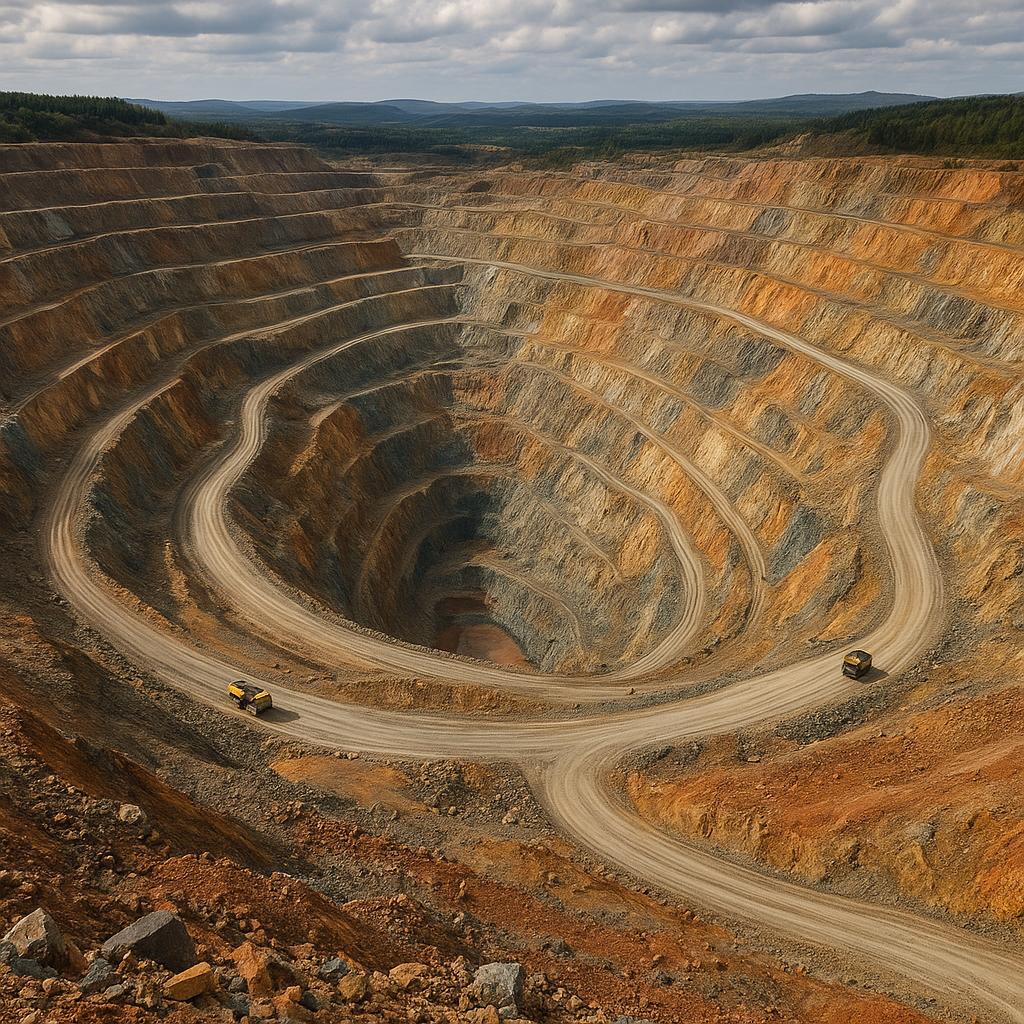
The Rudna mine is one of Poland’s most important industrial sites and a cornerstone of the country’s mining sector. Operated by KGHM Polska Miedź, this large underground complex extracts high-grade copper ore and produces significant quantities of silver as a valuable by-product. The mine’s operations, geology, and socio-economic role have shaped the surrounding region for decades, creating a mix of technical innovation, environmental challenges, and local prosperity. Below are multiple perspectives on Rudna — from its geological setting and extraction methods to its economic importance and some of the most interesting facts that make this mine notable on a European and global scale.
Location and Geological Setting
Rudna is located in the western part of Poland, within the historical and industrial region of Lower Silesia, and forms part of the larger Legnica-Głogów Copper District (LGOM). This district is one of the world’s most significant areas of sediment-hosted copper-silver mineralization. The mine itself lies near the town of Polkowice and the surrounding mining towns that developed along with KGHM’s operations.
Geologically, the copper-silver mineralization exploited at Rudna is hosted in Permian volcanic and sedimentary rocks. The ores are typically copper sulphides — chiefly chalcopyrite and bornite — accompanied by substantial concentrations of native and electrum-associated silver. The mineralizing processes that produced these deposits are associated with deep-seated hydrothermal systems that operated in the geological past, concentrating metals into layers and lenses that modern miners exploit.
Mining and Processing Operations
Underground Infrastructure and Methods
Rudna is an extensive underground operation featuring a network of shafts, drifts, and galleries that allow access to ore bodies at depth. Mining at Rudna uses mechanized methods designed for high productivity and safety in a deep underground environment. The mine employs a sequence of drilling, blasting, mucking, and haulage systems along with mechanized loaders and heavy equipment to move ore to underground crushers and hoisting systems.
Ore Processing and Recovery
After extraction, ore is transported to surface processing facilities where crushing, grinding, and flotation concentrate the copper-bearing minerals. The flotation concentrates are then either sent to smelters or refined further. Rudna’s processing chain also focuses on recovering by-products, most notably silver, which is extracted from concentrates and refined to high purity. Modern metallurgical processes ensure efficient metal recovery, while research and development continue to optimize yields and reduce energy consumption.
Economic Significance
Rudna plays a vital role in both the regional and national economy. As part of the KGHM group — which is among the world’s larger producers of copper and a major silver producer — Rudna contributes significantly to Poland’s export earnings, industrial supply chains, and employment.
- Employment: The mine provides direct jobs for thousands of miners, technicians, engineers, and administrative staff. Indirect employment in suppliers, service firms, and local businesses multiplies the socio-economic impact.
- Exports and Trade Balance: Copper and silver products originating from Rudna underpin export revenues and help Poland balance trade in metals and industrial commodities. High-grade copper concentrates and refined products enter global markets and industrial supply chains.
- Industrial Value Chain: Rudna supports related industries such as metallurgy, manufacturing, and electronics by providing base metals essential for wiring, machinery, and components.
- Regional Development: The mine’s presence has driven investments in infrastructure, local services, and housing, accelerating the economic development of towns like Polkowice and the broader leg of mining towns in Lower Silesia.
Environmental and Social Considerations
Large-scale underground mining carries environmental and social responsibilities. Rudna’s operators face ongoing challenges that are typical for deep mining: managing mine water, controlling dust and emissions from processing plants, handling tailings and waste rock, and monitoring ground stability to mitigate subsidence.
- Water Management: Groundwater inflows and mine drainage require treatment systems that prevent contamination and protect surface water quality.
- Tailings and Waste: Concentrate production generates tailings that must be stored safely. KGHM has invested in tailings management systems, often combining engineered ponds and controlled storage areas with continuous monitoring.
- Air Quality and Emissions: Processing and smelting operations can introduce emissions; modern filters, scrubbers, and process improvements aim to minimize impacts.
- Community Engagement: Rudna has significant social obligations to local communities, providing jobs, social programs, and funding for local infrastructure and cultural initiatives.
Technology, Safety, and Innovation
Rudna is notable for adopting and developing advanced mining technologies to increase productivity, safety, and environmental performance. Innovation is evident in fleet modernization, automation of repetitive tasks, and enhanced monitoring systems for underground hazards.
Automation and Mechanization
Mechanized mining equipment reduces manual exposure to hazardous conditions and increases efficiency. Remote-controlled loaders and automated haulage systems help sustain continuous operations while minimizing occupational risks.
Seismic Monitoring and Ground Control
Deep mining in the LGOM is associated with seismic events and changing stress regimes in the rock mass. Rudna employs sophisticated seismic monitoring networks, rock mechanics models, and ground support systems to manage these hazards and protect workers and infrastructure.
Digital Tools and Data Analytics
The application of digital mine management tools — including data analytics, predictive maintenance systems, and real-time monitoring — helps optimize production rates, reduce downtime, and predict equipment failures. Research partnerships with academic institutions enhance these capabilities and foster continuous improvement.
Regulatory and Corporate Context
Rudna operates under Polish mining law and environmental regulations, while KGHM as a corporate entity is subject to both national oversight and international standards relevant to mining and public companies. Compliance with safety, environmental, and reporting obligations drives much of the mine’s operational planning. Corporate governance, investor relations, and transparency are increasingly significant as global investors and local stakeholders demand responsible resource development.
Interesting Facts and Lesser-Known Details
Several features make Rudna particularly interesting beyond its immediate industrial function:
- Major Silver Producer: Although primarily a copper operation, Rudna contributes a disproportionately large share of Poland’s silver production. Combined with other KGHM assets, the region elevates Poland’s position in the global silver market.
- Scale and Depth: Rudna’s underground workings extend deep into the crust, requiring complex logistics for ventilation, hoisting, and emergency response. The scale of subterranean development is both an engineering achievement and a logistical challenge.
- Community Towns: Several towns around the mine were shaped and expanded because of mining activity. Worker housing estates, social amenities, and local economies grew up in close connection with Rudna’s development over the decades.
- Research Collaborations: The mine is a living laboratory for geology, mining engineering, and environmental science. Universities and research institutes often collaborate with KGHM on resource modeling, metallurgy, and sustainability projects.
- Adaptive Reuse and Rehabilitation: As parts of the mining landscape mature, planning for post-mining land use becomes vital. Efforts include rehabilitating waste dumps, restoring native vegetation, and repurposing infrastructure where feasible.
- Strategic Resource: Copper remains a strategic metal for electrification and industrial processes. As global demand for copper rises with renewable energy, electric vehicles, and electrification projects, mines like Rudna increase in geopolitical and economic significance.
Challenges and the Road Ahead
Like all long-life mines, Rudna faces a set of forward-looking challenges. Key issues include resource depletion in some zones, the need to access deeper or more complex orebodies, increasing operational costs, and the mandate to reduce environmental footprints. Balancing continued production with sustainability objectives, technological upgrades, and workforce changes is central to Rudna’s strategic planning.
The global transition toward low-carbon energy systems also has implications for mines: on one hand, copper demand is likely to grow; on the other, mines must reduce their own carbon emissions and energy consumption. Investments in energy-efficient processes, electrified equipment, and renewable power sources can help align Rudna’s operations with broader climate goals.
Rudna’s Place in the Broader Mining World
Rudna and the LGOM are often cited in international comparisons of sediment-hosted copper-silver districts. The mine’s combination of high-quality ore, established infrastructure, and integration into a large, experienced corporate group gives it resilience and global relevance. KGHM’s operational know-how, refined smelting and refining chains, and position in global metal markets ensure that Rudna’s output plays a steady role in supplying industrial metals worldwide.
Moreover, Rudna’s experience demonstrates how a regional mining complex can evolve over time: from early exploration and development to decades of production and ongoing modernization. The mine exemplifies how technical innovation, environmental management, and community relations must co-evolve to maintain viable and responsible mineral production.
Concluding Notes on What Makes Rudna Distinct
Rudna is more than a source of copper and silver; it is a hub of industrial activity, scientific research, and regional identity. Its operations embody the technical complexity and socio-economic significance of modern underground mining. The mine’s continued modernization, the importance of its metal outputs to global industry, and the evolving approaches to environmental stewardship and community involvement are all key elements that define Rudna’s ongoing story.

