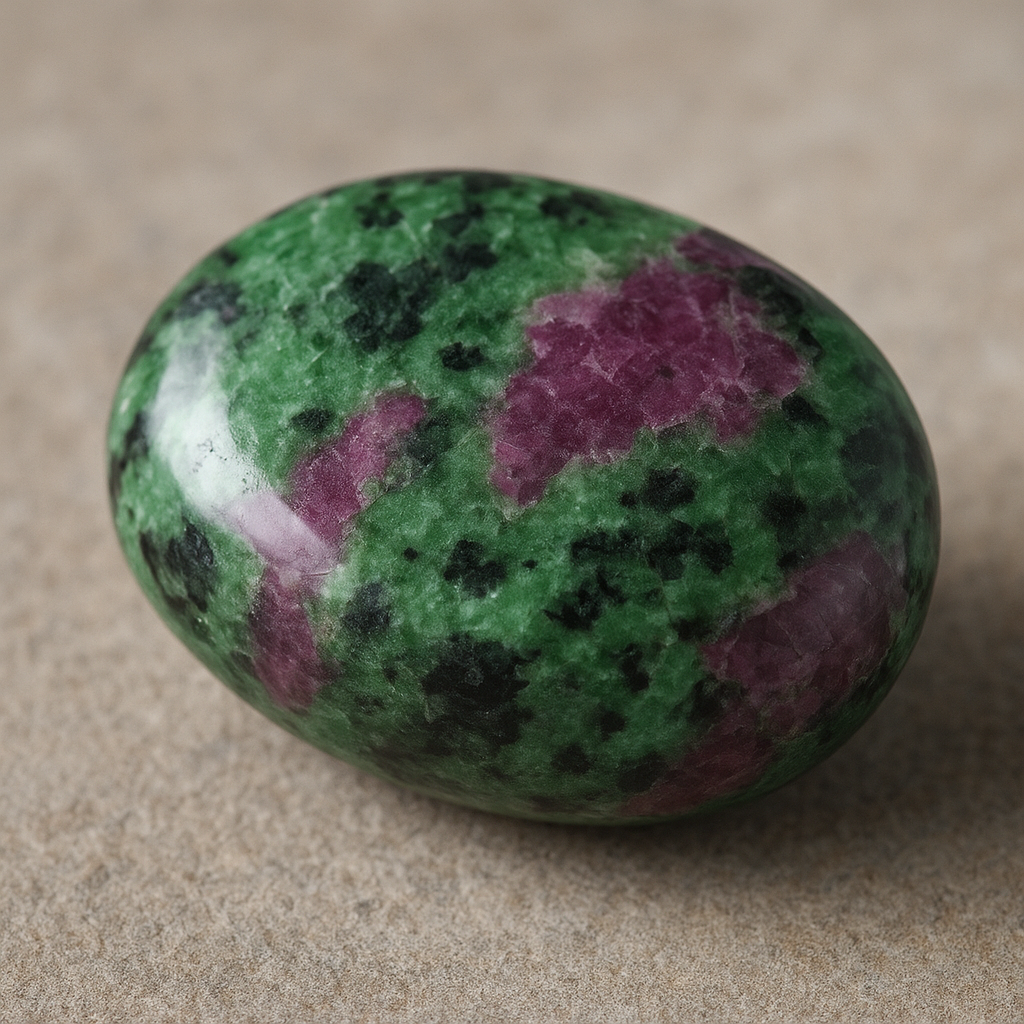
Ruby Zoisite is a striking and unusual ornamental stone that combines verdant green matrix with vivid red crystals, producing one of the most visually dramatic natural combinations found in gemstones. Often sought after by collectors, lapidaries and metaphysical practitioners alike, this material can be both sculpted into elegant jewelry and carved into bold decorative pieces. In the paragraphs that follow you will find detailed information about the stone’s geology, distribution, practical uses, cutting and care, market considerations, and the cultural and metaphysical themes that make it particularly fascinating.
Origin, Mineralogy and Geological Context
At its core the material commonly called Ruby Zoisite is a combination of green zoisite with inclusions of red ruby (corundum). The green host is a calcium aluminium silicate produced under metamorphic and hydrothermal conditions, while the red crystals are aluminum oxide with chromium traces that produce the red color. Where both formed in the same rock, a dramatic contrast appears: red crystalline nodules, veins or specks set against a rich green background. Occasionally dark, fibrous minerals such as amphiboles appear as black or brown streaks, adding contrast and texture.
How it forms
The production of such composite material requires a specific geological environment. Typically, these rocks form in metamorphosed, aluminum-rich protoliths undergoing complex fluid-rock interactions. Ruby crystals grow in Al-rich zones under high temperature and pressure, while the green zoisite often forms later or contemporaneously when calcium and silicate-bearing fluids alter the host. Variable chemistry, pressure and temperature can influence the size, abundance and clarity of the ruby within the zoisite matrix, creating specimens that range from delicate speckling to bold, gem-quality ruby crystals embedded in massive green.
Common associated minerals
- Hornblende and other amphiboles (dark streaks and needles)
- Biotite and other micas
- Chromian spinels and other accessory oxides
- Garnet in some metamorphic assemblages
Where Ruby Zoisite Occurs
Although similar mineral assemblages can appear in several metamorphic terrains around the world, one locality has become synonymous with the trade name: the Longido and Arusha region of northern Tanzania. The deposits there produce the most commercially known material and shaped the modern market for the stone. Smaller or occasional occurrences are reported from other metamorphic belts, sometimes as isolated pockets or boulders showing the same green-and-red juxtaposition.
Principal localities
- Tanzania: The most famous and prolific source, with material mined and exported in various grades for gem and ornamental use.
- Other localities: Rare occurrences and similar material have been reported in other countries with appropriate metamorphic geology; such finds tend to be sporadic and of variable quality.
Because of the concentration of commercial production in Tanzania, most market examples are labeled as Tanzanian ruby-zoisite or by the trade name Anyolite. The trade name helps buyers and gem cutters communicate expectations about color, structure and common matrix inclusions.
Appearance, Grading and Lapidary Characteristics
Part of the stone’s appeal is its dramatic visual contrast. Ruby Zoisite specimens vary widely: some show tiny red pinpoints peppering the green, others feature large ruby patches that can be faceted or cut as cabochons, and some are so heavily veined with dark amphibole that the piece takes on a rugged, sculptural quality. The aesthetic value depends on color balance, intensity of the red ruby, translucency of the ruby crystals, and overall harmony of pattern.
Color and clarity factors
- Ruby intensity: Vivid, saturated red or raspberry tones increase desirability.
- Zoisite hue: Bright, even green or slightly bluish-green backgrounds are prized.
- Contrast: High contrast between red and green—or the presence of dramatic black veins—often elevates visual interest.
- Inclusions and fractures: Natural inclusions are common; large fractures or friable zones reduce lapidary yield.
Things lapidaries must consider
Working this material requires skill because the stone encompasses minerals of different hardness. The ruby phase (corundum) is much harder than the zoisite matrix, so polishing must accommodate variable abrasion rates. Cabochons and carvings that highlight large ruby crystals can be particularly attractive, but cutters must take into account cleavage directions, internal stress, and the risk that softer green areas may polish differently than the corundum inclusions.
Popular cuts and finished forms
- Cabochons—common, to emphasize pattern and color interplay
- Beads and tumbled stones—used for jewelry and mala-style strands
- Carvings and decorative objects—figurines, spheres, bowls
- Polished slices and slabs—for display and collectors
Practical Uses and Jewelry Considerations
The balance of visual drama and accessibility makes ruby-in-zoisite a favorite for statement pieces. It is commonly used for pendants, earrings, brooches, and large rings. Be mindful that the matrix’s relative softness means everyday wear—especially in rings exposed to knocks—can be riskier than with uniformly hard stones. Settings that protect the stone’s edges and reduce exposure to impact are recommended.
Buying tips
- Examine the pattern: choose a composition that pleases you visually—some prefer peppered red spots, others large bold ruby inclusions.
- Ask about treatments: some pieces are stabilized with resin to impregnate fractures and increase toughness; stained or dyed specimens are less desirable.
- Request a certificate if a large, expensive ruby-bearing section is represented as gem-quality corundum.
- Consider the setting: bezel settings and protective mounts decrease risk for fragile edges.
Care, Cleaning and Conservation
Because the composite contains both tougher and softer phases, cleaning must be gentle. Avoid prolonged exposure to acids, household chemicals, and high heat—these can damage the green matrix or affect color. Ultrasonic cleaners may be safe for solid, dense pieces but can be risky for stones with fractures or resin-filled areas.
- Use a soft brush, mild soap and warm water for routine cleaning.
- Dry carefully with a soft cloth and avoid steam and ultrasonic cleaning for compromised specimens.
- Store separately to avoid scratching other gems—although the ruby inclusions are hard, the overall matrix can be scratched by harder materials.
Market, Valuation and Treatments
Value is primarily aesthetic. A piece with prominent, richly colored ruby crystals set in a vivid green zoisite matrix commands higher prices, especially when the ruby is translucent and well-defined. Large carvings and museum-quality slabs attract collectors, while small cabochons enter the craft and jewelry markets at lower price points.
Treatments and enhancements
Common commercial practices include stabilization with resins to strengthen fractured or porous pieces. Some specimens are dyed to enhance the green background, which should be disclosed. Large, exceptional ruby crystals embedded in zoisite may be removed and sold as separate corundum if they meet quality standards, and such separation can affect the value of the remaining matrix.
Cultural and Metaphysical Themes
Beyond commercial and aesthetic interest, Ruby Zoisite has become popular in the metaphysical and wellness communities. Practitioners ascribe a combination of energies to the stone based on the perceived qualities of its components: the vitality and passion of ruby balanced by the growth and grounding associated with zoisite. The mix of red and green appeals visually as well as symbolically—contrast often interpreted as the union of heart and will.
Common metaphysical associations
- Transformation and personal growth—seen as a stone that supports change.
- Creativity and motivation—used by artisans and creative professionals.
- Emotional balance—some claim the pairing soothes anxiety while invigorating action.
- Chakra work—often linked to heart and root or sacral alignments by practitioners.
It is important to emphasize that metaphysical claims are cultural and anecdotal; they are not substitutes for medical or psychological care. Many people, however, value stones like ruby-zoisite for their ability to serve as meaningful talismans or focus objects during meditation and creative practice.
Identification and Avoiding Common Pitfalls
Because the material is visually distinctive, outright counterfeits are uncommon, yet buyers should still be cautious. Look for natural textural transitions between the red and green areas; artificially assembled pieces sometimes show glues, seams or sudden color boundaries. Synthetic corundum rarely appears embedded naturally in zoisite matrix, so suspiciously perfect, evenly colored ruby fragments should prompt further scrutiny.
How to authenticate
- Examine under magnification: natural inclusions, crystal boundaries and growth zoning are signs of authenticity.
- Ask for provenance: reputable dealers usually know the source locality and treatment history.
- Seek gemological testing for high-value pieces: refractive index, specific gravity and spectroscopy help differentiate constituent minerals.
Interesting Uses and Unusual Examples
Beyond conventional jewelry, this stone has found creative niches. Artists often slice slabs to create inlay panels and mosaic work. Sculptors carve abstract forms that exploit the natural flow of red streaks through green backgrounds. Museum displays sometimes include large museum-grade slabs that reveal spectacular ruby crystals and tell a geological story about metamorphism and mineral growth.
Notable creative applications
- Inlay work in furniture and decorative boxes to highlight contrasting color.
- Custom cabochons for statement rings and collector pendants.
- Large, polished spheres and freeform sculptures that showcase dramatic ruby sections.
Collectors prize specimens that reveal unusually large or well-formed ruby crystals, especially when the surrounding zoisite accentuates the contrast rather than obscuring it. Such specimens both delight visually and serve as educational tools in illustrating mineral paragenesis and the ways different minerals coexist within a single rock.
Final Notes on Appreciation
As an accessible and visually memorable stone, Ruby Zoisite occupies an interesting place between popular jewelry material and geological curiosity. Its combination of robust color contrast, workable lapidary properties and cultural associations with creativity and transformation keeps demand steady among makers, collectors and metaphysical enthusiasts. Whether chosen as a personal talisman, a striking pendant or a carved centerpiece, the stone continues to offer both aesthetic pleasure and an invitation to explore deeper geological and cultural stories.