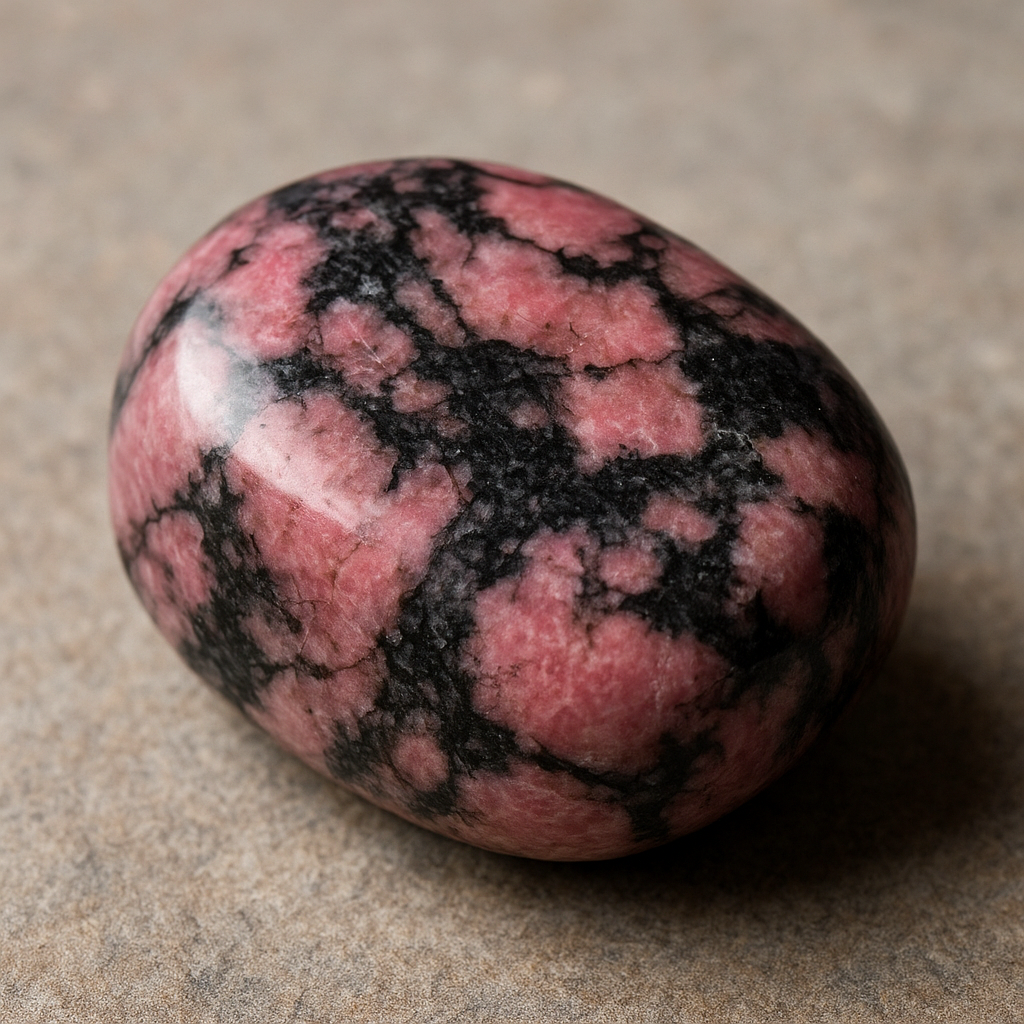
Rhodonite is a striking pink to red silicate mineral admired both for its color and the dramatic contrast of dark manganese-oxide veins that often crisscross its surfaces. Beyond its aesthetic appeal, rhodonite carries geological, historical and metaphysical significance. The following text explores where rhodonite forms and is found, how it is used in jewelry and ornamentation, and offers interesting facts and practical information any enthusiast or collector should know.
Geology, Chemistry and Formation
Rhodonite belongs to the class of inosilicates and typically has the chemical formula MnSiO3 with common substitutions by Fe, Mg and Ca in its crystal lattice. Its crystal system is most commonly triclinic, and crystals are usually tabular or granular rather than well-formed, though gem-quality material often occurs as massive aggregates suitable for cutting and polishing.
Rhodonite forms primarily in manganese-rich environments. Two primary geological settings produce rhodonite:
- Regional and contact metamorphism of manganese-bearing sediments, where heat and pressure drive recrystallization of manganese silicates.
- Hydrothermal veins and skarn deposits where manganese-rich fluids react with host silicates or carbonates.
During formation, manganese in the mineral contributes the pink to red hues. The characteristic black or brown-black veins and dendritic patterns that accent rhodonite are usually manganese oxides such as pyrolusite or other secondary manganese minerals that formed later, often along fractures. These contrasting patterns are among the most sought-after features for ornamental material.
Physical Properties and Gemmological Characteristics
Rhodonite has a combination of properties that make it attractive for lapidary work, yet also impose some limitations for certain uses:
- Color: Ranges from pale pink to deep rose and sometimes nearly wine-red. Intensity depends on manganese content and trace elements.
- Luster: Vitreous to pearly on cleavage surfaces.
- Hardness: Approximately 5.5–6.5 on the Mohs scale — durable enough for many jewelry applications but less suitable for rings expected to receive rough wear compared to harder gemstones.
- Specific gravity: Typically 3.4–3.7, indicating a moderately dense stone.
- Cleavage: Distinct in two directions, making careful cutting and cabochon work necessary to avoid breakage.
- Often occurs with black rhodonite matrix or veinlets (manganese oxides), which can either enhance aesthetic appeal or complicate cutting.
From a gemological perspective, rhodonite is commonly fashioned into cabochons, beads, cameos and carved objects. Transparent, facetable rhodonite is extremely rare; most commercial material is translucent to opaque.
Where Rhodonite Is Found: Notable Localities
Rhodonite has a worldwide distribution wherever manganese-rich geological environments exist. Some well-known and historically significant localities include:
- Ural Mountains, Russia: Historically one of the most famous sources. Ural rhodonite was widely used in Russian decorative arts and has produced some of the most collectible ornamental pieces.
- Sweden (Langban and surrounding districts): Known for colorful manganese mineral assemblages and specimens prized by mineral collectors for their quality and crystal variety.
- Australia (Broken Hill and other New South Wales & Queensland deposits): Produces attractive material for carving and jewelry.
- Brazil (Minas Gerais and other states): One of several South American sources yielding attractive pink material and often sold on the gem market.
- Madagascar: Known for producing vibrant pink specimens in recent decades, frequently cut for beads and cabochons.
- Canada (British Columbia): Noted occurrences associated with metamorphosed manganese deposits.
- United States: Several localities including Massachusetts, New Jersey (Franklin area), Colorado and California have produced rhodonite specimens; some localities are classic mineral-collecting sites.
- Peru and Mexico: Also yield rhodonite in various manganese-rich veins and metamorphic zones.
Collectors often prize specimens that display a vivid pink ground color sharply contrasted by black manganese oxide dendrites or veins. Larger masses suitable for carving or architectural uses are rarer and therefore command higher interest and price.
Historical and Cultural Uses
Rhodonite has a long history as an ornamental and decorative material. Throughout the 18th and 19th centuries, large decorative slabs and carved objects of rhodonite were preferred by nobility and wealthy patrons, especially in Russia, where local deposits supplied lapidaries and royal workshops. Smaller objects such as snuffboxes, brooches and inlaid panels were popular during the Victorian era in Europe as well.
Because of its warm color and ease of carving compared to harder stones like jade, rhodonite was often used for cameos, intaglios and bas-relief carvings. In modern times, rhodonite continues to be fashioned into beads, cabochons and ornamental carvings for the international gem trade.
Lapidary Practices and Jewelry Applications
Lapidaries value rhodonite for its attractive colors and the dramatic aesthetic created by contrasting veins. Common treatments and techniques include:
- Cutting as cabochons to display color and pattern without risking fracture from inclusions.
- Polishing into beads for necklaces and bracelets — large bead strands are a frequent product from Madagascar and Brazil.
- Carving small sculptures and decorative objects, including eggs, spheres and figurines.
- Inlay work, combining rhodonite slices with other stones or metals for ornamental panels and jewelry.
Care for rhodonite jewelry involves avoiding strong impacts due to its moderate hardness and cleavage. Cleaning with warm soapy water and a soft brush is generally safe; ultrasonics are often discouraged if the piece contains fracture-filling or large inclusions. Avoid harsh acids or prolonged exposure to heat which can alter color or damage fillers.
Economic and Industrial Relevance
While rhodonite contains manganese — an element important in steelmaking and various industrial applications — most rhodonite is not mined as a primary ore for manganese on an industrial scale. Economically important manganese ores are typically oxides or carbonates that are far more abundant and easily processed. Rhodonite’s value lies mainly in the gem and mineral specimen markets.
That said, in regions where manganese minerals are plentiful and rhodonite occurs in massive form, it can be a locally significant source of manganese. More commonly, however, rhodonite is extracted for ornamental stone, lapidary uses and collectors’ specimens.
Metaphysical Beliefs and Uses
Beyond its physical properties, rhodonite holds an important place in metaphysical and crystal-healing communities. Though such uses lack scientific backing, they are culturally meaningful to many:
- Rhodonite is commonly associated with the heart chakra and is viewed as a stone of emotional healing, compassion and forgiveness.
- Practitioners often use it to promote calm during stress, to encourage self-love and to mend interpersonal relationships.
- As a grounding stone, rhodonite is sometimes suggested for balancing emotions and nurturing a sense of purpose.
These interpretations have made rhodonite popular in the wellness market, where it appears in worry stones, palm stones and meditation sets. Whether one believes in metaphysical properties or values rhodonite purely aesthetically, the stone resonates in many cultural contexts.
Identification, Imitations and Synthetics
When identifying rhodonite, several characteristics are helpful:
- Distinct pink to red coloring derived from manganese content.
- Presence of black manganese oxide veins or dendritic patterns.
- Hardness around 5.5–6.5 and a specific gravity near 3.4–3.7.
- Typical translucency to opaque body; rare transparent crystals.
Imitations and look-alikes include dyed or stabilized jasper, some pink marbles and other manganese-bearing silicates. Glass and composite materials may be manufactured to mimic rhodonite’s color and veining; these are usually detectable by differences in weight, hardness, and by magnification which reveals air bubbles in glass or a uniform pattern in dyed materials.
No widely produced synthetic rhodonite is common on the market, but treatments such as impregnation with resins to enhance luster and durability are sometimes performed. Buyers of higher-value material should seek reputable sellers and request provenance or laboratory testing for significant purchases.
Collecting, Care and Market Trends
Collectors value rhodonite both as an attractive lapidary material and for specimens showing well-formed crystals or exceptional patterns. Key points for collectors and buyers:
- Specimens from classic localities (Urals, Langban, Broken Hill) often carry historical appeal and can command premium prices.
- Large, uniformly colored slabs suitable for architectural or decorative use are uncommon and particularly prized.
- For jewelry buyers, ask about any stabilizing treatments and examine cabochons for fractures that could affect durability.
- Market demand has risen for unique and ethically sourced stones; Madagascar and Brazil supply many commercial pieces today, while historical Russian material remains sought after by museums and high-end collectors.
Because rhodonite is not as hard as quartz or corundum, it occupies a niche market where unique color and patterning drive value more than physical durability. That niche supports a steady trade in beads, cabochons and ornamental carvings, and an active collectors’ exchange for well-preserved mineral specimens.
Interesting Facts and Lesser-Known Details
1. Color chemistry
The pink to red color of rhodonite comes mainly from manganese ions in its crystal structure. Trace substitutions by iron and other elements can modify tones toward brownish or more muted shades, while oxidation and weathering can lead to darker surface patterns.
2. Relation to other manganese minerals
Rhodonite is often found alongside rhodochrosite (a manganese carbonate), pyrolusite (manganese oxide), and various manganese silicates. This mineral association is a hallmark of manganese-rich geological environments and helps geologists interpret the formation history of deposits.
3. Architectural uses in history
In regions with abundant rhodonite, craftsmen historically used it in decorative panels, fireplace surrounds and ornamental inlays. The warm pink and dramatic veining made rhodonite an attractive complement to gold, dark wood and other luxurious materials in stately interiors.
4. Collector favorites
Specimens that show sharp black dendrites across vivid pink backgrounds, or that display rare crystalline habits, are particularly prized. Mineral shows frequently feature rhodonite specimens alongside manganese mineral suites, and dedicated collectors specialize in regional varieties.
5. Use in therapy sets and talismans
Because of its association with emotional balance, rhodonite is commonly included in gemstone therapy kits. It is often chosen as a gift to symbolize sympathy, reconciliation or support during difficult times.
Practical Tips for Buyers and Enthusiasts
- When purchasing rhodonite jewelry, examine the setting and check for visible fractures. Cabochons with stable polish and minimal fractures offer the best durability.
- Request information about treatments such as resin stabilization; these are common on specimens with abundant fractures and can affect long-term care.
- For collectors, documented provenance enhances a specimen’s value. Ask about the mine, locality and any historical context when possible.
- Store rhodonite pieces separately from harder stones to prevent scratches, and avoid prolonged exposure to sunlight or heat that may alter appearance over time.