
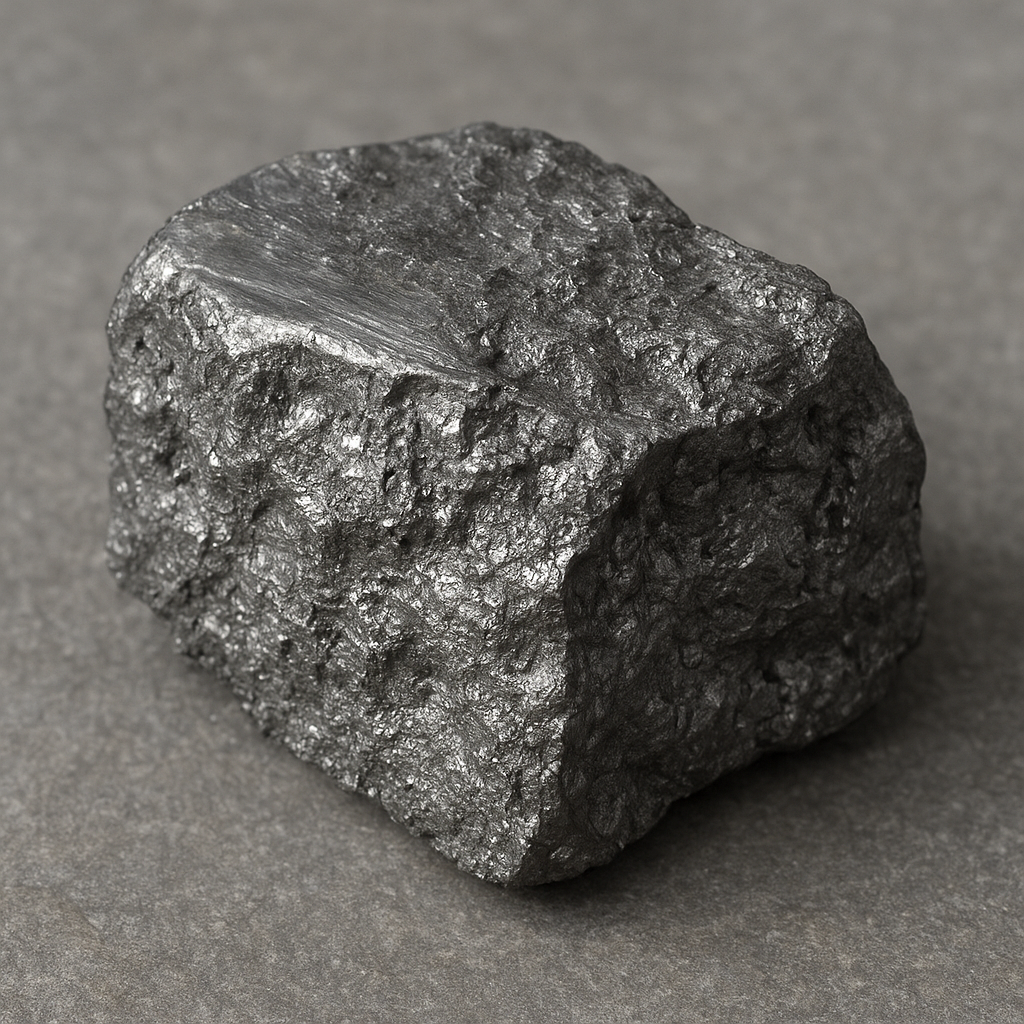
Rhenium is one of the rarest and most intriguing transition metals on Earth, prized for a combination of exceptional physical and chemical properties that make it indispensable in high-performance technologies. Although it occurs only in minute quantities in the Earth’s crust, its influence on modern industry is outsized: it plays a crucial role in aerospace engineering, catalyst design, and advanced electronics. This article explores where rhenium is found, how it is extracted and processed, its notable applications, and several fascinating aspects of its chemistry and economics that are often overlooked.
Occurrence and Geology
Rhenium is element number 75 and belongs to the group of heavy transition metals. It is extremely uncommon as a native element and most often appears in trace amounts associated with other metal ores rather than in standalone deposits. The metal typically occurs in association with molybdenum and copper ores, and is often recovered as a byproduct of molybdenite (MoS2) processing.
Primary geological sources
- Porphyry copper and molybdenum deposits — These are the principal geological settings where rhenium is concentrated. In such deposits, rhenium substitutes for molybdenum within molybdenite and is liberated during ore processing.
- Alluvial placers — Very small amounts of native rhenium can occasionally be found in placer deposits, though these are not economically significant sources.
- Recycling streams — Given its rarity and cost, recycling of rhenium from industrial scrap has become an increasingly important secondary source.
Concentrations of rhenium in the Earth’s crust are estimated at about 1 part per billion by mass — making it one of the scarcest stable elements. Commercial rhenium production is therefore tightly linked to global molybdenum and copper mining activities; when molybdenum production falls, rhenium supply is affected.
Extraction, Refining, and Production
Recovering rhenium requires specialized metallurgical processes because it does not typically form its own ore bodies. The usual pathway is extraction from molybdenite concentrates: during roasting of molybdenite to produce molybdenum trioxide (MoO3), rhenium is oxidized to volatile oxides (mainly Re2O7) and can be captured from flue gases. Subsequent chemical processing yields rhenium metal or rhenium salts used for catalyst production.
Key steps in production
- Roasting of molybdenite concentrates to convert sulfides to oxides while volatilizing rhenium oxides.
- Absorption of volatile rhenium oxides into alkaline solutions.
- Chemical reduction and precipitation to produce ammonium perrhenate (NH4ReO4), the most common intermediate compound.
- Hydrogen reduction of ammonium perrhenate to obtain metallic rhenium powders or filaments.
Because its production is a byproduct, rhenium supply can be vulnerable to fluctuations in demand for other metals. In recent decades, global output has been concentrated in a handful of countries that operate large copper-molybdenum mines coupled with rhenium recovery plants.
Physical and Chemical Properties
Rhenium is remarkable for its combination of high density, extraordinary melting point, and corrosion resistance. Some of the most notable properties include:
- Very high melting point — rhenium has one of the highest melting points among all elements, exceeded only by tungsten and tantalum.
- High density — it is a dense metal, which contributes to its use in specialized weight-sensitive applications.
- Excellent high-temperature strength and creep resistance — these traits make rhenium invaluable in alloys that must operate under extreme thermal stress.
- Chemical inertness in many environments — it resists oxidation at lower temperatures and forms stable compounds under controlled conditions.
The presence of rhenium as a minor alloying element can dramatically enhance the high-temperature performance of nickel-based superalloys, improving their mechanical stability and resistance to deformation under load.
Major Applications
Rhenium’s most important and commercially valuable uses stem from its role in high-temperature applications and catalysis. Below are the principal industrial areas that rely on rhenium.
1. Aerospace and gas turbines
One of the most significant industrial uses of rhenium is in nickel-based superalloys employed in jet engines and stationary gas turbines. Adding small amounts (typically 3–6% by weight in certain alloy formulations) of rhenium substantially increases creep strength and temperature capability, allowing turbine blades and discs to operate at higher temperatures and pressures. This improvement translates directly into higher engine efficiency and reduced fuel consumption, making rhenium a strategic component for high-performance aero-engines.
2. Catalysts in petroleum refining
Rhenium is a critical catalyst component in reforming and hydroprocessing units in petroleum refining. When combined with platinum on alumina supports, rhenium-platinum catalysts exhibit superior performance for:
- Hydrocracking and hydrodesulfurization reactions, which remove sulfur and improve product quality.
- Platforming and reforming, converting low-octane hydrocarbons into higher-octane components for gasoline.
The addition of rhenium to platinum catalysts enhances stability, decreases coke formation, and extends operational lifetimes—key benefits in expensive refinery environments.
3. Electrical and electronic uses
Rhenium’s stable electrical properties and ability to be drawn into fine filaments make it useful for specialized electrical contacts and filaments in devices such as mass spectrometers, ion gauges, and some types of heating elements. Its combination with tungsten in filaments improves mechanical strength and life at elevated temperatures.
4. Superconducting and research applications
Rhenium forms alloys and compounds studied for superconductivity research. Its heavy atomic mass and unique electron configuration make it a subject of interest in condensed matter physics. In addition, rhenium-containing compounds are used in high-temperature thermocouples and other precision instrumentation.
Isotopes, Radioactivity, and Medical Uses
Rhenium has two naturally occurring stable isotopes: 185Re and 187Re, with 187Re being slightly radioactive (it undergoes beta decay with a very long half-life). Beyond natural isotopes, synthetic radioisotopes of rhenium are important in medicine and scientific research.
- 187Re — Naturally occurring, weakly radioactive with an extremely long half-life; used in geochronology in certain contexts.
- 186Re and 188Re — These radioisotopes are used in nuclear medicine for therapeutic applications, such as targeted radiotherapy for cancer, because they emit beta particles and have suitable half-lives for medical treatments.
Rhenium-188, in particular, can be obtained from a tungsten-188/rhenium-188 generator and is valued for bone pain palliation and certain radiopharmaceutical therapies. The medical use of rhenium isotopes highlights the element’s interdisciplinary importance across chemistry, physics, and medicine.
Economic and Strategic Considerations
Because rhenium is rare and predominantly produced as a byproduct, its market dynamics are unique. Rhenium prices can be volatile and are influenced by:
- Variations in copper and molybdenum mining output.
- Demand from the aerospace sector and catalytic refiners.
- Recycling rates and availability of reclaimed rhenium from scrapped superalloys and catalysts.
- Geopolitical factors affecting the locations of primary producers and processing facilities.
Many nations consider rhenium a strategic material because of its critical role in defense and aerospace technologies. Consequently, stockpiles and recycling programs are part of long-term resource planning, and high-purity rhenium supplies attract significant commercial interest.
Environmental Impact and Recycling
Although rhenium is used in technologies that can improve environmental outcomes—such as more efficient jet engines and cleaner fuel processing—its extraction and processing can have environmental footprints tied to the larger mining and refining operations. Recovery of rhenium from flue gases and residues is an important measure to mitigate losses and reduce environmental impact.
- Recycling of rhenium from spent catalysts and superalloy scrap is economically attractive and environmentally beneficial, reducing the need for new extraction.
- Refineries and metallurgical plants have developed techniques to recover rhenium at high efficiencies from process streams, limiting atmospheric emissions of volatile rhenium oxides.
Responsible management, coupled with technological advances in recovery, helps ensure that rhenium’s limited natural reserves are used judiciously.
Interesting Chemical Behavior and Research Frontiers
The chemistry of rhenium is rich and varied, spanning oxidation states from -1 to +7, with common oxidation states of +4, +6, and +7. Several features make rhenium chemically and scientifically intriguing:
- High oxidation state chemistry — Rhenium forms stable high-valent oxides such as Re2O7, which are volatile and chemically reactive.
- Organometallic complexes — Rhenium forms a wide range of organometallic compounds used as models in catalysis research and for photochemical applications.
- Cluster compounds — Rhenium clusters with metal-metal bonds provide insight into bonding in heavy transition metals and the behavior of electrons in dense metallic frameworks.
Contemporary research explores rhenium complexes as catalysts for fine chemical synthesis, hydrogenation, and selective functional group transformations. Another frontier is the design of heterogenous catalysts where rhenium enhances selectivity and durability under harsh reaction conditions.
Notable Historical and Cultural Facts
Rhenium was one of the last naturally occurring elements to be discovered. Isolated in 1925 by the German chemists Ida Tacke, Walter Noddack, and Otto Berg, its name derives from the Latin name for the Rhine River, where some of the ores studied by the discoverers originated. The discovery confirmed predictions based on periodic trends and completed a gap in the periodic table at the time.
The rarity of rhenium meant that early uses were limited, but the advent of jet propulsion and modern petroleum refining in the mid-20th century rapidly expanded demand. Today, rhenium’s story is an example of how a trace component can have an outsized technological impact.
Practical Considerations for Industry and Researchers
Working with rhenium and its compounds requires attention to purity, handling, and cost. For engineers specifying materials:
- Design choices must weigh the performance benefits of rhenium against its expense and supply risk.
- Where possible, alloy and catalyst formulations should include provisions for efficient recovery and recycling.
- Quality control and analytical methods for rhenium at trace levels are essential in both mining and recycling operations.
Researchers exploring rhenium chemistry benefit from its unique electron-rich behavior, but must also consider safety protocols for volatile oxides and radioactive isotopes when working with certain compounds and materials.
Future Outlook
Rhenium’s future will be shaped by advances in materials science, changes in aerospace and refining industries, and improvements in recovery technologies. Potential trends include:
- Continued demand in turbine and jet-engine manufacturing, tempered by efforts to develop rhenium-reduced or rhenium-free alloys that can approach the performance of rhenium-containing materials.
- Innovations in catalysis that could either increase rhenium demand for specialty chemical processes or discover alternatives that reduce reliance on scarce elements.
- Improved recycling systems that recover a larger fraction of rhenium from end-of-life components, easing supply pressures.
Ultimately, rhenium stands as a compelling example of how a scarce element, through unique physical and chemical virtues, becomes essential to modern technology and continues to inspire research into better utilization and substitution strategies.