
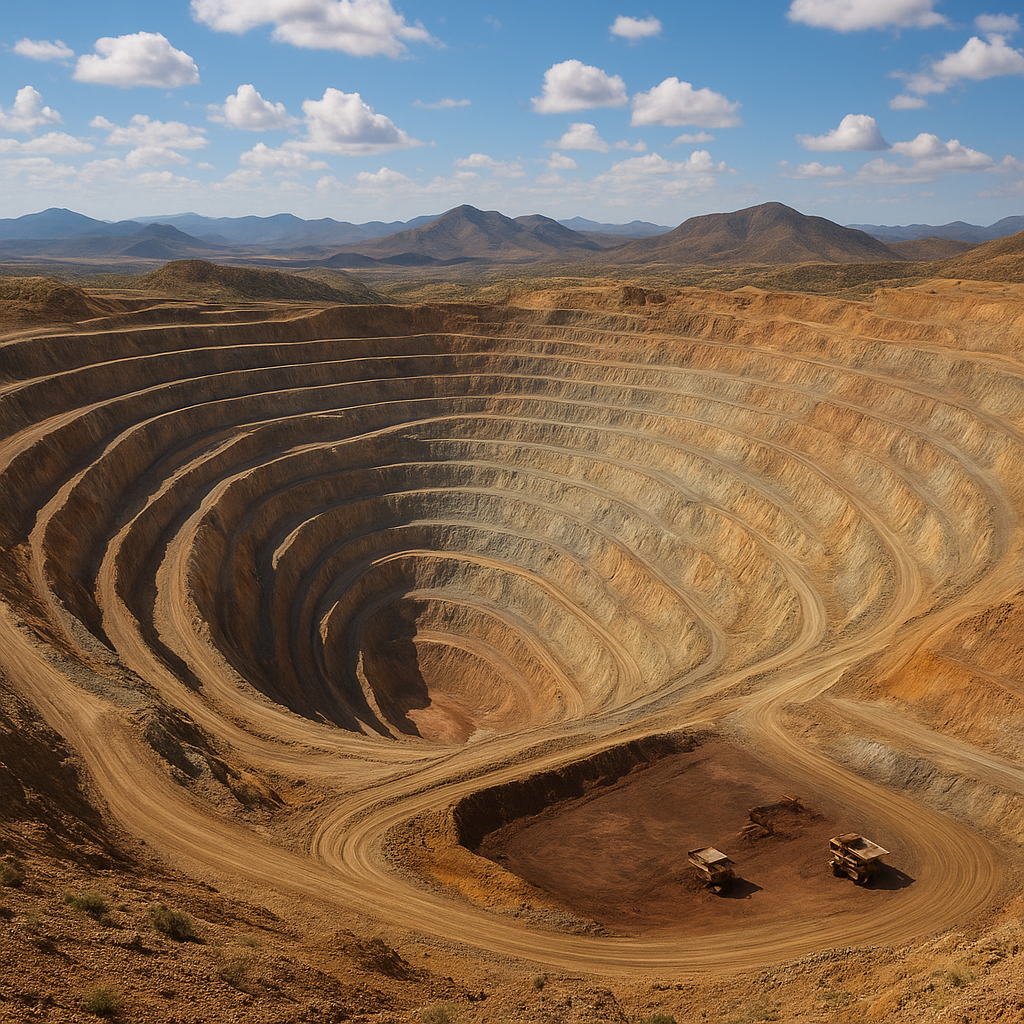
The Resolution Copper project is one of the most discussed and controversial mining developments in the United States. Located in the heart of southern Arizona, this venture aims to tap one of the country’s largest undeveloped copper deposits. Beyond raw extraction, Resolution Copper represents a convergence of modern mining engineering, complex land and water permitting, Native American cultural concerns, and large-scale economic implications for both the region and the nation. The following sections explore where the project is, what is mined there, how it will operate, its economic importance, and several intriguing aspects of the deposit and the project.
Location, Geology and Resource Description
The Resolution Copper deposit sits near Superior, in Pinal County, southern Arizona, roughly 60 miles east of Phoenix. The deposit lies beneath the surface and is part of the larger Magma mineral district, which has a long history of copper mining dating back more than a century. Geologically, the deposit is classified as a porphyry copper system — a type of large, low-to-medium-grade, disseminated mineral deposit that forms in the roots of ancient volcanic systems. Such systems are prized because they often contain vast quantities of metal that can be mined at a relatively low cost per ton when economies of scale are achieved.
The resource at Resolution Copper is remarkable for its size and grade relative to many porphyry deposits. Estimates from company technical reports indicate billions of pounds of recoverable copper along with significant byproducts such as molybdenum, and potential traces of gold and silver. The orebody sits at considerable depth, generally more than 7,000 feet below the surface at its deepest extents, which has driven the choice of specialized underground mining methods rather than an open pit.
What Is Mined and How: Methods and Technologies
Primary Mineral
The primary commodity is copper. Copper’s electrical conductivity, ductility, and corrosion resistance make it essential for power grids, electronics, construction, and increasingly, electric vehicles and renewable energy infrastructure. As global demand for electrification intensifies, large, concentrated sources of copper have taken on strategic significance.
Mining Method
Because the deposit occurs at great depth, the project is planned as a large-scale block-cave underground mine. Block caving is a mass-mining method that allows the controlled collapse of an ore mass to be extracted from drawpoints below. It is well-suited to massive, relatively uniform orebodies and offers very high productivity and low operating costs on a per-ton basis compared with many other underground methods. Block caving, however, requires significant upfront capital investment, extensive preconditioning of rock, and meticulous planning to manage ground subsidence and safety risks.
Ore from the underground caverns will be transported via a network of conveyors, shafts, and tunnels to surface facilities, where it will be crushed, processed, and concentrated before being shipped to smelters and refiners. The project will likely incorporate modern automation and remote-control technologies to enhance safety and efficiency, and may integrate sophisticated geotechnical monitoring systems to manage the complex behavior of a large caving operation.
Economic Importance and Industrial Context
Resolution Copper carries substantial economic weight. The scale of the deposit means the mine has the potential to supply a meaningful portion of U.S. copper demand over several decades. Economists and industry analysts highlight several economic dimensions:
- Direct employment: Construction, mine operations, processing, and associated services are expected to generate thousands of jobs during construction and hundreds to thousands of permanent jobs during operations.
- Indirect and induced jobs: Local suppliers, logistics, hospitality, and other service sectors can expect increased activity from the mine’s presence, amplifying regional employment.
- Taxes and royalties: The project will contribute to local, state, and federal revenues through taxes, royalties, and permitting-related fees, supporting public services and infrastructure.
- Supply-chain implications: Domestic access to large-scale copper ore reduces reliance on foreign sources, aiding critical minerals security for the U.S., particularly given copper’s role in electrification and decarbonization strategies.
- Capital investment: The mine requires multi-billion-dollar capital commitments. This investment stimulates the construction industry and ancillary sectors during the multi-year development phase.
Proponents argue that the project can be transformative for the local economy around Superior, including potentially revitalizing communities impacted by the decline of older, smaller mines in the region. At the national level, the project aligns with policy priorities to strengthen domestic supply chains for critical minerals.
Environmental, Social and Cultural Considerations
Resolution Copper has been subject to extensive environmental review and public debate. As a large-scale mining undertaking located near important public lands, water resources, and communities, the project intersects with several environmental, social, and cultural concerns.
Environmental Management
Key environmental issues include:
- Water use and protection of regional aquifers and springs.
- Management of tailings and waste rock to prevent leaching and contamination.
- Air quality and dust control during construction and operations.
- Land disturbance, habitat fragmentation, and biodiversity impacts.
- Subsidence risks associated with block-cave mining and the implications for surface infrastructure and ecosystems.
The project proponents have committed to modern mitigation practices, including water conservation measures, advanced tailings management systems, and significant reclamation planning. Nonetheless, independent scientists, environmental groups, and some public agencies have scrutinized the sufficiency of mitigation measures and called for conservative approaches to protect sensitive resources.
Cultural and Tribal Concerns
A particularly contentious issue has been the project’s planned use of land containing or near sites of cultural and spiritual significance to Native American tribes, most notably the San Carlos Apache Tribe. The contested land exchange that enabled Resolution Copper to access federal land parcels has been a focal point of legal and political disputes. For many indigenous communities, the sites are not only historically important but remain vital to cultural practices and identity. Respectful engagement, meaningful consultation, and concrete protections for cultural resources have been central demands from tribal communities and their allies.
History, Ownership and Regulatory Path
The deposit was originally worked in earlier eras by companies with smaller-scale operations. Modern exploration intensified in the late 20th and early 21st centuries. Today the project is a joint venture; the two principal partners are Rio Tinto, a global mining company, and BHP, one of the world’s largest mining firms. These global miners bring substantial technical expertise and financial resources, which are necessary for the capital-intensive nature of the project.
The path to permitting has been long and complex. Because parts of the necessary surface area were owned by the federal government and managed as national forest or public lands, a controversial land exchange was enacted to consolidate surface ownership for mine development. This exchange and the broader permitting process required environmental impact statements, consultations, and many layers of state and federal review. The project’s approvals have faced legal challenges and remain subject to oversight and possible future litigation depending on evolving environmental law and political decisions.
Interesting and Notable Aspects of Resolution Copper
- Depth and scale: Many published figures draw attention to the exceptional depth of the deposit. The combination of depth and tonnage raises unique challenges and drives the selection of block caving.
- Critical minerals relevance: Given global decarbonization trends, copper’s strategic importance has grown. Resolution Copper’s potential output makes it a key asset in conversations about domestic critical minerals supply.
- Engineering innovations: The project is likely to incorporate advanced automation, remote operation, and real-time monitoring systems to manage safety and geotechnical risk in a large caving environment.
- Public-private complexity: The land exchange and negotiation with multiple stakeholders represent a case study in how resource development, public lands policy, and indigenous rights intersect in the U.S.
- Long timelines: Large mines like Resolution Copper have timelines that span decades — from exploration and permitting to construction and multi-decade operation — meaning their influence on regional economies can be long-lived.
- Byproduct value: While copper is primary, byproducts such as molybdenum and precious metals can provide economically meaningful credits that improve project economics.
Local and Regional Impacts: Communities and Infrastructure
Regional impacts are both practical and social. Mining operations require significant infrastructure, including roads, power supply, water, and waste management systems. Some potential outcomes for the area include:
- Upgrades to roads and utilities that can benefit other businesses and residents.
- Increased housing demand during construction phases that can strain local services if not planned carefully.
- Opportunities for local contractors and suppliers to participate in multi-year contracts.
- Potential shifts in land use and recreational access depending on how surface impacts and reclamation are managed.
Community engagement and benefit-sharing mechanisms, such as workforce training programs and infrastructure investments, are often part of modern project planning and can help distribute economic gains more broadly, though their effectiveness varies with implementation.
Global Context and Future Outlook
On a global scale, Resolution Copper is an example of how advanced societies develop major mineral deposits to support transitions in energy and technology. Copper demand forecasts tied to electrification and renewable energy systems suggest long-term demand growth, and large new supply sources can modulate global prices and influence trade balances. However, market dynamics depend on recycling rates, substitution, exploration elsewhere, and geopolitical developments affecting supply chains.
Looking ahead, the project’s timeline will hinge on final permitting outcomes, financing conditions, commodity prices, technological choices, and how well the developers address environmental and cultural concerns. The balance between resource development and stewardship of land and heritage will remain a focal point as the project moves forward or if its plans evolve.
Concluding Observations
Resolution Copper stands at the crossroads of modern mining capability and complex social-environmental responsibility. Its potential to supply vast quantities of copper aligns with global trends toward electrification and sustainability, while its deep geological setting demands advanced engineering and careful stewardship. For southern Arizona and the broader United States, the project embodies both opportunity — in jobs, investment, and industrial resilience — and challenge, particularly in reconciling development with cultural and environmental protection. How those trade-offs are navigated will influence not only the fate of a single mine but also broader debates about resource policy, indigenous rights, and the sustainable management of critical minerals.

