
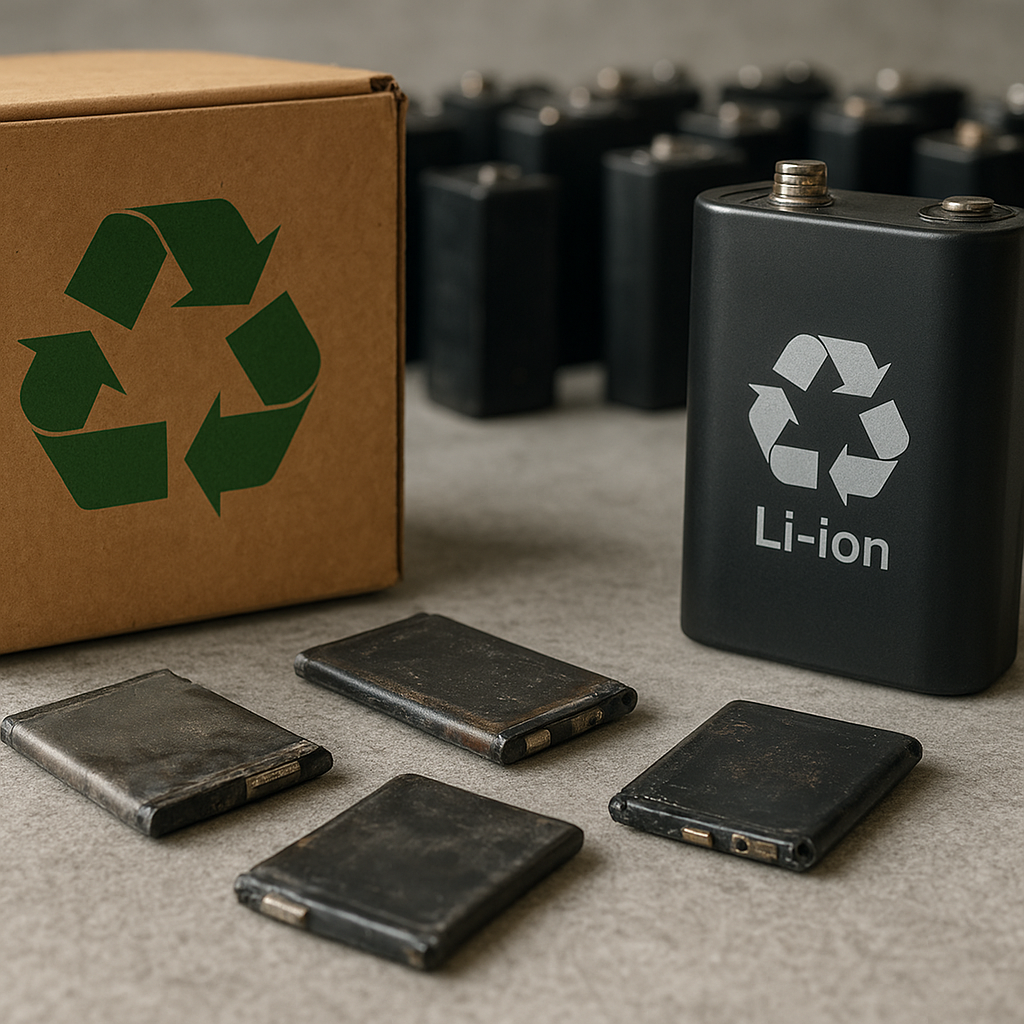
The rapid expansion of electrification in transport, portable electronics and energy storage has placed recycling of lithium-ion batteries at the center of industrial, environmental and policy debates. This article examines the major technical and economic barriers that slow the transition from a linear “mine-use-dispose” model to a more resilient circularity-oriented system. It also outlines practical challenges across collection, processing and market structures, and highlights where targeted action could unlock value and reduce environmental risks.
Scope, urgency and stakes
The global fleet of devices and electric vehicles powered by lithium-ion cells is growing exponentially. Increasing demand for energy density and longer lifetimes has driven innovation in cell chemistry and design, but this heterogeneity complicates end-of-life handling. Beyond waste-management concerns, the strategic importance of cathode metals such as lithium, cobalt and nickel has created geopolitical and supply-chain pressures. Effective battery recycling can reduce dependency on primary extraction, lower lifecycle emissions and recover valuable materials — but only if the recovery processes are technically viable and economically attractive.
Technical barriers to effective recycling
Heterogeneous chemistries and complex designs
Modern lithium-ion technologies encompass a wide range of cathode and anode chemistries (NMC, NCA, LFP, LCO, LMO, silicon-graphite blends and more), each requiring different processing approaches. Cells are also assembled with multiple polymers, electrolytes, current collectors and separators. The variability in form factor (pouch, cylindrical, prismatic) and the presence of integrated electronics make automated disassembly and material-sorting difficult and costly. Accurate identification and sorting at scale is a prerequisite for efficient recovery but remains an unsolved practical problem in many collection systems.
Safety and hazardous-material handling
Residual charge, flammable electrolytes and the potential for thermal runaway pose serious safety risks during transport, storage and processing. Safe preparation requires state-of-the-art discharge, quarantine and dismantling protocols, increasing labor and capital costs. Improper handling can cause fires in recycling facilities, which in turn raises insurance premiums and public scrutiny. Implementing robust safety measures is essential but technically demanding and expensive.
Processing technologies and material losses
There are several main categories of recycling processes, each with trade-offs:
- Pyrometallurgy: high-temperature smelting recovers metals like cobalt and nickel but often oxidizes lithium into slag, reducing lithium recovery rates and consuming significant energy.
- Hydrometallurgy: leaching and chemical separation can extract lithium, cobalt, nickel and manganese with higher recovery yields but require chemical reagents, wastewater treatment and careful management of effluents.
- Direct (or black-mass) recycling: attempts to restore cathode active materials directly to reusable form, potentially offering higher value recovery and lower environmental footprint, but faces challenges in consistency, impurity control and scaling.
All approaches face material losses, contamination by binders and additives, and the need for downstream refining to meet battery-grade purity. Achieving stable, high-purity outputs reliably at industrial scale remains a technical bottleneck.
Traceability and quality control
To select appropriate recycling routes and to verify recovered material value, recyclers need accurate traceability of chemistry and history. However, many batteries enter waste streams with little or no documentation about manufacture date, cycle life, or internal chemistry. Developing robust standards, labeling schemes and digital traceability systems is necessary but requires industry coordination and upfront investment.
Economic barriers and market dynamics
Collection and logistics costs
Collection is the first economic hurdle. Batteries are dispersed across households, businesses, and fleet depots. Aggregating end-of-life units into volumes that justify recycling plants involves significant transportation and handling costs. Moreover, safety-related precautions during collection further increase expenses. In many regions, weak or non-existent producer take-back systems and low consumer return rates undermine feedstock availability, making operational planning difficult for recyclers.
Capital intensity and economies of scale
Recycling plants require substantial upfront capital for specialized equipment, environmental controls and safety systems. Small facilities often cannot achieve the throughput needed to lower unit costs, while large plants need reliable long-term feedstock commitments. This capital intensity discourages new entrants and leads to geographic concentration of facilities, which can increase logistics distances and emissions.
Volatility of commodity prices and value recovery
The economics of recycling are sensitive to market prices for recovered metals. When commodity prices fall, the revenue from recovered cobalt or nickel may not cover processing costs. Conversely, high prices incentivize recycling but also encourage informal and sometimes unsafe recovery methods in unregulated markets. Recovered materials may also require further refining to battery-grade specifications, adding downstream costs and time before they can be reintroduced into the supply chain.
Competition with primary mining and purity requirements
Primary producers benefit from established extraction and refining pathways and often lower per-unit costs when operating at scale. Recycled material must meet strict technical specifications to be acceptable to battery manufacturers. The cost of achieving those specifications through additional refining can erode the price advantage of recycled feedstock. Until direct recycling techniques can reliably produce battery-grade cathode materials at scale, recyclers may be limited to selling lower-value metal salts rather than high-margin active materials.
Regulatory and policy uncertainty
Fragmented regulations across jurisdictions create compliance complexity for operators and slow investment. Inconsistent definitions of waste vs. resource, unclear liability for defective or hazardous returns, and varying extended producer responsibility (EPR) rules undermine predictable business models. In some markets, inadequate incentives for proper disposal encourage illegal dumping or export of batteries to regions with lower standards, transferring environmental and safety risks.
Strategies to overcome barriers
Design for recycling and standardization
Manufacturers can significantly ease recycling by adopting design principles that favor disassembly and material separation: modular packs, standardized fasteners, fewer adhesive layers, and clear chemistry labeling. Industry-wide standards for battery identification and reuse protocols would reduce sorting costs and improve safety. Collaborative efforts between OEMs, recyclers and regulators can accelerate these improvements.
Scaling advanced recycling technologies
Investment in second-generation processes such as low-temperature hydrometallurgy and direct cathode regeneration can improve recovery rates and lower energy input. Demonstration projects and public-private partnerships can de-risk these technologies. Combining mechanical pre-processing with targeted chemical flowsheets tailored to specific chemistries can optimize yields and economics.
Improving collection systems and return incentives
Robust collection networks with clear incentives for consumers and business actors increase feedstock quality and quantity. Approaches include deposit-refund schemes, mandatory take-back by retailers, and EPR programs that allocate collection responsibilities and costs to producers. Digital platforms that facilitate battery registration and logistics optimization can further reduce collection friction.
Policy levers and market instruments
Governments can use a mix of regulation and incentives to level the playing field: minimum recycled content mandates for battery materials, producer responsibility rules, tax credits for recycling investments, and funding for R&D. Clear and harmonized standards for safety, labeling and material certification would reduce uncertainty and attract capital. Strategic stockpiling or purchase agreements for recycled material can help stabilize prices and guarantee demand for recovered outputs.
New business models and value capture
Innovative value chains can improve economic viability. Examples include:
- Second-life battery aggregation, where modules with remaining capacity are repurposed for stationary energy storage before final recycling.
- Vertical integration, where battery manufacturers operate their own recycling facilities to secure feedstock and close material loops.
- Service-based models where manufacturers retain ownership of battery packs and manage returns, enabling controlled refurbishment and material recovery.
Standards, traceability and digital solutions
Adoption of interoperable digital passports for batteries — containing chemistry, manufacturing data, and usage history — would enable smarter sorting, more efficient processing and higher-value material recovery. Traceability reduces uncertainty, supports regulatory compliance and facilitates the matching of recycled outputs to manufacturer specifications.
Addressing the interplay of technical complexity and fragmented economics will require coordinated action across industry, policymakers and investors. Technical advances in disassembly, material separation and cathode regeneration must be matched by policies that create stable demand for recycled inputs and by logistics systems that gather quality feedstock at scale. With targeted interventions and aligned incentives, recycling could become a linchpin for sustainable battery supply chains, enabling resource security while mitigating environmental and safety risks.
