
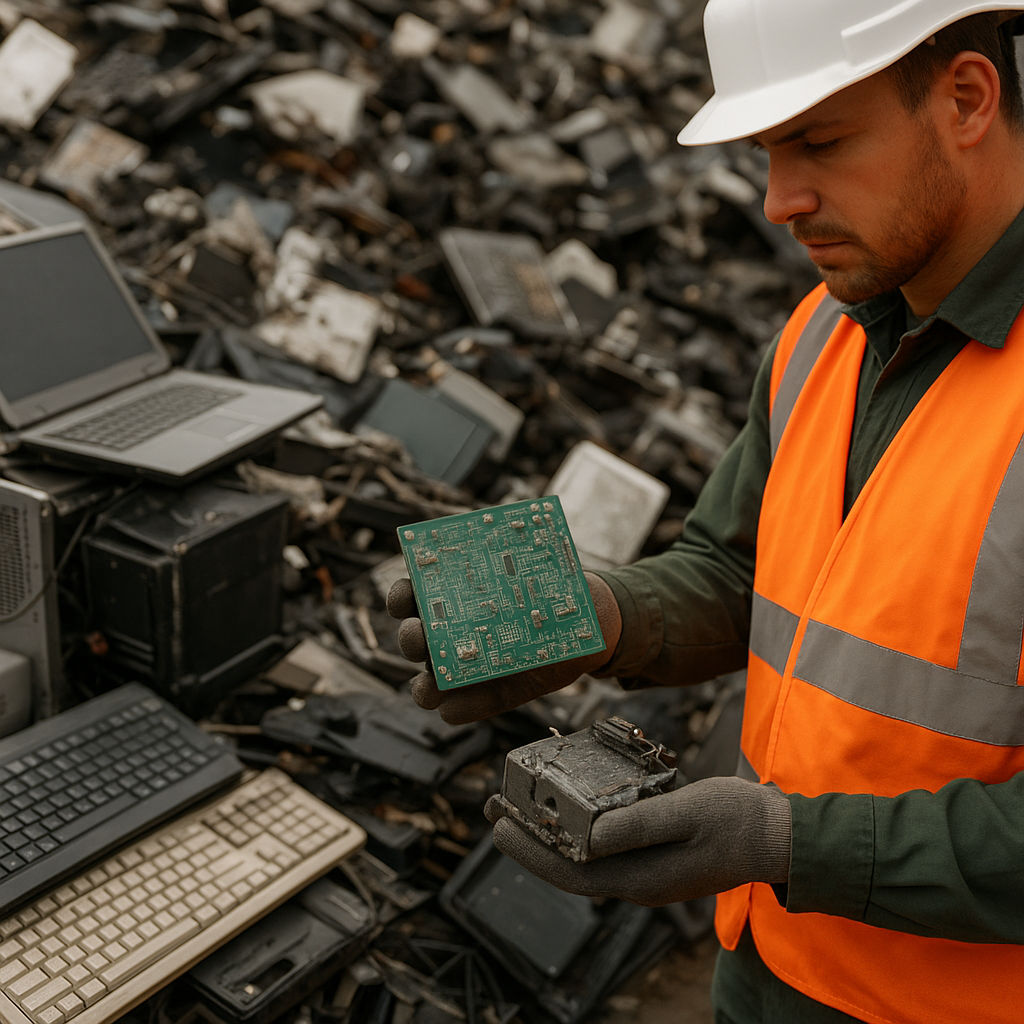
The proliferation of electronic devices has created an urgent need to rethink how societies manage discarded products. Recycling electronic waste offers a promising pathway to secure supply chains for critical minerals, reduce environmental harm, and foster a more resilient industrial base. This article explores the scale of the problem, the types of valuable materials embedded in electronics, the technologies and business models that enable recovery, and the policy and market actions required to turn e-waste into a strategic resource.
The scale and impact of modern electronic waste
Global generation of discarded electronics has been rising steadily, driven by rapid innovation cycles, consumer demand, and planned obsolescence. Estimates point to tens of millions of tonnes of e-waste annually, much of it containing both hazardous substances and economically valuable components. Traditional disposal routes — landfilling and informal dismantling — produce significant environmental and human health risks, while also squandering finite resources. Recovering high-value components from discarded devices can reduce the need for newly mined ores and mitigate supply risks associated with geopolitically concentrated deposits of rare earths and other critical elements.
The environmental footprint of primary mining is substantial: it includes habitat disruption, carbon emissions, water use, and pollution. In contrast, well-managed e-waste processing can achieve lower overall environmental impacts per unit of recovered material, especially when paired with renewable-energy-powered operations and efficient logistics. Beyond environmental considerations, the potential for urban mining — extracting metals from end-of-life products collected in cities — represents a tangible opportunity to decentralize supply and create local value chains.
Critical minerals found in electronic devices
Modern electronics embed a wide variety of valuable and strategic elements. Smartphones, laptops, electric vehicle battery packs, printed circuit boards, and display technologies contain concentrations of metals that are often orders of magnitude higher than those found in typical ores.
- Lithium — Used primarily for rechargeable batteries in consumer electronics and electric vehicles. Recovered lithium can help alleviate pressure on hard-rock and brine extraction.
- Cobalt — A key component in many battery chemistries, though evolving formulations are reducing reliance on it. Cobalt recovery from battery scrap remains commercially attractive.
- Rare earths — A group of 17 elements used in magnets, speakers, and various high-performance components. Despite their name, these elements are relatively common but are rarely found in concentrated, mineable deposits.
- Precious metals such as gold, silver, and palladium — Concentrated in connectors, plating, and multi-layer circuit boards; these are among the most economically recoverable materials in e-waste.
- Base metals like copper, aluminum, and nickel — Present in large volumes and often recovered for value and material recycling.
Beyond metals, modern devices also contain polymers, glass, and rare semiconductors whose recovery or safe disposal is increasingly important. Identifying the material composition of device streams is the first step toward efficient resource recovery and designing processes that maximize yield while minimizing environmental impact.
Technologies and processes for material recovery
Recovering critical minerals from e-waste involves a sequence of operations: collection and aggregation, disassembly (manual or automated), physical separation, and chemical or metallurgical extraction. The choice of technology depends on feedstock heterogeneity, targeted materials, regulatory environment, and economic scale.
Collection and pre-processing
Effective recovery begins with proper collection systems that route devices to formal recycling facilities rather than informal channels. Pre-processing includes manual removal of batteries and hazardous components, shredding, and debris sorting. Designing products for easier disassembly can greatly enhance the efficiency of these steps.
Physical separation and concentration
Density separation, magnetic and eddy-current separation, and advanced sensor-based sorting (near-infrared, X-ray fluorescence) enable concentration of specific fractions such as circuit boards, precious-metal-rich residues, and battery modules. Concentrating valuable fractions reduces downstream chemical processing volumes and costs.
Chemical and metallurgical extraction
Hydrometallurgical processes (leaching and solvent extraction) and pyrometallurgical routes (smelting and refining) are widely used to extract metals. Innovations in selective leaching agents, bioleaching, and electrochemical recovery are improving yields and lowering environmental footprints. For batteries, direct recycling — which restores cathode materials to a usable state — promises higher value retention than complete metallurgical breakdown.
Integration of digital tools such as material passports, blockchain for supply chain traceability, and AI-driven sorting systems is accelerating efficiency and enabling higher recovery rates. Coupling these technologies with supportive regulation can make recycling pathways both environmentally and economically viable.
Economic, regulatory, and supply chain considerations
Turning e-waste recycling into a reliable source of critical minerals requires supportive economic conditions and clear policy frameworks. Market drivers include metal prices, the cost competitiveness of recycled vs. primary materials, and industry demand for certified secondary sources to reduce supply chain risk.
- Extended producer responsibility (EPR) schemes can shift the cost burden to manufacturers, incentivizing design for recyclability and funding collection programs.
- Standards and certification for recycled materials help integrate secondary sources into manufacturing supply chains by providing assurance about composition and quality.
- Public procurement rules that favor recycled-content products boost demand and create stable markets for recovered minerals.
Investment in infrastructure — specialized recycling facilities, logistics networks, and R&D — is essential. Public-private partnerships can bridge the initial capital gap, while targeted subsidies or tax incentives can accelerate technology deployment. Trade and export controls on critical minerals also shape how recycling capacity is built and where recovered materials flow.
Barriers, risks and future directions
Despite the promise, several challenges hamper widespread recovery of critical minerals from electronic waste. Heterogeneous product design, the presence of hazardous materials, and the dispersed nature of e-waste collection all raise costs and complexity. Informal recycling sectors in many regions operate outside environmental and labor regulations, creating health risks and undercutting formal recyclers.
Technical barriers include the complexity of recovering elements present in low concentrations, the difficulty of processing mixed-material assemblies, and the energy intensity of some extraction methods. Economic volatility in raw material markets can also affect the viability of recycling investments.
Addressing these obstacles will require coordinated action across stakeholders:
- Manufacturers should prioritize design choices that facilitate recycling and material recovery, such as modular design and standardized fastenings.
- Policymakers need to implement coherent regulatory frameworks that encourage formal recycling, ensure safe handling of hazardous fractions, and provide incentives for circular practices.
- Researchers and entrepreneurs must continue to develop low-energy, selective extraction methods and scalable mechanical separation technologies.
- Consumers and institutions can support circular models by participating in take-back programs and choosing products with verifiable recycled content.
Emerging trends point toward a future where recycling is integrated into product life cycles from design to end-of-life, enabling a resilient supply of critical minerals while reducing environmental harm. Combining policy action, technological innovation, and market signals will be key to unlocking the full potential of e-waste as a strategic resource and advancing broader goals of sustainability and a circular economy.
