
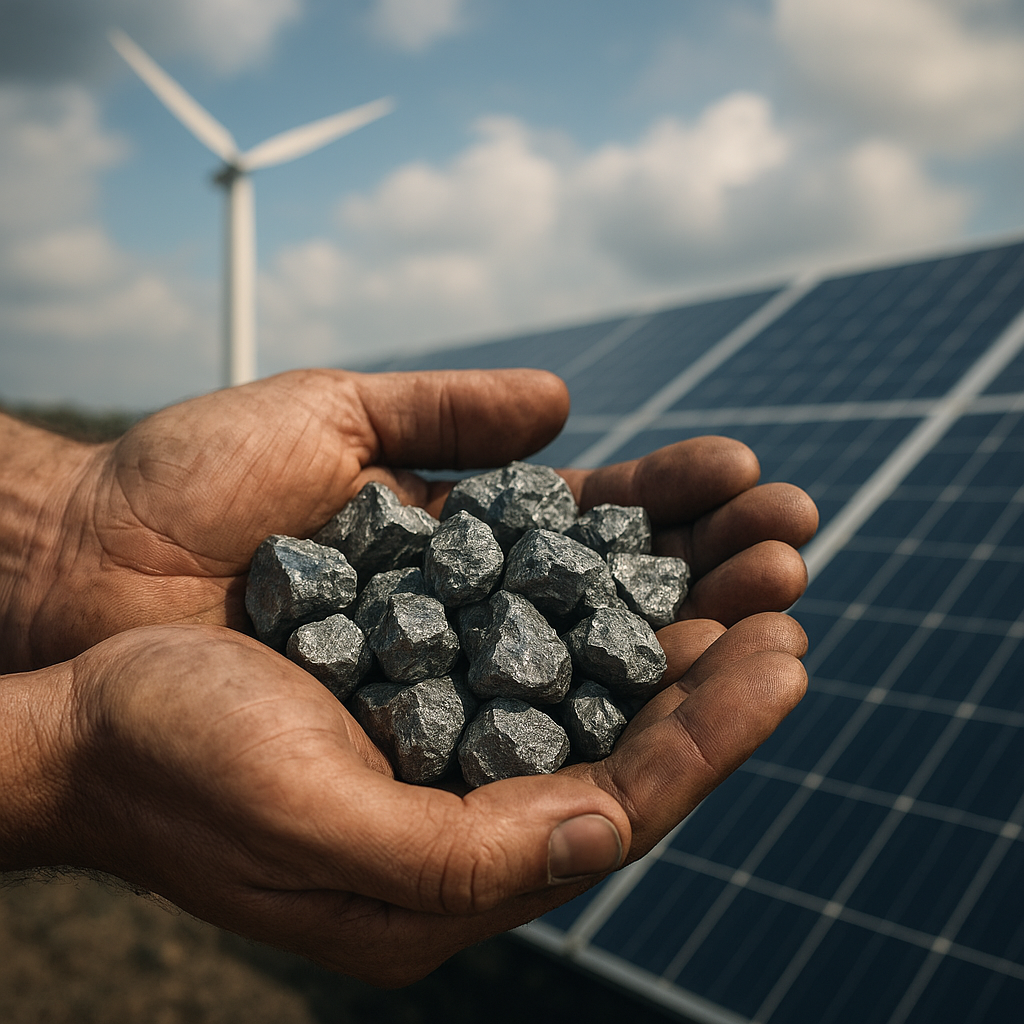
The accelerating shift to low-carbon energy systems has elevated the importance of a group of often-overlooked materials. These elements—ranging from bulk metals to rare earths—are essential to technologies such as wind turbines, electric vehicles, energy storage and grid modernization. Understanding the risks surrounding their supply is vital for policymakers, industry leaders and investors who aim to steer the clean energy transition without encountering crippling bottlenecks. This article examines the strategic role of these materials, identifies the most pressing supply vulnerabilities, and outlines practical approaches to reduce exposure to those risks.
The strategic role of critical and rare metals in the clean energy transition
Clean energy technologies depend on a varied set of materials. Some are relatively common but need to be produced in far greater volumes—such as copper for power networks and nickel for batteries. Others are truly scarce or concentrated geographically, like rare earth magnets containing neodymium and dysprosium, which are central to high-performance wind turbines and electric motors. Meanwhile, lithium and cobalt remain indispensable for many rechargeable battery chemistries.
Beyond their physical applications, these materials have economic and strategic weight. They form the backbone of supply chains that connect mining operations to factories and markets across multiple countries. Any disruption—whether geological, geopolitical, environmental or technical—can cascade through manufacturing schedules, raise production costs and slow deployment of low-carbon technologies. The dependency is not just about availability but also about timing, quality and the ability to scale extraction and refining quickly.
Key supply risks and vulnerabilities
Several intersecting risks create a complex picture of vulnerability for rare and critical metals:
Geographic concentration and single-source dependency
Production of many critical materials is highly concentrated. For example, a handful of countries dominate the mining, processing and refining stages. The Democratic Republic of Congo (DRC) supplies a major share of global cobalt, while China controls a substantial portion of rare earth processing and much of the global refining capacity for several battery metals. Such concentration creates acute exposure to localized political instability, export restrictions, regulatory shifts or infrastructure failures.
Environmental and social constraints
Mining and processing of metals can have significant environmental footprints: water use, habitat disruption, tailings risks and greenhouse gas emissions. Communities often resist new projects because of social and health impacts, leading to permitting delays or outright cancellations. Increasingly stringent environmental standards and strong public opposition can create bottlenecks, slowing the ramp-up of new production even when raw mineral reserves exist.
Processing and refining bottlenecks
It is not enough to extract ore; refining and chemical processing steps—often more technically demanding—are critical. For example, the production of battery-grade materials requires sophisticated refining infrastructure. Because these downstream stages are frequently more concentrated than upstream mining, they create choke points where a single facility or region can influence global supply and pricing.
Market dynamics and price volatility
Demand for certain metals can escalate rapidly, driven by policy changes, EV adoption or government procurement. Price spikes can incentivize short-term supply but also increase project risk, discourage long-term investment and create boom-bust cycles. Price volatility complicates planning for manufacturers and can slow the uptake of technologies if component costs rise unpredictably.
Geopolitical risks and trade policy
Trade measures, export controls and strategic stockpiling are increasingly used to secure supply. Nations may impose restrictions in response to perceived strategic threats or to support domestic industries. Such policies can rapidly alter the shape of international supply chains. Furthermore, geopolitical tensions can disrupt logistics and insurance markets, raising the cost and risk of shipping critical materials.
Specific metals of concern and their unique issues
Different metals pose different kinds of challenges:
- Lithium: Rapidly growing demand from batteries for EVs and grid storage strains supply. Lithium resources are abundant in several regions but converting brine or hard-rock deposits into battery-grade material requires time, investment and water resources.
- Cobalt: High concentration of mining in the DRC creates supply-risk and ethical concerns related to artisanal mining and labor standards.
- Nickel: Battery-grade high-purity nickel demand has surged. Conventional nickel sulfide mines vs laterite deposits require different processing approaches with varied environmental impacts.
- Copper: Essential for electrification at scale; long project development lead times and declining ore grades pose long-term supply issues.
- Rare earths (neodymium, dysprosium): Essential for powerful, compact magnets. Processing complexity and high concentration of refining capacity in certain countries make supply fragile.
Mitigation strategies: industry, government and research responses
Multiple strategies can reduce exposure to rare metal supply risks. No single approach is sufficient; resilience depends on a portfolio of actions.
Policy and strategic interventions
- Develop national and regional strategic reserves for the most critical materials to smooth short-term shocks.
- Implement transparent critical mineral lists and risk assessments that guide industrial policy and investment incentives.
- Encourage diversified sourcing through trade agreements and partnerships, reducing dependence on single suppliers.
Scaling sustainable mining and processing
Investment in new projects can increase supply, but it must be paired with stronger environmental and social governance. Permitting reforms that maintain rigorous standards while improving predictability can shorten lead times. Encouraging best practices, community engagement and benefit-sharing helps mitigate social opposition that often delays projects.
Value-chain development and onshoring
Countries and companies can seek to internalize more stages of the value chain—moving from raw extraction toward refining and component manufacturing. While costly, localizing refining capacity reduces exposure to foreign policy changes and creates domestic economic benefits. Policies such as tax incentives, public-private partnerships and targeted investments can accelerate this trend.
Materials innovation and substitution
Research into alternative chemistries and design changes can reduce reliance on constrained metals. Examples include low-cobalt and cobalt-free battery chemistries, motors that use fewer or no rare earth magnets, and more copper-efficient grid designs. Investment in R&D and pilot deployment can accelerate viable substitutes, though tradeoffs in performance or cost often persist.
Circular economy and recycling
Recycling of end-of-life batteries, electronics and permanent magnets can recover a meaningful share of critical metals. Improving collection systems, standardizing product designs for easier disassembly and scaling hydrometallurgical and direct-recycling technologies are essential. A mature circular system reduces the need for virgin extraction and provides a buffer against supply shocks.
Market mechanisms and risk-sharing
Financial tools—such as long-term offtake agreements, futures contracts and blended finance—can underwrite upstream investments and provide price stability. Responsible sourcing certifications and transparent supply-chain tracing can also help firms manage reputational risks and regulatory compliance.
Implications for stakeholders
Different actors must adopt tailored approaches:
- Policymakers should coordinate industrial strategy, environmental regulation and international engagement to secure supplies while upholding sustainability goals.
- Businesses need to map their supply chains, stress-test scenarios and invest in diversification, recycling and product redesign.
- Investors must weigh geopolitical, environmental and technological risks when financing projects, favoring operations with strong governance and long-term viability.
- Civil society and communities should be involved to ensure mining and processing respect human rights and local livelihoods.
Where innovation matters
Technological innovation—from advanced mining techniques and low-carbon processing to battery chemistries and recycling—will be decisive. Public funding for applied research, demonstration projects and workforce development can shorten timelines from lab breakthroughs to commercial deployment. Collaboration across governments, academia and industry accelerates diffusion of less material-intensive solutions.
Challenges ahead and the path to resilience
Meeting the scale of material demand required for the clean energy transition is not impossible, but it requires deliberate coordination. The interplay between rapid deployment targets and the long lead times of mining and refining projects means planning must start now. Prioritizing environmental and social standards, investing in recycling and processing, diversifying supply sources and supporting technological alternatives together build a more robust system.
Ultimately, the transition’s success hinges on an integrated approach that treats materials as strategic elements of energy policy rather than as mere inputs. That mindset shift — backed by concrete policies, finance and innovation — can reduce vulnerability and ensure that the move to a low-carbon future is economically viable, socially just and environmentally responsible.
