
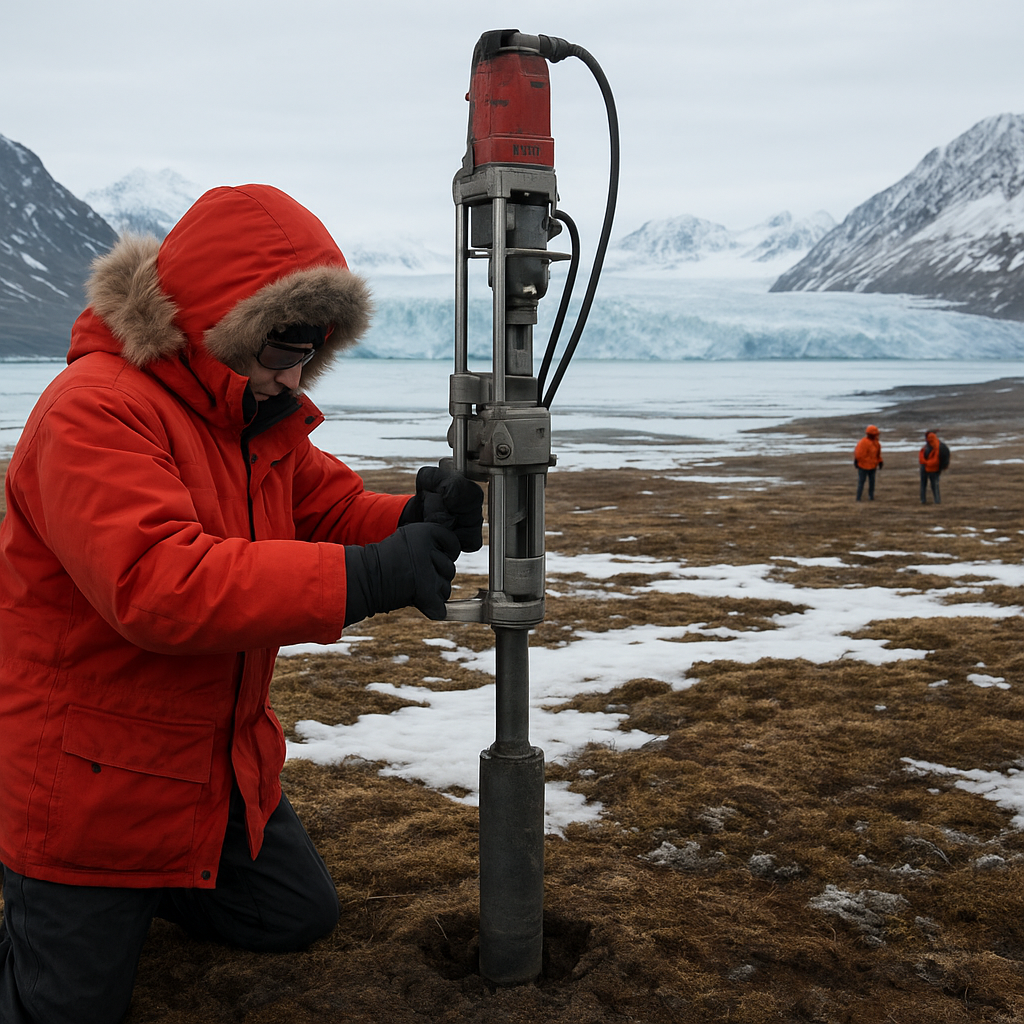
The pursuit of rare earth elements in high-latitude environments demands an approach that balances advanced science, resilient logistics, and deep respect for fragile ecosystems and local communities. Arctic regions, defined by extreme climates, complex geology, and sensitive social contexts, present opportunities for new deposits that could diversify global supply chains. Successfully locating and evaluating these resources requires integrated strategies that combine modern exploration technologies with adaptive field practices, robust environmental safeguards, and meaningful collaboration with northern stakeholders.
Geological and environmental context
Understanding the geological framework of the Arctic is the foundation of any effective exploration program. Many promising rare earth element (REE) occurrences are associated with specific lithologies and alteration systems—carbonatites, peralkaline igneous complexes, weathering profiles, and heavy-mineral placers in glacial and marine sediments. Arctic geology is additionally complicated by glacial cover, limited outcrop exposure, and episodes of recent sedimentation that can mask primary mineralization.
Key geological controls
- Intrusive-related systems: carbonatite and alkaline complexes often control elevated concentrations of light and heavy REEs.
- Secondary enrichment: weathering and supergene processes can concentrate REEs in laterites and saprolites where the climate has permitted deep alteration.
- Detrital and placer systems: glacial and fluvial transport can create accumulations of heavy-mineral sands enriched in REE-bearing minerals.
- Hydrothermal alteration: veins and replacement bodies associated with hydrothermal fluids may host localized REE enrichment.
Environmental factors such as permafrost depth, seasonal ice cover, and sparse vegetation affect both the expression of mineralization and the feasibility of exploration techniques. Permafrost can preserve sediments and create unique geochemical signatures but also complicates drilling and sampling. Short field seasons constrain the timing of surface mapping, sampling, and mobilization of heavy equipment.
Exploration strategies and technologies
Targeting REE deposits in polar settings benefits from a staged, multidisciplinary approach that maximizes information gain while limiting footprint. The strategy typically moves from broad reconnaissance to focused, high-resolution campaigns.
Stage 1 — Regional reconnaissance
- Satellite and airborne remote sensing to map lithology, structural trends, and alteration; multispectral and hyperspectral data help identify key minerals and alteration halos even under tundra or snow in some seasons.
- Regional geochemical surveys of lake sediments, till, and stream waters to detect catchment-scale anomalies; glacial dispersal trains must be interpreted with knowledge of ice flow history.
- Compilation and reinterpretation of legacy data, including historical drill logs, geophysical surveys, and government geological maps, using modern GIS workflows.
Stage 2 — Intermediate evaluation
- Airborne geophysics, notably magnetics and radiometrics, to delineate bedrock units and alteration. Magnetic surveys are particularly useful for mapping carbonatites and associated magnetic signatures.
- High-resolution gravity surveys and, where feasible, airborne electromagnetic (AEM) methods to detect stratigraphic and structural targets beneath glacial cover.
- Directed surface sampling and trenching during the brief summer field window; use of portable XRF and field spectrometers accelerates decision-making.
Stage 3 — Advanced characterization
- Focused diamond drilling campaigns enhanced by downhole geophysics and core scanning; core must be handled to preserve sensitive mineralogical and geochemical information, with special care in frozen ground.
- Detailed mineralogy using QEMSCAN, SEM-EDS, and LA-ICP-MS to fingerprint REE-hosting minerals and understand liberation characteristics for downstream processing.
- Integrated 3D geological modeling and resource estimation, incorporating glacial transport models and permafrost mapping to constrain geometric uncertainty.
Emerging tools such as machine learning for anomaly detection and drone-based geophysics (magnetics and hyperspectral imaging) are increasing efficiency, particularly where access is limited. Combining methods reduces the risk of false negatives in complex Arctic settings.
Logistics, infrastructure and community engagement
Logistical planning is as critical as the technical exploration plan. Arctic operations face limited windows of opportunity, high transport costs, and the necessity of minimizing environmental and social disturbance. Building resilient supply chains and working with local capacities improves safety and social license to operate.
Logistical considerations
- Logistics solutions include modular camps, ice- and gravel-road planning, seasonal marine access, and aircraft support (fixed-wing and helicopter). Pre-fabricated equipment and cold-adapted machinery reduce mobilization time.
- Fuel storage, waste management, and emergency response must be designed for remote conditions, with contingency plans for severe weather and limited evacuation options.
- Data handling uses satellite communications and edge-computing technologies to transmit and process data in near real-time, shortening feedback loops between field teams and analysts.
Engagement with local and indigenous communities
Respectful, early and ongoing engagement with northern communities is non-negotiable. Indigenous peoples often hold rights, traditional knowledge, and stewardship responsibilities over the land. Best practices include:
- Co-designing exploration timelines that respect subsistence activities and cultural sites.
- Hiring and training local workforce, prioritizing capacity building and long-term economic benefits.
- Incorporating Traditional Ecological Knowledge into environmental baseline studies, particularly for wildlife migration routes and sensitive habitats.
Environmental protection and sustainability
Exploration must aim to minimize environmental disturbance and to contribute to scientifically robust baselines for future monitoring. The Arctic hosts unique biodiversity and ecosystem services that are sensitive to even small-scale disturbances.
Mitigation measures
- Design low-impact access routes and use temporary platforms or snow roads to protect vegetation and soil structure.
- Strict fuel and chemical management protocols to prevent contamination of surface and groundwater; double-walled tanks and spill response kits are mandatory.
- Adaptive monitoring for permafrost stability and erosion risks, since thawing ground can change hydrology and mobilize contaminants.
- Progressive reclamation planning that begins at the exploration phase, including stockpile management and site restoration trials adjusted for northern climates.
Environmental baseline programs should measure not only typical physical and chemical parameters but also biological indicators of ecosystem health, and should be designed to continue through seasonal and interannual variability. Transparent data sharing with regulators and communities builds trust and supports cumulative effects assessment.
Regulatory frameworks, economics and market context
Exploration in Arctic jurisdictions operates under a combination of national laws, territorial statutes, and international agreements. Navigating permitting pathways requires early engagement with regulators and adherence to consultation and impact assessment requirements. The strategic value of REEs on global supply chains affects project economics and stakeholder interest.
Permitting and compliance
- Licensing timelines vary widely; some territories require comprehensive environmental assessment for any exploration involving significant earthworks or winter road construction.
- Cross-border considerations and shipping routes may implicate international maritime law and Arctic Council guidelines on pollution prevention and emergency cooperation.
Economic drivers
REE project viability in remote regions depends on the grade and metallurgy of the deposit, access to processing routes, and evolving market demand for specific elements (e.g., neodymium, dysprosium, terbium). Value-added strategies, such as concentrating or partial processing on-site to reduce shipping volumes, must be weighed against capital and environmental costs. Partnerships with downstream processors and investment in metallurgical testwork are crucial early steps.
Case studies and innovation pathways
Examples from northern Greenland, Arctic Canada, and Scandinavia illustrate diverse approaches. Projects that successfully progress integrate rigorous scientific programs, adaptive logistics, and robust social license. Innovation pathways include:
- Developing cold-climate metallurgical processes that reduce water usage and reliance on energy-intensive steps.
- Testing modular processing units that can operate seasonally and be relocated with minimal footprint.
- Applying predictive modeling that couples glacial transport simulations with geochemical dispersion to refine target generation.
Advances in autonomous and remotely operated systems will further reduce the human footprint of reconnaissance and enable year-round data collection in otherwise inaccessible areas. Combining these technological improvements with policy frameworks that prioritize environmental protection and community benefit will shape the future of exploration in northern latitudes.
