
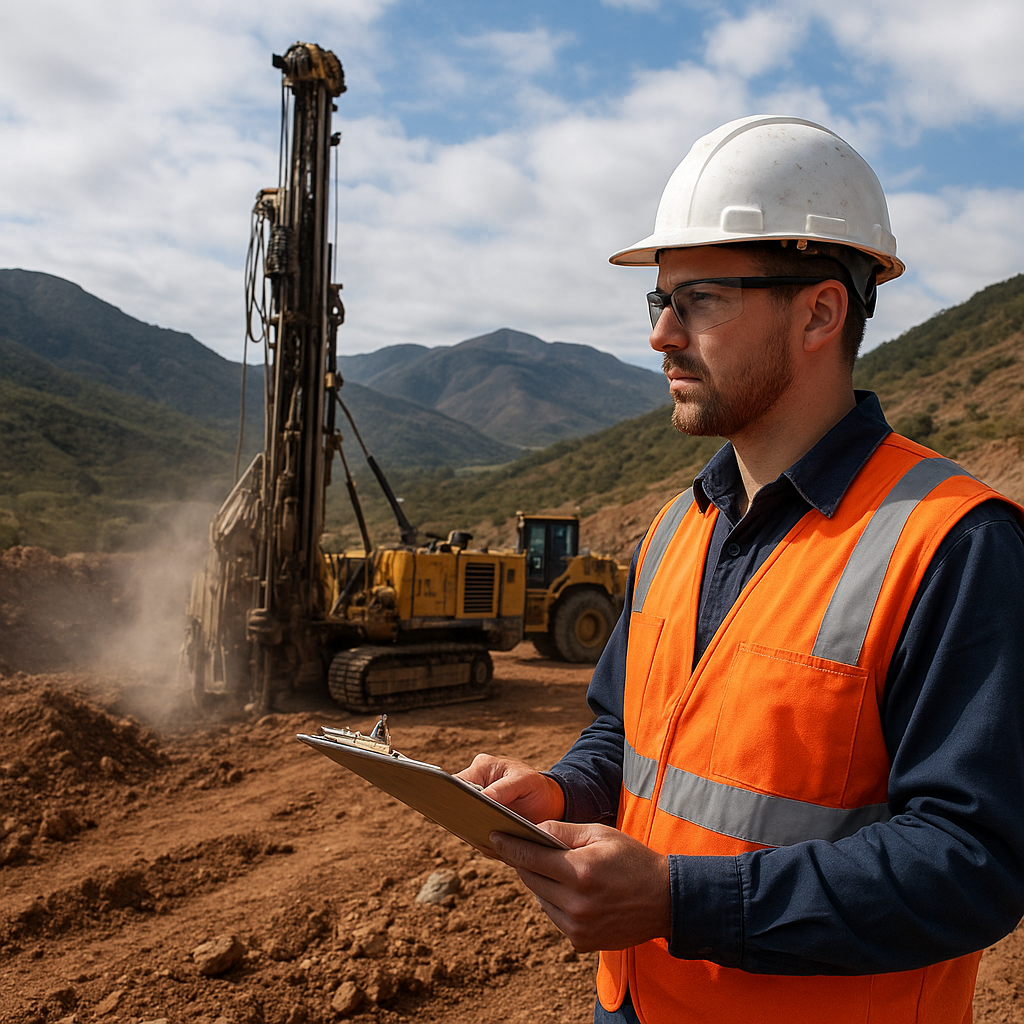
The global scramble for rare-earths has shifted from geopolitically narrow corridors to a broad front of activity across Western countries. Driven by the race to electrify transport, decarbonize power systems and secure critical technologies for defense and communications, governments and companies in North America, Europe and Oceania are ramping up exploration and permitting for deposits long known but previously neglected. This article examines why the boom is happening, where exploration is concentrated, what technical and social obstacles stand in the way, and how innovation and policy are reshaping the future of the supply chain for these indispensable elements.
Why rare earths have become a strategic priority
Rare earth elements (REEs) are a group of 17 metals including neodymium, praseodymium, dysprosium and terbium, whose unique magnetic, catalytic and luminescent properties make them essential to modern high-tech applications. They are central to the manufacture of permanent magnets used in electric vehicle (EV) motors and wind turbine generators, to defense systems, and to advanced electronics and optics. The confluence of rising demand from the green energy transition and concerns about concentrated supply — historically dominated by a single major producer — has turned REEs into critical minerals at the top of many national security lists.
Governments now view domestic resources and nearby allies as strategic buffers against supply disruption. The result is a policy-driven wave of exploration funding, incentives for domestic processing capacity, and the establishment of strategic stockpiles. This momentum has given fresh life to deposits that were uneconomic under low-price regimes or technically challenging to process.
Major drivers behind the Western exploration boom
Energy transition and industrial demand
EV sales and renewable capacity targets have produced long-term forecasts for REE demand that far exceed historical consumption. Permanent magnets in traction motors and wind turbines are particularly magnetizing demand for neodymium and praseodymium (NdPr) as well as smaller volumes of heavy rare earths like dysprosium. Industry players are responding by advancing upstream projects to secure feedstock.
Geopolitics and supply security
Concentration risks and the history of export restrictions prompted many Western states to treat REEs as matters of national security. Policy instruments include grants for exploration, low-interest loans for processing plants, and public-private partnerships to accelerate mine-to-magnet capability. International cooperation among allies also aims to build resilient, diversified supply chains.
Capital and market dynamics
Higher commodity prices, clearer policy signals and an improving investor understanding of the market economics for REEs have unlocked capital. Junior exploration companies are now able to attract investment for advanced-stage drilling programs and metallurgical testwork, while larger miners are reassessing historical deposits with modern processing routes and environmental standards in mind.
Where exploration is expanding: regional hotspots
Exploration activity in Western countries is geographically varied, reflecting different geological settings and endowments.
- United States: Historically home to the Mountain Pass deposit in California, the U.S. has renewed interest across the West, Alaska and parts of the Southeast. Federal initiatives support both exploration and downstream processing capacity.
- Canada: Known projects in the Northwest Territories and northern Manitoba (including projects like Nechalacho at Thor Lake) have attracted investment backed by government funding and Indigenous partnerships.
- Australia: A leading global miner with established REE production (notably Mt Weld) is expanding exploration, and Australian companies are investing in downstream processing to move beyond export of concentrates.
- Europe: Scandinavia (Sweden, Finland) and Greenland have become focal points. European policy emphasizes secure supply for the EU’s green and defense industries, drawing in exploration and research funding.
Each region faces different technical challenges — from complex mineralogy to remote logistics — but all share the pressure to bring deposits to production in an environmentally and socially acceptable way.
Technical, environmental and social challenges
Extracting and processing rare earths is not a simple pivot from conventional mining. The ores often contain low-grade concentrations, complex mineral matrices and sometimes trace radioactive elements such as thorium and uranium. These attributes make metallurgical processing and waste management technically demanding and capital-intensive.
- Waste and tailings: REE processing generates residues that require careful handling to avoid soil and water contamination.
- Radiological concerns: Some deposits carry naturally occurring radioactive materials that complicate permitting and community acceptance.
- Water and energy use: Processing can be water- and energy-intensive, posing trade-offs with local environmental priorities.
- Community and Indigenous rights: Exploration and mine development intersect with Indigenous lands, protected ecosystems and traditional livelihoods, requiring rigorous consultation and benefit-sharing.
Regulatory systems in Western countries tend to have higher environmental standards and longer permitting timelines than some alternative producers, which raises project costs and time to market. That said, Western projects often promise lower lifecycle environmental footprints when modern processing technologies and stricter oversight are applied.
Technological innovations reshaping the sector
Advancements in extraction, processing and recycling are changing the feasibility landscape for Western projects.
- Hydrometallurgical processes and novel separation techniques increasingly allow for lower-cost, lower-emissions recovery of individual REEs from complex ores.
- Direct separation technologies — including ion-exchange, molecular recognition and solvent extraction improvements — reduce reagent use and improve selectivity for specific elements.
- Magnet recycling and urban mining are gaining traction as ways to recover NdPr and heavy REEs from end-of-life electronics, EV motors and industrial equipment, providing an important secondary supply stream.
- Digital geological methods such as machine learning applied to geophysical and geochemical datasets accelerate target identification and reduce exploration risk.
These technological trends are complemented by investments in decarbonizing processing plants (e.g., electrification, renewable energy integration) and in circular-economy approaches that prioritize reuse and recycling over virgin extraction when possible.
Policy responses and market instruments
Western governments have rolled out a mix of policies to catalyze exploration and domestic processing. These include exploration grants, tax incentives, loan guarantees for downstream plants, and procurement policies favoring domestically sourced materials for defense and critical infrastructure. Some jurisdictions have also introduced strategic stockpiles and formed international partnerships to ensure rapid response to market disruptions.
Market instruments are emerging too: offtake agreements between miners and magnet producers, joint ventures across the value chain, and commodity financing tailored to the unique cashflow timing of critical mineral projects. These mechanisms reduce risk for investors and help align upstream activity with downstream manufacturing needs.
Economic and geopolitical implications
The exploration boom in Western countries is reshaping global power dynamics. Diversifying production reduces leverage that a dominant supplier may exert over prices and exports. It also carries geopolitical weight: countries that secure domestic REE value chains gain greater autonomy in defense procurement and green technology deployment.
At the same time, bringing new Western supply online will not immediately alter global balances. Building mines and processing plants takes years, and market tightness may persist in the short term. The boom is therefore a medium- to long-term strategy to buffer against disruption and to encourage competitive pricing while meeting environmental and social standards valued by Western markets.
Investment outlook and what to watch next
Investors and policymakers should monitor several indicators that will determine whether exploration activity translates into a resilient, responsible supply base:
- Progress on permitting timelines and community agreements for major projects.
- Advances in processing technologies that lower costs and mitigate environmental impacts.
- Development of downstream capacity — magnet manufacturing, alloy production and permanent magnet assembly — to capture value within the West.
- Policies and trade measures that shape tariff and export environments, as well as international cooperation frameworks.
- Scaling of recycling streams and circular business models that reduce raw-material demand growth rates.
Successful projects will be those that integrate technical viability with robust environmental management and strong social licenses to operate. Public trust, transparent governance and equitable economic benefits will be as crucial as geological grades.
